
May 18, 2026
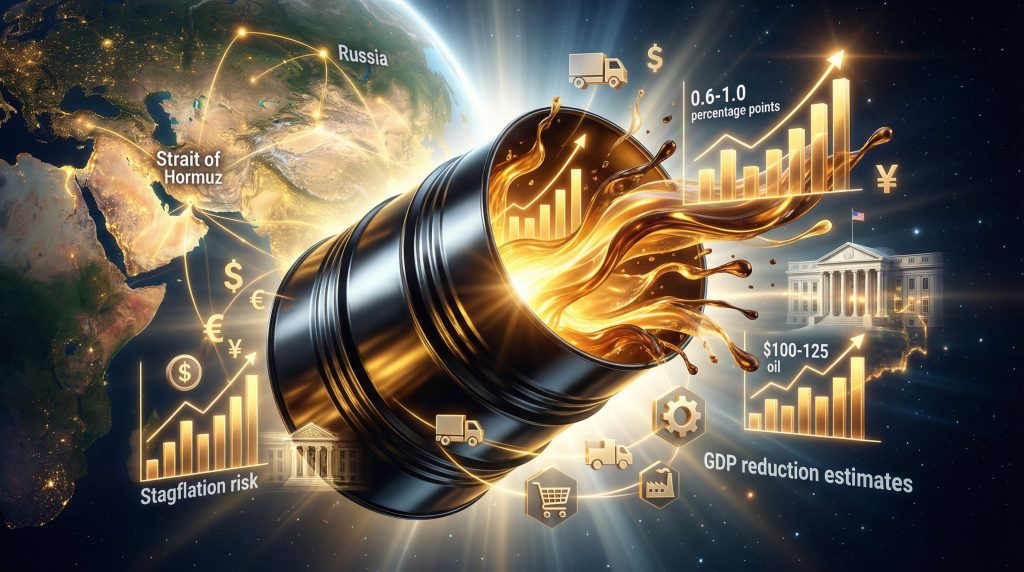
How Oil Shocks Create Modern Economic Volatility
Energy crises have historically triggered some of the most severe economic disruptions in modern financial history. When oil prices experience sudden, dramatic increases, they create ripple effects that extend far beyond fuel pumps, fundamentally altering the trajectory of global economic growth, consumer behaviour, and monetary policy decisions. Understanding these inflation and oil shock transmission mechanisms becomes crucial as geopolitical tensions continue to threaten energy security worldwide.
The complexity of oil shock economics lies in their dual nature: they simultaneously create inflationary pressures while constraining economic growth, a phenomenon known as stagflation. This economic paradox challenges traditional policy responses and creates uncertainty for investors, central bankers, and consumers alike. Recent events demonstrate how quickly energy disruptions can reshape economic expectations and financial markets.
When big ASX news breaks, our subscribers know first
Understanding Oil Price Shock Characteristics in Today's Economy
Defining Modern Energy Market Disruptions
Oil price shocks represent sustained increases exceeding 20% within 30-day periods, though economists increasingly focus on absolute price thresholds rather than percentage changes alone. When West Texas Intermediate crude approaches or exceeds $100 per barrel, markets typically enter shock territory where inflation and oil shock implications become pronounced.
Recent market data illustrates this dynamic effectively. During the February 2026 Iran conflict, WTI crude posted a 35% weekly gain, representing the largest weekly increase since oil futures trading began in 1983. Prices briefly spiked toward $120 per barrel before political intervention helped stabilise markets around $85.
Critical Infrastructure Dependencies
The Strait of Hormuz exemplifies how geographic chokepoints amplify oil shock severity. This narrow waterway handles approximately three-quarters of Persian Gulf oil production, according to energy analytics firm Wood Mackenzie. When tensions threaten this critical passage, global energy markets immediately price in supply disruption risks.
The strategic importance of such chokepoints creates vulnerability multipliers throughout the global economy. Supply chain disruptions extend beyond energy markets, affecting transportation costs, manufacturing inputs, and consumer goods pricing across multiple economic sectors.
Energy Shock Transmission Through Economic Systems
Primary Inflation Pathways
Energy shocks transmit through economic systems via several distinct channels, beginning with direct consumer price impacts. Transportation fuels represent the most immediate transmission mechanism, with petrol and heating costs directly affecting household budgets within weeks of crude oil price increases.
Recent inflation data demonstrates these transmission patterns clearly. In February 2026, energy prices rose 0.6% monthly, marking the first increase after January's 1.5% decline. Natural gas climbed 3.1% while petrol increased 0.8% before seasonal adjustments. Following the Iran conflict escalation, gas prices surged an additional 19% in a single month.
Secondary Economic Amplification Effects
Beyond direct energy costs, oil price movements create secondary inflation pressures through transportation and logistics networks. Freight costs escalate rapidly, affecting goods transportation and ultimately consumer prices for non-energy products. These secondary effects often persist longer than initial energy price spikes.
Core inflation typically experiences delayed but meaningful impacts from sustained energy shocks. While February 2026 core CPI remained steady at 2.5% annually, economists warned that March and April data would capture the full impact of energy price increases. Consequently, oil price rally projections suggest headline inflation could rise from 2.4% toward 3% by year-end according to Goldman Sachs.
Timeline Analysis of Inflation Development
| Shock Duration | Headline Inflation Impact | Core Inflation Risk | Economic Response |
|---|---|---|---|
| 1-3 months | 0.2-0.4 percentage points | Minimal | Temporary adjustment |
| 3-6 months | 0.6-1.0 percentage points | Moderate | Policy consideration |
| 6+ months | 1.0+ percentage points | High | Stagflation risk |
The progression from short-term price adjustments to persistent inflation depends heavily on energy shock duration and magnitude. Brief disruptions typically create temporary headline inflation increases without affecting core measures. Extended periods above threshold prices begin influencing broader economic expectations and wage negotiations.
Stagflationary Pressure Mechanisms
Dual Economic Squeeze Dynamics
Oil shocks create unique economic challenges by simultaneously reducing consumer purchasing power while increasing production costs across industries. Furthermore, this dual pressure mechanism distinguishes energy crises from other economic disruptions, as traditional monetary policy tools struggle to address both inflation and growth concerns effectively.
Consumer spending patterns shift dramatically during energy crises as households allocate larger portions of income toward essential energy needs. This reallocation reduces discretionary spending, creating deflationary pressures in non-essential sectors while energy-related inflation accelerates.
Regional Economic Vulnerability Assessment
Different economies demonstrate varying resilience to oil shocks based on energy import dependencies, economic structure, and domestic energy production capabilities. European economies typically show higher vulnerability due to substantial energy import requirements, while major oil-producing nations may experience economic benefits from price increases.
The United States demonstrates moderate resilience through domestic production capabilities and service-sector economic dominance. However, transportation-dependent regions and energy-intensive manufacturing sectors remain vulnerable to sustained price increases.
What Are the GDP Impacts Under Different Price Scenarios?
Economic modelling suggests escalating GDP impacts as oil prices reach higher thresholds:
- $100-125 oil range: 0.2-0.4% GDP reduction estimates
- $125-150 oil range: 0.6-0.8% economic contraction risk
- $150+ oil sustained: Recession probability increases significantly
These estimates reflect historical relationships between energy costs and economic output. However, modern economic structures may demonstrate different sensitivities than past episodes according to recent economic analysis.
Central Bank Navigation of Energy-Driven Inflation
Federal Reserve Policy Dilemma Framework
Central banks face particularly challenging decisions during oil-driven inflation episodes. Accommodative monetary policy risks allowing temporary energy price increases to become embedded in broader inflation expectations. Conversely, restrictive policies may amplify economic slowdowns caused by higher energy costs.
Current market positioning reflects this policy uncertainty. Financial markets are pricing a 95.6% probability of no Federal Reserve rate changes at upcoming meetings. This indicates expectations that policymakers will adopt a wait-and-see approach while energy markets stabilise.
Inflation Expectations Monitoring
Market-based inflation expectations provide real-time indicators of how energy shocks influence longer-term inflation outlooks. Five-year inflation breakeven rates rose from 2.4% to 2.6% following the Iran conflict, suggesting markets are beginning to price higher persistent inflation risks.
The 10-year Treasury yield experienced its largest single-day increase since October, climbing approximately 10 basis points to 4.03%. This occurred as energy-driven inflation concerns overwhelmed safe-haven demand for government bonds.
Historical Policy Response Patterns
Previous energy crises offer guidance on central bank response effectiveness:
- 1970s stagflation period: Required aggressive monetary tightening under Federal Reserve Chair Paul Volcker to break inflation psychology
- 2008 oil spike: Preceded by accommodative policy that proved insufficient when financial crisis emerged
- 2022 Russia-Ukraine crisis: Demonstrated coordination between strategic petroleum reserve releases and monetary policy
Each episode illustrates different aspects of energy shock management. For instance, they highlight the necessity of credible anti-inflation commitment to the importance of supply-side interventions.
Investment Implications During Energy-Driven Inflation
Asset Class Performance Characteristics
Energy shocks create distinct investment performance patterns as different asset classes respond to inflation and growth trade-offs. Commodity investments typically benefit from higher energy prices, while growth-sensitive sectors experience pressure from reduced consumer discretionary spending.
Recent performance data illustrates these dynamics clearly. Gold advanced approximately 80% over the past year while bitcoin declined about 10%, demonstrating how traditional inflation hedges outperform speculative assets during economic uncertainty periods.
Currency and Fixed Income Dynamics
Bond markets experience conflicting pressures during energy shocks as inflation concerns compete with economic growth worries. The recent period demonstrated this tension as Treasury markets posted their worst weekly performance since the Liberation Day tariff chaos, with yields rising despite broader economic concerns.
Currency markets typically favour the US dollar during global energy crises due to its reserve currency status. In addition, America's relative energy security compared to other developed economies provides additional support.
Portfolio Protection Strategy Implementation
Investment professionals recommend several approaches for energy shock protection:
- Inflation-protected securities allocation: Treasury Inflation-Protected Securities (TIPS) provide direct inflation hedging
- Energy sector exposure optimisation: Balanced exposure to benefit from price increases while avoiding overconcentration
- International diversification considerations: Geographic diversification across different energy vulnerability profiles
Ray Dalio's investment philosophy provides perspective on crisis positioning, recommending permanent gold allocations between 5% and 15% rather than tactical trades. His framework emphasises gold's institutional role as central bank reserves, distinguishing it from speculative alternatives during market stress.
The next major ASX story will hit our subscribers first
Economic Indicators Signalling Oil Shock Severity
Leading Indicators for Duration Assessment
Several indicators help predict oil shock persistence and economic impact magnitude. Geopolitical risk premium measurements track how much of current prices reflect supply disruption fears versus fundamental supply-demand imbalances. Recent market behaviour illustrates this dynamic as political statements helped reduce crude prices from $120 toward $85.
Strategic petroleum reserve deployment patterns historically signal government assessment of shock severity and duration expectations. Furthermore, alternative energy substitution rates indicate medium-term supply response capabilities.
Real-Time Economic Impact Monitoring
Economic data collection lags create challenges in assessing oil shock impacts. The February 2026 Consumer Price Index report collected data before the Iran conflict began February 28, meaning actual inflation impacts wouldn't appear until March and April releases.
Consumer confidence indicators typically deteriorate rapidly during energy shocks as households experience immediate impacts through petrol and heating costs. Small business optimism measures provide insights into how energy costs affect business investment and hiring decisions.
Recovery Timeline Prediction Models
Historical analysis suggests oil shock resolution patterns typically range from 3 to 18 months, depending on underlying causes and policy responses. Supply chain normalisation indicators help track economic recovery progress following energy market stabilisation.
Price elasticity response measurements demonstrate how consumption patterns adjust to sustained higher energy costs, influencing long-term demand and investment patterns.
Sectoral Economic Impact Analysis
Transportation and Logistics Vulnerabilities
Transportation sectors experience immediate and severe impacts from oil price shocks. Freight cost escalation multipliers affect goods movement costs throughout supply chains, creating cascading price pressures across industries.
Airline industries face particular margin compression during energy crises as fuel represents substantial operational costs. Shipping rate volatility patterns demonstrate how energy costs influence global trade economics.
Manufacturing Sector Adaptations
Energy-intensive manufacturing industries including aluminium, steel, and chemical production face direct input cost increases during oil shocks. These sectors often accelerate automation investments during cost pressure periods to improve energy efficiency.
Supply chain reconfiguration costs increase as companies seek alternative suppliers or production locations with more favourable energy cost structures. These adjustments create temporary disruptions while potentially improving long-term resilience.
Consumer Sector Spending Reallocation
Household spending patterns shift dramatically during energy crises as essential energy costs crowd out discretionary purchases. Lower-income households experience disproportionate impacts due to higher energy cost percentages relative to total income.
Regional economic impact variations reflect different energy dependencies and economic structures across geographic areas. Rural areas with higher transportation costs typically experience greater consumer pressure than urban centres with mass transit options.
Historical Lessons from Major Energy Crises
1973-1974 Arab Oil Embargo Insights
The Arab Oil Embargo created one of the most severe modern energy crises, with oil prices quadrupling and triggering persistent inflation and oil shock patterns that reached 12% from previous 3% levels. The episode demonstrated how sudden supply disruptions could fundamentally alter economic trajectories.
Recession depth and duration during this period illustrated the stagflationary impact of energy shocks. Consequently, it required years of economic adjustment and monetary policy response to restore price stability.
1979-1980 Iranian Revolution Consequences
The Iranian Revolution removed approximately 4 million barrels per day from global markets, creating supply disruption magnitudes that triggered double-digit inflation persistence. This episode highlighted how geopolitical events could create sustained energy market disruptions.
Monetary policy response effectiveness during this period required unprecedented interest rate increases to break inflation psychology and restore central bank credibility. The trade war impacts of modern conflicts demonstrate similar challenges.
2022 Russia-Ukraine Energy Crisis Comparisons
The Russia-Ukraine conflict demonstrated modern energy security vulnerabilities, particularly for European economies dependent on Russian energy supplies. Alternative supplier development timelines proved longer than initially anticipated, requiring sustained policy intervention.
Strategic petroleum reserve releases showed coordination potential between supply-side interventions and monetary policy. However, effectiveness remained limited by global supply constraints. An oil price crash analysis reveals similar patterns.
Long-Term Structural Economic Transformations
Energy Security Investment Acceleration
Energy shocks consistently accelerate renewable energy transition investments as governments and businesses seek supply security improvements. These investment cycles create economic opportunities while requiring substantial capital reallocation.
Strategic reserve capacity expansion receives increased political and economic support following energy crises. However, physical infrastructure development requires extended implementation timelines.
Inflation Expectations Management Challenges
Energy shocks test central bank credibility in maintaining price stability mandates. Consumer behaviour adaptation patterns during crisis periods can create persistent inflation psychology requiring sustained policy response.
Wage negotiation dynamics shift as workers seek protection from energy-driven living cost increases. This potentially creates wage-price spiral risks if economic growth cannot support higher compensation levels, as highlighted by oil-related economic stress.
Geopolitical Risk Premium Integration
Energy market structural pricing increasingly incorporates geopolitical risk premiums as supply security becomes prioritised alongside cost considerations. Insurance and hedging cost increases reflect these structural shifts.
International trade pattern modifications accelerate as countries seek energy security through diversified supply relationships. This potentially reduces economic efficiency while improving resilience. The OPEC meeting impact on such decisions remains significant.
This analysis is for educational purposes only and does not constitute investment advice. Energy market dynamics and inflation impacts involve significant uncertainty, and past performance does not guarantee future results. Investors should conduct thorough research and consider professional guidance when making investment decisions during periods of economic volatility.
Looking to Navigate Energy Market Volatility and Inflation Risks?
Discovery Alert's proprietary Discovery IQ model delivers real-time alerts on significant ASX mineral discoveries, helping investors identify actionable opportunities across energy and resource sectors while markets experience volatility from oil shocks and inflation concerns. Begin your 14-day free trial today to discover how major mineral discoveries can provide portfolio diversification benefits during periods of economic uncertainty.