June 10, 2026
Global energy markets face persistent vulnerabilities from geopolitical tensions that can trigger rapid price volatility and supply chain disruptions. The complexity of modern oil trading extends far beyond simple supply and demand fundamentals, incorporating risk premiums that reflect real-time assessments of political instability across critical production regions. Oil supply disruptions Iran scenarios continue to dominate market conversations, as understanding how these dynamics unfold requires examining the intersection of diplomatic negotiations, military positioning, and market psychology in key strategic chokepoints.
Current Iranian Oil Supply Risk Assessment
The geopolitical landscape surrounding Iran presents multiple escalation pathways that energy markets continuously monitor. Recent developments in early 2026 highlighted how quickly diplomatic tensions can translate into market movements, with the US Department of Transportation issuing advisories for vessel routing through critical waterways. These advisories specifically directed US-flagged vessels to maintain maximum distance from Iranian territorial waters while transiting the Strait of Hormuz and Gulf of Oman.
Maritime security incidents have occurred with documented frequency, including vessel boarding activities by Iranian forces as recently as early February 2026. The advisory recommended that eastbound ships stay close to Omani waters, illustrating the practical navigation challenges that arise from heightened regional tensions.
Sanctions Architecture and Market Impact
The enforcement mechanisms surrounding Iranian oil exports operate through a complex web of financial institutions, shipping companies, and third-party intermediaries. Current sanctions infrastructure relies heavily on vessel identification protocols and compliance monitoring systems that track both direct and indirect Iranian oil flows through global markets.
Iran's position within global oil production rankings remains significant despite ongoing restrictions. The nation maintains substantial production capacity that, under different geopolitical circumstances, could influence global supply balances. Market participants closely monitor any changes in sanctions enforcement intensity, as variations can trigger immediate price responses across commodity futures markets.
Furthermore, oil price movements remain highly sensitive to Iranian developments, particularly when diplomatic tensions escalate unexpectedly.
Diplomatic Engagement Patterns
Ongoing indirect negotiations between Washington and Tehran create uncertainty regarding future supply scenarios. February 2026 saw continued diplomatic discussions described by both parties as positive, though Iranian officials simultaneously issued statements regarding potential military responses to US actions in the Middle East region.
The diplomatic pathway remains active, with analysts tracking progress toward scheduling additional negotiation rounds. However, the parallel military buildup of US naval forces in the region creates a complex risk environment where diplomatic progress competes with military deterrence strategies.
When big ASX news breaks, our subscribers know first
Strait of Hormuz Critical Infrastructure Analysis
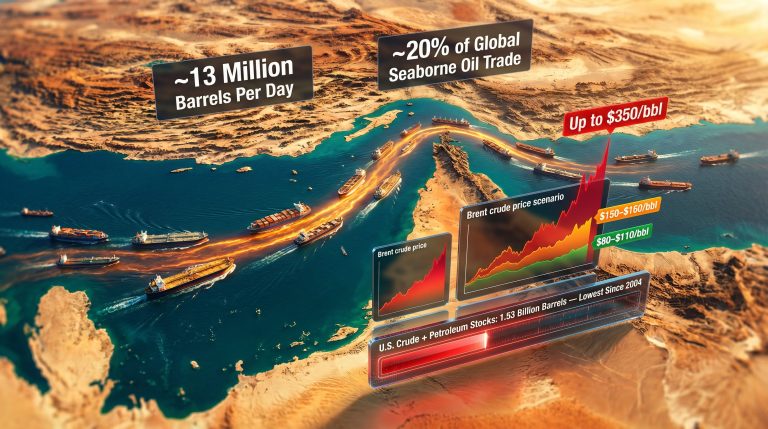
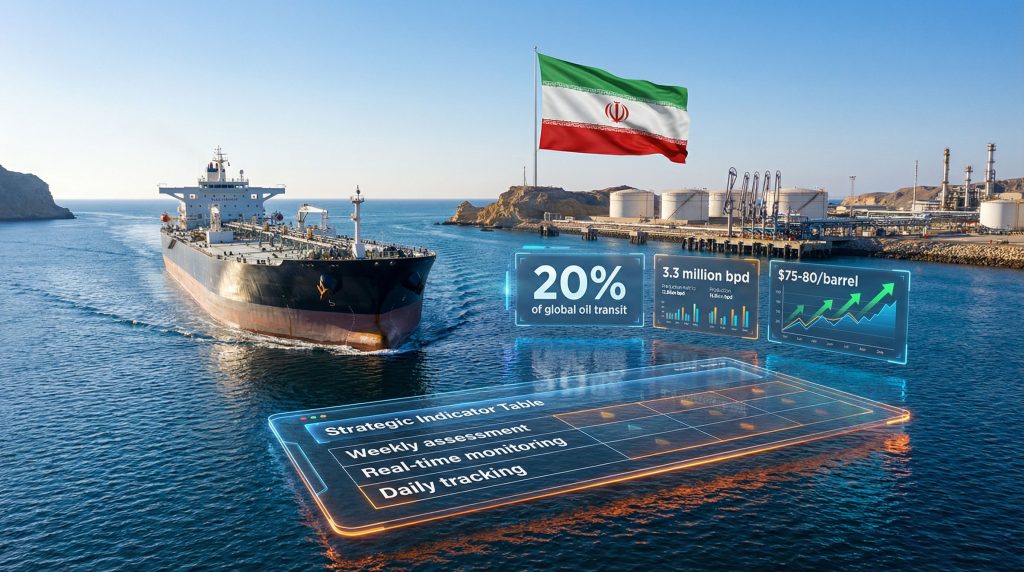
The strategic importance of the Strait of Hormuz cannot be overstated, with approximately one-fifth of global oil consumption passing through this narrow waterway between Oman and Iran. This concentration creates a single point of failure that markets continuously price into risk assessments, particularly during periods of heightened regional tension.
Price Volatility Under Disruption Scenarios
Market responses to Iranian-related supply concerns demonstrate the immediate nature of geopolitical risk pricing. On February 10, 2026, following the US Transportation Department advisory, Brent crude futures settled 99 cents higher at $69.04 per barrel, representing a 1.5% increase. West Texas Intermediate crude rose 81 cents to $64.36, showing a 1.3% gain within the same trading session.
"Current market dynamics reflect traders focusing primarily on geopolitical risk premiums rather than fundamental supply-demand calculations, with Iranian developments driving short-term price movements," according to market analysts tracking recent developments.
This pricing behaviour illustrates how quickly markets incorporate new information regarding potential oil supply disruptions Iran scenarios. The speed of these adjustments reflects sophisticated risk management systems that continuously evaluate multiple scenario probabilities across global energy trading networks.
Alternative Routing Considerations
Should Strait of Hormuz transit become compromised, alternative routing options exist but involve significant cost and time penalties. Longer shipping routes around the Arabian Peninsula would increase transportation expenses and extend delivery timelines, effectively tightening global supply availability even without actual production reductions.
Regional supply chain participants have developed contingency planning frameworks to address various disruption scenarios. These preparations include pre-positioned inventory strategies, alternative supplier relationships, and financial hedging mechanisms designed to mitigate price volatility impacts.
Economic Impact Scenarios Under Supply Constraints
Baseline Diplomatic Resolution Framework
Under scenarios where diplomatic engagement produces tangible progress, markets would likely experience gradual risk premium reductions. This pathway assumes continued indirect negotiations between the US and Iran, with both parties maintaining current engagement levels while avoiding escalatory actions.
The baseline scenario incorporates ongoing sanctions enforcement without additional restrictions, allowing current Iranian oil flows to continue through existing channels. Market participants would monitor diplomatic milestone achievements, adjusting risk assessments based on negotiation progress indicators.
In addition, OPEC meeting impact discussions frequently address Iranian production capacity and potential market rebalancing scenarios.
Moderate Escalation Scenarios
Increased enforcement of existing sanctions or implementation of additional restrictions could reduce Iranian export capacity by varying degrees. A 25% reduction in Iranian exports might push Brent crude toward the $75-80 per barrel range, while more severe 50% reductions could drive prices into the $85-95 territory within relatively short timeframes.
Economic Impact Projections
| Disruption Level | Expected Price Range | Market Response Time |
|---|---|---|
| 25% Export Reduction | $75-80/barrel | 2-4 weeks |
| 50% Export Reduction | $85-95/barrel | 1-2 weeks |
| Complete Supply Halt | $100+/barrel | Immediate |
Severe Disruption Analysis
Complete Strait of Hormuz closure would trigger immediate market responses exceeding $100 per barrel for benchmark crude prices. Such scenarios would activate emergency response protocols across multiple government and corporate entities, including strategic petroleum reserve releases and alternative supply coordination mechanisms.
The severity of market impact would depend heavily on disruption duration expectations and the effectiveness of coordinated international response measures. Historical precedents suggest that even temporary closures create lasting risk premium adjustments in oil futures markets.
Current Market Fundamentals and Supply Resilience
Global Supply Buffer Analysis
The global oil market maintains various supply buffers that could potentially offset Iranian disruptions. However, the effectiveness of these buffers depends on their accessibility and the speed with which they can be activated during crisis periods.
Kazakhstan's Tengiz oil field recovery provides one example of non-Iranian supply development. The Chevron-led facility reached approximately 60% of peak production capacity by February 2026, with targets of achieving full output by February 23, 2026. This recovery represents additional supply availability that could help offset potential Iranian shortfalls.
Inventory and Stockpile Considerations
US crude oil inventory levels provide another resilience factor, with stockpiles expected to show weekly variations based on seasonal demand patterns and refinery utilisation rates. February 2026 analyst projections anticipated crude inventory increases alongside gasoline and distillate stock decreases, reflecting typical seasonal adjustment patterns.
Strategic petroleum reserve deployment capabilities represent emergency response tools that governments can activate during severe supply disruptions. The timing and scale of such releases would depend on disruption severity and international coordination efforts among major consuming nations.
Alternative Supply Source Developments
Russian oil sanctions enforcement creates additional complexity within global supply dynamics. European Commission proposals for comprehensive bans on services supporting Russian crude exports could redirect supply flows and affect overall market balances.
Indian refiners, historically significant purchasers of Russian crude, began avoiding April 2026 delivery purchases according to market sources. Complete elimination of Indian Russian oil purchases would create sustained bullish pressure on global oil markets, potentially offsetting some supply increases from other regions.
Consequently, US‑China trade war effects continue to influence energy trade patterns and alternative supply relationships between major consuming nations.
Strategic Risk Management Frameworks
Corporate Supply Chain Adaptation
Energy companies and consumers employ multiple strategies to manage geopolitical supply risks. These approaches combine financial hedging tools with operational adjustments designed to maintain supply security across various disruption scenarios.
Risk Management Approaches:
- Geographic diversification of supply sources across multiple stable regions
- Forward contract utilisation to secure favourable pricing during stable periods
- Strategic inventory management with increased stockpiling during low-risk windows
- Transportation route diversification including testing of alternative shipping lanes
- Partnership development with suppliers in politically stable jurisdictions
Government Policy Coordination
National governments maintain diplomatic, economic, and military tools for managing energy supply security. Coordination between major consuming nations enhances the effectiveness of individual country responses during crisis periods.
Diplomatic engagement strategies focus on maintaining communication channels even during periods of heightened tension. Economic measures include calibrated sanctions enforcement designed to achieve policy objectives while minimising market disruption impacts.
Moreover, tariff impact insights demonstrate how trade policy tools intersect with energy security considerations across global markets.
Financial Market Response Mechanisms
Institutional investors and trading firms continuously adjust portfolio positions based on geopolitical risk assessments. Options markets reflect elevated volatility expectations during periods of Iranian-related uncertainty, with traders positioning for potential upside price movements.
Currency markets also respond to oil supply disruption scenarios, as energy-importing nations face increased input costs that can affect trade balances and monetary policy considerations. These interconnected effects create complex hedging requirements for multinational corporations and financial institutions.
Long-Term Energy Market Restructuring Implications
Energy Security Prioritisation Trends
Persistent geopolitical risks from oil supply disruptions Iran scenarios accelerate energy security planning across consuming nations. This prioritisation drives domestic production development, renewable energy deployment acceleration, and strategic partnership strengthening between allies.
The investment implications of enhanced energy security focus extend beyond traditional oil and gas sectors into renewable technology development, energy storage systems, and alternative fuel infrastructure. These trends reflect long-term strategic responses to supply vulnerability concerns.
Geopolitical Alliance Impacts
Iranian supply disruption scenarios influence broader geopolitical alignment patterns, particularly regarding Middle Eastern relationships and great power competition dynamics. Western alliance coordination on energy security creates frameworks that extend beyond immediate crisis response into long-term strategic planning.
The evolution of Russia-China-Iran cooperation frameworks adds additional complexity to global energy security calculations. These partnerships can potentially offset Western sanctions pressure while creating alternative energy trade networks that bypass traditional market mechanisms.
Furthermore, Venezuela oil policy developments contribute to broader discussions about alternative supply source development and sanctions policy effectiveness.
Technology Development Acceleration
Supply disruption risks drive accelerated development of monitoring technologies, alternative energy sources, and supply chain resilience systems. Enhanced satellite monitoring, financial flow tracking, and real-time market analysis tools become increasingly valuable for both government and corporate risk management.
The commercialisation timeline for alternative energy technologies may accelerate as organisations seek to reduce dependence on geopolitically sensitive supply sources. This technological development creates new investment opportunities while potentially reshaping long-term energy market structures.
The next major ASX story will hit our subscribers first
Monitoring Frameworks for Stakeholders
Early Warning Signal Systems
Effective monitoring requires tracking multiple indicator categories across diplomatic, military, economic, and market domains. Each category provides different leading indicators of potential supply disruption risks that stakeholders can incorporate into decision-making frameworks.
Key Risk Monitoring Categories:
| Indicator Type | Specific Metrics | Assessment Frequency |
|---|---|---|
| Diplomatic | Negotiation scheduling, public statements | Weekly review |
| Military | Naval deployments, exercise activities | Daily monitoring |
| Economic | Sanctions announcements, enforcement actions | Real-time tracking |
| Market | Price volatility, trading volume patterns | Continuous analysis |
Real-Time Market Assessment Tools
Financial markets provide continuous feedback on risk perception changes through price movements, trading volumes, and options positioning. The February 10, 2026 market response to US Transportation Department guidance demonstrated how quickly prices adjust to new information regarding Iranian-related risks.
Cross-commodity correlation analysis helps identify broader market stress patterns that extend beyond crude oil into refined products, natural gas, and alternative energy securities. These correlations provide insights into market expectations regarding disruption severity and duration.
Intelligence Integration Protocols
Comprehensive risk assessment requires integrating multiple information sources including satellite imagery for infrastructure monitoring, financial transaction analysis for sanctions effectiveness evaluation, and social media sentiment tracking for domestic stability assessment within Iran.
The combination of technical analysis tools with geopolitical intelligence creates sophisticated early warning systems that can identify emerging risks before they fully materialise in market pricing. These systems become increasingly valuable as geopolitical complexity continues growing across global energy markets, particularly regarding oil supply developments across major producing regions.
Disclaimer: This analysis contains forward-looking assessments and scenario projections that involve inherent uncertainties. Oil supply disruptions Iran scenarios depend on multiple variables including diplomatic developments, military actions, and market responses that cannot be predicted with certainty. Stakeholders should conduct independent risk assessments and maintain flexible response capabilities across multiple potential outcomes.
Could Your Portfolio Weather Major Oil Market Disruptions?
Discovery Alert's proprietary Discovery IQ model delivers real-time alerts on significant ASX mineral discoveries, including critical energy sector developments that could impact global commodity markets during geopolitical tensions. Visit Discovery Alert's dedicated discoveries page to understand why major mineral discoveries can generate substantial returns, then begin your 14-day free trial today to position yourself ahead of market-moving events.