July 20, 2026
The Anatomy of an Oil Market Signal: Understanding OPEC+'s June 2026 Production Decision
When oil markets move, headlines chase barrel counts. Yet the most consequential decisions in global energy markets are rarely about volume alone. They are about architecture, timing, and the carefully constructed language of institutional intent. The OPEC+ June output increase of 188,000 barrels per day, confirmed on May 3, 2026, offers a textbook case of how a relatively small production adjustment can carry outsized strategic meaning, provided you know how to read the signal beneath the number.
When big ASX news breaks, our subscribers know first
Why OPEC+ Production Strategy Is About More Than Barrels
The Dual Mandate Shaping Alliance Decisions in 2026
The OPEC+ alliance operates under two simultaneous and sometimes competing pressures. The first is fiscal: member states rely on oil revenues to fund government budgets, social programmes, and national development agendas. The second is market-psychological: the group must project coherence and credibility to prevent speculative volatility from destabilising the very price environment it seeks to protect.
These two pressures do not always point in the same direction. A price too high risks accelerating the transition to alternative energy sources and crushing demand. A price too low strains national budgets, particularly for producers with high fiscal breakeven requirements. Navigating this tension has transformed OPEC+ from a blunt quota-setting body into a sophisticated market management institution over the past decade. Understanding OPEC's market influence helps clarify why these institutional pressures matter so much to global energy pricing.
Since its formation in 2016 through the initial Declaration of Cooperation, the alliance has progressively layered its production management tools. What began as a relatively straightforward system of collective production ceilings has evolved into a multi-tiered framework that includes core baseline quotas, separate voluntary adjustment tranches, and compensation mechanisms for overproduction. Each layer serves a distinct strategic purpose, and understanding this architecture is essential before interpreting any headline production figure.
How the Voluntary Adjustment System Actually Works
The voluntary adjustment mechanism introduced in April 2023 represents a significant structural innovation within the OPEC+ framework. Unlike core quota changes, which require full alliance consensus and carry significant diplomatic weight, voluntary adjustments can be announced, modified, or reversed by smaller subgroups of participating nations. This design feature grants the alliance a level of policy agility that formal quota revisions cannot provide.
A second tranche of voluntary adjustments was added in November 2023, creating a two-layer buffer system sitting above the core production entitlements. These two layers operate independently and can be deployed selectively, allowing the group to calibrate its market response without triggering the full diplomatic machinery required for formal quota revisions.
Key Concept: The OPEC+ June output increase of 188,000 bpd is not new supply being unlocked. It is a partial unwinding of previously self-imposed voluntary restraint, drawing specifically from the April 2023 layer while leaving the November 2023 tranche entirely intact as a reserve policy buffer.
What Exactly Did OPEC+ Agree to for June 2026?
The Core Decision: 188,000 Barrels Per Day
Seven OPEC+ member nations convened virtually on May 3, 2026, to assess prevailing global market conditions. Following their review, the group formally agreed to implement a production adjustment of 188,000 barrels per day, effective June 2026. Critically, this adjustment draws exclusively from the voluntary cuts announced in April 2023 and does not touch the separate November 2023 voluntary adjustment tranche, which remains fully intact.
The decision was framed explicitly around collective commitment to oil market stability, with the group emphasising that its approach remains graduated and conditional rather than fixed or automatic. The OPEC meeting impact on production policy has consistently demonstrated how these formal gatherings shape both immediate and forward-looking supply expectations.
Who Are the Seven Participating Nations?
The same seven countries that originally announced the April and November 2023 voluntary adjustments are the parties to the June 2026 decision. Their participation reflects differing structural roles within the broader OPEC+ framework.
| Member Country | Role in OPEC+ Architecture | Compliance Considerations |
|---|---|---|
| Saudi Arabia | De facto leader and principal swing producer | Consistently high compliance; primary market stabiliser |
| Russia | Co-chair of OPEC+ framework | Compliance complicated by Western sanctions affecting measurement |
| Iraq | Major Gulf producer and second-largest OPEC output | Historically below-target compliance |
| Kuwait | Stable GCC producer | Generally consistent compliance record |
| Kazakhstan | Central Asian swing producer | Structural compliance challenges tied to IOC contracts at Tengiz |
| Algeria | North African member | Moderate and generally steady compliance |
| Oman | Non-OPEC Gulf partner | Generally compliant with agreed targets |
What Flexibility Was Built Into the June Decision?
The participating nations were explicit about retaining full optionality over future production decisions. Three key flexibility provisions were embedded in the announcement:
- The April 2023 voluntary adjustments may be reversed in part or in full based on evolving market conditions
- The November 2023 voluntary adjustments remain entirely in place and were not affected by this decision
- Monthly review meetings will continue, with the next session scheduled for June 7, 2026
This built-in reversibility is not procedural boilerplate. It is a deliberate communication strategy designed to reassure oil futures markets that OPEC+ retains the capacity to withdraw supply support rapidly if conditions deteriorate.
Is the June Output Hike a Real Supply Surge or a Market Signal?
The Gap Between Announced Barrels and Physical Delivery
Market analysts broadly characterise the June 2026 OPEC+ output increase as a confidence-calibration tool rather than a transformative supply event. The reasons become clear when the headline figure is placed in proportion against the scale of global oil markets.
| Metric | Volume |
|---|---|
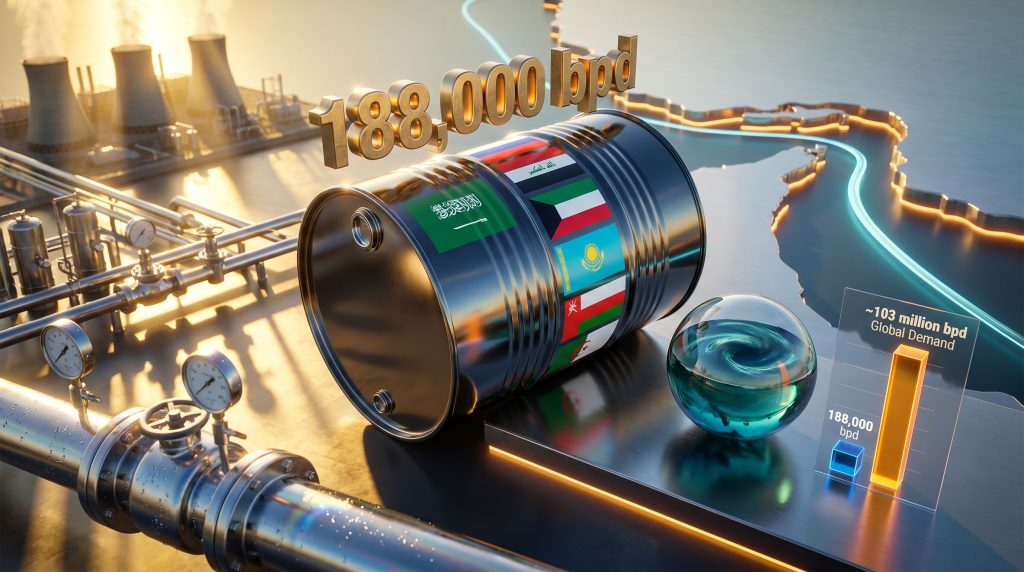
| June 2026 OPEC+ output adjustment | ~188,000 bpd |
| Global daily oil consumption (approximate) | ~103 to 104 million bpd |
| June increase as a percentage of global demand | ~0.18% |
| Cumulative OPEC+ overproduction requiring compensation | ~4.57 million bpd (since January 2024) |
At roughly 0.18% of global daily consumption, the physical volume of the June adjustment is unlikely to materially shift supply-demand balances on its own. What it does accomplish, however, is project coordinated intent and reinforce market confidence in the alliance's continued relevance as a price management institution.
Beyond volume, real-world delivery of announced production increases depends on factors that often decouple actual supply from stated targets. These include:
- Infrastructure capacity constraints, particularly in nations that have underinvested in upstream maintenance during periods of reduced output
- Export logistics and port capacity, which can create lag times between upstream production increases and actual market arrivals
- Geopolitical access risks, especially where shipping routes are subject to disruption or elevated insurance costs
The Overproduction Compensation Dimension
Complicating the net supply picture further is the alliance's documented overproduction problem. Several member nations have consistently produced above their individual quota allocations since January 2024. The seven participating countries have formally committed to compensating for this cumulative excess, meaning that future below-quota production is expected to offset prior overproduction.
When this compensation obligation is factored in, the effective net new supply from the June increase may be substantially lower than the headline 188,000 bpd figure for markets served by non-compliant producers. In some scenarios involving the heaviest overproducers, net supply contribution could potentially be negative relative to compensation-adjusted expectations.
Analyst Note: The June announcement itself acknowledged that the output adjustment will provide an opportunity for participating countries to accelerate their compensation for overproduced volumes. This framing confirms that the increase and the compensation commitment are being managed simultaneously, not sequentially.
What Geopolitical Forces Are Shaping OPEC+ Output Decisions in 2026?
The West Asia Risk Premium and Its Market Mechanics
Geopolitical tension across the broader Middle East region has introduced a persistent and elevated risk premium into crude pricing throughout 2026. Furthermore, this risk premium functions as an invisible surcharge on oil prices, reflecting the probability that supply disruptions could occur even when they have not yet materialised. The interplay between oil price geopolitics and production policy has rarely been more pronounced than it is in the current market environment.
When physical supply routes face uncertainty, producer nations and their institutional frameworks use production announcements as psychological anchoring tools. A modest, well-telegraphed output increase can reduce speculative volatility more effectively than a larger, unexpected move, because it signals coherence and control rather than reactive desperation.
The cautious, graduated approach adopted by the seven-nation group reflects an acute awareness that overcorrection in either direction carries both reputational and fiscal risk. An announcement that is too aggressive risks accelerating price declines in an already uncertain demand environment. An announcement that is too timid risks signalling internal disagreement or loss of market management capacity.
The Strait of Hormuz: The Variable That Renders Quotas Secondary
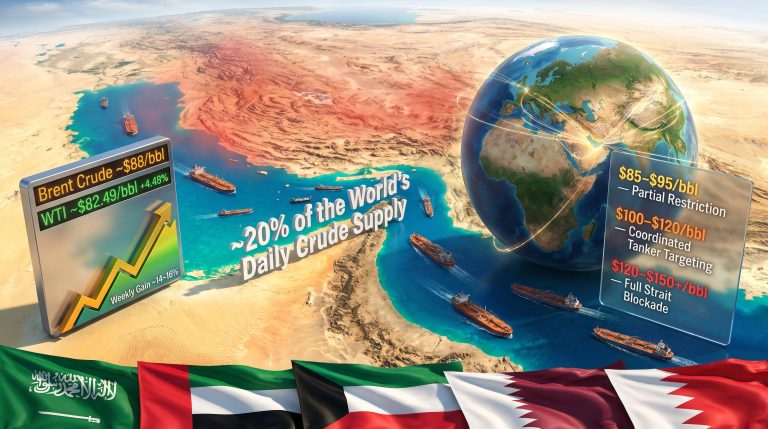
No analysis of OPEC+ production decisions in 2026 is complete without addressing the Strait of Hormuz. Approximately 20% of global seaborne oil trade transits this narrow waterway, making it one of the most strategically critical chokepoints in the global energy system.
According to Al Jazeera, OPEC's output increase was announced as a symbolic gesture specifically amid the ongoing Strait of Hormuz closure, underscoring the extent to which maritime security concerns are directly shaping the alliance's communication strategy. A separate report confirms that OPEC had already lowered its second-quarter global oil demand forecast in response to the Iran war, and that an earlier OPEC+ output increase had been announced specifically amid the Strait of Hormuz crisis.
These contextual details reshape how the June decision should be read. The alliance is making production announcements against a backdrop of genuine transit uncertainty. This means:
- Any sustained restriction on Hormuz passage could neutralise upstream production increases regardless of what quotas state
- The June increase functions partly as a stabilising communication in an environment where physical supply security is itself uncertain
- Traders and market participants are pricing not just the volume of announced increases, but the probability that those barrels actually reach destination markets
Critical Context: The convergence of active maritime security concerns at the Strait of Hormuz with the OPEC+ June output announcement transforms what might otherwise appear to be a routine quota adjustment into a geopolitically loaded market management act.
How Does the June Decision Fit Into OPEC+'s Broader 2026 Production Trajectory?
A Deliberate Pattern of Incremental Monthly Adjustments
The June 2026 OPEC+ output increase does not exist in isolation. It continues a series of incremental monthly production adjustments initiated earlier in the year, reflecting the group's established preference for graduated unwinding over abrupt policy reversals. This approach serves multiple strategic functions simultaneously.
By staging increases across monthly intervals rather than implementing a single large restoration, OPEC+ can assess the market's price response at each increment before committing to the next step. If oil prices react negatively to one month's increase, the following month's meeting provides a natural decision point to pause, reduce, or reverse the trajectory without requiring a formal extraordinary session.
Understanding the Two-Tranche Architecture
The relationship between the April 2023 and November 2023 voluntary adjustment tranches is central to understanding the alliance's strategic positioning in June 2026.
April 2023 Voluntary Cuts:
- Currently being gradually reversed through monthly increases
- The June 2026 adjustment draws from this tranche specifically
- Subject to full or partial reversal depending on market conditions
- Serve as the primary policy lever being actively deployed
November 2023 Voluntary Cuts:
- Remain fully intact as of June 2026
- Explicitly retained as a reserve policy buffer
- Available for deployment if downside market scenarios materialise
- Represent the alliance's deepest available supply management tool
This two-tranche structure gives OPEC+ a layered defence against price deterioration. The April 2023 cuts are the active adjustment zone, while the November 2023 cuts function as a strategic reserve, held in readiness but deliberately preserved.
What the Retention of Flexibility Language Communicates to Traders
The explicit retention of language affirming the group's ability to increase, pause, or reverse the production phaseout is a deliberate signal to oil futures markets. Traders interpret this embedded optionality as a form of implicit price floor management.
When OPEC+ consistently communicates that it retains the ability to withdraw supply support at any time, it effectively places a psychological ceiling on how far bearish sentiment can push prices before the group would credibly respond. This mechanism operates through expectations as much as through actual supply changes, which is precisely why the specific wording of OPEC+ communiques receives such intense scrutiny from market participants.
The next major ASX story will hit our subscribers first
What Are the Compliance and Conformity Challenges Facing the Group?
The Scale of the Overproduction Problem
Beneath the orderly language of production adjustments and market stability commitments lies a structural compliance challenge that significantly complicates the interpretation of any headline output figure. Member nations have collectively overproduced by an estimated 4.57 million barrels per day relative to agreed targets between January 2024 and early 2026.
The seven participating countries formally confirmed their intention to fully compensate for overproduced volumes since January 2024, with the JMMC tasked with monitoring compliance and compensation progress. The official acknowledgment that the June increase will help accelerate this compensation process reveals a deliberate attempt to use the output adjustment as a mechanism for absorbing overproduction debt within the alliance's accounting framework.
Where Compliance Pressure Is Greatest
Not all OPEC+ members face equal compliance challenges. Three nations stand out as the primary sources of conformity pressure:
-
Kazakhstan has faced recurring compliance difficulties rooted in contractual obligations with international oil companies operating major fields including Tengiz. Because these contracts are governed by agreements predating Kazakhstan's OPEC+ membership commitments, the government has limited unilateral capacity to restrict output without triggering legal or commercial consequences.
-
Iraq has historically operated below its agreed compliance targets. Domestic political dynamics, multiple competing stakeholders in the Iraqi oil sector, and infrastructure constraints have made precise quota adherence structurally difficult for Baghdad.
-
Russia's compliance is complicated by the practical difficulty of independently verifying output figures under the conditions created by Western sanctions imposed following the 2022 invasion of Ukraine. Export measurement and third-party verification have become increasingly opaque, making Russia's actual production contribution difficult to assess against stated commitments.
The JMMC's Enforcement Role and Its Limitations
The Joint Ministerial Monitoring Committee is OPEC+'s compliance oversight body, meeting regularly to review production data and assess individual member conformity. Compensation schedules for overproduction are negotiated within this framework and incorporated into the Declaration of Cooperation's formal architecture.
However, the JMMC's enforcement powers are structural rather than coercive. The committee monitors and reports but cannot directly compel a sovereign nation to reduce its production. Compliance ultimately depends on the political will of individual member governments, balanced against their domestic economic pressures and international commercial commitments.
The monthly meeting cadence, with the next session scheduled for June 7, 2026, allows for rapid course corrections. However, the history of OPEC+ compliance suggests that the gap between announced commitments and actual barrel counts will continue to be a defining feature of the alliance's operational reality.
How Should Energy Markets and Analysts Interpret the June 2026 Decision?
Three Analytical Frameworks for Reading the Signal
The June 2026 OPEC+ output increase can be read through three distinct analytical lenses, each revealing different dimensions of the decision's significance.
Framework 1: Supply Fundamentals
Viewed through the lens of physical supply and demand, the June adjustment is marginal. At roughly 0.18% of global daily consumption, it cannot move fundamental balances materially. When compensation obligations for overproduction are factored in, the net additional supply may be negligible or even negative for certain markets served by non-compliant producers. Price impact through this lens depends almost entirely on coincident demand catalysts rather than the OPEC+ announcement itself.
Framework 2: Geopolitical Risk Management
Through a geopolitical lens, the decision reads as a stabilisation signal crafted for a market already elevated by risk premium. The timing relative to ongoing West Asia tensions and Strait of Hormuz security concerns suggests deliberate strategic communication intent. A modest, well-telegraphed increase reduces anxiety without adding supply that might overwhelm already uncertain demand. This framework explains why the group chose this specific moment to continue its graduated unwinding rather than pausing. Consequently, the dynamics of oil markets under trade war conditions add yet another layer of complexity to how these production signals are received by traders.
Framework 3: Group Cohesion and Governance
Viewed through an institutional governance lens, the decision reinforces the alliance's internal discipline mechanisms. Monthly meeting cadences, formal compensation commitments, and explicit flexibility language all function to maintain the credibility of OPEC+ as a market management institution. The seven-nation subgroup structure enables faster decision-making than full plenary sessions require, reflecting a deliberate evolution toward more agile governance architecture.
Frequently Asked Questions: OPEC+ June Output Increase
What is the OPEC+ June 2026 output increase?
Seven OPEC+ member nations agreed to raise collective production by approximately 188,000 barrels per day in June 2026. This represents a partial reversal of voluntary production cuts originally put in place in April 2023, implemented as part of an ongoing graduated strategy to restore production while preserving market stability.
Which countries are part of the June 2026 decision?
The seven participating nations are Saudi Arabia, Russia, Iraq, Kuwait, Kazakhstan, Algeria, and Oman. These are the same countries that implemented the original April and November 2023 voluntary adjustments that are now being gradually unwound.
Will the June OPEC+ increase significantly affect oil prices?
At roughly 0.18% of global daily consumption, the physical volume of the adjustment is unlikely to materially alter price trajectories on its own. The more significant market impact is psychological, communicating group unity and signalling continued commitment to managed, stable market conditions. In addition, the broader relationship between trade war and oil prices introduces further downside demand uncertainty that may offset whatever stabilising effect the June announcement delivers.
What happens if oil market conditions deteriorate after June?
The group explicitly retained full flexibility to pause, reduce, or completely reverse the production phaseout. The November 2023 voluntary cuts also remain available as an additional buffer tool if downside risks escalate beyond the group's current assessment.
What is the JMMC and why does it matter?
The Joint Ministerial Monitoring Committee is OPEC+'s compliance oversight body. It tracks member production levels against agreed targets, monitors conformity with the Declaration of Cooperation, and manages compensation schedules for overproduction. Its regular meetings provide the institutional structure through which the alliance enforces collective commitments.
When is the next OPEC+ review meeting?
The seven participating nations are scheduled to meet again on June 7, 2026 to review market conditions, assess conformity, and determine subsequent production adjustments. Reuters reporting indicates that OPEC+ was already set to agree on a third output quota hike since the Hormuz closure, suggesting the June meeting may carry even greater strategic weight than a routine review.
Key Takeaways: Reading the June 2026 OPEC+ Decision Correctly
For market participants, analysts, and observers seeking to interpret what the OPEC+ June output increase actually means, several conclusions emerge from a structured analysis of the decision.
-
The 188,000 bpd increase is a policy signal, not a supply event in any meaningful volumetric sense. Its significance lies in the architecture of the decision and what it communicates about group strategy.
-
The layered voluntary adjustment framework gives OPEC+ unprecedented tactical flexibility. The preservation of the November 2023 tranche as an untouched buffer demonstrates sophisticated use of this architecture.
-
Compliance gaps and overproduction compensation obligations mean that net supply impact may be significantly lower than the headline figure, and in some member-specific contexts, potentially negative relative to adjusted expectations.
-
Geopolitical risk, not OPEC+ quotas, remains the dominant variable in 2026 oil pricing. Ongoing tensions across West Asia and active maritime security concerns at the Strait of Hormuz create the risk environment within which all OPEC+ decisions must be evaluated.
-
Monthly meetings and embedded reversal language confirm that OPEC+ is managing markets dynamically and iteratively, not executing a fixed restoration timeline. Each monthly increment is a checkpoint, not a commitment to a predetermined trajectory.
-
For traders and investors, the most actionable insight from the June 2026 announcement is not the barrel count but the institutional signal: OPEC+ retains the capacity, the cohesion, and the stated willingness to respond rapidly if market conditions deteriorate.
This article is based on information available as of the date of publication. Oil market conditions, geopolitical developments, and OPEC+ decisions evolve rapidly. Nothing in this article constitutes financial or investment advice. Readers should conduct independent research and consult qualified financial professionals before making investment decisions.
Want to Stay Ahead of the Next Major Resource Discovery Driving Market Moves?
While geopolitical forces reshape global energy markets, Discovery Alert's proprietary Discovery IQ model delivers real-time notifications on significant ASX mineral discoveries — instantly translating complex data into actionable investment insights for traders and investors at every level. Explore how historic discoveries have generated extraordinary returns on Discovery Alert's dedicated discoveries page, and begin your 14-day free trial today to position yourself ahead of the market.