July 31, 2026
Global petroleum markets in early 2026 demonstrated sophisticated supply management strategies as major producing nations coordinated output levels through complex frameworks. The OPEC oil output January 2026 reflected deliberate supply adjustments, with total production reaching 28.34 million barrels per day, representing a strategic 60,000 bpd decrease from December 2025 levels.
This approach demonstrates how producers balance revenue requirements with market stability concerns. Furthermore, the coordination mechanisms extend beyond traditional monthly adjustments to incorporate compensation frameworks and multi-quarter planning horizons that influence global energy flows.
Strategic Production Management in Early 2026
The first quarter of 2026 marked a significant shift in global oil production coordination strategies. Rather than pursuing aggressive production expansion, OPEC members prioritised supply-demand equilibrium amid concerns about potential market oversaturation affecting long-term pricing stability.
OPEC oil market influence demonstrates sophisticated analysis capabilities that extend beyond simple quota management. The organization's evolution toward nuanced market intervention reflects comprehensive understanding of global supply-demand dynamics and infrastructure constraints.
Key Production Metrics for January 2026:
• Total OPEC output: 28.34 million barrels per day
• Monthly decline: 60,000 bpd from December 2025
• Production pause: First quarter 2026 suspension of monthly increases
• Agreement coverage: Eight OPEC+ members participating in output coordination
• Compensation requirements: 130,000 bpd combined cuts for Iraq and UAE
The underlying market fundamentals supporting this approach reflect sophisticated analysis of global supply-demand projections. Many OPEC members operate near capacity constraints, which fundamentally limits the practical impact of production increase agreements regardless of announced targets.
Capacity Constraints and Market Reality
The technical reality facing petroleum producers in early 2026 reveals significant operational limitations that influence production decisions beyond policy considerations. Multiple OPEC members operate close to maximum sustainable production rates, creating structural constraints on output expansion capabilities.
This capacity reality means that production agreements must account for physical infrastructure limitations rather than merely establishing quota targets. The gap between theoretical production capacity and sustainable output rates affects how effectively coordination mechanisms can respond to market conditions.
Infrastructure Utilisation Patterns:
• Saudi Arabia: Operating as market anchor with flexible capacity management
• Russia: Maintaining 9.6 million bpd target amid seasonal operational considerations
• Iraq: Balancing increased southern terminal exports with compensation obligations
• UAE: Managing production flexibility within compensation framework requirements
• Kuwait: Functioning as swing producer within regional coordination structure
When big ASX news breaks, our subscribers know first
Regional Production Variations and Supply Disruptions
African OPEC members experienced the most significant production volatility during January 2026, with Nigeria posting the organisation's largest output decline. These variations highlight operational challenges that extend beyond policy coordination to include infrastructure resilience and environmental factors.
Nigeria's production constraints reflect multiple operational challenges affecting the country's petroleum sector. Infrastructure limitations, security concerns, and technical maintenance requirements combined to reduce available production capacity during the first quarter of 2026.
Nigeria's Operational Challenge Categories:
• Infrastructure constraints: Port facility limitations and pipeline system vulnerabilities
• Security factors: Regional instability affecting operational continuity
• Technical maintenance: Routine equipment servicing reducing temporary capacity
• Export terminal accessibility: Coastal infrastructure affecting loading operations
Libya encountered weather-related disruptions that impacted crude loading operations at Mediterranean terminals. Bad weather conditions prevented safe tanker operations, demonstrating how environmental factors can override production planning in certain regional contexts.
Weather Impact on Loading Operations
The specific meteorological challenges affecting Libyan operations during January 2026 illustrate the vulnerability of petroleum infrastructure to seasonal patterns. Mediterranean weather systems created operational constraints at loading terminals, limiting export capability despite adequate production capacity.
Weather-Related Operational Constraints:
• High wind conditions preventing safe tanker mooring at terminals
• Rough sea states prohibiting crude transfer operations
• Reduced port visibility affecting operational safety protocols
• Limited pipeline redundancy increasing weather vulnerability
• Concentrated terminal capacity creating single-point-of-failure risks
These environmental disruptions demonstrate how regional producers face operational challenges that coordination agreements cannot address through policy mechanisms alone.
Iranian Production Under Sanctions Pressure
Iranian crude supply continued declining during January 2026 as sanctions pressure intensified. U.S. sanctions targeting oil exports over nuclear policy concerns, combined with additional measures announced in January related to governmental responses to protests, created structural export limitations.
The sanctions framework represents a permanent supply constraint rather than temporary operational disruption. Consequently, this structural removal of Iranian capacity from global markets affects OPEC's overall supply management calculations and influences how other members approach production planning.
Compensation Mechanisms and Compliance Framework
The OPEC+ compensation structure demonstrated both the organisation's commitment to collective discipline and the practical challenges of enforcing production agreements. Iraq and UAE faced combined compensation cuts totalling 130,000 bpd to offset previous overproduction periods.
However, this compensation mechanism operates by requiring members who exceeded agreed quotas in prior periods to reduce output below normal targets in subsequent timeframes. The approach aims to maintain overall supply discipline while accounting for historical compliance variations.
Compensation Implementation Framework:
| Member | Compensation Status | Operational Impact |
|---|---|---|
| Iraq | Subject to cuts | Increased southern terminal exports despite constraints |
| UAE | Subject to cuts | Maintaining production flexibility within limits |
| Algeria | Agreement compliance | Output unchanged before adjustments |
| Kuwait | Agreement compliance | Swing producer role continuation |
| Saudi Arabia | Market management | Anchor producer maintaining stability |
Despite compensation obligations, the five OPEC members party to January agreements actually increased output by 60,000 bpd month-on-month. Nevertheless, total output remained below established targets due to the compensation framework and African production declines affecting overall supply levels.
Enforcement Mechanism Effectiveness
The practical implementation of compensation cuts reveals both the strengths and limitations of OPEC's collective discipline framework. While members face clear reduction requirements, the measurement methodologies and enforcement capabilities demonstrate varied effectiveness across different operational contexts.
Survey data from multiple sources, including LSEG flow data and Kpler tracking systems, provides independent verification of production levels that may differ from official OPEC reporting. These discrepancies highlight the complexity of accurately measuring and enforcing production agreements within diverse operational environments.
Non-OPEC Alliance Contributions and Coordination
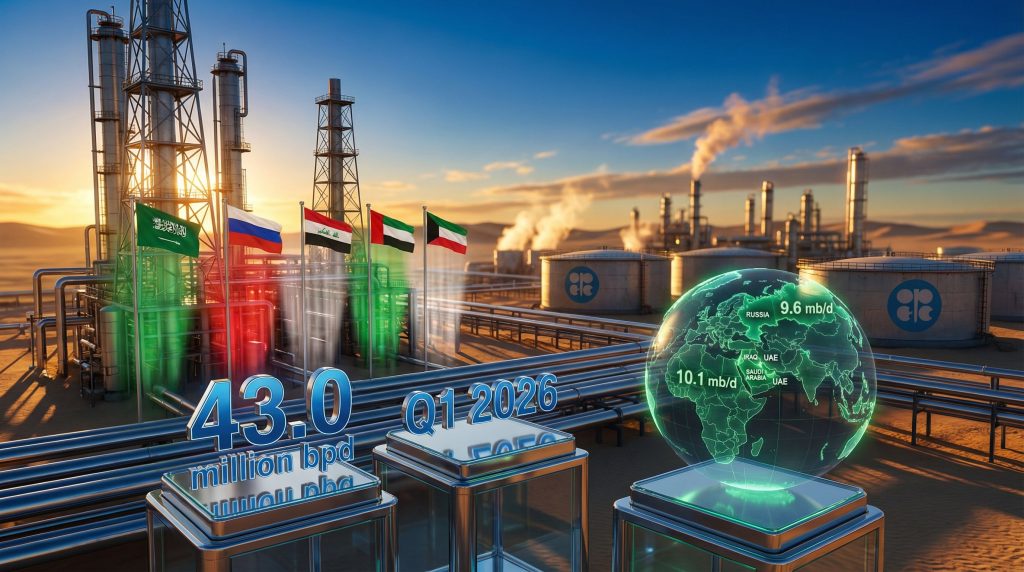
Russia's participation as the leading non-OPEC member of the alliance adds significant complexity to global production coordination. Russian output patterns, targeted at 9.6 million bpd for the first quarter of 2026, directly influence the effectiveness of collective supply management strategies.
The OPEC+ framework represents unprecedented coordination between traditional OPEC members and significant non-OPEC producers. This expansion of cooperative production management covers approximately 40% of global oil supply, creating substantial market influence capabilities that extend beyond traditional organisational boundaries.
Kazakhstan and other allied contributors maintain meaningful production volumes within the coordination framework. Kazakhstan's target of 1.6 million bpd during the production pause period represents significant aggregate contribution to global supply management effectiveness across multiple producing regions.
Diplomatic Infrastructure Supporting Coordination
The sophisticated diplomatic mechanisms enabling OPEC+ coordination involve regular multilateral consultations, bilateral producer relationships, and technical working groups that address operational coordination challenges across diverse political and economic systems.
These diplomatic frameworks extend beyond traditional OPEC meeting structures to include continuous communication channels between key producers. For instance, OPEC meeting insights demonstrate how coordination infrastructure enables rapid response to changing market conditions and operational disruptions.
Market Fundamentals and Demand Projections
Global oil demand projections supporting current production strategies suggest OPEC+ crude requirements of approximately 43.0 million bpd for 2026, representing modest growth from 2025 baseline levels. This demand outlook justifies the organisation's cautious approach to production increases during the first quarter.
The supply-demand balance calculations incorporate non-OPEC supply growth projections of 600,000-700,000 bpd, which creates additional market pressure that influences OPEC+ production planning. These external supply additions affect how OPEC members approach their own output strategies within global competitive dynamics.
Demand-Supply Balance Components:
• Total OPEC+ production capacity exceeding immediate demand requirements
• Non-OPEC supply growth creating additional competitive pressure
• Global inventory levels influencing short-term pricing dynamics
• Economic growth projections affecting petroleum consumption patterns
• Energy transition impacts on long-term demand trajectory expectations
Price Stability Objectives and Fiscal Requirements
The production management strategies implemented in early 2026 reflect member nation requirements for oil revenues that support government fiscal needs while avoiding price levels that could trigger demand destruction. In addition, these strategies consider how pricing affects alternative energy adoption rates across consuming regions.
This balance requires sophisticated analysis of price elasticity, consumer behaviour patterns, and macroeconomic conditions across major consuming regions. OPEC+ coordination aims to maintain prices within ranges that optimise revenue without undermining long-term market share preservation strategies.
Investment Implications and Infrastructure Development
OPEC's production management approach directly influences global energy investment patterns, affecting upstream development project timing and infrastructure expansion decisions across producing regions. The coordinated supply management creates investment planning challenges for petroleum companies that must balance capacity expansion with uncertain production quota allocations.
This dynamic affects exploration project economics and development timeline planning across multiple operational contexts. Furthermore, oil price movements influence how companies approach capital allocation decisions within volatile market environments.
Investment Impact Categories:
• Exploration and development: Project timing influenced by production allocation expectations
• Transportation infrastructure: Utilisation rates affected by coordinated output levels
• Refining capacity: Optimisation strategies responding to crude supply patterns
• Alternative energy: Investment flows influenced by petroleum price stability
• Technology development: Enhanced recovery and efficiency improvement priorities
Long-term Strategic Positioning
The organisational approach to first quarter 2026 production reflects broader strategic considerations about maintaining market relevance amid global energy transition pressures and evolving consumer preferences across developed economies.
OPEC+ members face the challenge of maximising current revenue from petroleum resources while preparing for potential long-term demand changes. This balance influences how aggressively producers pursue short-term output maximisation versus market stability maintenance within evolving geopolitical contexts.
The next major ASX story will hit our subscribers first
Future Production Trajectory Analysis
Forward-looking analysis suggests OPEC+ will maintain flexible production management throughout 2026, with quarterly assessments determining incremental output adjustments based on evolving market conditions. The organisation's approach indicates a shift toward more responsive production management rather than predetermined output schedules.
This flexibility enables rapid adjustment to supply disruptions, demand changes, or geopolitical developments affecting market conditions. For example, easing oil prices demonstrate how external political developments can influence production strategy adjustments within coordination frameworks.
Production Scenario Framework:
• Baseline scenario: Gradual monthly increases resuming in second quarter 2026
• Upside scenario: Accelerated increases if demand growth exceeds current projections
• Downside scenario: Extended production constraints if oversupply concerns persist
• Disruption scenario: Emergency production adjustments responding to supply interruptions
• Transition scenario: Modified strategies addressing accelerated energy transition trends
Technology and Efficiency Enhancement
Member nations continue investing in production efficiency improvements that potentially allow higher output from existing infrastructure without requiring quota modifications. These technological enhancements affect the practical implementation of production agreements across diverse operational environments.
Enhanced recovery techniques, digital monitoring systems, and infrastructure optimisation projects enable producers to maximise output from allocated quotas. These efficiency gains provide operational flexibility within coordination frameworks while supporting long-term competitiveness objectives.
Technological Enhancement Areas:
• Enhanced oil recovery techniques improving field productivity
• Digital monitoring systems optimising production operations
• Infrastructure modernisation reducing operational constraints
• Environmental technology reducing regulatory compliance costs
• Transportation efficiency improvements reducing delivery costs
Market Response and Trading Implications
The strategic production management approach influenced petroleum trading patterns throughout early 2026, with market participants adjusting inventory strategies and pricing expectations. Moreover, tariffs and market impact considerations added complexity to global trading relationships.
Trading firms adjusted procurement strategies based on anticipated supply availability and regional production variations. The coordination framework created more predictable supply patterns, enabling improved planning across supply chain participants and reducing volatility concerns.
Trading Pattern Adjustments:
• Inventory management strategies responding to coordinated supply levels
• Regional price differential optimisation based on production variations
• Hedging strategy modifications accounting for increased supply predictability
• Transportation route planning influenced by loading terminal availability
• Financial market positioning reflecting production coordination effectiveness
Conclusion and Market Outlook
The OPEC oil output January 2026 patterns demonstrate the organisation's evolution toward sophisticated market management approaches that balance member revenue requirements with long-term strategic positioning. The coordination between OPEC and non-OPEC allies through the expanded framework represents unprecedented global supply management capability.
Regional production variations, compensation mechanisms, and infrastructure constraints create complex operational realities that influence how effectively policy coordination translates into actual supply management. The success of these approaches depends on continued diplomatic cooperation, technical coordination capability, and market condition responsiveness.
The strategic implications for global energy markets extend beyond immediate supply-demand balance considerations to encompass investment patterns, technology development priorities, and long-term energy transition planning. Understanding these dynamics provides essential context for analysing petroleum market developments throughout 2026 and beyond.
According to recent OPEC monthly oil market reports, the organisation continues monitoring global demand patterns and adjusting production strategies accordingly. These assessments inform ongoing coordination efforts and future production planning decisions across member nations.
"The organisation's approach to supply management reflects careful consideration of market fundamentals and member nation requirements," according to industry analysts monitoring production coordination effectiveness throughout the first quarter of 2026.
Considering Energy Investment Opportunities in 2026's Shifting Market?
Whilst OPEC's sophisticated production strategies dominate global petroleum markets, savvy investors are increasingly exploring opportunities in Australia's dynamic mineral discovery sector. Discovery Alert's proprietary Discovery IQ model delivers real-time alerts on significant ASX mineral discoveries, instantly empowering subscribers to identify actionable opportunities ahead of the broader market—providing diversification beyond traditional energy investments into the rapidly evolving commodities landscape.