
May 15, 2026
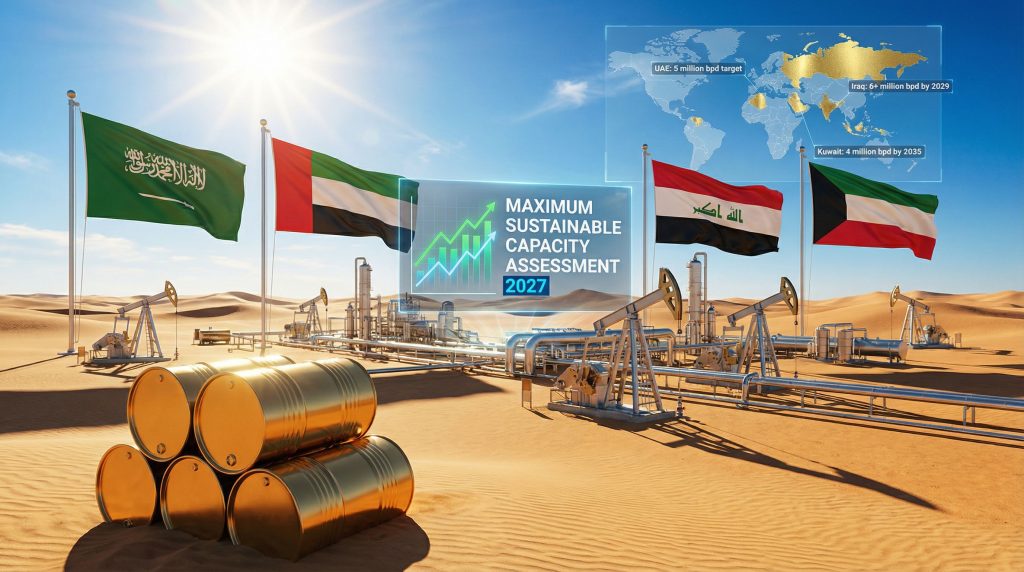
The global petroleum industry stands at an inflection point where technological assessment supersedes political negotiation in determining market power. This transformation emerges through systematic evaluation of production infrastructure rather than traditional diplomatic agreements, creating unprecedented incentives for capacity expansion investments across major oil-producing regions. The new opec production capacity mechanism fundamentally reshapes how production quotas are determined and allocated.
Strategic Transformation: Technical Capacity Assessment Over Political Negotiations
The petroleum industry witnesses a fundamental shift from subjective quota determinations to objective capacity verification systems. This new Maximum Sustainable Capacity (MSC) assessment mechanism establishes precise technical standards for evaluating production capabilities across global oil producers.
Core Assessment Parameters:
- Assessment Timeline: January-September 2026 for baseline determinations
- Capacity Definition: Average maximum crude oil production achievable within 90-day ramp-up capability, sustained continuously for one full year including all planned maintenance activities
- Verification Standards: Third-party auditing firms conduct independent assessments
- Alternative Arrangements: Non-U.S. auditors for Russia and Venezuela due to sanctions; Iran's baseline determined through secondary source methodology
- Annual Reassessment: Yearly capacity evaluations allow responsive adjustments
The mechanism replaces politically negotiated baseline assumptions with standardised measurement criteria. Independent auditors assess actual production capabilities rather than self-reported figures, reducing incentives for overstatement while acknowledging operational realities through maintenance integration.
Technical Innovation: The 90-day ramp-up standard with 12-month sustainability requirements creates uniform assessment criteria across all participating nations, eliminating subjective interpretation in capacity calculations.
Historical Context of Quota Disputes
Previous allocation systems relied on politically negotiated agreements that frequently became outdated or contested. Angola's January 2024 departure from OPEC after 16 years exemplified these systemic issues. The country faced declining field performance due to underinvestment in new production facilities and maturing older oilfields, yet received fixed production quotas that ignored operational realities.
At a mid-2023 meeting, Angola and Nigeria received lower crude oil production quotas as part of alliance adjustments, penalising both nations for underperformance stemming from infrastructure limitations rather than deliberate production choices. The OPEC production impact demonstrates how the new MSC framework theoretically prevents similar disputes by tying baselines directly to verified production capabilities.
When big ASX news breaks, our subscribers know first
Investment Transformation Through Capacity Competition
The new OPEC production capacity mechanism fundamentally alters upstream investment economics by creating direct linkage between infrastructure expansion and quota allocations. This transformation converts capacity expansion from a political liability into a strategic asset yielding measurable market share advantages.
Gulf State Expansion Trajectories
United Arab Emirates Strategic Positioning:
- Current Production Capacity: 4.8 million barrels per day (bpd)
- 2027 Production Target: 5 million bpd
- Maximum Potential: 6 million bpd (conditional on market requirements)
- Investment Focus: Low-cost production optimisation and advanced recovery technologies
Iraq's Ambitious Scaling:
- Current Production Output: Approximately 4 million bpd
- 2029 Capacity Goal: Greater than 6 million bpd
- Long-term Vision: 7 million bpd by 2030
- Strategic Challenge: Compensating for previous overproduction in alliance agreements
Kuwait's Modernisation Strategy:
- 2035 Capacity Target: 4 million bpd
- Technology Focus: Enhanced recovery methods and heavy oil development prioritisation
- Infrastructure Investment: Comprehensive field modernisation programmes
Saudi Arabia's Market Leadership:
- Total Production Capacity: 12 million bpd
- Current Spare Capacity: Approximately 2 million bpd
- Dual Strategy: Maintaining oil-producing potential while expanding renewable energy capacity (44 gigawatts renewable energy tendering announced)
Furthermore, the new OPEC production mechanism establishes a competitive framework that rewards infrastructure investment with direct quota benefits.
Investment Incentive Mechanisms
The capacity-focused approach creates powerful economic incentives through several mechanisms:
Baseline Linkage Effects:
- Direct correlation between capital investment timing and quota outcomes
- Annual reassessment requirements maintain competitive pressure for sustained operational capability
- Technology adoption acceleration through transparent verification requirements
- Market share preservation opportunities through measurable capacity expansion
Capacity Dividend Structure:
| Investment Type | Traditional Return | New Mechanism Advantage |
|---|---|---|
| Field Development | Production revenue only | Production revenue + baseline quota increase |
| Technology Adoption | Efficiency improvements | Verification advantages + capacity recognition |
| Infrastructure Expansion | Long-term production gains | Immediate quota calculation benefits |
| Enhanced Recovery | Extended field life | Demonstrated sustainability metrics |
Resolution of Historical Allocation Conflicts
The technical verification system addresses fundamental sources of member disputes through objective assessment protocols. This approach eliminates subjective political negotiations that previously created baseline disagreements and member exit risks.
Dispute Prevention Through Transparency
Technical Resolution Framework:
| Previous System Issues | New Mechanism Solutions |
|---|---|
| Politically negotiated quotas subject to interpretation | Independently verified by third-party auditors using standardised criteria |
| Outdated baseline assumptions ignoring field performance | Annual assessments reflecting infrastructure investment and operational changes |
| Underperformance penalties based on political decisions | Capacity gaps documented through technical assessment |
| Member grievance resolution through bloc-building | Standardised audit review and appeal procedures |
| Infrequent baseline updates requiring consensus | Responsive annual adjustments to verified capacity data |
Angola Case Study Analysis
Under the new MSC system, Angola's situation would have evolved differently. Instead of receiving lower quotas based on political consensus regarding underperformance, Angola's baseline would reflect independently verified capacity constraints. Technical audits would document infrastructure limitations, field maturation effects, and investment requirements, providing objective foundation for quota determinations.
This approach transforms underperformance from a punitive political issue into a technical assessment opportunity, potentially encouraging foreign investment partnerships or infrastructure modernisation programmes rather than organisational departure.
Enhanced Market Control Implications
The capacity mechanism strengthens long-term market influence through improved spare capacity optimisation and strategic positioning against competing production regions. Moreover, the OPEC market influence demonstrates how this framework enables systematic market share reclamation.
Spare Capacity Enhancement Strategy
Current Alliance Positioning:
- Saudi spare capacity: ~2 million bpd provides primary swing production capability
- Enhanced crisis response flexibility through verified capacity buffers
- Improved market intervention capabilities during supply disruptions
- Counter-balance strategy against U.S. shale production growth
Market Share Recovery Objectives:
The framework enables systematic market share reclamation from Americas-based production through several mechanisms:
- Sustainable Competitive Advantages: Low-cost Gulf production with verified expansion capabilities
- Supply Security Enhancement: Increased total alliance capacity reduces geopolitical risk premiums
- Technology Leadership: Advanced recovery methods verified through independent assessment
- Investment Coordination: Synchronised capacity expansion across multiple alliance members
Global Supply Buffer Development
Expanded alliance capacity creates enhanced energy security for consuming nations while maintaining producer influence over pricing mechanisms. This dual benefit structure potentially reduces political pressure for alternative energy transitions while providing crisis response capabilities.
Geopolitical Scenario Development
The capacity framework enables multiple strategic pathways that reshape global energy relationships and investment flows over the next decade.
Scenario One: Regional Capacity Competition
Gulf producers accelerate infrastructure investments to maximise 2027 allocations, creating:
- Regional Economic Effects: Increased oil service sector demand and technology transfer acceleration
- Employment Growth: Enhanced engineering and technical services opportunities
- Technology Innovation: Competitive pressure drives advanced recovery method adoption
- Supply Chain Development: Expanded equipment and service provider networks
Scenario Two: Non-Gulf Producer Marginalisation
Countries with limited expansion capabilities face structural challenges:
- Relative Market Influence Decline: Reduced voting power and baseline allocations
- Foreign Investment Pressure: Necessity for international partnerships to maintain competitiveness
- Alliance Restructuring Potential: Possible membership adjustments based on capacity verification results
- Economic Development Constraints: Limited revenue growth opportunities without capacity expansion
Scenario Three: Enhanced Global Supply Security
Expanded alliance capacity provides multiple benefits for energy security:
- Crisis Response Capabilities: Improved ability to offset supply disruptions from geopolitical events
- Price Volatility Reduction: Larger spare capacity buffers moderate extreme price movements
- Consumer Nation Benefits: Enhanced supply reliability reduces strategic reserve requirements
- Investment Flow Redirection: Capital allocation toward verified capacity expansion projects
Oil Market Dynamics Through 2030
The capacity mechanism influences petroleum pricing through both investment phase effects and long-term supply-demand balance modifications. However, concerns about oil price stagnation remain prevalent despite these structural changes.
Short-term Market Implications (2025-2027)
Investment Phase Characteristics:
- Increased upstream capital expenditure across alliance members
- Oilfield services sector demand surge in Gulf regions
- Technology adoption acceleration for verification advantages
- Enhanced market sentiment regarding supply security
Price Formation Factors:
- Reduced geopolitical risk premiums due to improved supply reliability
- Investment spending effects on short-term production optimisation
- Market confidence improvements from transparent capacity assessment
- Competitive pressure effects on production efficiency
Additionally, trade war oil movements continue to influence market dynamics alongside the new production framework.
Medium-term Projections (2027-2030)
Capacity Utilisation Scenarios:
| Market Scenario | Global Demand Growth | Alliance Response | Price Range Impact |
|---|---|---|---|
| High Growth | 2%+ annually | Full capacity utilisation with expansion | $70-85/barrel |
| Moderate Growth | 1-2% annually | Selective capacity deployment | $60-75/barrel |
| Energy Transition | <1% annually | Spare capacity maintenance | $50-65/barrel |
| Economic Slowdown | Negative growth | Production cuts from verified baseline | $45-60/barrel |
Long-term Structural Changes
The mechanism creates permanent alterations in market structure through:
- Capacity-Based Pricing: Market valuations increasingly reflect verified production capabilities
- Investment Cycle Synchronisation: Annual assessments create coordinated expansion timing
- Technology Integration: Continuous verification requirements drive innovation adoption
- Geopolitical Risk Distribution: Enhanced spare capacity reduces individual country supply importance
Furthermore, the US oil production decline creates additional opportunities for alliance members to expand their market influence through verified capacity improvements.
The next major ASX story will hit our subscribers first
Strategic Recommendations for Market Participants
Different stakeholder groups require tailored approaches to capitalise on the changing market structure while managing associated risks.
Oil Company Strategic Adjustments
Partnership Strategy Optimisation:
- Prioritise relationships with expanding alliance members showing verified capacity growth
- Develop specialised capacity assessment and verification technologies
- Focus investment portfolios on low-cost, scalable upstream projects
- Establish service provider relationships in high-growth capacity regions
Technology Investment Priorities:
- Enhanced recovery systems demonstrable through independent audit
- Digital monitoring capabilities supporting capacity verification
- Modular production systems enabling rapid capacity adjustments
- Environmental compliance technologies meeting verification standards
Consuming Nation Energy Security Strategies
Supply Relationship Diversification:
- Develop strategic partnerships with multiple alliance members
- Negotiate long-term contracts incorporating capacity verification metrics
- Establish emergency supply protocols leveraging enhanced spare capacity
- Coordinate international strategic reserve policies
Alternative Energy Integration:
- Balance renewable energy transitions with petroleum security requirements
- Develop hybrid energy systems reducing dependence on single source types
- Invest in energy storage capabilities managing supply variability
- Create policy frameworks supporting energy transition while maintaining security
Financial Market Portfolio Positioning
Investment Opportunity Assessment:
- Evaluate upstream projects based on capacity verification potential
- Assess geopolitical risk redistributions across producing regions
- Monitor capacity utilisation metrics as performance indicators
- Develop commodity trading strategies incorporating spare capacity data
Risk Management Frameworks:
- Incorporate capacity assessment uncertainties in pricing models
- Evaluate technology adoption risks in verification processes
- Monitor alliance stability through capacity competition effects
- Assess currency and political risks in expanding producer nations
Frequently Asked Questions
How does the MSC assessment methodology differ from previous quota determination systems?
The MSC uses independent third-party verification of actual production capabilities measured against standardised technical criteria, replacing politically negotiated targets based on historical production and subjective assessments. This creates objective, transparent baseline calculations that members can verify and compare.
Which alliance members gain the most significant advantages from this new framework?
Gulf states with expansion capabilities, particularly the UAE, Saudi Arabia, and Kuwait, benefit most significantly. Iraq also gains substantial advantages due to planned capacity increases. These countries can translate infrastructure investments directly into larger quota allocations through verified capacity expansion.
What effects will this mechanism have on global oil price volatility?
Enhanced spare capacity across multiple alliance members should reduce price volatility by providing improved crisis response capabilities and supply security. However, initial investment phases may create short-term price fluctuations as markets adjust to changing capacity distributions.
How might this framework affect countries unable to expand production capacity?
Nations with limited expansion potential face reduced relative influence within the alliance and potential pressure to seek foreign investment partnerships. This could lead to alliance restructuring or increased cooperation with non-alliance producers to maintain market position.
What role do independent auditors play in ensuring assessment accuracy?
Third-party auditing firms provide objective verification of production capabilities using standardised measurement criteria. This removes political bias from capacity assessment while creating accountability for accurate reporting and technological verification of claimed production levels.
Could this mechanism trigger a global oil investment boom?
The framework creates strong incentives for upstream capital expenditure among alliance members seeking to maximise quota allocations. This may drive increased investment in oil infrastructure, technology, and services sectors, particularly in regions with verified expansion potential.
Future Energy Market Architecture
The capacity-focused assessment mechanism represents more than a technical policy adjustment; it establishes a new paradigm for global petroleum market governance. By linking quota allocations directly to verified production capabilities, this framework incentivises continuous infrastructure investment while potentially marginalising members unable to demonstrate expansion capacity.
This strategic transformation positions the alliance for enhanced long-term market control through several reinforcing mechanisms. Enhanced spare capacity provides improved crisis response capabilities, reducing price volatility and strengthening energy security for consuming nations. Simultaneously, the competitive pressure for capacity expansion creates powerful investment incentives that may accelerate technology adoption and infrastructure development across member nations.
The implications extend beyond petroleum markets into global investment flows, technological innovation, and international energy relationships. Success of this mechanism depends on member compliance with assessment protocols and their ability to translate capacity investments into sustained market influence amid evolving global energy demands and alternative technology development.
As energy markets navigate the complex transition between fossil fuel dependence and renewable alternatives, capacity-based allocation systems may become standard frameworks for resource management across multiple commodity sectors. The petroleum industry's experience with this innovation provides valuable insights for other resource-dependent economies seeking transparent, technically-based allocation mechanisms.
In conclusion, the new opec production capacity mechanism fundamentally transforms how global oil markets operate. The system creates powerful incentives for new OPEC production baselines through technical verification, establishing a framework that may define energy market governance for the coming decade.
Disclaimer: This analysis involves forecasting and speculation about future market conditions, policy implementations, and geopolitical developments. Actual outcomes may differ significantly from projections due to numerous variables including technological developments, political changes, economic conditions, and unforseen global events. Investment and policy decisions should incorporate comprehensive risk assessment and professional consultation.
Want to Capitalise on Energy Market Transformations?
With OPEC's new capacity-based framework reshaping oil market dynamics and creating unprecedented investment opportunities across energy sectors, Discovery Alert's proprietary Discovery IQ model provides real-time insights into ASX-listed energy companies positioned to benefit from these global shifts. Experience how major mineral discoveries have historically generated substantial returns whilst staying ahead of evolving commodity markets through our 30-day free trial.