August 14, 2026
OPEC+ raises output amid Middle Eastern tensions has become a defining characteristic of contemporary energy markets, as producers navigate complex geopolitical landscapes while attempting to maintain supply stability. When global energy markets face mounting pressure from geopolitical tensions, production decisions by major oil cartels become complex exercises in crisis management rather than simple supply-demand calculations. The intersection of regional instability and energy security creates economic environments where traditional market fundamentals take a backseat to logistical constraints and security considerations.
The delicate balance between maintaining price stability and ensuring adequate supply becomes particularly challenging when critical chokepoints face potential disruption. Market participants must navigate uncertainty while producers weigh immediate response capabilities against long-term strategic positioning.
What Drives OPEC+ Production Decisions During Regional Conflicts?
The Economics of Crisis-Driven Output Management
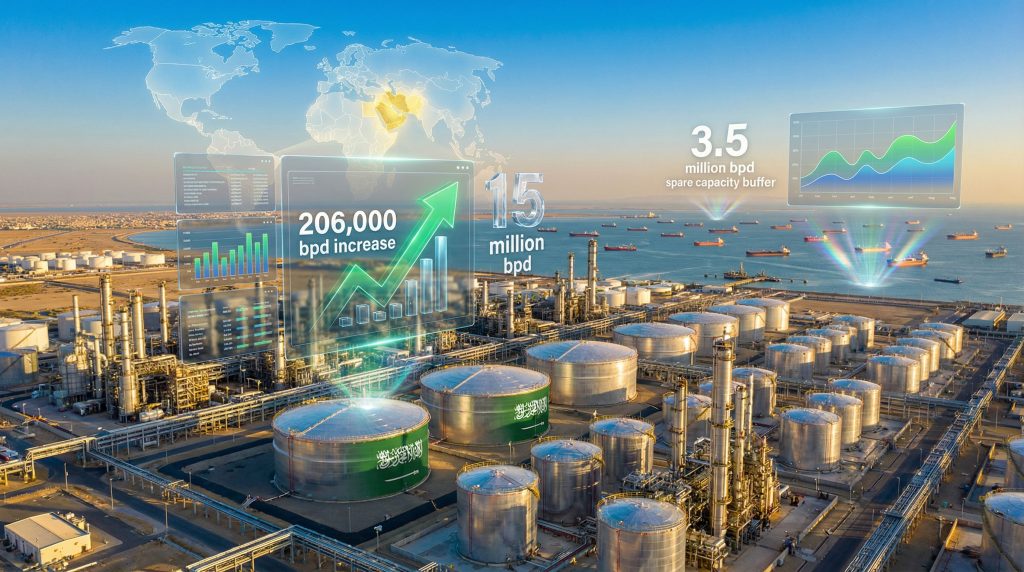
Geopolitical risk premiums fundamentally alter the decision-making calculus for oil-producing nations during periods of regional instability. When OPEC+ announced its 206,000 barrels per day (bpd) increase for April 2026 production targets, the figure represented a strategic compromise between competing market pressures.
The original projection called for a more modest 137,000 bpd increase before Middle Eastern tensions escalated, demonstrating how rapidly changing security dynamics can reshape production strategies. Furthermore, OPEC production decisions during crisis periods prioritise supply security over traditional inventory management, forcing producers to recalibrate their response mechanisms.
Historical analysis reveals several key patterns in crisis-driven production management:
• Preemptive capacity deployment to signal market assurance before formal policy announcements
• Strategic timing coordination between physical shipments and headline policy decisions
• Buffer preservation strategies to maintain emergency response capabilities
• Regional stability assessment integration into production quota calculations
The economic rationale behind maintaining approximately 3.5 million bpd in effective spare capacity reflects sophisticated optionality preservation. Rather than deploying maximum available capacity, producers maintain strategic reserves to address potential escalation scenarios while avoiding oversupply conditions that could destabilise pricing mechanisms.
Balancing Act Between Supply Security and Price Stability
The tension between responding to immediate geopolitical risks and preventing demand-side oversupply creates complex economic trade-offs for major producers. In addition to immediate supply concerns, Jorge Leon, Senior Vice President and Head of Geopolitical Analysis at Rystad Energy, emphasised that production decisions during crisis periods reflect dual imperatives requiring careful balance.
Strategic capacity preservation serves multiple economic functions during periods of heightened regional tension:
| Preservation Strategy | Economic Function | Market Impact |
|---|---|---|
| Undershooting maximum capacity | Maintains intervention flexibility | Prevents aggressive inventory build-up |
| Buffer reserve protection | Enables emergency deployment | Preserves market confidence |
| Graduated response protocols | Allows escalation management | Reduces volatility amplification |
The modest increase relative to available capacity demonstrates deliberate crisis management rather than maximum production deployment. This approach maintains operational flexibility should regional instability deepen while signalling market assurance through measured response protocols.
Saudi Arabia's preemptive export strategy illustrates sophisticated market positioning ahead of formal policy announcements. The kingdom's crude exports reached three-year highs prior to the official OPEC+ decision, suggesting partial implementation occurred before headline policy confirmation.
When big ASX news breaks, our subscribers know first
How Do Critical Chokepoints Shape Global Oil Market Dynamics?
The Strait of Hormuz: A $2 Trillion Annual Trade Gateway
The concentration of global energy flows through narrow maritime corridors creates acute vulnerability points that dominate market psychology during geopolitical crises. The Strait of Hormuz represents the most critical of these chokepoints, with 15 million bpd of crude oil transiting daily through this narrow channel.
This volume represents approximately 30% of global seaborne crude trade and roughly one-fifth of total global oil supply, making any disruption to this corridor economically catastrophic. The strategic importance extends beyond simple volume metrics to encompass the time-sensitivity of modern supply chain management.
Chokepoint vulnerability assessment reveals several critical risk factors:
• Geographic concentration creating single points of failure for global supply
• Navigation complexity during military activity or conflict scenarios
• Insurance and freight rate escalation during periods of heightened tension
• Limited alternative routing capacity with significant cost premiums for bypassing disrupted corridors
Leon's analysis highlighted that physical supply accessibility supersedes production capacity announcements during crisis periods. The distinction between theoretical spare capacity and practical supply delivery determines market outcomes more significantly than headline production targets.
"The critical market concern centres on whether produced barrels can physically transit export corridors, not on theoretical spare capacity metrics. This distinction separates supply-side policy from demand-side market impact."
Supply Chain Resilience in Energy Infrastructure
Alternative routing capabilities provide limited relief during Strait of Hormuz disruptions due to capacity constraints and associated cost premiums. The economic implications of supply chain diversification involve substantial infrastructure investments and operational complexity increases.
Strategic petroleum reserve deployment serves as a critical buffer mechanism during chokepoint disruptions, though deployment thresholds require careful calibration to avoid premature depletion. Regional refinery capacity distribution affects vulnerability patterns, with some markets more exposed to specific supply route disruptions than others.
Modern energy infrastructure resilience depends on multiple redundancy layers:
- Primary transport corridors with maximum efficiency and lowest costs
- Secondary routing options with higher costs but maintained accessibility
- Emergency stockpiling systems providing temporary supply bridge capacity
- Regional refinery networks reducing import dependency for processed products
The economic calculation involves weighing infrastructure investment costs against disruption risk exposure. Consequently, different regions adopt varying approaches based on their specific vulnerability profiles and strategic priorities.
What Economic Indicators Signal Market Stress in Energy Sectors?
Price Volatility Patterns During Geopolitical Events
Energy markets exhibit distinctive price reaction patterns during different types of geopolitical events, with the magnitude and duration of volatility correlating to perceived disruption probability and expected timeline. Historical analysis reveals predictable response mechanisms that market participants can use for risk assessment purposes, as highlighted in recent oil price rally analysis of similar market conditions.
Oil Price Reactions to Middle Eastern Conflicts (2019-2026)
| Event Type | Initial Price Jump | Duration | Recovery Period |
|---|---|---|---|
| Strait Closure Threats | 8-15% | 2-4 weeks | 1-3 months |
| Regional Military Action | 5-12% | 1-2 weeks | 2-6 weeks |
| Infrastructure Attacks | 10-20% | 3-7 days | 1-4 weeks |
The price volatility causation chain follows a predictable sequence: geopolitical event occurrence triggers market perception of supply disruption risk, leading to risk premium incorporation in futures prices, followed by duration assessment and recovery expectations based on presumed disruption resolution.
Forward curve analysis during geopolitical stress periods requires weighting security risk assessment more heavily than traditional supply-demand fundamentals. Market sensitivity to logistics accessibility often overshadows production volume considerations, as demonstrated by the March 2026 market response patterns.
Inventory Management and Strategic Reserve Dynamics
Commercial inventory levels serve as critical market confidence indicators during periods of geopolitical tension. However, strategic reserve deployment represents the ultimate backstop mechanism for severe supply disruptions. Government stockpiling patterns vary significantly by region based on import dependency levels and strategic vulnerability assessments.
Strategic reserve deployment thresholds typically consider multiple factors:
• Disruption magnitude and expected duration
• Alternative supply source availability and associated costs
• Economic impact assessment on domestic industries and consumers
• International coordination requirements for synchronised responses
The psychological impact of reserve announcements often exceeds their immediate physical supply contribution. Market participants interpret deployment decisions as official confirmation of supply crisis severity.
How Does Saudi Arabia's Export Strategy Influence Global Markets?
Kingdom's Preemptive Market Positioning
Saudi Arabia's role as the world's largest oil exporter provides unique market influence capabilities, particularly through strategic timing of export adjustments relative to formal policy announcements. The kingdom's preemptive shipment increases ahead of OPEC+ decisions demonstrate sophisticated market management techniques.
The strategy of reaching three-year export highs prior to formal production announcements serves multiple economic objectives:
• Market confidence signalling through demonstrated supply assurance capacity
• Operational flexibility preservation by maintaining response options for crisis escalation
• Logistical preparation through inventory positioning ahead of potential disruption scenarios
• Price stability support via physical supply increases preceding headline policy confirmation
This approach indicates that major producers employ supply management beyond formal policy mechanisms to influence market psychology and operational readiness. The timing differential between physical shipments and policy announcements provides additional tools for crisis management, as observed in trade war oil price movements where similar preemptive strategies proved effective.
Riyadh's Role as Global Energy Stabiliser
Saudi Arabia's export strategy reflects economic diplomacy objectives that extend beyond immediate commercial considerations. The kingdom's ability to influence global energy markets carries strategic implications for international relationships and regional stability maintenance.
Long-term strategic positioning involves balancing multiple competing priorities:
- Domestic fiscal requirements from oil revenue dependency
- International market stability through supply assurance
- Regional diplomatic considerations regarding crisis management
- Economic diversification objectives under long-term development plans
The preemptive export increase during the March 2026 crisis period demonstrates partial implementation of production adjustment strategies. Formal announcements serve as policy confirmation rather than operational initiation.
What Are the Broader Economic Implications of Energy Supply Disruptions?
Macroeconomic Ripple Effects Across Industries
Energy supply disruptions create transmission mechanisms that propagate economic impacts far beyond commodity markets. These effects manifest through input cost escalation and supply chain complexity increases. The March 2026 escalation fundamentally reframed market assumptions regarding supply reliability and operational risk assessment.
Industry-specific impact channels include:
• Transportation sector facing direct fuel cost increases and reduced profit margin pressure
• Manufacturing industries experiencing petrochemical feedstock price escalation
• Electricity generation requiring fuel source diversification and cost structure adjustments
• Consumer spending patterns shifting toward necessities as energy costs reduce discretionary capacity
The economic scale of potential disruption becomes apparent when considering that global crude demand exceeds 100 million bpd. With 15 million bpd flowing through the Strait of Hormuz representing approximately 15% of total global demand, disruptions have far-reaching consequences.
Central Bank Policy Responses to Energy-Driven Inflation
Monetary policy authorities face complex decisions when energy price shocks create inflationary pressure. This particularly applies when distinguishing between temporary supply disruptions and persistent price level adjustments. Historical precedents demonstrate varying central bank responses depending on crisis duration expectations and broader economic conditions.
Policy response considerations typically include:
- Inflation expectations management to prevent wage-price spiral initiation
- Economic growth support during energy cost-induced slowdown periods
- Currency stability maintenance for energy-importing economies
- Financial system stability protection during market volatility periods
Regional economic vulnerability varies significantly based on energy import dependency levels. Some economies face disproportionate exposure to supply disruption scenarios. Currency market impacts reflect these differential vulnerability patterns through exchange rate movements.
How Do Market Participants Navigate Uncertainty in Energy Trading?
Risk Management Strategies for Energy Commodities
Professional energy traders employ sophisticated hedging mechanisms during periods of heightened geopolitical volatility. Derivative market behaviour reflects evolving risk perception and pricing expectations. Options market activity provides valuable insight into market participant sentiment and expected volatility duration.
Portfolio diversification approaches for energy exposure include:
• Geographic diversification across multiple supply sources and transport corridors
• Temporal hedging strategies using futures and options contracts for price protection
• Cross-commodity hedging through related energy and industrial metal positions
• Currency hedging to manage foreign exchange exposure from international energy trades
The complexity of risk management increases during crisis periods due to correlation changes between normally independent variables. Liquidity constraints in derivative markets during extreme volatility periods further complicate these strategies, as documented in recent oil price stagnation insights.
Investment Flow Patterns During Crisis Periods
Capital allocation patterns shift significantly during energy supply crisis periods. Institutional investors adjust portfolio weightings to reflect changing risk-reward profiles across energy sector components. Infrastructure investment priorities evolve to emphasise supply security over pure cost optimisation.
Strategic planning considerations under uncertainty conditions require multiple scenario development and flexible response capability maintenance. Long-term investment decisions must account for the possibility of persistent geopolitical risk elevation and associated operational complexity increases.
The next major ASX story will hit our subscribers first
What Long-Term Structural Changes Emerge from Current Market Dynamics?
Energy Security Policy Evolution
National energy security policies undergo significant evolution during prolonged periods of supply vulnerability. Governments reassess the balance between economic efficiency and strategic autonomy. The costs of energy independence initiatives often require substantial public investment and may conflict with short-term economic optimisation.
International cooperation frameworks for crisis management become increasingly important as supply chain interdependencies create shared vulnerability patterns. Technology investment acceleration in alternative supply routes reflects long-term adaptation to persistent geopolitical risk elevation, similar to patterns observed in trade war impact on oil markets.
Market Structure Adaptations for Enhanced Resilience
Financial market infrastructure evolves to accommodate increased volatility and complexity during extended crisis periods. Trading mechanism improvements focus on maintaining market function during extreme volatility whilst information sharing protocols between market participants enhance collective risk assessment capabilities.
Regulatory framework adjustments for emergency situations typically involve:
• Enhanced reporting requirements for supply chain monitoring
• Coordinated response protocols between national authorities
• Market stability mechanisms to prevent excessive volatility
• Strategic reserve coordination for international crisis management
The evolution toward greater market resilience requires balancing efficiency considerations with stability requirements. This often results in higher operational costs but reduced systemic risk exposure.
Frequently Asked Questions About OPEC+ Production Decisions
Why Did OPEC+ Choose a Modest Increase Rather Than Major Output Boost?
The decision to implement a 206,000 bpd increase rather than a more substantial production boost reflects strategic capacity preservation principles and market oversupply risk management. OPEC+ maintains approximately 3.5 million bpd in effective spare capacity as a strategic buffer for emergency deployment.
Releasing excessive capacity during initial crisis stages could eliminate response flexibility if regional tensions escalate further. The measured approach demonstrates resolve whilst preserving intervention capability for more severe disruption scenarios, as reported by Reuters in their analysis of the decision.
How Quickly Can Additional Production Reach Global Markets?
Production ramp-up timelines vary depending on existing capacity utilisation and infrastructure readiness. Logistical constraints often determine delivery schedules more than production capability. Saudi Arabia's preemptive export increases suggest that partial implementation can occur rapidly when infrastructure capacity exists.
Transportation and refining constraints may create bottlenecks even when production increases are technically feasible. This particularly applies if alternative routing becomes necessary due to chokepoint disruptions.
What Triggers Would Lead to Further Production Adjustments?
Additional production adjustments would likely result from specific threshold events including sustained chokepoint disruptions, escalating regional military activity, or significant infrastructure damage affecting export capabilities. Market monitoring focuses on physical supply accessibility rather than headline geopolitical developments.
Coordination mechanisms for emergency responses involve rapid consultation protocols between OPEC+ members and assessment of spare capacity deployment requirements. These assessments base decisions on disruption magnitude and expected duration.
Strategic Outlook: Navigating Energy Market Volatility
Short-Term Market Stabilisation Measures
Immediate policy tools available to market participants include strategic reserve coordination, alternative routing activation, and enhanced market information sharing to reduce uncertainty premiums. Emergency response protocols require pre-established coordination mechanisms to ensure rapid deployment during crisis escalation.
The effectiveness of short-term measures depends heavily on international cooperation and the ability to maintain supply chain function during periods of heightened geopolitical tension. OPEC+ raises output amid Middle Eastern tensions demonstrates the complexity of balancing multiple competing objectives in crisis management scenarios.
Building Long-Term Energy Market Resilience
Infrastructure investment priorities for enhanced supply security include alternative transport corridor development, strategic stockpiling capacity expansion, and diversified sourcing arrangements to reduce chokepoint dependency. Technology solutions for market transparency can help reduce uncertainty premiums during crisis periods.
The challenge involves balancing economic efficiency with security considerations. Resilience enhancements typically involve higher operational costs but provide insurance against severe disruption scenarios. Long-term strategic planning must account for the possibility that geopolitical risk remains elevated for extended periods, requiring permanent adjustments to energy market structure and operation.
Furthermore, OPEC+ raises output amid Middle Eastern tensions has established new precedents for crisis response mechanisms. These precedents will likely influence future policy frameworks and market structure adaptations as energy security remains a paramount concern for global economic stability.
Please note that this analysis contains forward-looking statements and market projections that involve inherent uncertainty. Energy market developments depend on numerous geopolitical, economic, and operational factors that may change rapidly. Investors should conduct independent research and consider professional advice before making energy-related investment decisions.
Looking to Capitalise on Energy Market Volatility?
Discovery Alert's proprietary Discovery IQ model delivers real-time alerts on significant ASX mineral discoveries, instantly empowering subscribers to identify actionable opportunities in energy and commodities sectors ahead of the broader market. With energy market dynamics creating new investment opportunities, begin your 14-day free trial today and secure your market-leading advantage during periods of heightened volatility.