
June 21, 2026
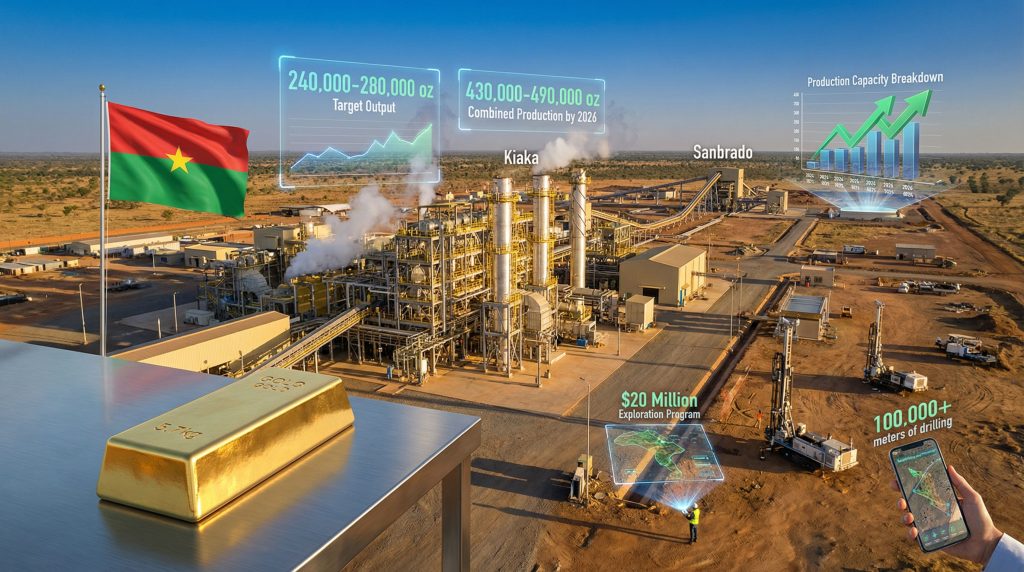
The Operational Architecture of West Africa's Mining Transformation
West Africa's mining sector is undergoing a fundamental shift in operational capacity, with sophisticated extraction technologies and multi-mine coordination systems driving unprecedented production scaling. This transformation represents more than simple output increases; it demonstrates how modern mining operations integrate advanced processing infrastructure, geological exploration techniques, and regional economic frameworks to create sustainable extraction platforms. Furthermore, the mining industry trends indicate that Burkina Faso gold mine expansion exemplifies these broader sectoral developments.
The technical complexity of coordinating multiple large-scale mining facilities within a single operational framework requires sophisticated logistics management, synchronized processing schedules, and integrated supply chain coordination that extends far beyond traditional single-mine operations.
When big ASX news breaks, our subscribers know first
Advanced Processing Infrastructure Driving Burkina Faso Gold Mine Expansion
The Kiaka mining complex represents Burkina Faso's most technically sophisticated gold processing operation, featuring integrated smelting capabilities that eliminate traditional concentrate transportation requirements. This facility successfully produced its inaugural 5.7-kilogram gold bar through on-site processing, demonstrating the operational efficiency gains achievable through vertical integration of extraction and refining processes.
Technical Specifications and Processing Capabilities
The operational framework at Kiaka incorporates several technological innovations that distinguish it from traditional West African mining operations:
- On-site smelting infrastructure eliminating transportation delays and security risks
- Integrated processing systems reducing time-to-market from ore extraction to refined gold
- Advanced ore sorting technology optimising feed grade consistency
- Automated material handling systems minimising manual processing requirements
The facility achieved first gold production within three and a half years of project acquisition, demonstrating accelerated development timelines that reflect both technical efficiency and streamlined project execution methodologies.
Production Scaling and Capacity Optimisation
The dual-mine operational model coordinating Kiaka and Sanbrado facilities targets combined annual output of 430,000-490,000 ounces by 2026, representing a 63% increase from 2025 production levels. This scaling approach leverages complementary ore characteristics and processing schedules to maintain consistent output throughout operational cycles.
Production Capacity Analysis:
| Facility | 2026 Target Output | Processing Method | Operational Phase |
|---|---|---|---|
| Kiaka Mine | 240,000-280,000 oz | Integrated smelting | First full production year |
| Sanbrado Mine | 190,000-210,000 oz | Conventional processing | Mature operations |
| Combined Total | 430,000-490,000 oz | Synchronised output | Dual-facility coordination |
Cost Structure Analysis and Economic Positioning
The targeted All-in Sustaining Cost (AISC) below $1,900 per ounce positions these operations within the lower-cost quartile of global gold production, providing significant operational resilience during commodity price volatility periods. This cost advantage stems from several operational efficiencies that underscore the importance of data-driven mining operations in achieving such competitive positioning.
Operational Cost Optimisation Strategies
- Integrated processing reducing external smelting and transportation costs
- Shared infrastructure between mining facilities lowering per-unit operational expenses
- Local workforce development minimising expatriate labour costs
- Regional supply chain optimisation reducing logistics and procurement expenses
The cost structure benefits from economies of scale achieved through dual-mine coordination, allowing shared technical expertise, equipment utilisation, and administrative functions across both facilities.
Market Positioning and Competitive Advantages
West African mining operations benefit from several structural advantages that support sustained profitability. Geographic proximity to established logistics corridors reduces transportation costs compared to remote mining locations. Established operational infrastructure eliminates the capital expenditure requirements associated with greenfield development projects.
Regional labour availability provides access to experienced mining personnel without the premium costs associated with international recruitment. Government framework stability offers predictable regulatory environments supporting long-term operational planning within the broader global mining landscape.
Exploration Technology and Resource Extension Strategies
The $20 million exploration programme planned for 2026 encompasses over 100,000 metres of drilling across multiple target categories, utilising advanced geological surveying technologies to identify expansion opportunities. This systematic approach to resource extension employs sophisticated exploration methodologies that highlight the mineral exploration importance in sustaining mining operations.
Advanced Geological Survey Techniques
Airborne geophysical surveys identify subsurface anomalies indicating potential mineralisation zones. Ground-penetrating radar systems map geological structures and fault systems that may contain gold deposits.
Geochemical sampling programmes analyse soil and rock compositions to trace mineralisation patterns. 3D geological modelling integrates survey data to create comprehensive subsurface maps guiding drilling programmes.
Drilling Programme Structure and Objectives
| Target Category | Drilling Allocation | Expected Outcomes | Development Timeline |
|---|---|---|---|
| Near-surface anomalies | 40,000 metres | Immediate reserve additions | Q2-Q3 2026 |
| Depth extensions | 35,000 metres | Long-term mine life extension | Q3-Q4 2026 |
| Regional prospects | 25,000 metres | New site identification | Ongoing assessment |
The exploration strategy prioritises near-surface targets that can contribute to immediate production increases while simultaneously investigating depth extensions that support long-term operational sustainability.
Regional Economic Integration and Infrastructure Development
Burkina Faso gold mine expansion creates significant multiplier effects throughout the regional economy, generating employment opportunities and supporting local supply chain development while contributing to national export revenues. This economic impact demonstrates the broader implications of sustainable mining transformation across West Africa.
Local Economic Multiplier Effects
Direct employment at mining facilities supports approximately 2,000 positions across both operations, including technical, administrative, and operational roles. Indirect employment through suppliers, contractors, and service providers generates an estimated 4,000 additional positions in the regional economy.
Local procurement programmes prioritise regional suppliers for non-specialised goods and services, creating sustainable business opportunities for local enterprises. Skills development initiatives train local personnel in technical mining operations, creating transferable expertise that supports broader sector development.
Infrastructure Development Catalyst Effects
Mining operations drive regional infrastructure improvements that benefit broader economic development:
- Transportation network upgrades connecting mine sites to export facilities and regional markets
- Power generation capacity expansion supporting both mining operations and community needs
- Telecommunications infrastructure enabling advanced operational technologies and regional connectivity
- Healthcare facilities serving mining personnel and surrounding communities
Geological Characteristics and Ore Quality Analysis
The geological formations underlying Burkina Faso's mining operations contain orogenic gold deposits formed through metamorphic processes that concentrate gold within quartz-carbonate vein systems. These deposits typically exhibit several favourable characteristics supporting efficient extraction methods.
Ore Grade Distribution and Metallurgical Properties
Gold mineralisation occurs primarily within quartz-carbonate veins and shear zones that facilitate efficient extraction through conventional processing methods. Oxide ore zones near surface levels require minimal processing, reducing operational complexity and costs.
Sulfide ore zones at depth contain higher gold concentrations but require more complex metallurgical processing. Free-milling characteristics of much ore material enable direct cyanidation processing without pre-treatment requirements.
Geological Risk Factors and Mitigation Strategies
Structural geology understanding enables prediction of ore continuity and grade distribution, supporting accurate resource estimation. Hydrogeological assessment identifies groundwater management requirements for sustainable operations.
Geotechnical analysis ensures slope stability and underground development safety where applicable. Environmental baseline studies establish pre-mining conditions supporting restoration planning.
The next major ASX story will hit our subscribers first
Security Considerations and Operational Risk Management
Mining operations in West Africa incorporate comprehensive security protocols designed to protect personnel and infrastructure while maintaining production continuity. The security framework addresses multiple risk categories affecting operational sustainability.
Facility Protection and Asset Security
Perimeter security systems protect mining facilities, processing plants, and administrative areas through integrated surveillance and access control. Gold storage and transport security employs armoured transportation and secure storage facilities to protect refined products.
Personnel security protocols ensure safe working conditions and emergency response capabilities across all operational areas. Supply chain security protects critical equipment and materials from theft or damage during transportation and storage.
Regional Stability Assessment and Contingency Planning
Political risk assessment monitors regional stability factors that may affect operational continuity. Additionally, the challenges facing mining companies in Burkina Faso require careful consideration in operational planning.
Emergency response planning provides protocols for various scenarios including security incidents, natural disasters, and medical emergencies. Insurance coverage protects against operational disruptions and asset damage.
Investment Analysis and Shareholder Value Creation
The operational scaling at Burkina Faso mining facilities creates multiple pathways for shareholder value creation through sustained cash flow generation and strategic positioning within the global gold sector. However, investors must consider the broader risks associated with mining operations in the region.
Financial Performance Indicators
Cash flow projections based on 430,000-490,000 ounce annual production support dividend potential in H2 2026, reflecting operational confidence and financial stability. Share price performance gained nearly 5% on the Australian Securities Exchange following production guidance announcements.
Market capitalisation growth potential stems from demonstrated operational execution and systematic production scaling. Share buyback programmes under consideration reflect management confidence in sustained operational performance.
Strategic Positioning and Growth Trajectory
The 500,000+ ounce annual production goal by 2030 positions the company within the mid-tier gold producer category, providing enhanced market visibility and institutional investor appeal. Operational diversification across multiple facilities reduces single-asset dependency risks.
Cost competitiveness below $1,900 per ounce AISC provides operational resilience during commodity price downturns while maximising profitability during favourable market conditions.
Technical Innovation and Processing Efficiency
Modern gold processing technologies employed at Burkina Faso facilities incorporate several technical innovations that enhance recovery rates and operational efficiency compared to traditional processing methods. These innovations represent a key component of Burkina Faso gold mine expansion strategies.
Metallurgical Process Optimisation
Carbon-in-pulp (CIP) processing systems optimise gold recovery from crushed ore through controlled cyanidation and carbon adsorption processes. Electrowinning technology recovers gold from loaded carbon with minimal chemical consumption and environmental impact.
Tailings management systems incorporate water recycling and waste stabilisation technologies that minimise environmental footprint while recovering residual gold values. Process control automation maintains optimal processing parameters reducing manual intervention requirements.
Equipment Integration and Operational Efficiency
Automated material handling reduces manual processing requirements while maintaining consistent feed quality to processing circuits. Real-time monitoring systems track processing efficiency and equipment performance enabling preventive maintenance scheduling.
Energy-efficient processing incorporates renewable power sources where applicable and optimises equipment operation to minimise power consumption per ounce produced.
This analysis examines operational mechanics and technical infrastructure without guaranteeing future performance outcomes. Mining operations involve inherent risks including commodity price volatility, geological uncertainty, and operational challenges that may affect projected results. Investors should conduct independent research before making investment decisions.
Interested in Profiting From the Next Major Gold Discovery?
Discovery Alert provides instant notifications when significant ASX mineral discoveries are announced, powered by its proprietary Discovery IQ model that transforms complex geological data into actionable investment insights. Explore historic examples of exceptional returns from major mineral discoveries, then begin your 14-day free trial today to position yourself ahead of the market for the next breakthrough.