May 21, 2026
Operational Excellence in Argentina's Lithium Triangle
The global battery metals sector faces an inflection point as electric vehicle adoption accelerates and energy storage demands intensify. Rio Tinto lithium exports Argentina operations represent a critical component of this transformation, as mining companies worldwide reassess their strategic positioning within critical mineral supply chains. This evolution particularly affects lithium extraction where technological advancement and geographical diversification have become paramount considerations, reflecting broader mining industry trends toward operational excellence frameworks.
Within this evolving landscape, Argentina's northwest provinces have emerged as strategically significant production centres for battery-grade lithium carbonate. The region's geological advantages, combined with evolving regulatory frameworks and technological innovations, have attracted substantial battery metals investment commitments across multiple operational phases.
When big ASX news breaks, our subscribers know first
Strategic Market Positioning in Argentina's Mining Sector
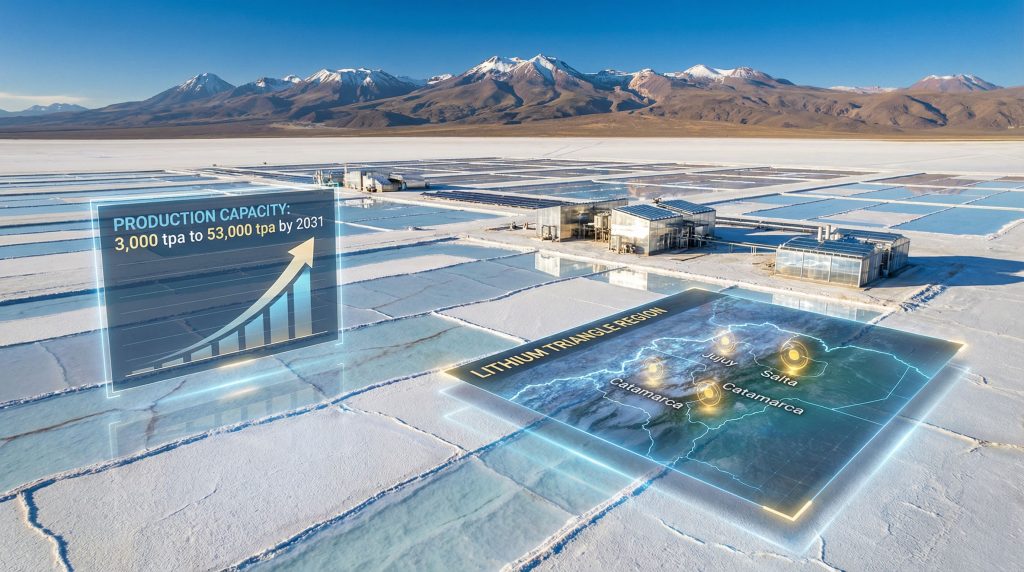
Rio Tinto's emergence as a dominant force in Argentine lithium production represents the culmination of nearly three decades of operational presence across the country's most lithium-rich provinces. The Anglo-Australian mining giant has systematically built a multi-asset portfolio spanning Catamarca, Jujuy, and Salta provinces, positioning itself as the only lithium carbonate producer with active export operations across all three northwestern Argentine jurisdictions.
The company's strategic framework centres on three core operational pillars:
- Geographic diversification across the lithium triangle to mitigate single-jurisdiction regulatory and operational risks
- Technology integration through direct lithium extraction (DLE) systems that reduce environmental impact and accelerate production timelines
- Market timing alignment with accelerating Asian battery manufacturing capacity and electric vehicle adoption rates
Argentina's Mining Export Performance (2025)
| Metric | Value | Growth Driver |
|---|---|---|
| Total Mining Exports | US$6.037 billion | Gold price appreciation |
| Primary Growth Sector | Lithium production | New project commissioning |
| Export Destinations | Asian markets | Battery supply chain integration |
This strategic positioning reflects broader industry recognition of Argentina lithium brine insights and the country's advantages within the global lithium supply chain. Furthermore, the country's brine deposits offer superior economics compared to hard rock spodumene operations, with lower capital intensity requirements and faster production ramp-up capabilities.
Multi-Asset Portfolio Integration
Rio Tinto lithium exports Argentina operations extend across three distinct project areas, each contributing to an integrated regional production strategy:
- Fénix Project (Catamarca Province) – Long-established operational facility with proven production capabilities
- Olaroz Project (Jujuy Province) – Joint venture operation contributing to regional supply chain optimisation
- Rincón Project (Salta Province) – Newest commercial operation with significant expansion potential
The transition from traditional mining operations to battery materials production represents a fundamental shift in Rio Tinto's Argentine strategy. This evolution aligns with global mining industry trends toward critical mineral specialisation and electric vehicles in mining supply chain positioning.
Rincón Project Operations and Production Excellence
Commercial lithium carbonate production at the Rincón project achieved a significant milestone in March 2026 with the completion of its first export shipment. The initial commercial delivery consisted of 200 tonnes of battery-grade lithium carbonate transported in 10 standard containers from Buenos Aires port to Shanghai, China, establishing direct supply relationships with Asian battery manufacturing networks.
Rincón Project Development Timeline
| Development Phase | Capacity Target | Timeline | Investment |
|---|---|---|---|
| Starter Operations | 3,000 tpa LCE | 2026 (active) | Initial capex |
| Phase 1 Expansion | 25,000 tpa LCE | 2028 target | US$1.3 billion |
| Full-Scale Operations | 53,000 tpa LCE | 2031 target | US$2.7 billion total |
The phased development approach reflects industry best practices for large-scale lithium projects, enabling operational optimisation and risk mitigation before major capital deployment. Consequently, this sequential expansion strategy allows production validation while maintaining flexibility to adjust capacity scaling based on market demand evolution.
What Makes Direct Lithium Extraction Technology Revolutionary?
Rincón operations utilise advanced DLE technology systems that represent a significant improvement over traditional evaporation pond methods. These technological systems offer several operational advantages:
- Water consumption reduction of 60-90% compared to conventional brine processing
- Lithium recovery efficiency achieving 70-90% extraction rates in commercial operations
- Production timeline acceleration with faster ramp-up to nameplate capacity
- Environmental impact minimisation through reduced land disturbance and water usage
The implementation of DLE technology at Rincón positions the project among the most technologically advanced lithium operations in South America. In addition, battery-grade lithium carbonate produced through these systems meets international purity standards exceeding 99.5% lithium carbonate equivalent with contamination levels below industry specification thresholds.
RIGI Framework Participation
Rio Tinto formally applied for participation in Argentina's Régimen de Incentivo para Grandes Inversiones (RIGI) framework to support the planned US$2.7 billion expansion investment at Rincón. The RIGI programme provides:
- 30-year stability agreements protecting against adverse regulatory changes
- Tax optimisation provisions for qualifying large-scale resource projects
- Streamlined approval processes for major infrastructure development
- Investment protection guarantees supporting long-term capital deployment
This regulatory framework participation demonstrates confidence in Argentina's evolving mining investment climate and provides operational certainty for multi-decade project development timelines.
Geological Advantages and Resource Characteristics
Argentina's position within the global lithium triangle provides access to some of the world's highest-grade brine deposits. The Puna plateau geological formation, spanning northwestern Argentina, contains brine aquifers with lithium concentrations ranging from 400-2,500 mg/L, significantly exceeding global averages for brine-based lithium extraction.
Comparative Advantages of Argentine Brine Deposits:
- Extraction complexity – Chemical precipitation versus ore crushing and roasting required for hard rock operations
- Production scalability – Faster capacity ramp-up with lower capital intensity per unit output
- Co-product opportunities – Potassium, boron, and magnesium recovery potential from brine processing
- Resource sustainability – Aquifer replenishment through ongoing geological processes
Regional Resource Distribution
Rio Tinto lithium exports Argentina multi-province operational strategy capitalises on geological variations across Argentina's lithium-producing regions:
Salta Province (Rincón Project)
- High-grade brine concentrations within the Puna geological formation
- Proven aquifer thickness supporting long-term extraction sustainability
- Strategic location enabling efficient export logistics through Buenos Aires
Jujuy Province (Olaroz Project)
- Established production infrastructure with proven operational history
- Integrated processing facilities supporting regional supply chain optimisation
- Proximity to Chilean border facilitating alternative export route optionality
Catamarca Province (Fénix Project)
- Long-operational facility with demonstrated production capabilities
- Geological characteristics supporting sustained lithium extraction
- Regional workforce development and community engagement foundations
The diversity of geological characteristics across these three provinces provides operational flexibility and reduces concentration risk associated with single-deposit operations. However, this geographical diversification strategy aligns with international mining industry best practices for critical mineral portfolio management.
How Sustainable Are Resource Extraction Rates?
Long-term sustainability of Argentine brine operations depends on maintaining extraction rates within natural aquifer replenishment capabilities. Modern brine operations must balance production optimisation with environmental stewardship through:
- Hydrological monitoring systems tracking aquifer water levels and chemical composition
- Extraction rate management ensuring sustainable yield thresholds are maintained
- Environmental compliance protocols aligned with Argentine water resource regulations
- Stakeholder engagement frameworks incorporating local community and environmental concerns
These sustainability considerations become increasingly important as Argentine lithium production scales toward projected 261,000+ tonnes annually by 2027, representing substantial growth from the 43,719 tonnes produced in 2023.
Investment Framework and Economic Analysis
Rio Tinto's US$2.7 billion investment commitment for Rincón expansion represents one of the largest foreign direct investments in Argentina's lithium sector. This capital allocation framework spans multiple development phases designed to optimise return on investment while managing execution risk.
Investment Allocation Strategy:
- Phase 1 Development (2026-2028) – US$1.3 billion for 25,000 tpa capacity
- Phase 2 Expansion (2028-2031) – US$1.4 billion for additional 28,000 tpa capacity
- Infrastructure Integration – Regional logistics and processing facility optimisation
- Technology Advancement – DLE system refinement and operational efficiency improvements
Economic Return Projections
The investment framework anticipates achieving competitive operating costs through economies of scale and technological advantages. Industry analysis suggests Argentine brine operations can achieve C1 operating costs of US$5-8 per kilogram of lithium carbonate equivalent when operating at full capacity.
These cost projections reflect several competitive advantages:
- Lower energy requirements for brine processing compared to hard rock operations
- Reduced infrastructure complexity with simplified processing flowsheets
- Economies of scale achieved through multi-asset operational integration
- Technology efficiency gains from advanced DLE implementation
Risk Assessment and Mitigation
Large-scale lithium investments in Argentina face several risk categories that require active management:
Political and Regulatory Risks:
- Currency exchange rate volatility affecting US dollar-denominated revenues
- Potential changes to mining taxation or royalty frameworks
- Export licensing and permit renewal requirements
- Labour relations and community engagement challenges
Operational and Technical Risks:
- DLE technology performance validation at commercial scale
- Aquifer sustainability and long-term resource access
- Infrastructure development and logistics optimisation
- Quality control and product specification consistency
Market and Commercial Risks:
- Lithium price volatility affecting project economics
- Asian market demand fluctuations and supply chain disruptions
- Competition from other lithium triangle producers
- Electric vehicle adoption rate assumptions
The RIGI framework participation provides substantial mitigation for political and regulatory risks through 30-year stability agreements and investment protection guarantees.
Global Supply Chain Implications
Argentina's emergence as a major lithium producer fundamentally alters global supply chain dynamics for battery manufacturing and electric vehicle production. The country's projected capacity growth from 43,719 tonnes in 2023 to potentially 261,000+ tonnes by 2027 represents a transformation in global lithium availability and geographic distribution.
Argentina's Strategic Position in Global Lithium Markets:
- Geographic diversification – Reduces dependence on Australian and Chilean production
- Supply chain resilience – Provides alternative sourcing for Asian battery manufacturers
- Production cost competitiveness – Argentine operations target industry-leading cost structures
- Quality consistency – DLE technology enables precise product specification control
Integration with Asian Battery Manufacturing
Rio Tinto lithium exports Argentina strategy prioritises Asian markets, particularly China, where battery manufacturing capacity continues expanding rapidly. The direct shipping route from Buenos Aires to Shanghai establishes efficient logistics for:
- Battery-grade lithium carbonate meeting international purity specifications
- Consistent supply volumes supporting long-term offtake agreements
- Quality assurance protocols ensuring product specification compliance
- Competitive delivery costs through optimised container shipping
This market positioning aligns with broader industry trends toward supply chain regionalisation and strategic mineral sourcing diversification. For instance, major battery manufacturers are actively seeking multiple sourcing regions to reduce supply chain vulnerabilities.
Long-Term Industry Transformation
Rio Tinto's Argentine operations represent broader shifts in global lithium industry structure:
Technology Leadership: DLE implementation positions Argentina at the forefront of sustainable lithium extraction methodology, potentially influencing global industry standards through Rio Tinto's lithium operations showcase.
Market Competition: Large-scale, low-cost Argentine production creates competitive pressure on higher-cost global producers, potentially reshaping industry cost curves.
Supply Security: Multi-jurisdictional production portfolios become increasingly important for battery manufacturers seeking supply chain resilience amid geopolitical uncertainties.
Environmental Standards: Advanced extraction technologies demonstrate industry evolution toward lower environmental impact operations, potentially influencing regulatory expectations globally. Furthermore, operations like Rio Tinto's first lithium shipment demonstrate commercial viability of these advanced systems.
The next major ASX story will hit our subscribers first
Strategic Implications for Industry Stakeholders
Rio Tinto's comprehensive approach to Argentine lithium development provides insights for various industry participants navigating the evolving battery materials landscape.
Mining Industry Strategic Lessons
Multi-Asset Regional Portfolios: Operating across multiple provinces and deposits reduces concentration risk while enabling operational synergies and supply chain optimisation.
Technology Adoption Leadership: Early implementation of DLE technology creates competitive advantages through reduced environmental impact and improved operational efficiency.
Government Partnership Frameworks: Participation in investment incentive programmes like RIGI provides operational certainty while demonstrating commitment to local economic development.
Phased Development Strategies: Sequential capacity expansion enables risk management while maintaining flexibility to adjust development timelines based on market conditions.
Battery Manufacturing Considerations
Supply Chain Diversification: Multiple sourcing regions and producers enhance supply security while providing negotiating leverage for long-term contracts.
Quality Specification Standards: Advanced extraction technologies enable more precise product specifications, supporting battery chemistry optimisation and performance consistency.
Long-Term Partnerships: Direct relationships with producers provide supply chain visibility while supporting sustainable sourcing objectives and ESG compliance requirements.
Investment Community Insights
Regulatory Risk Mitigation: Investment protection frameworks like RIGI provide substantial downside protection for large-scale resource development projects.
Technology Differentiation: Companies implementing advanced extraction technologies may achieve sustainable competitive advantages through cost leadership and environmental performance.
Market Timing Considerations: Argentine lithium development aligns with accelerating global electric vehicle adoption and energy storage deployment timelines.
Disclaimer: This analysis is based on publicly available information and industry data. Investment decisions should incorporate comprehensive due diligence, professional financial advice, and consideration of individual risk tolerance. Lithium market projections and production forecasts are subject to significant uncertainty and may not reflect actual future performance. Regulatory frameworks and government policies may change, affecting project economics and operational viability.
Looking to Capitalise on the Next Major Mineral Discovery?
Discovery Alert's proprietary Discovery IQ model delivers real-time alerts on significant ASX mineral discoveries, instantly empowering subscribers to identify actionable opportunities ahead of the broader market. Understand why historic discoveries can generate substantial returns by visiting Discovery Alert's dedicated discoveries page, and begin your 14-day free trial today to position yourself ahead of the market.