June 8, 2026
The Uranium Supply Gap That Three Decades Created
The global uranium market does not forgive supply inertia. Decades of underinvestment in new mine development, compounded by project cancellations and production curtailments during uranium's prolonged price slump between 2012 and 2020, have left the supply pipeline structurally thin at precisely the moment nuclear energy is staging its most significant comeback in a generation. Against this backdrop, the formal commencement of Orano Mongolia uranium project construction at the Zuuvch Ovoo deposit in June 2026 carries weight that extends well beyond a single mine opening.
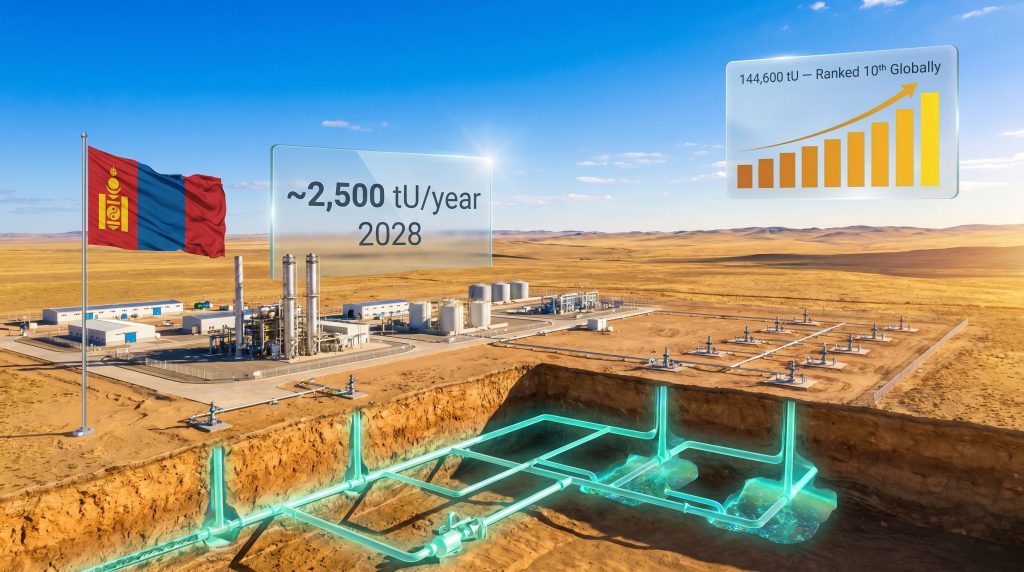
Mongolia sits on a uranium resource base that most of the world has largely overlooked. According to the World Nuclear Association's information library, the country holds an estimated 144,600 tonnes of uranium (tU) as of 2023, placing it 10th globally by resource endowment. That figure rivals several nations that are active, established producers contributing meaningfully to global supply every year.
Mongolia, by contrast, has contributed virtually nothing since the mid-1990s, when operations at the Dornod mine, run by a subsidiary of Russia's Priargunsky Industrial Mining & Chemical Union, came to a halt. The result is a three-decade production gap from a country with tier-one resource credentials — a gap that this project is now directly addressing.
Understanding why this moment matters requires stepping back from the project-specific details and examining the structural forces that make Zuuvch Ovoo's timing so strategically significant. The uranium supply deficit facing the global market only amplifies the importance of new mine development at scale.
When big ASX news breaks, our subscribers know first
Mongolia's Uranium Endowment and Why It Has Remained Dormant
Resource endowment and active production are not the same thing. This distinction sits at the heart of Mongolia's uranium story and helps explain why the country's enormous potential has remained largely theoretical for so long.
When Soviet-linked mining operations at the Dornod mine ceased in the mid-1990s, Mongolia found itself holding a substantial uranium inheritance but lacking the institutional frameworks, capital partnerships, and regulatory infrastructure needed to develop it independently. The governance models of the Soviet era did not translate smoothly into the post-independence period, and uranium development globally entered a prolonged contraction as reactor build programmes stalled and spot prices collapsed following Chernobyl and Fukushima.
The conditions that froze Mongolian uranium production for roughly three decades were not geological — they were structural. The ore was always there. What changed between the mid-1990s and the present is the global context surrounding nuclear energy, the sophistication of Mongolia's investment frameworks, and the emergence of foreign partners with both the technical capability and long-term conviction to commit serious capital.
Orano Mining's presence in Mongolia stretches back more than 25 years, with systematic exploration of the Gobi Desert region commencing in 1997. That kind of exploratory patience is unusual in an industry often driven by short-term capital cycles. The Zuuvch Ovoo deposit was formally identified in 2010 following this extended programme, representing over a decade of methodical geological work before a discovery was confirmed. The formal investment agreement between Orano and the Government of Mongolia was signed in January 2025, establishing the legal and financial architecture for what follows.
What the Zuuvch Ovoo Project Actually Is
Location, Discovery, and Deposit Profile
Zuuvch Ovoo is situated in Dornogovi (Dornogobi) province, in southeastern Mongolia, a region whose geological character has long attracted resource exploration interest. The deposit belongs to the broader project footprint that also includes related deposits such as Dulaan Uul/Umnut, all falling within the same provincial jurisdiction.
The deposit type is critical to understanding why ISL technology was selected. Sandstone-hosted uranium deposits, which are characteristic of formations found in parts of the Gobi Desert region, are among the most amenable geological settings for in-situ leach extraction. The permeable nature of the host rock allows chemical solutions to circulate effectively through the ore body without requiring physical excavation, making ISL not merely convenient but technically optimal for this type of deposit.
Joint Venture Structure and Sovereign Benefit Sharing
The project's ownership and benefit-sharing framework reflects the contemporary model for resource development in emerging mining jurisdictions, where host nations increasingly demand substantive economic participation rather than royalty receipts alone.
| Entity | Role | Economic Position |
|---|---|---|
| Orano (France) | Project operator and technical lead | Majority operational control |
| MonAtom (Mongolia) | State-owned nuclear entity | Strategic partner |
| Badrakh Energy | Joint venture operating company | Project implementation vehicle |
| Mongolian State | Sovereign beneficiary | More than 51% of direct project benefits |
The investment structure ensures Mongolia retains majority economic benefit from the project. Under the terms of the January 2025 investment agreement, more than 51% of the direct benefits generated by Zuuvch Ovoo flow to the Mongolian state, a model that directly aligns governmental interests with project success.
This structure matters for long-term project stability. When host governments become genuine economic beneficiaries rather than passive royalty collectors, the incentive alignment between sovereign and investor shifts substantially. Mongolia's participation through MonAtom and the Badrakh Energy joint venture also embeds institutional capacity-building within the project itself, developing indigenous expertise in nuclear fuel cycle operations that persists beyond any single project lifespan.
In-Situ Leach Technology: The Method Behind the Mine
How ISL Extraction Works
In-situ leach technology is the dominant extraction method for sandstone-hosted uranium deposits globally, yet it remains poorly understood outside specialist circles. The process involves injecting a chemical solution, typically acidic, directly into the uranium-bearing ore body through a network of injection wells drilled in specific geometric patterns. The solution dissolves uranium minerals within the formation.
The uranium-bearing liquid, known as pregnant leach solution, is then pumped to the surface through extraction wells positioned according to the hydrogeological characteristics of the deposit. At the surface, the solution passes through processing facilities where uranium is recovered through ion exchange and precipitation, ultimately producing uranium oxide concentrate, commonly called yellowcake.
The process requires no conventional open-pit blasting, no underground tunnelling, and no ore haulage. Furthermore, surface disturbance is limited to wellheads, piping networks, and processing infrastructure. The in-situ leaching benefits are particularly compelling in remote or environmentally sensitive locations such as the Gobi Desert.
Key steps in the ISL process at Zuuvch Ovoo:
- Chemical solution (acidic leachate) is prepared at the surface processing plant
- Solution is injected into the ore zone through a pattern of injection wells
- Uranium minerals dissolve into the solution within the formation
- Pregnant leach solution is extracted through production wells and pumped to surface
- Solution passes through ion exchange columns that concentrate the uranium
- Uranium is precipitated, dried, and packaged as yellowcake for transport
- Depleted solution is treated and, where appropriate, recirculated into the wellfield
Pilot Validation at Zuuvch Ovoo (2021–2022)
Before committing the approximately $500 million in pre-production capital required to build full commercial infrastructure, Orano conducted pilot ISL operations at the Zuuvch Ovoo site between 2021 and 2022. The pilot programme served multiple critical functions simultaneously.
First, it confirmed technical feasibility at the specific deposit level. ISL performance varies considerably between geological settings, and what works efficiently in Kazakhstan uranium production basins must be independently validated in each new formation. Second, the pilot generated the hydrogeological and geochemical data required to design the commercial wellfield configuration and processing plant specifications. Third, environmental performance data from the pilot phase supported regulatory engagement with Mongolian authorities, providing an evidence base for approvals rather than relying on theoretical projections.
This three-function validation approach is considered best practice in contemporary uranium project development, significantly de-risking the transition from exploration asset to operating mine.
Why ISL Is Uniquely Suited to the Gobi Desert Context
The environmental context of the Gobi Desert makes ISL technology strategically appropriate beyond its purely economic advantages:
- Dramatically reduced surface footprint preserves sensitive semi-arid ecosystems compared to open-pit or underground alternatives
- Lower water consumption per tonne of uranium produced, critical in an arid region where water resources require careful management
- Absence of tailings dams eliminates one of the most significant long-term environmental liability categories in conventional mining
- Smaller physical infrastructure requirements reduce the logistical complexity of construction in a remote desert location
- Alignment with Mongolia's interest in balancing resource extraction with environmental stewardship under the sovereign benefit-sharing framework
Production Capacity, Economics, and Global Supply Context
What 2,500 tU Per Year Actually Means
At nominal full capacity, Zuuvch Ovoo is designed to produce approximately 2,500 tonnes of uranium per year across an estimated 30-year operational lifespan. Taken together, these figures imply total lifetime production of roughly 75,000 tU, representing a substantial addition to cumulative global uranium supply over the project's duration.
To contextualise that annual figure, global uranium production in recent years has ranged between approximately 48,000 and 60,000 tU annually according to World Nuclear Association supply data. At full capacity, Zuuvch Ovoo would account for roughly 4 to 5 percent of current annual global output. Consequently, understanding the broader uranium market dynamics helps frame precisely why this new supply is so strategically timed.
| Metric | Value |
|---|---|
| Nominal annual production capacity | ~2,500 tU per year |
| Estimated operational lifespan | 30 years |
| Estimated total lifetime output | ~75,000 tU |
| Pre-production capital expenditure | ~USD 500 million |
| Total lifetime project investment | ~USD 1.6 billion |
| Target industrial production start | 2028 |
| Construction-to-production timeline | 4 years |
| Direct and indirect jobs created | 1,600 |
The 2,500 tU/year figure places Zuuvch Ovoo in the upper tier of new uranium project developments globally. Many mid-tier operating mines produce in the range of 1,000 to 3,000 tU annually, meaning Zuuvch Ovoo at full capacity would compete with established producing operations rather than being a marginal producer.
Pre-Production Capital and Long-Term Investment Rationale
The requirement to deploy approximately $500 million before the first kilogram of uranium leaves the site reflects both the technical complexity of greenfield ISL development at commercial scale and the economic reality of uranium project economics. Processing infrastructure, wellfield installation, the dedicated sulfuric acid plant, logistics networks, and workforce facilities in a remote desert location all represent substantial upfront commitments.
The total lifetime investment figure of approximately $1.6 billion spread across a 30-year operational period implies a capital intensity profile that requires long-term uranium price confidence to justify. That confidence appears embedded in the project's structure, which was advanced through the signing of the investment agreement in January 2025 despite ongoing uranium market uncertainties that characterise multi-decade resource commitments.
Socioeconomic Impact in Dornogovi Province
The project's regional economic significance extends beyond national fiscal contributions:
- An estimated 1,600 direct and indirect jobs will be created, primarily benefiting Dornogovi province, one of Mongolia's more sparsely populated southeastern regions
- A 30-year operational horizon provides multi-generational employment stability and fiscal revenues for communities that have limited alternative economic anchors
- The more than 51% state benefit share ensures that the majority of economic value generated flows to Mongolian public finances and, through government programmes, to local communities
- The Badrakh Energy joint venture structure creates opportunities for Mongolian nationals to develop technical expertise in uranium operations that can be retained domestically
Mongolia's Uranium Geopolitics and the Franco-Mongolian Strategic Framework
The Historical Context of Mongolia's Uranium Production Gap
Mongolia's uranium history is inseparable from the Soviet industrial legacy that shaped resource extraction across Central Asia during the second half of the twentieth century. The Dornod mine operated under Soviet-era arrangements that extracted uranium primarily for the benefit of the wider Soviet nuclear programme, with limited lasting benefit for the Mongolian state or local communities.
When those operations ceased in the mid-1990s following the dissolution of the Soviet Union, Mongolia inherited resource knowledge and geological data but not the institutional capacity or capital to continue independently. The Orano Mongolia uranium project construction programme represents Mongolia's re-entry into commercial production under a fundamentally different governance model, where the more than 51% state benefit share ensures extraction economics bear no resemblance to the Soviet model of the previous era.
Mongolia's Third Neighbour Foreign Policy and Western Energy Alignment
Mongolia's strategic positioning in the uranium geopolitical landscape is shaped by its foreign policy doctrine, which deliberately cultivates relationships with Western nations and multilateral institutions beyond its geographic borders with Russia and China. This orientation, sometimes described as Mongolia's third neighbour policy, creates natural alignment with Western uranium consumers seeking to diversify supply away from Russian-linked sources.
France's particular interest in Mongolian uranium reflects national energy security priorities. France operates the largest fleet of nuclear reactors in Europe by proportion of electricity generation and maintains a strategic interest in securing reliable, long-term uranium supply from politically stable, non-adversarial jurisdictions. When viewed through the lens of global uranium reserves and diversification strategy, Mongolia's resource base becomes even more strategically compelling.
The investment agreement's signing against the backdrop of the 60th anniversary of Franco-Mongolian diplomatic relations in 2025 was not coincidental framing. It reflects a genuine strategic partnership that aligns resource sovereignty, energy security, and long-term bilateral cooperation within a single infrastructure project.
The attendance at the June 2026 construction ceremony of the Governor of Dornogobi province, the Governor of Ulaanbadrakh sum, and the Secretary of the Nuclear Energy Commission signals that Mongolian governmental support extends across multiple administrative tiers, from local provincial governance through to the national nuclear regulatory body.
The next major ASX story will hit our subscribers first
Risk Factors and Investment Considerations
Construction Execution and Logistical Complexity
Four-year greenfield construction programmes in remote desert locations carry inherent execution risks that deserve clear-eyed assessment:
- Timeline risk: Supply chain disruptions, weather-related construction delays, or equipment delivery complications in a remote Gobi Desert location could extend the construction schedule beyond the 2028 target
- Cost overrun risk: Pre-production capital estimates of approximately $500 million represent a base case projection; actual expenditure in complex greenfield projects frequently diverges from initial estimates
- Sulfuric acid plant construction: The dedicated acid plant represents a technically complex critical path component whose completion determines the readiness of the broader ISL operation
- Water resource management: ISL operations require careful hydrogeological management in an arid environment; groundwater monitoring and management systems must be functional before production can commence
Sovereign and Regulatory Risk
Mongolia's mining regulatory environment has experienced periods of policy uncertainty in previous decades, including instances of retrospective adjustments to investment terms in other resource sectors. The January 2025 investment agreement provides contractual protections designed to insulate the project from such policy shifts, but 30-year resource commitments inherently carry sovereign risk that cannot be fully contractually eliminated.
The more than 51% state benefit share structure functions partially as a sovereign risk mitigation mechanism. When the Mongolian government's economic interests are directly tied to project performance, the incentive to disrupt operations or alter investment terms diminishes. This benefit alignment is increasingly recognised by resource investors as a more durable form of sovereign risk management than purely contractual protections alone.
Uranium Price Sensitivity
The project's economic viability across its 30-year operational horizon depends on uranium price trajectories that cannot be predicted with precision. While uranium prices strengthened considerably from 2023 onwards following years of supply curtailment and demand recovery, commodity price cycles are inherently volatile and a project of Zuuvch Ovoo's scale and timeline will experience multiple price environments across its life.
Orano's position as a global uranium major, with diversified operations across multiple producing jurisdictions, provides balance sheet resilience to manage price cycle exposure that a single-asset junior developer would not possess.
Disclaimer: The economic projections, production capacity estimates, and investment figures referenced in this article are based on information reported at the time of the January 2025 investment agreement and June 2026 construction commencement. Actual outcomes may differ materially from projections due to technical, regulatory, market, and geopolitical factors. This article does not constitute financial or investment advice.
Frequently Asked Questions: Orano Mongolia Uranium Project
When will Zuuvch Ovoo begin producing uranium?
Industrial uranium production at Zuuvch Ovoo is targeted to commence in 2028, following a construction and infrastructure build-out phase running from 2025 through 2028.
What mining method is used at Zuuvch Ovoo?
The project uses in-situ leach (ISL) technology, also known as in-situ recovery (ISR). This method dissolves uranium underground using injected chemical solutions, avoiding conventional excavation. The approach was validated through pilot operations conducted between 2021 and 2022.
How much uranium will Zuuvch Ovoo produce annually?
At full capacity, the project is designed to produce approximately 2,500 tonnes of uranium (tU) per year, with an estimated operational lifespan of 30 years and total lifetime output of approximately 75,000 tU.
Who owns and operates the Zuuvch Ovoo project?
The project is operated through Badrakh Energy, a joint venture between French nuclear major Orano and Mongolia's state-owned MonAtom. Under the investment agreement, more than 51% of direct project benefits flow to the Mongolian state.
How much will the project cost to develop?
Total lifetime project investment is estimated at approximately $1.6 billion, with pre-production capital expenditure of around $500 million required before uranium output begins.
What is Mongolia's global uranium resource ranking?
As of 2023, Mongolia holds approximately 144,600 tU in uranium resources, placing it 10th in the world by resource endowment according to World Nuclear Association data.
How many jobs will Zuuvch Ovoo create?
The project is expected to generate approximately 1,600 direct and indirect jobs, primarily benefiting the Dornogovi province region of southeastern Mongolia.
A Template for What Uranium Development Can Look Like
The Orano Mongolia uranium project construction programme is significant not merely for the tonnes of uranium it will eventually produce, but for the development model it represents. A resource-sovereign benefit structure ensuring more than half of project benefits flow to the host state, a 25-year exploratory commitment before production capital is deployed, a pilot validation programme that de-risks commercial-scale technology adoption, and a diplomatic framework that aligns energy security interests with bilateral cooperation — these are the structural elements that differentiate modern resource development from its historical antecedents.
With industrial production targeted for 2028 and a 30-year operational horizon ahead, Zuuvch Ovoo is positioned to become one of the more consequential new uranium mines to enter global supply in the coming decade. Whether it ultimately serves as a template for further development across Mongolia's broader uranium endowment will depend on how successfully the project navigates the construction, commissioning, and early operational phases that now lie ahead.
For a uranium market confronting structural supply deficits against a backdrop of renewed nuclear energy investment globally, the successful development of projects like Zuuvch Ovoo is not merely commercially interesting — it is arguably necessary.
Readers seeking additional context on global uranium supply dynamics and Mongolia's resource sector can explore reference material through the World Nuclear Association's information library, including country profiles and the broader supply of uranium report, available at world-nuclear.org.
Want To Catch the Next Major Mineral Discovery Before the Market Does?
Discovery Alert's proprietary Discovery IQ model scans ASX announcements in real time, instantly identifying high-potential mineral discoveries across uranium and more than 30 other commodities — turning complex data into clear, actionable opportunities for investors at every experience level. Explore how historic discoveries have generated extraordinary returns on the Discovery Alert discoveries page, and begin your 14-day free trial today to position yourself ahead of the broader market.