June 8, 2026
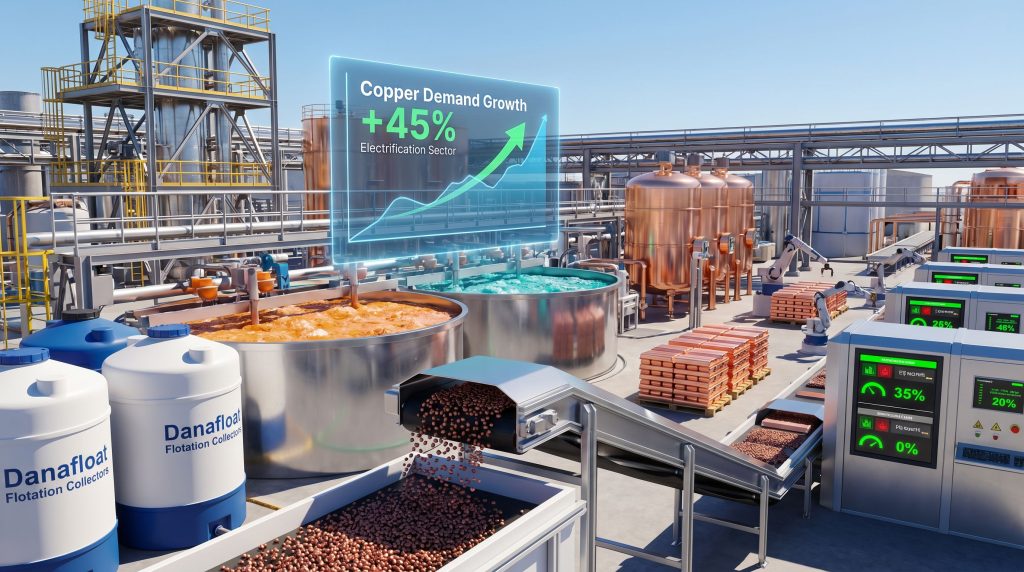
Orica's Danafloat acquisition represents a pivotal moment in the mining chemicals industry, where strategic consolidation is reshaping competitive dynamics across the entire value chain. The global mining industry stands at a critical inflection point where traditional operational boundaries are dissolving in favour of integrated value chain solutions. As ore grades continue their relentless decline and environmental regulations tighten across major mining jurisdictions, companies are increasingly seeking comprehensive partnerships that can optimise performance from extraction through processing.
Mining operators today face unprecedented complexity in balancing production targets with sustainability requirements while managing volatile commodity prices and evolving regulatory frameworks. The traditional model of managing multiple specialised vendors across different operational stages is giving way to integrated platforms that can coordinate optimisation efforts throughout the entire value chain. This transformation represents more than operational efficiency; it signals a strategic repositioning within an industry preparing for massive demand growth driven by global electrification initiatives.
Strategic Consolidation Reshaping Mining Chemical Markets
The mining chemicals sector has experienced accelerating consolidation as companies pursue vertical integration strategies that combine upstream and downstream capabilities. This trend reflects the industry's recognition that fragmented supplier relationships create operational inefficiencies and limit optimisation potential across integrated mining and processing operations. Furthermore, the mining industry evolution 2025 demonstrates how technological advancement is driving consolidation pressures.
Market Dynamics Driving Integration
- Cross-selling expansion opportunities where established supplier relationships in one operational area can be leveraged to introduce complementary services
- Customer acquisition cost reduction through existing mining relationships rather than competing for new accounts in saturated markets
- Coordinated supply chain optimisation enabling synchronised logistics and inventory management across multiple product categories
- Regulatory compliance advantages where integrated providers can ensure coordinated environmental and safety standards across all operational touchpoints
Mining companies increasingly prefer consolidated vendor relationships that reduce procurement complexity while enabling coordinated technical support across multiple operational areas. This preference has created competitive pressure on specialised chemical suppliers to either expand their service portfolios through acquisition or risk losing market share to integrated competitors.
Geographic Market Expansion Strategies
The Australian mining chemicals market has reached relative maturity, driving domestic suppliers to pursue international expansion opportunities. European and Latin American markets represent significant growth potential, particularly in copper-producing regions where flotation chemistry expertise commands premium pricing due to technical complexity and environmental compliance requirements.
Key geographic expansion drivers include:
- Regulatory diversification reducing dependence on single-market policy changes
- Currency risk mitigation through revenue streams in multiple jurisdictions
- Resource access optimisation positioning suppliers closer to major mining operations
- Competitive positioning establishing market presence before larger competitors enter attractive regional markets
When big ASX news breaks, our subscribers know first
Copper Market Fundamentals Accelerating Strategic Acquisitions
Global copper demand projections indicate unprecedented growth driven by electrification initiatives, renewable energy infrastructure deployment, and expanding data centre requirements. This demand surge is creating strategic urgency within the copper processing value chain as companies position themselves to capture margin expansion opportunities. In addition, copper & uranium investment trends indicate sustained market strength.
Electrification Demand Transformation
| Application Category | Current Copper Intensity | Projected Growth (2024-2030) | Market Significance |
|---|---|---|---|
| Electric Vehicle Manufacturing | 2.5-4.0 kg per vehicle | +180-220% production volume | Critical infrastructure component |
| EV Charging Networks | 8-12 kg per DC fast charger | +300-400% installation rate | Grid integration requirement |
| Renewable Energy Systems | 4-6 tonnes per MW wind capacity | +45-60% capacity additions | Energy transition necessity |
| Data Centre Infrastructure | 15-25 kg per server rack | +65-85% capacity expansion | Digital economy growth |
Source: International Copper Association demand analysis and International Energy Agency projections
These demand drivers create compounding pressure on copper supply chains, where processing optimisation becomes increasingly critical as ore grades continue declining at approximately 1% annually across major copper-producing regions. The Orica acquisition news highlights the strategic importance of this consolidation move.
Supply Chain Optimisation Imperatives
Copper ore processing faces mounting technical challenges that make flotation chemistry expertise increasingly valuable:
- Declining ore grades requiring more sophisticated chemical solutions to maintain economic recovery rates
- Environmental compliance pressures demanding reduced reagent consumption and improved water treatment outcomes
- Energy cost pressures necessitating processing efficiency improvements to maintain profit margins
- Infrastructure limitations in remote mining locations requiring optimised chemical logistics and storage
Average copper concentrate grades have declined from 1.8% copper content in 1990 to approximately 0.9% in 2024, representing a fundamental shift in processing economics. Each percentage point improvement in flotation recovery rates can generate $50-150 million in additional annual revenue for major copper operations, making specialised flotation chemistry a high-value strategic capability.
Technology Integration Creating Competitive Advantages
The convergence of blasting optimisation and flotation chemistry represents a paradigm shift in mining operations where previously isolated processes become components of integrated optimisation systems. This technological integration creates substantial barriers to competitive entry while generating measurable operational improvements. Moreover, AI in mining operations is revolutionising how these systems work together.
Blast Fragmentation and Flotation Performance Correlation
Modern mining operations increasingly recognise the direct relationship between controlled fragmentation and downstream processing efficiency. Optimal flotation performance requires specific particle size distributions that can be engineered through coordinated blast design parameters.
Technical optimisation factors include:
- P80 fragmentation targeting to achieve ideal flotation feed characteristics (typically 40-200 micrometers for copper sulfide ores)
- Particle size distribution consistency reducing variability in flotation plant feed characteristics
- Mineral liberation optimisation through controlled explosive energy distribution to maximise valuable mineral exposure
- Secondary crushing reduction through improved primary fragmentation, reducing overall processing energy requirements
Research demonstrates that coordinated blast-to-flotation optimisation can improve overall copper recovery by 2-8% depending on ore characteristics and existing operational efficiency levels. For a 100,000 tonnes-per-day copper operation, this improvement range represents $25-100 million in additional annual revenue at current copper prices.
What Are the Key Benefits of Data Integration Platforms?
Integrated chemical suppliers can leverage real-time operational data to optimise performance across the entire mining-to-concentrate value chain. This capability creates significant customer switching costs while enabling continuous performance improvements that justify premium pricing. Consequently, data-driven operations are becoming essential for competitive advantage.
Advanced data integration enables predictive adjustments to flotation parameters based on upstream blast characteristics, creating optimisation feedback loops that improve overall operational efficiency while reducing environmental impact through more precise reagent dosing.
Key integration capabilities include:
- Predictive flotation modelling using fragmentation data to optimise collector dosages before ore reaches the processing plant
- Real-time performance monitoring enabling immediate adjustments to chemical additions based on flotation performance indicators
- Inventory optimisation coordinating explosive and chemical supply chains to reduce working capital requirements
- Maintenance coordination scheduling equipment maintenance across blasting and processing operations to minimise production disruption
Competitive Landscape and Market Positioning Analysis
The flotation chemistry market structure reflects ongoing consolidation pressures as specialised suppliers compete with diversified chemical companies for market share in an increasingly sophisticated technical environment. However, the strategic context must also consider decarbonisation in mining requirements.
Market Structure Evolution
| Competitive Category | Representative Companies | Strategic Positioning | Geographic Strengths |
|---|---|---|---|
| Integrated Mining Solutions | Orica's Danafloat acquisition, Dyno Nobel | End-to-end optimisation | Australia, Americas, Asia-Pacific |
| Diversified Chemical Giants | BASF, Dow Chemical, Huntsman | Broad portfolio leverage | Global presence |
| Specialty Chemistry Focus | Clariant, Solvay, SNF Group | Technical specialisation | Europe, targeted regions |
| Regional Specialists | Various local suppliers | Cost-competitive solutions | Specific geographic markets |
The competitive landscape increasingly favours companies that can provide integrated solutions rather than point-product suppliers. This shift reflects mining companies' preference for coordinated technical support and consolidated vendor relationships that reduce operational complexity. Furthermore, the copper processing expansion highlights this industry trend.
Barriers to Market Entry
Successful competition in flotation chemistry requires substantial technical capabilities and customer relationship development:
- Regulatory approval processes for new chemical formulations requiring 18-36 months for permitting in major mining jurisdictions
- Customer validation requirements where mining operations conduct extensive testing before approving new chemical suppliers
- Technical support infrastructure necessitating local expertise for troubleshooting and optimisation services
- Supply chain logistics including specialised storage and handling capabilities for hazardous chemicals
These barriers create competitive moats for established suppliers while making market entry increasingly expensive for new competitors. Companies with existing mining relationships possess significant advantages in expanding their service portfolios through acquisition rather than organic development.
Investment Implications and Strategic Outlook
The intersection of rising copper demand, declining ore grades, and increasing environmental regulations creates a favourable investment environment for companies positioned to provide integrated mining solutions. This market dynamic suggests sustained pricing power and market share expansion opportunities for well-positioned chemical suppliers.
Revenue Growth Catalysts
Multiple factors support accelerating growth in the specialty mining chemicals sector:
- Copper price sustainability driven by structural supply-demand imbalances supporting higher-cost production
- Technology adoption acceleration as mining companies invest in operational optimisation to maintain profit margins
- Environmental compliance spending requiring specialised chemical solutions to meet increasingly stringent discharge standards
- Market consolidation premiums as remaining independent suppliers become acquisition targets for larger competitors
Risk Considerations
Despite favourable market dynamics, several factors could impact growth projections:
- Commodity price volatility potentially reducing mining company capital expenditure on optimisation technologies
- Regulatory changes affecting chemical approval processes or environmental standards in key markets
- Technological disruption through alternative processing methods or breakthrough chemical formulations
- Geopolitical factors impacting international expansion strategies or supply chain operations
The next major ASX story will hit our subscribers first
Future Market Evolution and Strategic Positioning
The flotation chemistry market appears positioned for continued consolidation as companies pursue integrated solution capabilities while mining operators seek simplified vendor relationships. This evolution suggests ongoing acquisition opportunities and market share redistribution among existing competitors.
Technology Development Trajectories
Future competitive advantages will likely emerge from several technological advancement areas:
- Artificial intelligence integration enabling real-time optimisation of chemical dosages based on ore characteristics and processing conditions
- Environmental impact reduction through more selective chemical formulations that improve recovery while reducing ecological footprint
- Remote monitoring capabilities allowing suppliers to provide technical support and optimisation services from centralised locations
- Predictive maintenance integration coordinating chemical supply and equipment maintenance schedules to maximise operational efficiency
How Should Companies Respond to Market Changes?
Competitors in the flotation chemistry market face several strategic options for maintaining competitive position:
- Acquisition-based expansion to match integrated solution capabilities offered by expanding competitors
- Technology partnership development creating integrated offerings without full acquisition investment
- Geographic market defence focusing resources on protecting market share in existing stronghold regions
- Niche specialisation strategies targeting specific ore types or processing challenges where technical expertise creates sustainable advantages
The market evolution suggests that companies unable to provide integrated solutions or specialised technical expertise may face increasing competitive pressure as mining operators consolidate their supplier base around fewer, more capable partners.
Investment Strategy Considerations
For investors evaluating opportunities in the mining chemicals sector, several key factors deserve consideration:
- Integration capabilities assessing companies' ability to coordinate multiple service offerings for mining customers
- Geographic positioning evaluating exposure to high-growth copper-producing regions
- Technology development pipelines analysing research and development investments in next-generation chemical solutions
- Customer relationship quality examining long-term contracts and switching cost dynamics with major mining operators
The flotation chemistry market appears positioned for sustained growth driven by fundamental supply-demand dynamics in copper markets, technological advancement requirements, and ongoing industry consolidation pressures. Companies successfully executing integrated solution strategies while maintaining technical innovation capabilities appear best positioned to capitalise on these market trends.
Disclaimer: This analysis is based on publicly available information and industry research. Investment decisions should consider comprehensive due diligence including company-specific financial analysis, market condition assessments, and professional investment advice. Commodity markets and mining operations involve substantial risks that may impact financial performance regardless of operational optimisation efforts.
Want to Capitalise on Mining Industry Consolidation?
Discovery Alert's proprietary Discovery IQ model delivers real-time alerts on significant ASX mineral discoveries, instantly empowering subscribers to identify actionable opportunities ahead of the broader market as companies pursue strategic acquisitions and integration plays. Begin your 14-day free trial today and secure your market-leading advantage in this rapidly evolving sector.