July 31, 2026
When the Ground Gives Way: Understanding the Deadly Cycle of Coal Mine Explosions in Pakistan
Underground coal mining operates at the intersection of geology, chemistry, and human endurance. Long before a methane explosion tears through a tunnel system, the conditions for disaster have been quietly assembling for hours, sometimes days. Gas seeps from fractured seams, accumulates in poorly ventilated shafts, and waits for a single ignition source to transform a working mine into a catastrophe. This is not a new story in Pakistan's Balochistan province, and that repetition is precisely what makes the Pakistan coal mine blast in Balochistan so devastating to confront once again.
When big ASX news breaks, our subscribers know first
What Caused the Deadly Explosion at the Balochistan Coal Mine Complex?
The Role of Methane Gas in Underground Coal Mining Disasters
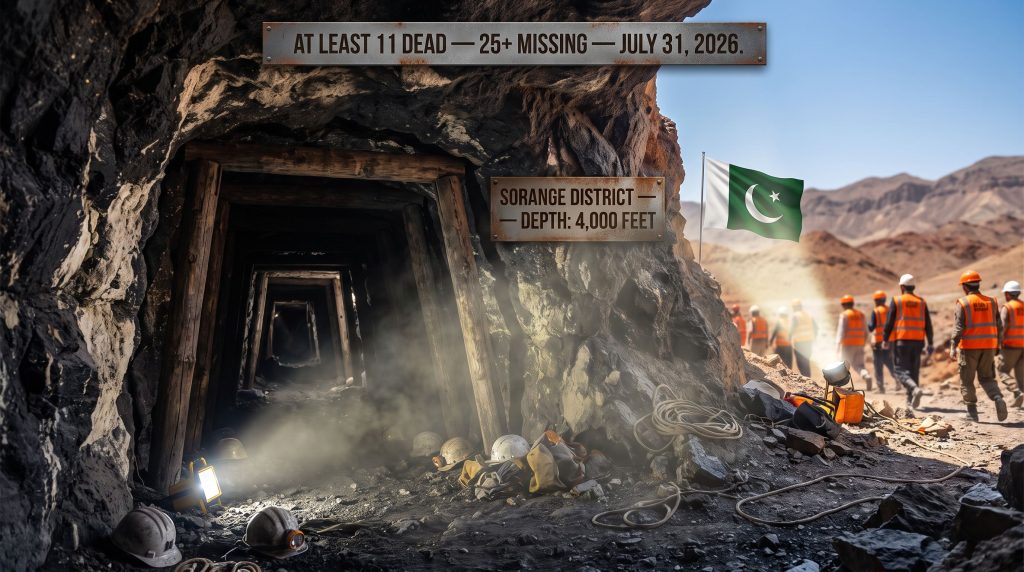
On July 31, 2026, a powerful methane gas explosion tore through a coal mining complex in the Sorange district near Quetta, killing at least 11 miners and leaving more than 25 workers unaccounted for deep underground. Two adjacent mines within the same complex sustained simultaneous damage, a detail that reveals the explosive force involved and underscores how interconnected these informal underground operations tend to be.
Methane, known within the mining industry as firedamp, is a colourless, odourless gas naturally embedded within coal seams. As mining activity disturbs surrounding rock and coal, trapped methane releases and migrates into the working atmosphere of the tunnel. Without adequate ventilation infrastructure to continuously dilute and exhaust this gas, concentrations can climb rapidly toward combustible levels.
How Methane Accumulates in Deep-Seam Coal Mines
The deeper a mine, the higher the ambient pressure, and the greater the volume of gas that can be held within the coal matrix. At depths approaching 4,000 feet (approximately 1,219 metres), the conditions that produce elevated methane concentrations are significantly more pronounced than in shallow workings. This is why deep-seam operations worldwide require continuous atmospheric monitoring, forced ventilation systems, and strict controls on ignition sources, including restrictions on electrical equipment, steel tools, and even certain types of footwear.
Why Sorange's Geological Conditions Create Elevated Risk
Balochistan sits atop coal reserves embedded in complex geological formations shaped by intense tectonic activity. The folded and faulted nature of these seams means methane can be trapped in pockets at irregular intervals along a working face. Miners may advance through apparently normal conditions before encountering a gas-rich zone with little warning. This geological unpredictability compounds the risk significantly, particularly in operations where real-time gas monitoring equipment is absent.
Key Facts: The Balochistan Mine Blast at a Glance
| Detail | Data Point |
|---|---|
| Confirmed Fatalities | At least 11 miners |
| Workers Inside Collapsed Section | 36 total |
| Missing as of Late Thursday | 25+ workers |
| Rescue Depth | Approximately 4,000 feet (1,219 metres) |
| Explosion Cause | Methane gas buildup |
| Location | Sorange, near Quetta, Balochistan |
| Mines Affected | Two adjacent mines damaged simultaneously |
Critical Incident Summary: A methane gas explosion struck a coal mining complex in the Sorange district near Quetta, Balochistan, on July 31, 2026. Of the 36 workers confirmed to be inside the affected section at the time of the blast, at least 11 were confirmed dead and more than 25 remained unaccounted for as rescue teams worked at extreme depth.
Where Is Sorange, and Why Does Balochistan Have So Many Coal Mines?
Balochistan's Coal Reserves: A Resource-Rich but Regulation-Poor Province
Balochistan is Pakistan's largest province by area and among its most resource-rich, holding substantial deposits of coal, natural gas, and various minerals. The province's coal fields have been worked for generations, supplying fuel to both domestic consumers and industrial users across Pakistan. However, the institutional capacity to regulate this sector has historically lagged far behind the pace of extraction activity.
The combination of economic pressure, limited government oversight capacity, and a workforce with few alternative employment options has produced a mining culture where productivity frequently takes precedence over safety protocols. Many operations in the province function as small-scale or artisanal enterprises, with ownership structures that lack the financial resources or technical expertise to implement international safety standards. Understanding mining permitting basics helps illustrate just how far many of these informal operations fall short of even foundational requirements.
The Geographic Isolation of Sorange and Its Impact on Emergency Response
Sorange is described as a remote area near Quetta, the provincial capital. While proximity to the capital theoretically enables faster emergency response, the rugged terrain of Balochistan creates practical barriers that slow rescue operations significantly. Road access to mine sites is often limited, specialised underground rescue equipment may not be readily available, and the sheer depth of operations at 4,000 feet means that even well-equipped teams face extraordinary logistical challenges.
How Proximity to Quetta Shapes Provincial Mining Oversight
The presence of the Chief Inspector of Mines office in Quetta places at least some institutional oversight within reasonable distance of major mining districts. However, Balochistan covers an enormous geographic area, and the ratio of inspectors to active mine sites is understood to be vastly insufficient for meaningful enforcement of existing safety regulations.
How Did Rescue Operations Unfold at 4,000 Feet Underground?
The Challenges of Deep-Level Mine Rescue in Remote Terrain
Working at 4,000 feet underground is an extreme environment by any measure. Oxygen levels can be compromised, temperature and humidity rise substantially with depth, and the structural instability created by an explosion makes every advance by rescue teams a calculated risk. Furthermore, the tunnel collapse risks associated with post-blast structural damage are considerable, as tunnel collapse risks in deep underground environments can make rescue corridors unstable and dangerous for responders themselves.
Specialised breathing apparatus, communication systems capable of functioning at depth, and structural shoring equipment are all essential, yet not universally available in Balochistan's emergency response inventory.
Role of the Provincial Disaster Management Authority in the Response
The Provincial Disaster Management Authority coordinated emergency response alongside the Chief Inspector of Mines. These two bodies represent the primary institutional framework for responding to underground mine emergencies in Balochistan, though critics have long argued that the resources allocated to these agencies are inadequate relative to the scale and frequency of incidents in the province.
What Officials Said About Survival Chances
Muhammad Atif, the Chief Inspector of Mines for Balochistan, acknowledged that rescue teams remained hopeful of locating survivors, while also confirming that the probability of finding miners alive declined significantly as hours elapsed given the depth and conditions involved. This assessment reflects a difficult reality that mine rescue professionals worldwide confront: survival after a methane explosion at extreme depth depends on whether sealed pockets of breathable air exist, whether blast survivors avoided carbon monoxide poisoning, and whether structural collapses created survivable voids rather than complete entombment.
Is This Part of a Broader Pattern of Mine Safety Failures in Pakistan?
A Timeline of Deadly Coal Mine Explosions in Balochistan: 2024–2026
The July 2026 disaster did not occur in isolation. According to Al Jazeera's coverage of the 2024 Balochistan mine explosion, twelve workers were killed in a single incident that year alone, underscoring that the Pakistan coal mine blast in Balochistan is a recurring crisis rather than an isolated event. Consequently, the fact that each tragedy produces limited structural reform points to deep institutional inertia rather than isolated operational failures.
| Year | Incident Type | Primary Cause | Approximate Casualties |
|---|---|---|---|
| 2024 | Underground coal mine blast | Methane gas | Multiple fatalities |
| 2025 | Coal mine explosion, Balochistan | Gas accumulation | Multiple fatalities |
| 2026 | Sorange complex explosion | Methane gas buildup | 11+ confirmed dead, 25+ missing |
Why Methane Gas Incidents Recur in Pakistan's Coal Sector
The recurrence of methane-related disasters reflects a structural problem rather than a series of isolated accidents. Without mandatory real-time gas monitoring, continuous ventilation auditing, and enforceable consequences for non-compliance, the conditions that produce these explosions are simply rebuilt each time a mine reopens after a fatal incident. The economic incentive to resume production quickly frequently outweighs the institutional motivation to investigate root causes thoroughly.
Structural Weaknesses in Mine Inspection and Enforcement Frameworks
Pakistan's mine safety regulatory framework exists on paper, but the translation of written standards into on-ground compliance has been consistently weak. Inspection frequencies are low, penalties for violations are limited, and the political economy of a province heavily dependent on informal mining employment creates disincentives for aggressive enforcement action. Stronger mining regulation frameworks, such as those developed in other resource-rich jurisdictions, demonstrate that meaningful reform is achievable when institutional will is present.
The next major ASX story will hit our subscribers first
What Are the Systemic Safety Failures Behind Pakistan's Coal Mining Deaths?
Inadequate Ventilation Systems in Artisanal and Small-Scale Operations
Ventilation is the single most important safeguard against methane accumulation in underground coal mines. Properly designed systems use a combination of main fans, auxiliary fans, and controlled airflow pathways to continuously dilute and remove gas from the working environment. In small-scale and artisanal operations, these systems are frequently absent, underpowered, or poorly maintained, leaving miners exposed to gas buildups that a functioning ventilation circuit would prevent entirely.
The Gap Between Regulatory Mandates and On-Ground Compliance
Even where regulations technically require gas monitoring and ventilation standards, the gap between mandate and reality in Balochistan's coal sector is substantial. A significant proportion of active mines operate without valid safety certifications, and the inspection regime lacks the frequency and rigour needed to identify and correct dangerous conditions before they produce fatalities. Effective mining risk management strategies require not only written policy but consistent on-site enforcement and accountability mechanisms.
Worker Vulnerability: Informal Employment and Limited Safety Training
Key Insight: Balochistan's coal mining workforce is predominantly engaged through informal labour arrangements. Workers in these conditions frequently lack access to standardised safety inductions, emergency response training, or personal protective equipment appropriate for underground gas environments. This absence of baseline safety literacy compounds the human cost of every gas-related incident, as workers may not recognise early warning signs of dangerous methane concentrations.
How Does Pakistan's Coal Mine Safety Record Compare Regionally?
Coal Mine Fatality Rates: Pakistan vs. Regional Benchmarks
Understanding where Pakistan sits relative to comparable coal-producing nations reveals both the scale of the challenge and the evidence that improvement is achievable given sufficient institutional will.
| Country | Regulatory Framework Strength | Methane Monitoring Requirement | Fatality Rate (Relative) |
|---|---|---|---|
| Pakistan (Balochistan) | Limited enforcement | Inconsistent | High |
| China | Heavily reformed post-2000s | Mandatory | Declining |
| India | Centralised oversight | Required | Moderate |
| Turkey | Strengthened post-Soma disaster | Mandatory | Moderate |
China's experience is particularly instructive. Following a period of catastrophic mine fatality rates in the early 2000s, the Chinese government implemented sweeping reforms including mandatory methane drainage before mining, continuous atmospheric monitoring, and severe penalties for non-compliance. The results were measurable, with fatalities declining substantially over the following decade. This demonstrates that the technical and institutional tools needed to address Pakistan's coal mine safety crisis are well understood globally.
What International Mine Safety Standards Require for Methane Detection
The International Labour Organization's Safety and Health in Mines Convention establishes a framework for underground gas management that includes continuous atmospheric monitoring, pre-shift gas testing, mandatory evacuation thresholds, and regular equipment certification. These are not aspirational standards reserved for wealthy mining nations. They represent the baseline below which operating an underground coal mine constitutes an unacceptable risk to human life.
The Case for Mandatory Gas Monitoring Technology in Deep-Seam Operations
Modern methane detection technology is neither prohibitively expensive nor technically complex to deploy. Portable gas detectors capable of providing continuous personal exposure readings are widely available. Fixed-point sensor networks connected to surface monitoring stations have become standard in regulated mining jurisdictions. The barrier to adoption in Balochistan is not technological unavailability but rather the absence of enforceable mandates and the economic model of small-scale operators who treat safety equipment as an avoidable cost.
What Is Methane Gas and Why Is It So Dangerous in Coal Mines?
The Science of Methane Accumulation in Underground Seams
Coal forms over millions of years through the biological decomposition and geological compression of organic material. Throughout this process, methane is generated as a byproduct and becomes trapped within the microporous structure of the coal matrix and in surrounding rock formations. This stored gas, under the natural pressure of the overlying strata, remains stable until mining activity disturbs the equilibrium.
Explosive Concentration Thresholds: When Methane Becomes Lethal
Methane becomes flammable when its concentration in air reaches approximately 1% and explosive when it reaches between 5% and 15%. Within this range, any ignition source, whether a spark from a tool, a faulty electrical connection, or even the friction of a roof fall, can trigger a detonation. Below 1%, the gas simply displaces oxygen without igniting. Above 15%, the mixture is too rich to combust but oxygen depletion creates its own lethality. The 5% to 15% window is known in the industry as the explosive range or the lower and upper explosive limits (LEL/UEL) for methane.
Step-by-Step: How a Methane Explosion Progresses Underground
Understanding the sequence of events in a methane explosion helps explain why survival rates are so low at depth:
- Seam disturbance during drilling, blasting, or cutting releases trapped methane gas from the coal matrix and surrounding strata.
- Inadequate ventilation allows methane concentration to build beyond safe thresholds, entering the explosive range between 5% and 15%.
- Ignition source such as electrical sparking, mechanical friction, or spontaneous combustion provides the energy needed to trigger combustion.
- Primary pressure wave propagates at high velocity through interconnected tunnel systems, causing structural collapse and destroying ventilation infrastructure.
- Secondary hazards including carbon monoxide generation from incomplete combustion, oxygen depletion, and roof falls create compounding survival threats for anyone not killed in the initial blast.
What Happens to Miners Trapped at 4,000 Feet? Understanding Survival Timelines
Oxygen Depletion and Carbon Monoxide Risk in Collapsed Tunnels
For miners who survive the initial blast, the clock begins immediately. Carbon monoxide, an invisible and odourless gas produced by the explosion's combustion, can reach lethal concentrations within minutes in an enclosed underground space. Oxygen levels in sealed sections decline as workers breathe and as chemical reactions in the rock continue to consume available air. Historical mine rescue data consistently shows that survival rates decline steeply after the first six to twelve hours, with the primary causes being CO poisoning and oxygen depletion rather than physical injury.
Historical Precedents: Survival Cases from Deep-Level Mine Rescues Globally
Remarkable survival cases from mine rescues around the world share common factors: the existence of sealed refuge chambers stocked with compressed air and supplies, the presence of experienced miners who knew to move to higher ground within the tunnel to avoid heavier post-blast gases, and relatively rapid rescue penetration. Without these factors, particularly at 4,000 feet in an operation that is unlikely to have purpose-built refuge infrastructure, the odds shift dramatically against survival as hours accumulate.
Why the First 24 Hours Are Critical in Underground Mine Rescue Operations
The 24-hour threshold is widely recognised in mine rescue methodology as the point at which the probability of finding living survivors shifts substantially. This is not a fixed boundary but rather a reflection of the combined physiological limits of CO exposure, oxygen depletion, dehydration, and physical injury. Every hour of rescue progress in the first 24 matters disproportionately compared to equivalent effort applied after that window closes.
What Policy Changes Could Prevent Future Disasters in Balochistan's Mines?
Mandatory Methane Monitoring: The Technology Already Exists
Policy Gap: Despite a documented and recurring pattern of fatal methane explosions across multiple years, Balochistan's coal mining sector continues to operate without systematic, real-time atmospheric monitoring across its underground operations. This is a standard requirement in most major coal-producing nations, including those at comparable stages of economic development.
The solution is technically straightforward. Continuous methane monitoring, mandatory ventilation audits, and pre-shift gas testing before any worker enters an underground seam would directly address the primary mechanism behind repeated fatalities. The political and economic will to mandate and enforce these measures is the missing variable. In addition, addressing mine safety and reclamation as interconnected priorities, rather than treating them in isolation, would help embed a culture of long-term responsibility within the sector.
Provincial vs. Federal Jurisdiction: Who Is Responsible for Mine Safety in Pakistan?
Mine safety in Balochistan sits primarily within provincial jurisdiction following Pakistan's 18th Constitutional Amendment, which devolved significant regulatory authority to the provinces. This means that the Balochistan government, through the Ministry of Mines and Mineral Development and the Chief Inspector of Mines, holds primary responsibility for safety standards. Federal oversight bodies can provide technical assistance and model legislation but cannot directly enforce provincial mining codes. This jurisdictional structure places the full weight of reform responsibility on a provincial institution that has historically lacked both resources and political incentive for aggressive enforcement.
The Economic Argument for Safety Investment in Coal-Dependent Regions
Coal mining is a primary source of formal and informal employment across significant parts of Balochistan. The economic argument for safety investment is often framed as a cost burden on small operators, but this framing ignores the substantial economic losses associated with repeated disasters: lost production during incident investigations, compensation liabilities, reputational damage to the sector, and the permanent removal of experienced workers from the labour pool. A mine that kills its workforce is not an economically efficient operation by any long-term measure.
The Human Cost: Who Are Pakistan's Coal Miners?
Labour Conditions in Balochistan's Informal Mining Sector
The majority of workers in Balochistan's coal mines are drawn from economically marginalised communities with limited access to alternative livelihoods. Many are internal migrants from poorer districts, employed on daily or task-rate arrangements that provide no job security, no workplace insurance, and no access to formal grievance mechanisms. When a disaster occurs, families of victims frequently receive no compensation, and the informal nature of employment records means that even establishing how many people were inside a mine at the time of an explosion can take hours.
Why Workers Continue to Enter High-Risk Mines Despite Known Dangers
The decision to work in a high-risk mine is rarely a free choice in any meaningful sense. It is the outcome of constrained economic options, where the alternative to dangerous mine work may be no income at all. This structural vulnerability makes worker-led safety advocacy nearly impossible, as individuals who raise safety concerns risk immediate dismissal and replacement from a pool of workers equally desperate for income.
Community Impact: When an Entire Village Depends on a Single Mine
In many districts of Balochistan, a single large mine or mining complex represents the dominant employer for an entire village or cluster of settlements. When a catastrophic explosion occurs, the human toll extends far beyond the immediate casualty count. Families lose primary breadwinners, children face interrupted schooling, and community social structures built around mine employment are destabilised for years. The July 2026 disaster at Sorange, with 36 workers confirmed to have been inside the affected section, likely represents a significant fraction of the working-age men from several nearby communities.
What Needs to Change: A Framework for Safer Coal Mining in Pakistan
Short-Term Interventions: Emergency Ventilation and Gas Detection Upgrades
The most immediate priority is equipping operating mines with portable methane detectors and establishing minimum ventilation standards with enforcement mechanisms. Even basic handheld gas meters capable of alerting workers when methane concentration approaches the lower explosive limit would provide a critical early warning layer that is currently absent in many Balochistan operations.
Medium-Term Reform: Strengthening the Chief Inspector of Mines Authority
Meaningful regulatory reform requires both additional inspection capacity and genuine enforcement authority. This means increasing the number of qualified mine safety inspectors, providing them with modern testing equipment, establishing a transparent and publicly accessible register of inspection findings, and creating escalating penalty structures that impose real consequences on operators who fail to meet minimum standards. IndustriALL Global Union's reporting on Pakistan's mining fatalities further highlights that international labour bodies have consistently called on Pakistani authorities to implement precisely these kinds of accountability measures.
Long-Term Structural Change: Formalising Labour and Licensing in Balochistan's Coal Sector
Sustainable improvement in mine safety outcomes requires the formalisation of employment relationships across the sector. Workers with formal employment contracts have legal standing to demand safe conditions, access compensation mechanisms when injured, and participate in safety committees. Licensing requirements that mandate demonstrated safety competence before a mine can operate create accountability at the ownership level rather than placing all risk on the most vulnerable participants in the system.
The Sorange disaster of July 31, 2026 is both a tragedy and a data point in a pattern that Pakistan's authorities have the knowledge, and increasingly the international scrutiny, to address. The technology exists. The regulatory models are well established globally. What remains is the institutional commitment to transform a sector where the current trajectory leads, with grim predictability, toward the next Pakistan coal mine blast in Balochistan.
Readers seeking broader context on mine safety standards and underground coal mining risks may find value in reviewing publicly available reports from the International Labour Organization on occupational safety in extractive industries, as well as global incident coverage at miningweekly.com.
This article contains references to ongoing rescue operations and casualty figures as reported at the time of the incident. Final fatality and missing person counts may differ as rescue operations conclude. References to regional regulatory comparisons and methane concentration thresholds are drawn from publicly available industry and international safety organisation sources.
Want to Stay Ahead of Significant ASX Mineral Discoveries the Moment They're Announced?
Discovery Alert's proprietary Discovery IQ model delivers real-time alerts on high-potential ASX mineral discoveries, turning complex geological data into clear, actionable investment insights for both short-term traders and long-term investors — explore historic discovery returns to understand the scale of opportunity these moments can create, then begin your 14-day free trial at Discovery Alert to position yourself ahead of the broader market.