August 4, 2026
The Underground Hazard That Never Goes Away: Understanding Pakistan's Coal Mine Methane Crisis
Underground coal mining is, by its fundamental nature, a confrontation with geology. The deeper a mine descends, the more it encroaches on environments where pressure, gas, and structural instability converge in ways that surface-level intuition cannot fully anticipate. Methane, the silent and invisible byproduct of coal seam decomposition, has claimed lives in mining regions across the world for centuries. In countries where regulatory frameworks have matured alongside engineering standards, fatality rates have declined substantially. In regions where enforcement remains weak and capital investment in safety infrastructure is treated as optional, the same chemistry continues to produce the same catastrophic outcomes.
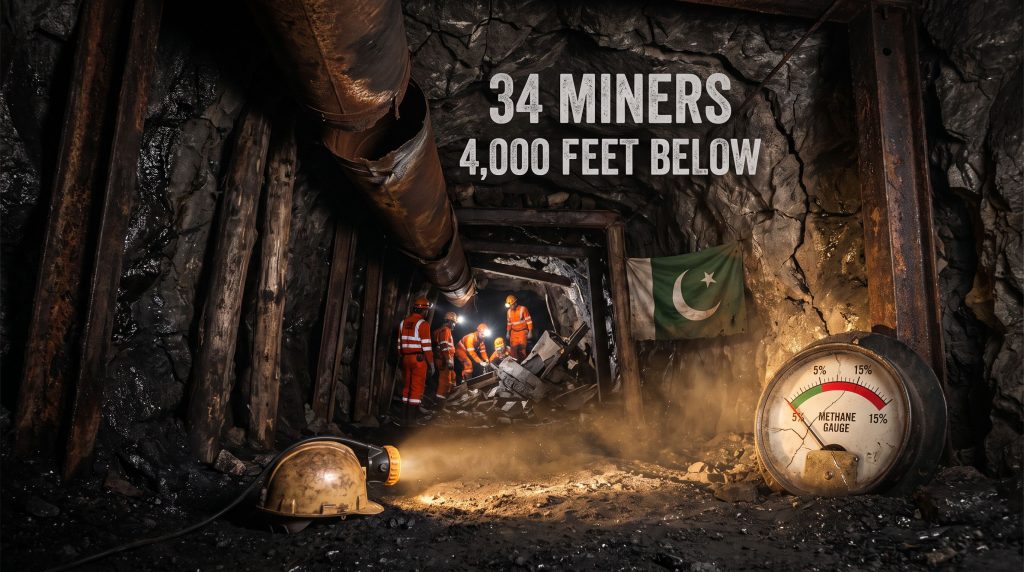
The Sorange coalfield disaster in Balochistan, a Pakistan coal mine methane explosion, which killed 34 miners and injured or trapped dozens more, is not a story that begins with a single explosion. It is the latest chapter in a structural narrative that has been building for decades.
When big ASX news breaks, our subscribers know first
What the Sorange Explosion Reveals About Deep Coal Mine Hazards
The mechanics of a Pakistan coal mine methane explosion are well understood in engineering terms, which makes their continued occurrence in preventable circumstances all the more troubling. Methane, or CH₄, is continuously released from coal seams as mining activity fractures surrounding rock and disturbs the natural pressure equilibrium of the deposit. Under normal conditions in a well-ventilated mine, continuous air circulation dilutes methane concentrations before they can approach dangerous thresholds.
The problem emerges when ventilation systems are absent, underpowered, or not maintained. Methane is colourless, odourless, and slightly lighter than air, meaning it accumulates silently in roof voids, dead-end headings, and areas of reduced airflow. The explosive range sits between 5% and 15% concentration in air, a band engineers refer to as spanning from the Lower Explosive Limit to the Upper Explosive Limit. Within that range, a single ignition source of any kind — whether an electrical fault, friction from cutting equipment, or even static discharge from clothing — is sufficient to initiate a pressure wave that propagates through confined tunnel geometry with devastating force.
At the Sorange coalfield, the blast originated approximately 4,000 feet below the surface. This depth is significant for several interconnected reasons:
- Natural airflow through passive tunnel systems is essentially non-existent at such depths, making active mechanical ventilation the only viable gas management tool
- Structural blast damage at depth is compounded by the enormous overburden pressure already acting on tunnel walls and roof supports, meaning secondary collapses are far more likely than at shallower workings
- Rescue operations at extreme depth are logistically complex and time-constrained, since survivor air quality deteriorates rapidly once blast damage disrupts ventilation pathways
- The viable window for extracting survivors alive compresses dramatically with every hour that passes after structural collapse seals access points
The timing of the explosion during a shift change amplified the casualty toll. Shift transitions are the periods when underground worker density peaks, as incoming and outgoing crews overlap. This operational reality is well understood in mine safety planning, and in well-regulated jurisdictions, shift changes trigger specific ventilation checks and gas readings before personnel movement underground is authorised.
Confirmed Incident Statistics
| Metric | Confirmed Figure |
|---|---|
| Confirmed fatalities | 34 miners |
| Survivors extracted | 22 workers |
| Initial trapped count (primary site) | 22 workers |
| Additional sites affected | 1 neighbouring mine |
| Rescue authority | Provincial Disaster Management Authority (PDMA) |
| Explosion depth | Approximately 4,000 feet |
Emergency response was further complicated by the blast's impact on a neighbouring mine site, forcing the Provincial Disaster Management Authority to coordinate rescue operations across two separate locations simultaneously, dividing personnel and equipment at a moment when concentration of resources would have maximised survival odds.
Balochistan's Coal Sector: Structure, Scale, and Safety Deficit
Understanding why Pakistan coal mine methane explosions recur requires examining how Balochistan's coal industry is actually structured, rather than how its regulatory documents describe it. Furthermore, the mining industry evolution seen in more developed nations makes the contrast with Balochistan's stagnant safety culture all the more striking.
Balochistan is Pakistan's largest coal-producing province by output, supplying a substantial share of the country's domestic coal consumption across industries including cement, brick kilns, and thermal power generation. The economic importance of this coal supply chain is not in dispute. What is in dispute is whether the human cost embedded in that supply chain is acceptable or preventable.
The operational profile of the sector creates compounding risk:
- The majority of active mines are privately owned and small-scale, with operators typically prioritising extraction rates over infrastructure investment
- Worker registration practices are inconsistently applied, meaning that in the immediate aftermath of an accident, establishing the total number of workers underground at the time of a blast is itself an investigative challenge
- Many operations rely on passive ventilation through existing tunnel networks rather than engineered forced-air systems, an approach that is wholly inadequate at depths exceeding several hundred feet, let alone 4,000 feet
- Gas detection equipment, which in regulated jurisdictions must operate continuously and trigger automatic alarms and shutdowns, is largely absent from private mine operations in the region
The Pakistan Central Mines Labour Federation has consistently identified this combination of factors as the root cause of repeated disasters. The federation's position is that these are not accidents in any meaningful sense, but predictable outcomes of deliberate decisions by operators to avoid the cost of compliance.
Pir Muhammad Kakar of the All Pakistan Coal Miners Association has pointed specifically to methane accumulation as the direct product of safety protocol failures by private operators, and has highlighted the routine non-registration of workers as a governance failure that compresses accountability at every level of the system.
The Three Critical Infrastructure Gaps
- Continuous gas monitoring is standard in regulated underground coal operations globally but is largely absent in Balochistan's private mines. Without real-time methane readings, operators have no early warning before concentrations reach explosive thresholds.
- Mechanical ventilation engineering is not simply a matter of installing fans. Effective mine ventilation requires circuit design, airflow modelling, and regular audit to ensure that all working areas receive adequate air exchange. Passive systems through existing tunnels do not meet this standard at operational depths.
- Emergency egress infrastructure, including blast-rated refuge chambers and secondary escape routes, is a licensing prerequisite in Australian and United States underground coal operations. These installations provide trapped miners with a survivable environment while rescue operations proceed. Their absence in Balochistan fundamentally reduces survival probabilities when primary access is destroyed by blast damage.
How Pakistan's Safety Framework Compares Internationally
The contrast between Pakistan's coal mine regulatory environment and those of comparable mining nations is stark when examined side by side. In addition, broader mining risk management practices adopted internationally highlight just how far Balochistan's sector lags behind accepted global standards.
| Country or Region | Regulatory Framework | Gas Monitoring Requirement | Relative Fatality Rate |
|---|---|---|---|
| Australia | Stringent state-level enforcement | Mandatory continuous monitoring | Among the lowest globally |
| United States | Federal MSHA oversight | Mandatory | Low |
| China | Improving post-reform era | Mandatory in large operations | Moderate and declining |
| Pakistan (Balochistan) | Weak provincial enforcement | Not consistently enforced | Among the highest globally |
Pakistan's Mine Act and associated provincial instruments technically require ventilation compliance and gas monitoring. The enforcement mechanism, however, lacks the staffing, funding, and political will to translate those requirements into operational reality. The inspectorate capacity relative to the number of active private mines in Balochistan is, by regional labour organisation assessments, critically inadequate.
A particularly important international benchmark is ILO Convention No. 176 on Safety and Health in Mines, which establishes global baseline standards covering ventilation engineering, gas monitoring requirements, emergency egress design, and worker registration. Pakistan has not ratified this convention, placing it outside the accountability framework that governs mine safety in most major coal-producing nations.
The Pattern Behind the Headlines: Pakistan's History of Coal Mining Fatalities
The Sorange disaster did not occur in isolation. Fatal coal mining accidents in Balochistan follow a pattern that labour researchers have documented across decades, with the same contributing factors appearing repeatedly in incident investigations:
- Methane accumulation in poorly ventilated workings
- Absence of functioning gas detection equipment
- No engineered secondary escape routes
- Worker non-registration that complicates both casualty accounting and compensation processes
- Post-disaster investigations that produce recommendations without producing enforcement reform
The Pakistan Central Mines Labour Federation has argued that the predictable repetition of this pattern represents not a failure of knowledge, but a failure of political will to impose consequences on operators who violate safety laws.
This framing has practical implications. When disasters are treated as accidents rather than as the foreseeable outcomes of known deficiencies, the reform response tends toward inquiry rather than enforcement. Labour organisations in Pakistan have expressed scepticism about whether the investigation announced following the Sorange explosion will produce lasting change, citing prior instances where similar commitments were made and then did not translate into regulatory action with sufficient teeth. Consequently, mine safety and lifecycle governance continues to be treated as secondary to production output in too many operations across the region.
What Meaningful Reform Looks Like in Practice
Preventing future Pakistan coal mine methane explosions does not require novel technology. The solutions are well established in jurisdictions that have successfully driven down underground coal fatality rates. What they require is institutional commitment, adequate resourcing, and genuine enforcement. However, coal sector policy shifts in major producing nations demonstrate that political decisions can either accelerate or undermine safety progress, depending on the direction chosen.
Immediate Operational Reforms
- Mandatory continuous methane monitoring at all underground operations exceeding 500 feet depth, with automatic ventilation shutdown triggers calibrated to pre-set concentration thresholds
- Compulsory worker registration linked directly to operating licence validity, removing the ability of operators to run unregistered workforces
- Third-party ventilation audits conducted on a quarterly basis by independent engineers, with findings submitted to provincial mining authorities
Medium-Term Structural Changes
- Establishment of a dedicated provincial mine safety inspectorate with staffing ratios proportional to the number of active mines, rather than the currently inadequate inspector-to-mine ratios
- Introduction of blast-resistant refuge chambers as a mandatory licensing condition for all underground operations below 1,000 feet depth
- Development of a national mine safety data registry tracking incident frequency, causation patterns, and operator compliance histories across all provinces
Long-Term Policy Architecture
- Ratification of ILO Convention No. 176, which would bring Pakistan's mine safety obligations into alignment with internationally accepted baseline standards
- Creation of a mine safety levy on coal production revenue, with proceeds ring-fenced exclusively for enforcement infrastructure, inspector training programmes, and emergency response equipment procurement
- Technical cooperation agreements with jurisdictions such as Australia and Canada to transfer ventilation engineering expertise and gas management methodologies to provincial inspectorate staff. Furthermore, mining sustainability reforms achieved in comparable contexts demonstrate that systemic change is achievable when regulatory will is genuinely applied.
The next major ASX story will hit our subscribers first
Frequently Asked Questions: Pakistan Coal Mine Methane Explosions
What caused the Sorange coalfield methane explosion in Balochistan?
Methane gas, naturally released from coal seams during mining activity, accumulated to explosive concentrations underground due to inadequate ventilation. Once the gas reached a concentration within the explosive range of 5% to 15% in air, an ignition source triggered a catastrophic pressure wave that caused structural collapses and killed or trapped workers throughout the affected areas.
Why does explosion depth affect rescue outcomes so significantly?
At approximately 4,000 feet below surface, blast damage to tunnel structures is compounded by the enormous overburden pressure already acting on the mine. Collapsed entry and exit points cannot be cleared quickly, survivor air quality deteriorates without functional ventilation, and the logistical complexity of operating rescue equipment at extreme depth slows every phase of the response.
Why do coal mining accidents in Balochistan recur so consistently?
The structural profile of the sector, dominated by small-scale private operators with minimal capital investment in safety infrastructure and operating within a regulatory environment that lacks effective enforcement capacity, creates conditions where the known precursors to methane explosions are permitted to persist without consequence.
What has the government committed to following the Sorange disaster?
Provincial authorities announced a formal investigation into the blast's cause and a broader safety review across Balochistan's mining operations. Compensation for victims' families was also pledged. Labour organisations have noted that comparable commitments have followed previous disasters without producing durable enforcement reform.
What international framework governs underground coal mine safety?
ILO Convention No. 176 on Safety and Health in Mines establishes globally recognised baseline standards for ventilation, gas monitoring, emergency egress, and worker registration. Pakistan has not ratified this convention. Countries with strong safety records, including Australia and the United States, enforce detailed regulatory frameworks that go substantially beyond these baseline standards.
Key Takeaways
The loss of 34 miners at the Sorange coalfield near Quetta is a tragedy that demands more than investigation. It demands acknowledgement that the conditions enabling this Pakistan coal mine methane explosion were known, documented, and preventable. The combination of inadequate ventilation, absent gas monitoring, shift-change timing, extreme operational depth, and systematic worker non-registration did not emerge suddenly. It represents the accumulated consequence of years of regulatory tolerance for non-compliance.
Meaningful change in Balochistan's coal mining sector requires moving beyond post-disaster inquiry cycles toward a pre-operational licensing regime with genuine enforcement consequences. Until the cost of non-compliance reliably exceeds the cost of compliance for private mine operators, the physics of methane accumulation will continue to intersect with the economics of regulatory avoidance, and the human cost will continue to be borne by the miners underground.
Want To Stay Ahead of Significant Mineral Discoveries on the ASX?
Discovery Alert's proprietary Discovery IQ model delivers real-time alerts on significant ASX mineral discoveries, instantly translating complex geological data into actionable investment insights for both short-term traders and long-term investors. Explore historic examples of exceptional discovery returns and begin your 14-day free trial at Discovery Alert to gain a market-leading edge.