May 16, 2026
Paladin Energy's operational excellence and financial performance continue advancing through the complex uranium supply-demand dynamics shaping global nuclear fuel markets. The company's recent quarterly achievements demonstrate how strategic execution during market transitions creates sustainable competitive advantages. Furthermore, understanding operational metrics and capital allocation strategies provides critical insight into broader sector fundamentals affecting investment positioning.
What Drives Paladin Energy's Recent Operational Momentum?
Production Efficiency Metrics and Quarterly Performance Indicators
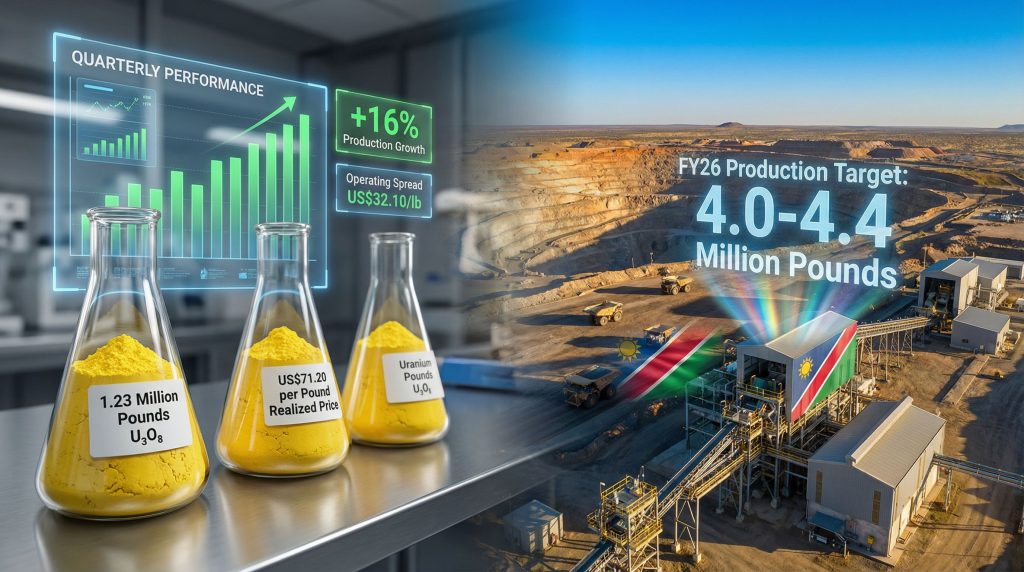
The fourth quarter of 2025 demonstrated significant operational improvements for the uranium producer, with quarterly output reaching 1.23 million pounds of U₃O₈. This represents a substantial 16% increase from the previous quarter's 1.06 million pounds. Moreover, this production advancement stems primarily from enhanced ore feed grades rather than throughput expansion alone, indicating optimized mining sequence execution.
Sales performance similarly strengthened during this period, with volumes climbing to 1.43 million pounds. This reflects an 18% quarterly improvement from 1.21 million pounds in Q3 2025. Consequently, the differential between production and sales volumes reflects inventory management strategies and timing of deliveries under existing contracts.
The production methodology focused on prioritising higher-grade ore sections within current mining areas. This approach maximises output from existing processing infrastructure. However, it demonstrates grade-driven optimisation during the operational ramp-up phase, where mining teams selectively target ore zones with superior uranium concentrations to enhance overall recovery rates.
Key Production Metrics Comparison:
| Metric | Q4 2025 | Q3 2025 | Quarterly Change |
|---|---|---|---|
| Production (M lbs U₃O₈) | 1.23 | 1.06 | +16.0% |
| Sales Volume (M lbs) | 1.43 | 1.21 | +18.2% |
| Grade Optimisation Impact | High | Moderate | Improving |
The Langer Heinrich Mine operations in Namibia achieved these improvements through enhanced ore body sequencing. Mining plans prioritised zones with elevated uranium concentrations. Furthermore, long-hole open stope mining techniques enable selective extraction of higher-grade material, supporting production growth without proportional increases in mining volumes.
Cost Structure Evolution and Margin Expansion Analysis
Operating cost management delivered notable improvements, with per-unit costs declining to US$39.10 per pound in Q4 2025. This represents a decline from US$41.00 per pound the previous quarter, reflecting a 4.6% reduction. In addition, this cost performance occurred alongside production increases, indicating operational leverage benefits as fixed costs distribute across greater output volumes.
Realised uranium pricing strengthened to US$71.20 per pound during the quarter, compared to US$68.50 per pound in Q3 2025. This reflects both market conditions and contract execution timing. The 3.9% pricing improvement combined with cost reductions generated significant margin expansion.
The resulting operating spread widened dramatically to US$32.10 per pound, representing a 16.7% expansion from the previous quarter's US$27.50 per pound. Consequently, this margin profile provides substantial financial flexibility for capital investment programs and operational contingencies.
Cost Structure Breakdown Analysis:
- Fixed Cost Distribution: Higher production volumes enable better absorption of processing plant maintenance, administration, and infrastructure costs
- Variable Cost Efficiency: Improved ore grades reduce processing requirements per pound of final product, lowering reagent consumption and energy usage
- Scale Economics: Operational leverage benefits become apparent as production approaches design capacity parameters
The simultaneous achievement of cost reduction and pricing improvement creates a compounding effect on profitability, with each dollar of price increase and cost decrease flowing directly to operating margins.
Market pricing dynamics reflect broader uranium supply constraints and strengthening demand fundamentals from nuclear energy programmes globally. However, contract pricing structures and spot market exposure influence realised prices, with timing of sales impacting quarterly results.
When big ASX news breaks, our subscribers know first
How Does Paladin's Capital Allocation Strategy Support Long-Term Growth?
Infrastructure Investment Framework
Capital expenditure commitments increased substantially to A$1.9 billion for the reporting period. This represents a 111% increase from the previous A$0.9 billion allocation. Furthermore, this investment intensity reflects deliberate infrastructure development targeting sustainable production capacity rather than short-term output maximisation.
The capital allocation framework prioritises several strategic areas:
- Processing Facility Enhancement: Plant upgrades targeting throughput optimisation and reliability improvements during the critical ramp-up phase
- Mining Infrastructure Development: Equipment procurement and mine development activities supporting consistent ore delivery to processing facilities
- Exploration Activities: Approximately A$0.5 million allocated toward resource expansion and geological understanding enhancement
- Operational Support Systems: Investment in maintenance facilities, power infrastructure, and logistics capabilities
This phased investment approach enables progressive capacity increases while maintaining operational stability. Moreover, the strategy differs from aggressive expansion models by emphasising reliability and sustainability over rapid growth, reducing execution risk during the transition to full production.
Capital Allocation Priority Matrix:
| Investment Category | Priority Level | Expected Impact Timeline |
|---|---|---|
| Processing Plant Upgrades | High | FY26-FY27 |
| Mining Equipment | High | Immediate-FY26 |
| Infrastructure Development | Medium | FY26-FY27 |
| Exploration Programs | Medium | FY27+ |
The investment timing aligns with production guidance trajectories. Consequently, capital deployment supports achievement of 4.0-4.4 million pound annual production targets for FY26 while positioning for full operational capacity in FY27.
Balance Sheet Optimisation and Financial Flexibility
Financial positioning remains robust with A$274 million in cash holdings. This provides substantial liquidity for operational requirements and capital investment programmes. In addition, this cash position offers strategic flexibility during the ramp-up phase when operational cash generation builds progressively.
The balance sheet structure supports self-funding capabilities for major capital commitments. With quarterly operating spreads of US$32.10 per pound and sales volumes of 1.43 million pounds, quarterly operational cash generation approximates US$45.8 million. This equals approximately A$70 million at current exchange rates.
Financial Strength Indicators:
- Liquidity Coverage: Cash position sufficient for 12+ months of operational requirements and capital commitments
- Self-Funding Capacity: Positive operating margins enable partial internal financing of growth capital
- Debt Service Capability: Strong cash flows support potential debt facility optimisation
- Operational Flexibility: Financial cushion enables response to market volatility or operational challenges
The combination of strong cash position and positive operating cash flow generation creates a self-reinforcing financial structure, reducing dependence on external financing during the critical production ramp-up period.
Working capital requirements during the ramp-up phase include inventory build-up for ore stockpiles and finished product. Furthermore, accounts receivable from uranium sales and operational supplies are included. The current cash position provides adequate coverage for these requirements while maintaining strategic reserves.
What Are the Key Production Milestones for FY26 and Beyond?
Production Guidance Analysis and Market Expectations
Management guidance targets 4.0-4.4 million pounds of U₃O₈ production for FY26. Expectations track toward the upper end of this range based on current operational momentum. However, this guidance represents approximately 3.3-3.7 times the annualised Q4 2025 production run-rate, indicating continued growth through the fiscal year.
The production trajectory reflects planned improvements across multiple operational areas:
- Mining Sequence Optimisation: Progressive access to higher-grade ore zones supports sustained production growth
- Processing Plant Efficiency: Ongoing plant upgrades and optimisation initiatives targeting higher throughput rates
- Operational Learning Curve: Continued improvement in mining and processing efficiency as teams gain experience during ramp-up
- Equipment Utilisation: Enhanced utilisation rates of existing mining and processing equipment
Current quarterly production of 1.23 million pounds suggests strong momentum entering FY26. The annualised run-rate already approaches guidance midpoint levels. Consequently, this performance indicates potential for guidance achievement at or above stated ranges.
Production Milestone Timeline:
| Period | Production Target | Key Operational Focus |
|---|---|---|
| Q1-Q2 FY26 | 1.0-1.1M lbs/quarter | Grade optimisation, throughput improvement |
| Q3-Q4 FY26 | 1.1-1.2M lbs/quarter | Processing plant efficiency gains |
| FY27+ | Full design capacity | Normalised operations at maximum throughput |
The ramp-up completion timeline targets end of FY26, with full mining and processing operations planned for FY27. Furthermore, this schedule provides investors with defined milestones for operational maturity assessment and performance evaluation.
Operational Risk Factors and Mitigation Strategies
Grade variability represents the primary operational risk factor. Production improvements largely depend on accessing and processing higher-grade ore zones. However, mining sequences encounter natural geological variation, potentially impacting production consistency if lower-grade areas require processing.
Risk Mitigation Framework:
- Mining Plan Flexibility: Long-hole open stope techniques enable selective mining of optimal ore zones
- Grade Control Programmes: Enhanced geological modelling and grade control procedures improve ore selection accuracy
- Processing Optimisation: Plant modifications targeting improved recovery rates from varying ore grades
- Inventory Management: Strategic ore stockpiling enables blending of different grade materials
Processing plant reliability during continued ramp-up operations creates potential throughput constraints. Equipment maintenance, optimisation projects, and operational learning curves influence production consistency during this critical phase.
Operational risk management focuses on maintaining production momentum while building sustainable long-term capabilities, balancing short-term performance with operational reliability.
Supply chain considerations include procurement of critical reagents (sulphuric acid, processing chemicals), maintenance supplies, and energy requirements. Namibian operational location generally provides stable infrastructure access. However, commodity price inflation affects input costs.
Regulatory compliance requirements encompass environmental monitoring, mining permits, and export licensing procedures. Moreover, established operations benefit from existing regulatory relationships and compliance frameworks, reducing execution risk during production increases.
How Does Paladin's Strategic Positioning Compare Within the Uranium Sector?
Competitive Landscape Analysis
The Langer Heinrich Mine operations position Paladin among significant global uranium producers by production volume. Quarterly output of 1.23 million pounds represents substantial scale within the independent producer segment. Furthermore, the FY26 guidance of 4.0-4.4 million pounds annually would establish the company among major global uranium suppliers.
Competitive Positioning Factors:
- Production Scale: Current and projected output volumes rank among top-tier independent uranium producers globally
- Operational Efficiency: Cost structure of US$39.10 per pound demonstrates competitive positioning relative to industry benchmarks
- Asset Quality: Langer Heinrich Mine represents world-class uranium deposit with established infrastructure and operational history
- Geographic Diversification: Namibian operations provide stable jurisdiction with established mining industry innovation frameworks
The operational improvement trajectory distinguishes Paladin from competitors facing production challenges or cost pressures. Quarterly performance metrics show strengthening execution capabilities and operational confidence building. In addition, recent implementation of advanced ISR production technology across the sector highlights the importance of operational excellence.
Market positioning benefits from timing advantages as uranium markets strengthen while many competitors face operational constraints. The ability to increase production during favourable market conditions creates strategic value relative to peers unable to capitalise on current pricing environments. However, regulatory developments such as the Nova Scotia uranium ban demonstrate ongoing policy considerations affecting the sector.
Canadian Asset Development Pipeline
Strategic asset diversification includes Canadian development projects providing long-term growth optionality beyond current Namibian operations. The Patterson Lake South exploration programme and Michelin project development timeline represent potential future production sources in politically stable jurisdictions.
Canadian Asset Portfolio Analysis:
| Asset | Status | Strategic Value |
|---|---|---|
| Patterson Lake South | Exploration Stage | High-grade potential in stable jurisdiction |
| Michelin Project | Development Phase | Diversification and production expansion |
| Regional Exploration | Early Stage | Future resource base development |
Geographic diversification provides risk mitigation through jurisdiction spreading while accessing different geological settings and market positioning opportunities. Canadian uranium assets benefit from proximity to North American nuclear fuel markets and established uranium industry infrastructure. Moreover, developments like the US Senate uranium ban on Russian imports create additional market opportunities for Western producers.
Resource development timelines extend beyond current FY26-FY27 production objectives, providing medium to long-term growth options as Langer Heinrich operations reach maturity. Consequently, this pipeline structure supports sustained company growth beyond initial production ramp-up completion.
What Investment Considerations Shape Paladin's Valuation Framework?
Fundamental Analysis and Growth Trajectory Assessment
Revenue growth sustainability depends on maintained production increases combined with uranium pricing stability or improvement. The current operating spread of US$32.10 per pound provides substantial margin cushion for market volatility while supporting continued capital investment programmes.
Valuation Framework Components:
- Production Growth Trajectory: Clear pathway from 1.23M lbs quarterly to 4.0-4.4M lbs annually represents significant revenue expansion
- Margin Expansion Potential: Cost structure improvements and operational leverage create profitability growth beyond revenue increases
- Capital Intensity Considerations: A$1.9 billion capex programme requires evaluation of returns on incremental investments
- Cash Generation Profile: Strong operating margins support self-funding capabilities and potential shareholder returns
The investment thesis centres on operational execution during the critical ramp-up phase. Successful achievement of production milestones validates long-term value creation potential. Furthermore, financial flexibility supports growth investment while maintaining balance sheet strength.
Market positioning during uranium sector strengthening provides timing advantages for companies able to increase production efficiently. The combination of operational momentum and favourable market conditions creates potential for compound value creation through both volume and price appreciation.
Market Dynamics and Sector Tailwinds
Global nuclear energy policy developments support long-term uranium demand growth. Multiple countries expand nuclear power capacity and extend existing plant lifespans. However, supply constraints from mine closures and production curtailments create market tightness benefiting efficient producers.
The uranium market exhibits characteristics of structural undersupply meeting growing demand from nuclear energy expansion programmes globally, creating favourable conditions for efficient producers with growth capabilities.
Long-term contracting environment evolution affects pricing and revenue stability, with utilities seeking supply security through term contracts. Paladin's production timing aligns with utility purchasing requirements as existing contracts expire and replacement sourcing becomes necessary.
Sector Tailwind Analysis:
- Nuclear Energy Renaissance: Policy support for nuclear power in major economies drives uranium demand growth
- Supply Constraint Environment: Mine production shortfalls and inventory drawdowns create market tightness
- Contracting Cycle Timing: Utility purchasing requirements align with production ramp-up timeline
- Geopolitical Considerations: Desire for secure, diversified uranium supply sources benefits Western producers
Investment sentiment toward uranium equities reflects broader nuclear energy policy support and recognition of supply-demand fundamentals. Companies demonstrating operational excellence and production growth capabilities attract premium valuations during favourable market cycles.
What Are the Primary Risk Factors and Volatility Considerations?
Operational Risk Assessment
Grade variability impact represents the most significant operational risk. Production improvements depend heavily on accessing and processing higher-grade ore zones. Natural geological variation within the ore body creates uncertainty regarding sustained grade levels through extended mining sequences.
Processing plant reliability during continued operational ramp-up creates potential bottlenecks affecting production consistency. Equipment maintenance requirements, optimisation project implementation, and operational learning curves influence throughput capabilities during this critical development phase.
Operational Risk Matrix:
| Risk Factor | Impact Level | Mitigation Strategy |
|---|---|---|
| Grade Variability | High | Selective mining, ore blending |
| Plant Reliability | Medium | Preventive maintenance, equipment redundancy |
| Mining Equipment | Medium | Fleet management, spare parts inventory |
| Weather/Environment | Low | Operational planning, contingency procedures |
Environmental and regulatory compliance requirements encompass ongoing monitoring obligations, permit maintenance, and export licensing procedures. While established operations benefit from existing frameworks, regulatory changes or compliance issues could affect operational continuity.
Technical execution risks during the ramp-up phase include potential delays in achieving target production rates. Cost overruns on capital projects or performance shortfalls relative to design specifications also pose concerns. Furthermore, management experience and operational track record provide mitigation but cannot eliminate execution uncertainty.
Market and Policy Risk Evaluation
Uranium price volatility exposure affects revenue and profitability, despite strong recent pricing trends. Commodity markets exhibit cyclical characteristics, with potential for price corrections affecting project economics and investment returns.
Nuclear energy policy uncertainty creates demand-side risks despite current supportive trends. Political changes, public sentiment shifts, or nuclear accidents could impact long-term demand projections and uranium price sustainability.
Market volatility in uranium pricing can create significant impact on mining company valuations, particularly during early production phases when operational leverage magnifies price sensitivity.
Geopolitical factors affecting global uranium markets include trade restrictions, sanctions regimes, and supply chain disruptions. While Namibian operations generally benefit from stable jurisdiction status, broader market disruptions could affect pricing and contract execution.
Policy Risk Assessment:
- Nuclear Energy Support: Policy reversals could reduce long-term demand growth expectations
- Trade Relations: Export restrictions or sanctions affecting market access
- Environmental Regulations: Enhanced requirements increasing operational costs
- Mining Policy Changes: Permit modifications or taxation adjustments
Currency exposure through USD-denominated uranium sales versus AUD-denominated costs creates foreign exchange risk. Exchange rate fluctuations affect realised margins and financial performance, requiring ongoing risk management attention.
The next major ASX story will hit our subscribers first
How Should Investors Approach Paladin Energy's Current Valuation?
Technical Analysis and Price Action Context
Recent share price performance reflects market recognition of operational improvements and strengthening uranium fundamentals. The approximately 10% share price increase following quarterly results indicates investor confidence in execution capabilities and production trajectory. Paladin Energy shares have surged following strong quarterly performance metrics.
Trading volume patterns suggest institutional interest building as operational milestones achieve validation. The combination of production growth, margin expansion, and clear guidance provides fundamental support for sustained investor attention.
Technical Considerations:
- Momentum Indicators: Recent operational performance supports positive price momentum
- Volume Analysis: Increased trading activity suggests growing institutional participation
- Support Levels: Established support zones reflect fundamental valuation floor based on asset quality
- Resistance Factors: Previous trading ranges and peer valuations may limit near-term appreciation
Market volatility expectations remain elevated given uranium sector characteristics and broader commodity market dynamics. Short-term price movements may exceed fundamental justifications during periods of sector rotation or risk sentiment changes.
Long-Term Investment Thesis Validation
Production growth trajectory sustainability represents the critical validation factor for long-term investment thesis support. Successful achievement of FY26 guidance and transition to full operations in FY27 would demonstrate operational capabilities and asset quality.
Investment success depends on operational execution validation during the critical ramp-up phase, with production milestones and cost management performance serving as key thesis confirmation points.
Market position strengthening through operational excellence during favourable uranium market conditions creates potential for sustained competitive advantages. The combination of production capability and cost efficiency positions the company for long-term value creation. Furthermore, comprehensive analysis reports provide additional context for investor evaluation.
Strategic optionality value from Canadian development projects provides additional growth opportunities beyond current operational focus. These assets represent potential future value catalysts while maintaining focus on near-term execution priorities.
Investment Thesis Validation Metrics:
- Production Target Achievement: FY26 guidance of 4.0-4.4M lbs demonstrating operational capability
- Cost Structure Sustainability: Maintaining competitive cost position during production increases
- Financial Performance: Cash generation supporting growth investment and shareholder returns
- Market Positioning: Strengthening competitive position within global uranium supply base
Paladin Energy update analysis reveals a company progressing through critical operational milestones while benefiting from favourable uranium market dynamics. The combination of production growth, margin expansion, and financial flexibility creates multiple value drivers. However, execution risk during the ramp-up phase requires ongoing monitoring and validation.
Disclaimer: This analysis is for informational purposes only and does not constitute investment advice. Uranium mining investments involve significant risks including operational challenges, commodity price volatility, and regulatory uncertainties. Investors should conduct their own research and consider their risk tolerance before making investment decisions. Past performance does not guarantee future results, and all forward-looking statements involve assumptions and uncertainties that may not materialise as expected.
Looking to Capitalise on Uranium Sector Opportunities?
Discovery Alert's proprietary Discovery IQ model delivers real-time alerts on significant uranium and mineral discoveries across the ASX, enabling investors to identify actionable opportunities ahead of the broader market. Begin your 30-day free trial today with Discovery Alert and position yourself to capitalise on the next major discovery before market consensus forms.