May 12, 2026
The global transition toward electrification presents both unprecedented challenges and remarkable opportunities for traditional commodity markets. As automotive manufacturers accelerate their shift away from internal combustion engines, established industrial metals face the urgent need to identify viable applications beyond their historical demand drivers. This transformation dynamic particularly affects platinum group metals, where the search for a new market for palladium in electric vehicles creates complex market restructuring scenarios that require strategic adaptation across multiple time horizons.
Executive Summary: The Palladium Market Transformation Challenge
Current Market Dynamics and Strategic Imperatives
The palladium market currently operates under significant structural constraints that necessitate immediate diversification strategies. Nornickel, commanding approximately 40% of global palladium production, faces the reality that autocatalyst applications represent more than 80% of total demand. This concentration creates vulnerability as electric vehicle adoption accelerates worldwide.
Global Palladium Demand Breakdown (2024-2026)
| Application Sector | Current Share | Risk Level | Timeline Impact |
|---|---|---|---|
| Automotive Catalysts | 80%+ | High | Immediate |
| Industrial Applications | 12-15% | Medium | 3-5 years |
| Electronics/Jewelry | 3-5% | Low | Long-term |
| Emerging Technologies | <2% | Opportunity | Development phase |
Supply concentration risks extend beyond single-company dominance. Russian and Central Asian production regions account for the majority of global output, creating geopolitical exposure that amplifies the strategic importance of demand diversification initiatives. Furthermore, current market pricing reflects these tensions, with palladium trading at $1,496.50 per troy ounce as of April 2026, demonstrating significant volatility with daily movements exceeding 5%.
Investment Thesis for New Application Development
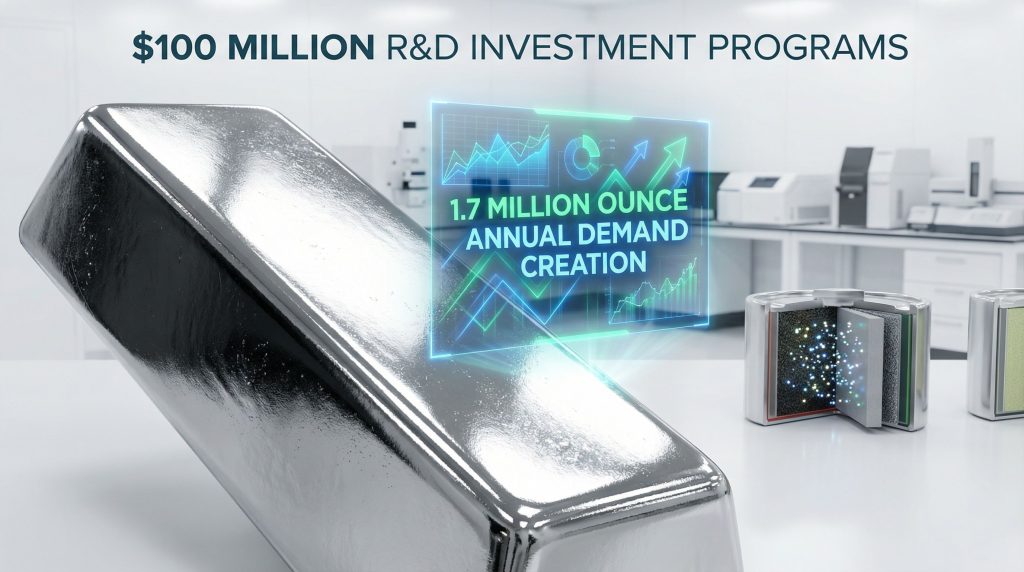
Nornickel's $100 million investment program represents a quantified commitment to market transformation, targeting 1.7 million troy ounces of new annual demand by 2030-2035. This initiative encompasses multiple technology platforms, with lithium-sulphur battery catalysts representing the primary opportunity where australia lithium innovations could play a crucial role.
The three-year commercialisation timeline for breakthrough battery catalyst technologies aligns with critical market transition windows. As traditional automotive demand faces structural decline, the successful development of viable alternatives becomes essential for maintaining price stability and production economics across existing mining operations.
Moreover, risk-adjusted return projections for palladium market diversification strategies depend heavily on technology commercialisation success rates. The company's stated confidence in creating "huge new markets for palladium" with potential demand of at least 1.5 million ounces annually from lithium-sulphur applications alone indicates substantial upside potential if technical barriers can be overcome.
When big ASX news breaks, our subscribers know first
What Makes Lithium-Sulphur Battery Technology a Game-Changer for Palladium Demand?
Technical Performance Advantages Over Conventional Li-Ion Systems
Lithium-sulphur battery technology offers theoretical advantages that could reshape energy storage markets if durability limitations can be addressed. The technology promises higher energy density alongside significantly reduced cost and weight compared to lithium-ion batteries currently dominating electric vehicle applications.
"Energy Density Opportunity: Li-S technology's theoretical specific energy capacity substantially exceeds current lithium-ion implementations, potentially enabling extended driving ranges without proportional weight increases in battery packs."
Weight reduction potential represents a critical competitive advantage in automotive applications. Lighter battery systems improve vehicle efficiency, reduce structural requirements, and enhance performance characteristics across multiple metrics. Furthermore, the cost structure analysis reveals that raw material advantages could drive manufacturing economics favourable to mass adoption.
Li-S vs. Li-Ion Performance Comparison
| Performance Metric | Li-Ion Current | Li-S Theoretical | Commercial Barrier |
|---|---|---|---|
| Energy Density | 150-250 Wh/kg | 500+ Wh/kg | Cycle life limitation |
| Material Cost | High (cobalt, nickel) | Lower (sulphur abundance) | Manufacturing scalability |
| Weight Factor | Baseline | Potential 40-60% reduction | Technology maturation |
| Cycle Life | 1,000+ cycles | <500 cycles currently | Primary development focus |
The Critical Catalyst Challenge in Li-S Commercial Viability
Current cycle life limitations represent the fundamental barrier preventing lithium-sulphur technology from achieving mass-market penetration. Existing implementations fall significantly short of the 1,000+ cycle requirement that automotive applications demand for commercial viability.
The extremely limited service life stems from complex electrochemical challenges including polysulfide dissolution and cathode material degradation. These technical barriers have prevented major automotive manufacturers from adopting Li-S technology despite its theoretical performance advantages.
However, palladium's catalytic properties offer potential solutions to these durability challenges. The metal's ability to facilitate sulphur conversion efficiency and prevent polysulfide shuttle effects could represent the breakthrough necessary for commercial deployment. Consequently, Nornickel's confidence in developing effective palladium-based catalysts within a three-year horizon reflects optimism about overcoming these fundamental technical barriers.
How Could Palladium Catalysts Solve the Li-S Battery Durability Problem?
Electrochemical Mechanisms and Performance Enhancement
Nornickel's strategic investment in palladium catalyst development targets the extension of lithium-sulphur battery lifespan to exceed 1,000 charging cycles, addressing the current service life constraint that prevents commercial adoption. This technical milestone represents the threshold necessary for automotive industry acceptance and aligns with broader critical minerals transition requirements.
The catalyst development approach focuses on integrating palladium nanoparticles within cathode architectures to optimise sulphur reduction processes. The metal's catalytic properties potentially address multiple degradation mechanisms that currently limit cycle life performance.
Step-by-Step Palladium Catalyst Function:
- Sulphur Activation: Palladium facilitates initial sulphur reduction reactions
- Polysulfide Management: Catalytic sites prevent destructive shuttle effects
- Reaction Kinetics: Enhanced conversion efficiency reduces stress on cathode materials
- Cycle Stability: Maintained catalytic activity across repeated charge/discharge cycles
Commercial Feasibility and Manufacturing Scale Requirements
Catalyst loading requirements determine the economic viability of palladium-enhanced lithium-sulphur systems. Estimated consumption rates per kilowatt-hour of battery capacity will directly influence total market demand projections and cost-benefit analyses for automotive manufacturers.
Palladium Demand Scenarios by Li-S Market Penetration
| Market Share | Annual Battery Capacity (GWh) | Palladium Loading (g/kWh) | Total Demand (Million oz) |
|---|---|---|---|
| 10% penetration | 150 GWh | 0.8g | 0.4M oz |
| 25% penetration | 375 GWh | 0.8g | 1.0M oz |
| 50% penetration | 750 GWh | 0.8g | 2.0M oz |
In addition, cost-benefit analysis for automakers adopting palladium-enhanced Li-S systems must consider catalyst costs against performance improvements. The economic equation becomes favourable if palladium loading costs remain below the value created through weight reduction, energy density improvements, and extended vehicle range capabilities.
What Are the Market Size Implications for New Market for Palladium in Electric Vehicles?
Demand Forecasting Models and Market Penetration Scenarios
Nornickel's projections indicate at least 1.5 million ounces annually of potential new demand from lithium-sulphur catalyst applications, with broader targets reaching 1.7 million troy ounces across all emerging applications by 2030-2035. These figures represent substantial market expansion relative to current consumption patterns and could significantly impact the battery metals investment landscape.
Geographic market analysis reveals differentiated adoption timelines across major automotive production regions. China's aggressive electric vehicle deployment, European regulatory frameworks, and North American infrastructure development create varying penetration scenarios that influence global demand projections.
Annual Palladium Consumption Projections
| Region | 2027 Baseline | 2030 Li-S Integration | 2035 Full Deployment |
|---|---|---|---|
| China | 200,000 oz | 450,000 oz | 800,000 oz |
| Europe | 150,000 oz | 350,000 oz | 600,000 oz |
| North America | 100,000 oz | 250,000 oz | 450,000 oz |
| Other Markets | 80,000 oz | 150,000 oz | 250,000 oz |
Timeline analysis suggests commercial deployment phases beginning in 2027-2028, with meaningful market penetration achieved by 2030, and potential full-scale adoption reaching maturity by 2035. These projections depend critically on successful technology commercialisation and competitive positioning against alternative solutions.
Competitive Positioning Against Alternative Catalyst Materials
Platinum group metal alternatives present both opportunities and competitive threats to palladium's market expansion. Cost and performance trade-offs between different catalytic materials will determine ultimate market share distribution in successful Li-S implementations. Recent advances in battery recycling breakthrough technologies may also influence material selection considerations.
Non-PGM catalyst development programmes represent longer-term competitive risks. While current alternatives face significant technical limitations, sustained research investment could potentially challenge palladium's catalytic advantages in future technology generations.
"Industry Perspective: The catalyst material selection criteria prioritise durability, cost-effectiveness, and manufacturing scalability, creating multiple evaluation dimensions that favour established PGM solutions in near-term commercialisation efforts."
How Do Hybrid Vehicle Trends Support Palladium's Transition Strategy?
PHEV Market Growth as Bridge Technology
Extended-range electric vehicle (EREV) adoption provides transitional demand support as the automotive industry evolves beyond pure internal combustion engines. Plug-in hybrid electric vehicle (PHEV) platforms maintain higher palladium catalytic requirements compared to battery-only systems, creating sustained demand during the electrification transition period.
Regional variations in EREV adoption reflect different regulatory environments and infrastructure development timelines. Chinese market expansion in particular demonstrates accelerated deployment of extended-range systems that require sophisticated catalytic solutions for optimal performance.
PHEV vs. BEV Market Development Timeline
- 2024-2027: PHEV growth phase with enhanced catalytic requirements
- 2028-2030: Transition period with mixed powertrain adoption
- 2031-2035: BEV dominance with potential Li-S integration
Regulatory Drivers Sustaining Traditional Palladium Applications
Euro 7 and Tier 4 emissions standards development impacts catalyst loading requirements across hybrid powertrains. Enhanced cold-start optimisation demands and extended durability specifications potentially increase palladium intensity factors in next-generation catalytic systems.
Policy timeline analysis reveals that internal combustion engine phase-out schedules vary significantly across regions, creating extended transition periods where hybrid technologies maintain market relevance. These regulatory frameworks support continued palladium demand even as pure electric adoption accelerates.
Regional Emissions Compliance Impact
| Region | Implementation Timeline | Catalyst Loading Effect | Palladium Demand Impact |
|---|---|---|---|
| Europe | 2027-2030 | 15-25% increase | Sustained through 2032 |
| China | 2026-2028 | 20-30% increase | Growth through 2030 |
| North America | 2028-2031 | 10-20% increase | Stable through 2033 |
What Other Emerging Applications Could Diversify Palladium Demand?
Hydrogen Economy Integration Opportunities
Fuel cell catalyst applications in commercial vehicle segments represent another diversification pathway for palladium demand. Hydrogen-powered heavy-duty transportation requires sophisticated catalytic systems where nornickel seeks new market opportunities and palladium's properties offer performance advantages over alternative materials.
Hydrogen purification and storage system requirements create additional industrial demand opportunities. As hydrogen infrastructure develops to support clean energy initiatives, catalytic applications expand beyond traditional automotive uses into broader energy system components.
Market sizing for hydrogen infrastructure development projects indicates potential demand creation across multiple application categories:
- Fuel cell stacks: Commercial vehicle and stationary power applications
- Hydrogen purification: Industrial gas processing and storage facilities
- Electrolysis systems: Clean hydrogen production catalyst requirements
Advanced Electronics and Industrial Applications
Multi-layer ceramic capacitor (MLCC) demand in electric vehicle electronic systems creates incremental consumption growth as vehicles incorporate more sophisticated electronic architectures. Advanced driver assistance systems, battery management, and power electronics require increased MLCC deployment.
Fiber optic and telecommunications infrastructure growth drivers support industrial palladium consumption beyond traditional applications. Data centre expansion, 5G network deployment, and broadband infrastructure development create sustained demand in telecommunications equipment manufacturing.
Furthermore, Nornickel has already identified a near-term commercial application in fibreglass production in China, demonstrating immediate diversification opportunities beyond speculative future technologies.
Industrial Application Growth Projections
| Sector | Current Demand | 2030 Projection | Growth Driver |
|---|---|---|---|
| Electronics | 180,000 oz | 320,000 oz | EV electronics complexity |
| Telecommunications | 90,000 oz | 150,000 oz | Infrastructure expansion |
| Industrial Catalysis | 120,000 oz | 200,000 oz | Process optimisation |
| Fibreglass Production | 40,000 oz | 85,000 oz | Chinese manufacturing |
The next major ASX story will hit our subscribers first
What Are the Investment and Supply Chain Implications?
Capital Allocation Strategies for PGM Producers
Research and development investment prioritisation across battery technology platforms requires careful risk assessment of multiple technology pathways. Nornickel's $100 million commitment represents significant capital allocation toward market transformation, but success depends on technology commercialisation timelines versus market transition speeds. This aligns with broader mining industry evolution trends.
Partnership structures with battery manufacturers and automakers become critical for technology validation and market access. Strategic collaboration agreements provide both technical feedback and commercial pathway development for new palladium applications.
Technology Development Risk Assessment:
• High probability: Industrial catalyst applications with established demand
• Medium probability: Li-S battery integration pending technical validation
• Speculative potential: Hydrogen economy applications subject to infrastructure development
• Long-term opportunity: Advanced electronics growth dependent on adoption rates
Supply Security and Recycling Infrastructure Development
End-of-life vehicle palladium recovery projections indicate growing secondary supply availability. Current estimates suggest 3.5 million ounces of recyclable palladium from automotive sources by 2025, providing supply chain resilience as new applications develop.
Secondary supply integration in new application markets offers cost advantages and reduces dependency on primary mining operations. Recycling infrastructure development creates circular economy opportunities that support sustained demand across multiple application categories.
"Circular Economy Insight: Advanced recycling technologies enable palladium recovery rates exceeding 95% from automotive catalysts, creating sustainable supply chains for emerging applications while reducing environmental impact."
Supply Source Diversification Timeline
- 2024-2026: Primary mining dominance with limited recycling integration
- 2027-2030: Growing secondary supply contribution (15-20% of total)
- 2031-2035: Mature recycling infrastructure supporting 25-30% of demand
Strategic Outlook for Palladium Market Evolution
Key Success Factors for Market Transformation
Technology commercialisation milestones represent the primary determinant of palladium's successful market diversification. Achieving the 1,000+ cycle life target for lithium-sulphur batteries within Nornickel's three-year development timeline creates the foundation for substantial demand creation and a new market for palladium in electric vehicles.
Industry collaboration requirements extend beyond single-company development efforts. Successful scaled adoption requires coordination between catalyst developers, battery manufacturers, automotive original equipment manufacturers, and supply chain partners across multiple geographic regions. Companies interested in longer-lasting ev batteries are monitoring these developments closely.
Critical Decision Points for Palladium Demand Trajectory (2026-2030)
| Milestone | Timeline | Success Criteria | Market Impact |
|---|---|---|---|
| Li-S Catalyst Validation | 2027 Q2 | 500+ cycle demonstration | Technology credibility |
| Commercial Partnerships | 2028 Q1 | OEM adoption agreements | Market access confirmation |
| Manufacturing Scale | 2029 Q3 | Pilot production capacity | Volume demand creation |
| Cost Competitiveness | 2030 Q2 | Economic viability vs. alternatives | Mass market potential |
Investment Recommendations and Risk Considerations
Portfolio diversification strategies for palladium exposure should balance traditional autocatalyst demand with emerging application potential. The transition period creates both opportunities and risks as market dynamics shift toward new technology platforms.
Regulatory and geopolitical risk factors in supply chain planning require careful assessment given the concentration of production in specific geographic regions. Political stability, trade relationships, and environmental regulations influence long-term supply security across primary production sources.
Three-Point Action Plan for Stakeholders:
- Monitor Technology Milestones: Track Li-S battery development progress and commercialisation timelines
- Assess Supply Chain Resilience: Evaluate exposure to concentrated production regions and develop alternative sourcing strategies
- Position for Transition: Balance traditional demand decline against emerging application growth in investment planning
Consequently, the development of a new market for palladium in electric vehicles represents both a necessity and an opportunity for industry stakeholders. As traditional automotive applications face structural decline, the successful commercialisation of palladium-enhanced lithium-sulphur batteries could transform market dynamics and create sustainable demand growth across multiple sectors.
Investment decisions involving palladium and related technologies should consider the speculative nature of emerging applications, technology development risks, and market transition uncertainties. Past performance does not guarantee future results, and commodity investments carry inherent volatility risks.
Looking to Capitalise on Critical Battery Metals Market Shifts?
Discovery Alert delivers immediate notifications on significant ASX mineral discoveries across battery metals and critical commodities, powered by its proprietary Discovery IQ model. Subscribers gain access to real-time insights on emerging opportunities in palladium, lithium, and other strategic materials as market dynamics shift toward electrification, ensuring informed decisions ahead of broader market recognition.