June 27, 2026
Pan American Silver's recent exploration success at La Colorada represents a significant advancement in high-grade silver vein discovery and resource expansion. The discovery of multiple vein systems with exceptional grades demonstrates the continued potential for world-class precious metals discoveries in established mining districts. Furthermore, the combination of traditional vein mineralization with newly identified skarn and carbonate replacement deposits creates diverse development opportunities that could substantially enhance the operation's long-term value.
Understanding High-Grade Vein Discovery Economics in Modern Silver Mining
The economics of high-grade silver vein systems depend on multiple interconnected factors that determine long-term project viability. Mining operations targeting narrow, high-grade veins require specialised extraction methods and processing techniques that differ significantly from bulk tonnage approaches used in lower-grade operations. Consequently, understanding these economic drivers becomes essential for evaluating discovery significance.
Defining High-Grade Silver Mineralization Standards
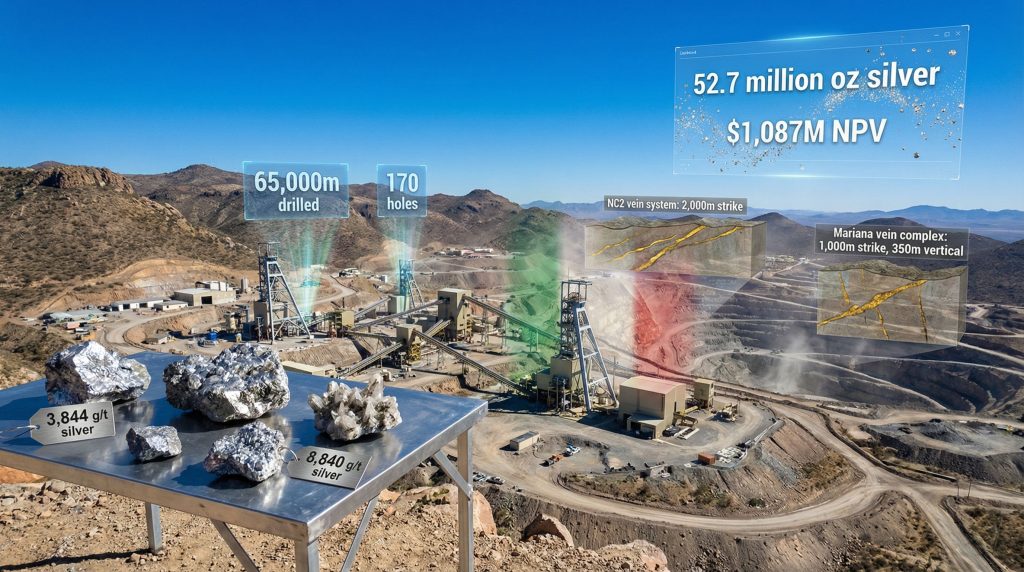
Industry benchmarks for economically viable silver operations typically range from 100-300 grams per tonne for bulk mining scenarios, while selective mining of high-grade veins can justify grades exceeding 1,000 g/t. The recent Pan American Silver new high-grade veins discovery at La Colorada demonstrates exceptional grades, with intercepts reaching 3,844 g/t silver in specific zones.
These extraordinary grades represent significant outliers compared to global averages. Most producing silver mines operate with head grades between 150-400 g/t, making the La Colorada intercepts particularly noteworthy from both technical and economic perspectives. The ability to consistently extract such high-grade material depends on precise geological understanding and selective mining techniques.
Key factors influencing high-grade vein economics include:
- Vein continuity and predictability
- Dilution factors during extraction
- Processing recovery rates
- Infrastructure requirements
- Labour and operational costs
Geological Context of Zacatecas Silver District
The Zacatecas region in Mexico forms part of the Mexican Silver Belt, a geological province known for world-class precious metals deposits. This area has produced silver continuously for over 450 years, establishing Mexico as a global leader in silver production. The geological setting provides ideal conditions for epithermal and mesothermal vein formation.
Regional mineralisation patterns indicate that silver-bearing veins typically follow north-south trending structural corridors. These structures create pathways for hydrothermal fluids carrying precious metals from deeper magmatic sources. The La Colorada mine benefits from this favourable geological setting, with multiple vein systems demonstrating similar orientations and mineralogical characteristics.
Historical production from surrounding operations provides valuable context for understanding the district's potential. Several nearby mines have operated successfully for decades, validating the region's geological prospectivity and establishing necessary infrastructure for continued development. Moreover, the established infrastructure reduces capital requirements for expansion projects.
When big ASX news breaks, our subscribers know first
How Do Exploration Results Translate to Resource Expansion?
Exploration programmes in established mining districts follow systematic approaches designed to maximise discovery potential whilst minimising costs. The La Colorada drilling campaign represents a comprehensive effort to define and expand known mineralisation through targeted drilling and geological modelling. Additionally, this systematic approach enables efficient drilling results interpretation for resource estimation purposes.
Drilling Campaign Technical Specifications
The current drilling programme at La Colorada encompasses approximately 65,000 meters across 170 holes, representing one of the most extensive exploration efforts in the mine's recent history. This campaign, scheduled from November 2024 through June 2025, targets multiple vein systems simultaneously to maximise efficiency and geological understanding.
| Metric | Specification |
|---|---|
| Total Meters Drilled | ~65,000m |
| Hole Count | 170 holes |
| Campaign Duration | November 2024 – June 2025 |
| Resource Increase | 52.7 million oz silver |
| Target Systems | Multiple vein complexes |
The programme's scope demonstrates Pan American Silver's confidence in the geological potential and commitment to systematic resource expansion. Each drill hole provides crucial data for 3D geological modelling and resource estimation refinement.
Vein System Extensions and Continuity Analysis
Multiple vein systems at La Colorada show remarkable continuity and grade consistency across significant distances. The NC2 vein system has been traced for over 2,000 meters along strike, demonstrating exceptional structural continuity rarely observed in epithermal environments. This extensive strike length suggests robust geological controls and potential for further expansion.
The Mariana vein complex extends approximately 1,000 meters along strike with 350 meters of proven vertical extent. Such dimensions indicate substantial mineralised volumes and support long-term mining scenarios. The combination of strike length and vertical extent provides operational flexibility for future mine planning.
Additional discoveries include:
- San Geronimo system: 500m strike extension
- Cristina vein complex: 500m additional strike length
- Multiple parallel structures with similar orientations
- Consistent grade patterns across extended zones
Step-Out Drilling Success Rates
Exploration success extends 400 meters eastward from previously defined limits on the NC2 system, indicating substantial additional potential. High-grade intercepts maintain consistency across these expanded zones, suggesting that mineralisation controls remain active throughout the extended areas.
The consistency of high-grade intercepts across step-out drilling locations indicates robust geological controls and predictable mineralisation patterns. This predictability significantly reduces exploration risk and supports resource classification advancement from inferred to indicated categories. Furthermore, such consistency enables more confident mine planning and development decisions.
What Are the Operational Implications of Multiple Vein System Discoveries?
Multi-vein mining operations require sophisticated planning and coordination to optimise extraction efficiency whilst maintaining safety standards. The presence of multiple high-grade vein systems at La Colorada creates both opportunities and challenges for operational optimisation. Consequently, understanding these implications becomes crucial for development planning.
Mine Planning Considerations for Multi-Vein Operations
Selective mining methods become essential when targeting multiple narrow, high-grade veins simultaneously. These operations typically employ mechanised cut-and-fill or sub-level stoping methods that allow precise ore boundary control and minimise dilution. The ability to selectively extract high-grade material directly impacts overall project economics.
Infrastructure requirements expand significantly when developing multiple vein systems across extended areas. Access development, ventilation systems, and material handling facilities must accommodate increased operational scope whilst maintaining efficiency standards. The geographic distribution of vein systems influences infrastructure design and capital requirements.
Key operational considerations include:
- Ventilation network expansion for deeper operations
- Multiple access points for simultaneous vein development
- Selective mining equipment deployment
- Ore sorting and blending strategies
- Labour allocation across multiple work areas
Processing and Metallurgical Factors
Silver recovery rates vary significantly based on mineralogical composition and ore characteristics from different vein systems. Understanding these variations enables optimisation of processing parameters and recovery maximisation. Metallurgical testing programmes help determine optimal processing strategies for each vein type.
Base metal credits from polymetallic zones provide additional revenue streams that enhance overall project economics. Lead, zinc, and gold commonly occur with silver mineralisation in epithermal systems, contributing to total revenue and improving project margins. The economic impact of base metal credits can be substantial, particularly during favourable market conditions.
Mill capacity constraints may require expansion or modification to accommodate increased throughput from multiple vein systems. Processing facility upgrades must balance capital costs against increased revenue potential from expanded operations. In addition, these considerations directly influence the mineral deposit tiers guide classification for the operation.
How Do Skarn and CRD Discoveries Change La Colorada's Profile?
The identification of skarn and carbonate replacement deposit (CRD) mineralisation represents a fundamental shift in La Colorada's geological understanding and development potential. These deposit types offer different mining approaches and economic characteristics compared to traditional vein systems. Moreover, they provide opportunities for bulk mining methods that could significantly increase production capacity.
Carbonate Replacement Deposit (CRD) Potential
Recent drilling intersected 23.15 meters at 382 g/t silver with bonanza-grade sections reaching 8,840 g/t silver and 29.40 g/t gold, representing a significant geological discovery that opens new bulk mining possibilities beyond traditional vein-focused operations.
CRD deposits typically form larger, more continuous ore bodies than vein systems, enabling different mining methods and potentially larger-scale operations. The discovery of high-grade CRD mineralisation suggests that La Colorada's geological environment supports multiple mineralisation styles, expanding future development options.
The presence of significant gold grades alongside silver mineralisation enhances the economic attractiveness of CRD zones. Gold recovery provides additional revenue streams and improves project margins, particularly important during periods of silver price volatility. This diversification aligns with broader precious metals analysis trends in the sector.
Skarn Mineralization Development Strategy
Skarn deposits often occur in close proximity to intrusive contacts and can host substantial tonnages of mineralisation. The two-phase development approach being considered for La Colorada recognises the different characteristics and requirements of skarn versus vein mineralisation.
Phase 1 focuses on sub-level stoping methods suitable for selective extraction of higher-grade zones within skarn systems. This approach allows early production whilst gathering operational data for larger-scale development planning. Sub-level stoping provides operational flexibility and enables grade control optimisation.
Phase 2 evaluates large-scale cave mining feasibility for bulk extraction of skarn mineralisation. Cave mining methods can achieve significantly higher production rates but require substantial capital investment and longer development timelines. The economic viability depends on demonstrated ore body continuity and grade distribution.
Economic Modelling for Expanded Operations
Preliminary economic modelling suggests substantial value potential from expanded La Colorada operations. The combination of vein, skarn, and CRD mineralisation types provides operational diversity and risk mitigation through multiple development scenarios.
| Phase | Method | Capacity | Mine Life | NPV Estimate |
|---|---|---|---|---|
| Phase 1 | Sub-level stoping | Variable | TBD | Under evaluation |
| Phase 2 | Cave mining | 50,000 tpd | 17 years | $1,087M (8% discount) |
| Combined | Multiple methods | Enhanced | Extended | Optimised scenario |
The potential for 17-year mine life with 50,000 tonnes per day capacity represents a significant scale increase from current operations. Economic modelling at 8% discount rates suggests robust project returns, though final feasibility depends on detailed engineering studies and market conditions.
What Does This Discovery Mean for Pan American Silver's Portfolio Strategy?
Resource base diversification becomes increasingly important as mining companies seek to reduce geographic and operational risks whilst maintaining growth trajectories. The La Colorada expansion contributes meaningfully to Pan American Silver's overall resource profile and strategic positioning. Furthermore, this Pan American Silver new high-grade veins discovery strengthens the company's position in key silver-producing regions.
Resource Base Diversification Impact
The addition of 52.7 million ounces of silver represents a substantial increase to Pan American Silver's total resource base. This expansion enhances the company's resource profile and extends potential mine life across the portfolio. Geographic diversification within Mexico provides additional operational flexibility and risk distribution.
Grade profile enhancement occurs when high-grade discoveries improve overall portfolio characteristics. The exceptional grades encountered at La Colorada contribute to higher average grades across Pan American Silver's operations, potentially improving margins and operational efficiency.
Resource quality improvements support long-term strategic planning by providing greater certainty regarding future production capabilities. High-confidence resources enable more accurate long-term planning and capital allocation decisions.
Capital Allocation Priorities
Development timeline considerations influence capital allocation decisions and project prioritisation. The La Colorada expansion must compete with other opportunities within Pan American Silver's portfolio for capital resources and management attention.
Infrastructure investment requirements vary significantly between development scenarios, influencing optimal development sequencing. Phased development approaches allow capital deployment optimisation whilst maintaining operational flexibility.
Permitting and regulatory pathway analysis becomes crucial for timeline development and risk assessment. Mexican mining regulations require comprehensive environmental and social impact assessments for major expansions, influencing development schedules and costs.
How Do These Results Compare to Industry Exploration Benchmarks?
Exploration success rates in the precious metals sector vary widely based on geological settings, exploration methods, and target types. Understanding industry benchmarks helps contextualise the significance of La Colorada's discoveries and their implications for future exploration strategies. Additionally, these comparisons provide investors with perspective on the Pan American Silver new high-grade veins discovery relative to sector performance.
Success Rate Analysis in Precious Metals Exploration
Industry statistics indicate that fewer than 5% of exploration projects advance to production, making the La Colorada discoveries statistically significant. High-grade vein discoveries with demonstrated continuity represent even rarer outcomes, occurring in less than 1% of exploration efforts. Based on reports from Pan American Silver's official announcement, the discovery represents exceptional exploration success.
Cost per ounce of resource addition provides important economic context for evaluating exploration efficiency. Successful programmes typically achieve resource additions at costs ranging from $0.50 to $2.00 per ounce, depending on geological complexity and exploration methods employed.
Drilling efficiency metrics compare favourably when programmes achieve high success rates with reasonable cost structures. The La Colorada programme's ability to add substantial resources through systematic drilling demonstrates effective geological understanding and targeting.
Mexican Silver Sector Context
Recent discoveries by other operators in the region provide comparative context for evaluating La Colorada's significance. Mexico's silver production leadership results from favourable geological settings and established mining infrastructure throughout key districts. However, the exceptional grades and continuity at La Colorada distinguish this discovery from typical regional results.
The regulatory environment for mine expansion in Mexico has evolved to balance economic development with environmental protection. Recent policy changes emphasise sustainable development practices and community engagement, influencing development timelines and costs.
Infrastructure advantages in Zacatecas state include established power systems, transportation networks, and skilled labour availability. These factors reduce development costs and timeline risks compared to greenfield projects in remote locations.
The next major ASX story will hit our subscribers first
What Are the Technical Risks and Opportunities Moving Forward?
Technical risk assessment becomes crucial as exploration transitions toward development planning and resource classification advancement. Understanding potential challenges enables proactive risk mitigation and contingency planning. Moreover, the broader implications for silver market dynamics must be considered in development planning.
Geological Risk Assessment
Structural complexity in multi-vein systems creates challenges for resource modelling and mine planning. Fault systems and structural discontinuities can interrupt mineralisation continuity, affecting resource confidence and mining methods. Advanced geological modelling techniques help quantify and manage these risks.
Grade continuity assumptions require validation through additional drilling and sampling. Whilst initial results show encouraging consistency, comprehensive evaluation across entire ore bodies remains necessary for resource classification advancement. Statistical analysis of grade distribution helps identify potential variability concerns.
Depth limitations become increasingly important as operations extend below current levels. Ground conditions, water management, and access requirements change significantly at depth, influencing mining methods and costs. Geotechnical studies help define operational limits and engineering requirements.
Operational Risk Mitigation Strategies
Water management challenges increase as mining operations extend to greater depths and larger areas. Dewatering requirements, water treatment obligations, and environmental compliance create ongoing operational considerations. Comprehensive water management plans address both technical and regulatory requirements.
Ground stability considerations influence mining method selection and safety protocols. Rock mass characterisation studies help determine appropriate ground support requirements and mining sequences. Continuous monitoring systems enable proactive stability management.
Labour and skills availability in the region supports operational planning but requires ongoing attention to training and development. Specialised mining skills become increasingly important as operations expand and technical complexity increases.
Market Timing and Development Sequencing
Silver price sensitivity analysis reveals the importance of market timing for development decisions. High-grade projects like La Colorada typically demonstrate robust economics across various price scenarios, but optimal development timing depends on market conditions and capital availability. Analysis from StreetInsider's coverage indicates strong market reception of the discovery announcement.
Optimal development pace considerations balance capital deployment efficiency against market opportunities and operational capacity. Phased development approaches enable flexibility whilst maintaining momentum toward production targets.
Integration with existing operations provides synergy opportunities through shared infrastructure and operational expertise. Coordinated development planning maximises efficiency and reduces overall capital requirements.
Future Exploration Potential and Resource Growth Outlook
Systematic exploration programmes in productive geological environments often yield additional discoveries as geological understanding improves and exploration techniques advance. The La Colorada district demonstrates characteristics suggesting continued exploration potential. Furthermore, the success of the current Pan American Silver new high-grade veins discovery provides strong justification for continued investment in regional exploration.
Remaining Exploration Targets
Untested extensions of known vein systems represent high-priority exploration targets with demonstrated geological potential. Systematic step-out drilling can define additional resources along strike and down-dip from current discoveries. Priority targets include northern and southern extensions of major vein systems.
Regional exploration opportunities extend beyond immediate mine areas into surrounding district-scale targets. Geological mapping and geochemical surveys help identify additional vein systems and alternative mineralisation styles within the broader property package.
Technology applications for deeper targeting include advanced geophysical methods and three-dimensional geological modelling. These tools enable more precise targeting and reduce exploration costs whilst improving discovery probabilities.
Resource Classification Advancement
The path from inferred to indicated resources requires additional drilling focused on improving geological confidence and reducing estimation variance. Systematic infill drilling programmes provide the data density necessary for resource classification upgrades according to international standards.
Additional drilling requirements depend on vein system characteristics and desired confidence levels. Complex structural environments may require higher drill density to achieve indicated resource classification compared to simpler geological settings.
Timeline for reserve conversion depends on completing feasibility studies and demonstrating economic viability under current market conditions. Reserve classification requires proven economic extraction capability based on detailed engineering studies and market analysis.
The La Colorada discoveries represent a significant milestone in Pan American Silver's exploration success and demonstrate the continued potential for high-grade precious metals discoveries in established mining districts. The exceptional grades, extensive vein continuity, and diverse mineralisation styles provide multiple development pathways that could substantially enhance the operation's long-term value proposition.
Investment decisions should always consider comprehensive risk assessments and professional financial advice. Mining investments carry inherent risks related to commodity prices, operational challenges, and regulatory changes that may affect project outcomes.
Ready to Position Yourself Ahead of the Next Major ASX Discovery?
Discovery Alert's proprietary Discovery IQ model delivers instant notifications on significant ASX mineral discoveries, providing subscribers with actionable insights that transform complex geological data into immediate trading opportunities. Explore why major mineral discoveries consistently generate substantial market returns by visiting Discovery Alert's discoveries page, and begin your 14-day free trial today to secure your market-leading advantage.