June 19, 2026
Global oil markets have witnessed unprecedented disruption as supply chain vulnerabilities expose the fragile nature of just-in-time energy procurement systems. When traditional sourcing routes become compromised, the entire energy distribution framework faces immediate stress, forcing market participants to abandon conventional pricing mechanisms in favour of securing physical barrels at any cost. This phenomenon demonstrates how panic oil buying in global markets fundamentally alters traditional energy economics.
What Triggers Panic Oil Buying in Global Oil Markets?
Panic oil buying emerges when supply disruptions create immediate scarcity fears, forcing market participants to abandon price sensitivity in favour of securing physical barrels. Unlike typical market volatility, panic buying represents a fundamental shift where availability trumps cost considerations, creating extreme price disconnects between physical crude and paper futures.
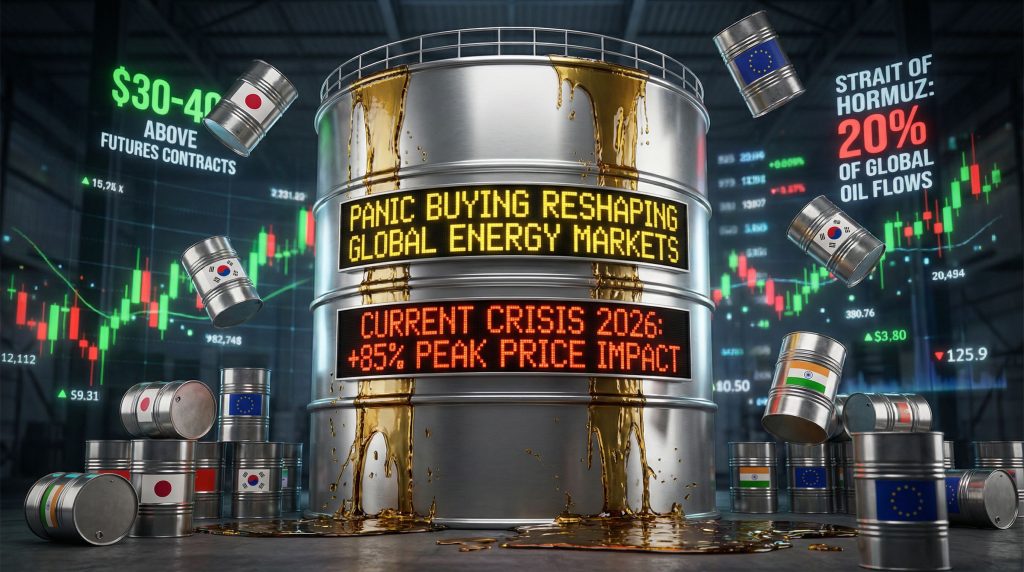
The current crisis demonstrates this phenomenon with physical Brent crude hitting a record $144 per barrel before ceasefire announcements, surpassing 2008 highs despite futures remaining far below their record levels. Following initial diplomatic progress, physical Brent dropped to $126 per barrel, still maintaining a spread of more than $30 above June delivery Brent futures.
Furthermore, these oil price movements reflect broader market dynamics that extend beyond immediate supply concerns.
The Psychology Behind Emergency Procurement
Market psychology shifts dramatically when scarcity perceptions override normal economic calculations. Asian refineries explicitly stated they were no longer focused on price, simply seeking to secure barrels wherever possible to ensure energy security. This abandonment of traditional profit maximisation demonstrates how panic oil buying in global markets fundamentally alters decision-making processes.
Critical psychological factors driving panic procurement include:
- Scarcity mindset activation: When refiners perceive limited availability, rational pricing models collapse
- Supply chain security prioritisation: Energy security concerns override profit margin calculations
- Herd behaviour amplification: One refiner's aggressive bidding triggers competitive responses across the industry
- Time compression effects: Normal 30-60 day procurement cycles shrink to immediate delivery requirements
The intensity of panic is reflected in premium structures where traders including Trafigura Group and Gunvor Group were bidding more than $22 per barrel above Dated Brent for North Sea cargoes. Nigerian supplies for May loading reached $25 per barrel above the benchmark, compared with less than $3 before the Iran war began.
Historical Context of Oil Market Panics
Major Oil Panic Episodes Since 1970
| Event | Year | Peak Price Impact | Duration | Recovery Period |
|---|---|---|---|---|
| Arab Oil Embargo | 1973 | +300% | 6 months | 18 months |
| Iranian Revolution | 1979 | +150% | 8 months | 24 months |
| Gulf War | 1990 | +100% | 4 months | 12 months |
| Current Crisis | 2026 | +85% | Ongoing | TBD |
The current episode follows historical patterns where geopolitical disruptions create supply fears that exceed actual physical shortages. However, the speed and intensity of premium development suggest modern market structures amplify panic responses compared to historical precedents.
When big ASX news breaks, our subscribers know first
Why Physical Oil Prices Are Divorcing from Futures Markets
The current crisis demonstrates an unprecedented divergence between physical crude markets and financial derivatives, with spot prices trading $30-40 above futures contracts—a spread historically seen only during extreme supply disruptions. This divergence reflects fundamental differences between financial market expectations and physical supply realities.
In addition, these dynamics are influenced by US oil production trends that affect global supply calculations.
Understanding Backwardation Extremes
Physical oil markets operate under severe backwardation when immediate delivery commands massive premiums over future contracts. The current market structure indicates several critical factors:
- Supply urgency: Refiners value today's barrel significantly more than next month's
- Storage limitations: Tank capacity constraints prevent hoarding strategies
- Financing strain: Higher working capital requirements stress smaller market participants
- Risk management breakdown: Traditional hedging instruments become ineffective
Roberto Ulivieri, a consultant at Midhurst Downstream and former refining economist for Saudi Aramco, articulated the operational challenge: whilst traditional refining economics might appear attractive due to high product prices, the working capital requirements and hedging complexity create practical constraints on market participation.
Regional Price Fragmentation Analysis
Different regions experience varying degrees of panic oil buying intensity based on their exposure to disrupted supply routes and alternative sourcing capabilities:
- Asia-Pacific: Most severe disruption due to Strait of Hormuz dependency
- Europe: Moderate stress with North Sea supply tightness
- Americas: Emerging pressure as export demand intensifies
The fragmentation is evident in specific cargo pricing. Midland WTI at Houston rose to a premium of nearly $4 per barrel to the US benchmark, roughly four times its level before the war, reflecting the time value of approximately five-day transit to Houston.
"Physical markets are not taking their cues from social media. Instead, they have strengthened relentlessly as disruptions have spread from Asia to the Atlantic basin."
How Supply Chain Disruptions Amplify Market Panic
Modern oil markets depend on just-in-time delivery systems that provide little buffer against sudden supply shocks. When key chokepoints close, the entire global distribution network faces immediate stress, creating cascading effects throughout the energy supply chain.
Consequently, understanding commodity market volatility becomes essential for managing these disruptions effectively.
Critical Infrastructure Dependencies
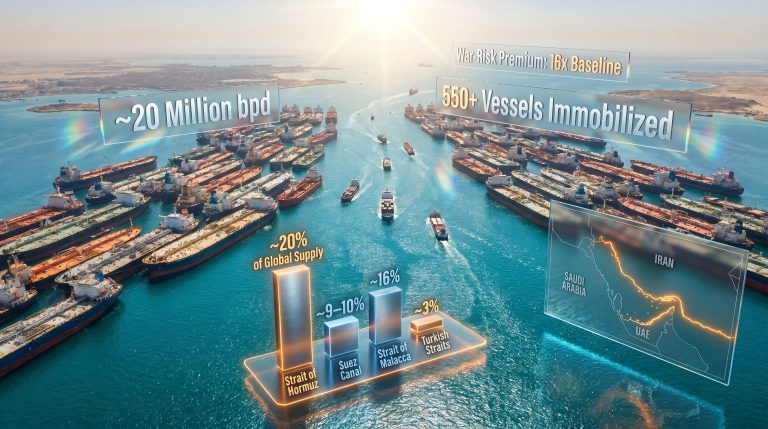
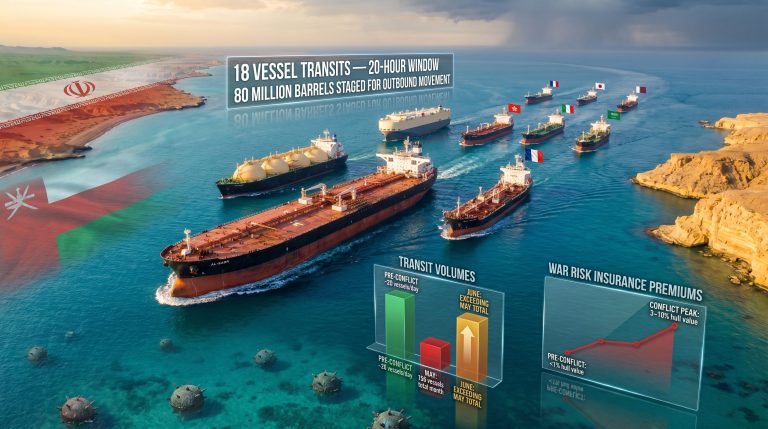
The Strait of Hormuz handles 20% of global oil flows and 30% of LNG shipments, making it the world's most critical energy chokepoint. Following disruption, traffic remained well below pre-war levels, with only early signs of increased activity noted over a weekend period featuring two Chinese supertankers and one Greek vessel.
Key infrastructure vulnerabilities include:
- Strait of Hormuz: Primary route for Middle Eastern exports
- Suez Canal: Alternative routing adds 2-3 weeks transit time
- Pipeline networks: Limited flexibility for rapid supply rerouting
- Storage facilities: Insufficient capacity for emergency stockpiling
Sultan al Jaber, chief executive officer of Abu Dhabi National Oil Co., provided temporal quantification of the supply disruption, noting that final cargoes transiting the Strait before conflict were arriving at destinations, exposing a 40-day gap in global energy flows.
Cascading Effects Across Energy Markets
Supply disruptions create interconnected impacts that amplify market stress:
- Crude oil scarcity → Higher refinery input costs
- Reduced refining capacity → Product shortages (diesel, gasoline, jet fuel)
- Transportation fuel shortages → Economic activity constraints
- Energy security concerns → Government intervention and rationing
The cascading effects are quantified through product market data. Jet fuel and diesel prices have soared to record or near-record highs exceeding $200 per barrel. In the US gasoline market, inventories have shrunk to their smallest levels in almost 16 years, according to the Energy Information Administration.
What Drives Refiners to Pay Extreme Premiums?
Refiners face a complex decision matrix during supply crises, balancing operational continuity against financial sustainability. Current market conditions force many to prioritise securing feedstock over maintaining profit margins, creating unprecedented bidding behaviour.
Refinery Economics Under Stress
Key refiner considerations include:
- Fixed cost coverage: Refineries must maintain minimum throughput to cover overhead
- Contract obligations: Long-term product supply agreements require fulfilment
- Market share protection: Temporary shutdowns risk permanent customer loss
- Financial capacity: Credit facilities and cash flow determine bidding power
- Strategic positioning: Geographic advantages in sourcing alternative supplies
The extreme level of premiums for immediately deliverable crude puts huge strain on market participants. Smaller refineries struggle with greatly increased financing needs due to higher prices, as well as the challenge of hedging in markets where physical crude oil costs significantly exceed the most liquid derivatives linked to it.
Alternative Sourcing Strategies
Refiners employ various tactics to secure crude supplies during crisis periods:
- Geographic diversification: Expanding beyond traditional supplier relationships
- Cargo size flexibility: Accepting smaller parcels for faster delivery
- Quality compromises: Processing heavier or higher-sulphur crudes
- Transportation optimisation: Utilising faster shipping routes despite higher costs
Japanese refiners demonstrated sophisticated crisis response by booking smaller-than-typical ships for US oil purchases specifically to traverse the Panama Canal more quickly and reduce transit time to Japan.
How Emergency Buying Patterns Reshape Global Trade Flows
Panic oil buying in global markets fundamentally alters traditional oil trade relationships, creating new supply chains and pricing mechanisms that may persist beyond the immediate crisis. Asian countries, most reliant on the Strait of Hormuz for crude supplies, moved beyond traditional sources to scour the globe for barrels.
Meanwhile, global markets are experiencing unprecedented disruption as buyers compete for scarce supplies.
Emerging Trade Route Analysis
New Oil Trade Patterns During Crisis
| Origin | Traditional Destination | New Buyers | Price Premium |
|---|---|---|---|
| US Gulf Coast | Domestic refineries | Asian refiners | +$15-20/bbl |
| Canadian Oil Sands | US Midwest | European buyers | +$12-18/bbl |
| Venezuelan Heavy | Regional markets | Indian refiners | +$8-15/bbl |
| Nigerian Light | European refineries | Asian spot buyers | +$20-25/bbl |
These trade pattern shifts demonstrate how panic oil buying creates new commercial relationships that extend beyond immediate crisis periods. Japanese refiners led a charge to buy oil from the US at record export levels, whilst Chinese refiners' buying spree lifted oil shipments from Vancouver to record highs for the month.
Strategic Reserve Utilisation
Governments worldwide activate emergency response mechanisms to stabilise domestic markets:
- Japan: Released 7.5 million barrels from strategic reserves
- South Korea: Coordinated release with industry stockpiles
- India: Accelerated strategic reserve filling from alternative sources
- European Union: Considering coordinated release mechanisms
Indian refiners ramped up purchases from Venezuela, with tankers loading almost 6 million barrels in the first week of April—double the volumes seen over the same March period, demonstrating how crisis conditions accelerate non-traditional trade relationships.
What Are the Economic Implications of Sustained Panic Buying?
Prolonged periods of panic oil buying create macroeconomic pressures that extend far beyond energy markets, affecting inflation, currency stability, and economic growth patterns globally. The crisis demonstrates how energy market disruptions rapidly transmit through interconnected economic systems.
These broader economic effects are compounded by tariff impact insights and understanding of inflation and tariffs in the current environment.
Inflationary Transmission Mechanisms
High oil prices propagate through the economy via multiple channels:
- Direct energy costs: Gasoline, heating oil, electricity generation
- Transportation expenses: Freight, logistics, supply chain costs
- Petrochemical inputs: Plastics, fertilisers, synthetic materials
- Secondary effects: Wage demands, monetary policy responses
The severity of current price increases suggests inflationary pressures will extend beyond traditional energy sectors. With jet fuel and diesel exceeding $200 per barrel, transportation costs face unprecedented increases that will affect virtually all economic sectors.
Central Bank Policy Responses
"The challenge for central banks is distinguishing between temporary supply shocks and persistent inflationary pressures that require monetary tightening."
Policy considerations include:
- Interest rate decisions: Balancing growth concerns against inflation risks
- Currency interventions: Supporting oil-importing nations' exchange rates
- Fiscal coordination: Government subsidies and strategic reserve releases
- International cooperation: Coordinated responses through G7/G20 mechanisms
The unprecedented scale of current price premiums complicates monetary policy responses, as traditional tools may prove insufficient to address supply-driven inflation whilst maintaining economic growth.
The next major ASX story will hit our subscribers first
How Long Can Extreme Oil Premiums Persist?
Market sustainability analysis suggests current premium levels represent short-term dislocations rather than permanent structural shifts, though the adjustment period may extend longer than typical supply disruptions due to the scale of infrastructure affected.
Furthermore, research suggests that panic buying behaviours tend to be self-limiting as markets adapt to new conditions.
Market Correction Mechanisms
Several factors will eventually moderate extreme premiums:
- Demand destruction: High prices reduce consumption across sectors
- Supply response: Alternative producers increase output capacity
- Substitution effects: Accelerated adoption of alternative energy sources
- Strategic releases: Government stockpile utilisation provides temporary relief
Neil Crosby, head of research at Sparta Commodities AS, noted that physical Brent had risen too far, suggesting even European refiners would need to lower utilisation, perhaps as early as the following month. This indicates market self-correction through demand reduction.
Recovery Timeline Scenarios
Potential resolution pathways include:
- Rapid resolution (2-3 months): Diplomatic breakthrough restores normal flows
- Gradual normalisation (6-12 months): Alternative supply chains establish stability
- Structural adjustment (12-24 months): Permanent shifts in global energy architecture
- Extended crisis (24+ months): Fundamental transformation of energy markets
The 40-day supply gap identified by industry executives suggests immediate relief requires both diplomatic resolution and sufficient time for replacement cargoes to reach global refineries.
What Investment Opportunities Emerge from Oil Market Panic?
Crisis periods create both risks and opportunities for investors, with sector rotation patterns favouring energy infrastructure, alternative suppliers, and efficiency technologies. The current panic buying episode presents unique investment themes driven by structural market changes.
Sector Performance Analysis
Investment Sector Performance During Oil Crisis
| Sector | Performance | Key Drivers | Risk Factors |
|---|---|---|---|
| Energy Infrastructure | +25-40% | Increased utilisation, pricing power | Regulatory intervention |
| Alternative Energy | +15-30% | Accelerated adoption timelines | Technology scalability |
| Transportation | -20-35% | Higher fuel costs, demand reduction | Recovery uncertainty |
| Consumer Discretionary | -15-25% | Reduced spending power | Inflation persistence |
The extreme premiums for immediately deliverable crude create investment opportunities in companies with existing inventory, transportation assets, and alternative energy solutions that reduce oil dependency.
Strategic Investment Themes
Long-term investment implications include:
- Energy security infrastructure: Strategic reserve capacity, pipeline diversity
- Supply chain resilience: Inventory management, alternative sourcing capabilities
- Technology acceleration: Energy efficiency, renewable adoption, storage solutions
- Geopolitical hedging: Diversified exposure across stable energy-producing regions
The crisis highlights how panic oil buying in global markets creates investment opportunities in companies that provide supply chain flexibility and energy security solutions.
Conclusion: Navigating the New Energy Market Reality
The current panic buying episode represents more than a temporary market disruption—it signals a fundamental reassessment of energy security priorities that will shape investment, policy, and strategic decisions for years to come. Market participants must adapt to a new reality where supply security considerations increasingly override pure economic optimisation in energy procurement decisions.
The documented $30+ spreads between physical and futures markets, combined with refiners explicitly abandoning price sensitivity, demonstrate how quickly traditional market mechanisms break down under supply stress. As some refiners step back from markets due to financing constraints and extreme premiums, the consequence will be reduced output, further squeezing oil product markets globally.
Understanding these dynamics becomes crucial for market participants navigating an environment where panic oil buying in global markets has become the dominant pricing mechanism, potentially reshaping energy trade relationships for the foreseeable future.
Are You Monitoring Energy Market Disruptions for Investment Opportunities?
Discovery Alert's proprietary Discovery IQ model delivers real-time alerts on significant ASX mineral discoveries, including critical energy metals and commodities that could benefit from supply chain disruptions like those affecting oil markets. Explore Discovery Alert's historic discoveries to see how major mineral finds have generated substantial returns during periods of market uncertainty, then begin your 14-day free trial today to position yourself ahead of emerging opportunities.