
May 20, 2026
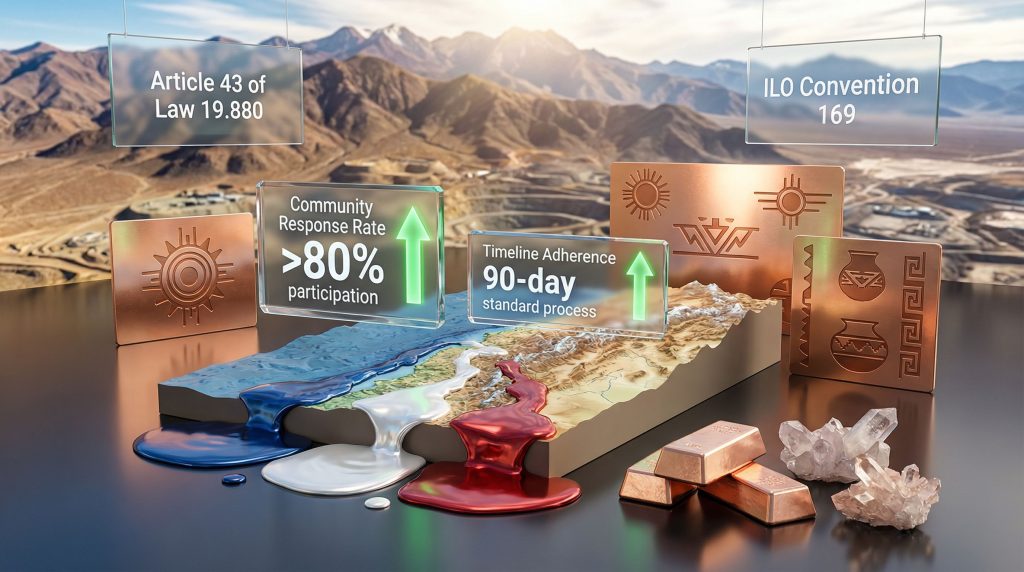
The regulatory landscape surrounding indigenous consultation in Chilean mining operations reflects a complex interplay between constitutional obligations, international treaty commitments, and practical operational challenges. The Pascua Lama indigenous consultation termination case exemplifies how administrative procedures interact with indigenous rights protections in Chile's evolving environmental assessment framework.
Understanding Chile's Indigenous Consultation Regulatory Framework
Chile's environmental assessment system operates within a sophisticated web of constitutional obligations and international treaty commitments that fundamentally reshape how mining projects interact with indigenous communities. The regulatory architecture governing indigenous consultation processes represents one of the most challenging aspects of Chilean environmental law, particularly as it applies to major mining operations in regions with significant indigenous populations.
Furthermore, the mining permitting procedures have become increasingly complex as they must accommodate both environmental protection requirements and indigenous rights safeguards. This dual mandate creates inherent tension when mining operations encounter sites of cultural significance.
Constitutional Foundations and ILO Convention 169 Implementation
The legal framework for indigenous consultation in Chile stems from the country's ratification of International Labour Organization Convention 169, which establishes binding obligations for states to engage indigenous peoples in decisions affecting their territories. This international commitment has been integrated into Chile's domestic environmental assessment procedures through specific regulations requiring consultation processes whenever mining projects may impact indigenous communities or their cultural sites.
Within this regulatory structure, the Environmental Assessment Service operates under a dual mandate: ensuring environmental protection while simultaneously safeguarding indigenous rights. This creates inherent tension when mining operations encounter sites of cultural significance, as demonstrated in recent cases where access restrictions to sacred locations trigger mandatory consultation requirements.
The procedural safeguards embedded in Chile's consultation framework include mandatory documentation standards, verification requirements for meaningful participation, and specific timeline protocols designed to ensure indigenous communities receive adequate information and opportunity to influence project decisions. However, these safeguards must evolve alongside industry evolution trends that increasingly emphasise social responsibility and stakeholder engagement.
Verification Protocols and Documentation Standards
Chilean environmental authorities maintain sophisticated documentation requirements for consultation processes, demanding systematic evidence of good faith engagement attempts. These verification protocols require mining companies and regulatory bodies to demonstrate concrete efforts to establish communication with affected indigenous communities through multiple channels.
The consultation framework mandates specific documentation trails that must include:
- Phone call logs with dates and contact attempts
- Digital communication records including messaging platforms
- Email correspondence requesting meeting confirmations
- Written invitations for consultation meetings
- Documentation of alternative communication methods employed
These requirements reflect regulatory recognition that modern consultation processes must adapt to contemporary communication technologies while maintaining traditional engagement approaches. In addition, the multi-channel documentation standard serves as both a procedural safeguard for indigenous rights and a legal protection mechanism for regulatory authorities facing potential challenges to their consultation determinations.
When big ASX news breaks, our subscribers know first
Administrative Termination Triggers in Indigenous Consultation Law
The mechanisms governing administrative termination of indigenous consultation processes represent perhaps the most controversial aspect of Chile's environmental assessment framework. Understanding these triggers requires examination of the intersection between general administrative law principles and specific indigenous rights protections, particularly as codified in Law 19.880's procedural abandonment provisions.
Legal Grounds for Procedural Abandonment
Article 43 of Law 19.880 provides the primary legal mechanism for terminating consultation processes when administrative authorities determine that continued engagement has become impossible. This provision allows environmental agencies to conclude consultation obligations under specific circumstances, though its application to indigenous consultation contexts raises significant human rights considerations.
The burden of proof for demonstrating "impossibility to persevere" falls on regulatory authorities, who must present documented evidence that continuation of the consultation process cannot reasonably be achieved. This standard requires environmental agencies to demonstrate systematic attempts at engagement while documenting the specific circumstances that prevent meaningful participation.
Consequently, the legal interpretation of "abandonment" in indigenous consultation contexts differs significantly from standard administrative procedures. While typical administrative abandonment involves a party's failure to pursue their own interests, consultation abandonment involves governmental determination that a third party's participation cannot be secured, raising complex questions about the state's obligations under international human rights law.
The complexity of these legal frameworks often intersects with broader mining claims framework considerations, particularly when traditional territorial rights conflict with modern mineral tenure systems.
Case Study: Pascua Lama Indigenous Consultation Termination
The Pascua Lama closure phase consultation provides a concrete example of how administrative termination operates in practice. In January 2026, SEA Atacama issued Resolution 20260310125, formally terminating the consultation process with the Diaguita Patay Co community after an eight-month engagement period that began in June 2024.
The termination decision was based on documented evidence including:
- Multiple coordination attempts during March 2025
- Failed phone calls to community representatives
- WhatsApp messages requesting meeting participation
- Email communications soliciting confirmation of scheduled consultations
- Lack of community response to formal meeting invitations
This case demonstrates the practical application of documentation requirements, showing how environmental authorities compile evidence to support impossibility determinations. The resolution specifically referenced the restriction of access to sites of cultural significance in controlled access areas as the triggering impact requiring consultation, highlighting the intersection between mining operational security and indigenous cultural rights.
For instance, the administrative record reveals that consultation challenges often arise from fundamental communication barriers rather than explicit community refusal to participate. This distinction becomes crucial for understanding whether termination represents legitimate administrative necessity or inadequate engagement methodology, particularly when considering broader class action governance challenges facing the mining sector.
Geographic and Cultural Challenges in Chile's Norte Chico Mining Region
The Norte Chico region presents unique consultation challenges that stem from the geographic overlap between mineral-rich territories and traditional indigenous lands. This convergence creates systematic consultation difficulties that extend beyond individual project circumstances to reflect broader structural challenges in Chile's approach to indigenous engagement in mining areas.
Diaguita Territory and Mining Concession Overlaps
The Diaguita communities of the Atacama Region inhabit territories that coincide with some of Chile's most significant mineral deposits. This geographic reality creates inevitable tension between traditional land use patterns and modern mining operations, particularly when mining activities require restricted access to areas of cultural significance.
Historical grievances between Diaguita communities and extractive industries compound these geographic challenges. Decades of mining development in traditional territories without adequate indigenous consultation have created trust deficits that complicate contemporary engagement efforts, even when regulatory frameworks have evolved to include consultation requirements.
The cultural significance assessment protocols for mining areas often reveal complex relationships between indigenous communities and specific geographic locations that may not be apparent through standard archaeological surveys. Sacred sites, traditional gathering areas, and ancestral burial grounds frequently overlap with areas of geological interest, creating consultation challenges that require specialised cultural mediation approaches.
Infrastructure and Communication Barriers
Remote indigenous communities in the Atacama Region face significant technology access barriers that complicate consultation processes designed for urban or connected populations. Limited internet connectivity, unreliable mobile phone coverage, and language barriers create systematic obstacles to meaningful participation in formal consultation procedures.
The consultation methodology employed in the Pascua Lama indigenous consultation termination case, which relied heavily on digital communication platforms including WhatsApp and email, may reflect inadequate adaptation to the technological realities of remote indigenous communities. Traditional consultation approaches that emphasise face-to-face engagement in community locations may prove more effective than administrative procedures designed for urban contexts.
However, resource allocation for meaningful engagement processes represents another significant challenge. Effective indigenous consultation requires substantial investment in community liaison programmes, cultural mediation services, and long-term relationship building that extends beyond regulatory compliance requirements. Mining companies and regulatory agencies operating under tight timeline constraints may find these investment requirements difficult to accommodate within standard project development schedules.
Impact Assessment: How Consultation Failures Affect Mining Operations
The consequences of consultation termination extend far beyond immediate administrative convenience, creating complex ripple effects throughout mining project development, approval processes, and long-term operational planning. Understanding these impacts requires analysis of both regulatory consequences and broader industry implications for companies operating in areas with significant indigenous populations.
Regulatory Pathway Modifications
When consultation processes are terminated due to administrative impossibility, mining projects must navigate modified approval pathways that may include enhanced mitigation requirements, additional monitoring protocols, or alternative cultural protection measures. The specific regulatory consequences depend on the nature of the identified impacts and the circumstances surrounding the consultation termination.
In the Pascua Lama case, the terminated consultation was related to access restrictions for culturally significant sites, requiring development of alternative protocols for site protection. This demonstrates how consultation failures often result in regulatory substitution rather than elimination of indigenous protection requirements.
The notification procedures mandated following consultation termination create formal administrative records that may influence future regulatory decisions or legal challenges. Requirements to notify CONADI, publish resolutions in electronic project files, and formally communicate with affected communities suggest that consultation termination does not eliminate regulatory oversight but rather shifts it to alternative mechanisms.
Furthermore, these challenges often coincide with broader government intervention measures that may further complicate mining operations in indigenous territories.
Timeline and Cost Implications for Mining Companies
The eight-month duration of the terminated Pascua Lama consultation illustrates the potential timeline impacts of extended engagement processes. While administrative termination may appear to accelerate project approval, the documentation requirements and formal procedures necessary to justify termination may actually extend overall project timelines compared to successful consultation completion.
| Consultation Outcome | Average Timeline | Documentation Requirements | Regulatory Risk |
|---|---|---|---|
| Successful Completion | 90-180 days | Standard participation records | Low administrative challenge risk |
| Administrative Extension | 180-365 days | Enhanced engagement documentation | Moderate delay risk |
| Formal Termination | 240-400 days | Impossibility evidence compilation | High judicial review risk |
The financial implications of consultation challenges extend beyond direct timeline delays to include enhanced legal risk, potential reputational damage, and increased regulatory scrutiny for future projects. Mining companies may find that consultation failures create long-term costs that exceed the immediate benefits of administrative termination.
"Consultation termination often signals deeper structural challenges in mining-community relations that require comprehensive institutional reform rather than procedural shortcuts. Companies that invest in proactive relationship building typically achieve better long-term outcomes than those relying on administrative termination mechanisms."
Alternative Dispute Resolution and Legal Challenge Mechanisms
When standard consultation processes fail, Chilean law provides multiple pathways for addressing indigenous consultation disputes, though the effectiveness and accessibility of these mechanisms vary significantly. Understanding these alternatives becomes crucial for both indigenous communities seeking to protect their rights and mining companies attempting to navigate complex regulatory requirements.
CONADI's Mediation Role and Institutional Capacity
The National Corporation for Indigenous Development serves as a key institutional actor in consultation disputes, receiving formal notification when consultation processes are terminated and maintaining capacity to facilitate alternative engagement mechanisms. CONADI's involvement in post-termination procedures suggests recognition that administrative closure of consultation does not necessarily resolve underlying community-industry conflicts.
However, CONADI's effectiveness in consultation mediation depends heavily on resource availability, institutional capacity, and political support that can vary significantly depending on broader governmental priorities. Indigenous communities may find that CONADI's mediation services provide limited recourse when consultation terminations have already been formalised through environmental agency resolutions.
The requirement to notify CONADI following consultation termination creates an administrative record that may prove valuable for future dispute resolution efforts, but does not automatically trigger alternative consultation mechanisms or guarantee continued indigenous participation in project decision-making.
Judicial Review Pathways and Constitutional Protections
Chilean courts maintain jurisdiction to review consultation termination decisions through multiple legal mechanisms, including administrative law challenges, constitutional protection actions, and specialised indigenous rights procedures. However, judicial review of consultation adequacy often occurs after project approvals have been granted, limiting its effectiveness as a preventive measure.
Supreme Court precedents on indigenous consultation adequacy have established varying standards for evaluating the sufficiency of engagement efforts, though these precedents may not specifically address administrative termination circumstances. The intersection between administrative procedure law and indigenous rights protections remains an evolving area of jurisprudence that may require additional legal development.
Constitutional Court review of consultation process violations represents the highest level of domestic legal challenge available to indigenous communities, though access to constitutional review requires meeting specific procedural requirements that may be difficult for remote communities to satisfy without specialised legal assistance.
International Complaint Mechanisms
The Inter-American Commission on Human Rights provides an international venue for challenging consultation termination decisions that may violate Chile's obligations under international human rights law. However, IACHR procedures typically require exhaustion of domestic remedies and involve extended timelines that may provide limited relief for immediate consultation disputes.
International legal experts have raised concerns about whether administrative termination of consultation processes complies with the "meaningful consultation" standards established under international law, particularly when termination occurs without explicit community consent to cessation of engagement.
The availability of international complaint mechanisms may influence mining company risk assessments and regulatory agency decision-making, even when these mechanisms are rarely invoked. The potential for international human rights scrutiny creates reputational and legal risks that extend beyond domestic regulatory compliance.
Comparative Analysis: International Standards and Best Practices
Chile's approach to consultation termination can be evaluated against international frameworks for indigenous engagement, revealing both innovative aspects and significant gaps compared to global best practices. This comparative analysis provides context for understanding the strengths and limitations of Chile's current regulatory approach.
Canadian Duty to Consult Framework
Canada's constitutionally-entrenched duty to consult provides a useful comparison point for evaluating Chile's consultation termination mechanisms. Canadian jurisprudence has established that consultation obligations cannot be unilaterally terminated by government authorities when indigenous communities maintain willingness to engage, even if practical challenges arise.
The Canadian framework emphasises accommodation of indigenous concerns through project modifications rather than procedural termination, suggesting alternative approaches that Chile might consider for addressing consultation challenges. Canadian courts have required governments to demonstrate concrete efforts to overcome participation barriers before concluding that meaningful consultation is impossible.
However, Canada's federal system and common law tradition create different institutional contexts that may not translate directly to Chile's civil law system and centralised environmental assessment structure.
Australian Native Title Consultation Requirements
Australia's native title legislation provides statutory frameworks for indigenous consultation that include specific procedural safeguards against premature termination of engagement processes. Australian law requires exhaustion of alternative dispute resolution mechanisms before consultation processes can be concluded without indigenous agreement.
The Australian experience demonstrates the importance of cultural competency training for government officials responsible for consultation oversight, suggesting that technical improvements in consultation methodology may reduce the frequency of consultation failures requiring administrative termination.
Investment Risk Assessment Implications
International mining finance increasingly incorporates Environmental, Social, and Governance considerations that may view consultation termination as a significant risk factor. Major international lending institutions have adopted indigenous rights policies that may limit financing availability for projects with terminated consultation processes.
The reputational risks associated with consultation failures in international markets may create economic incentives for mining companies to invest more heavily in successful consultation completion rather than relying on administrative termination mechanisms.
| Jurisdiction | Termination Authority | Appeal Mechanisms | International Compliance |
|---|---|---|---|
| Chile | Environmental agency discretion | Judicial review, IACHR | Mixed compliance record |
| Canada | Courts only after accommodation failure | Federal Court review | Strong compliance frameworks |
| Australia | Statutory dispute resolution required | Federal Court jurisdiction | Comprehensive protection mechanisms |
| Peru | Administrative impossibility determination | Constitutional Court review | Emerging compliance frameworks |
The next major ASX story will hit our subscribers first
Institutional Reform Recommendations and Future Pathways
The challenges revealed by consultation termination cases like the Pascua Lama indigenous consultation termination suggest the need for comprehensive institutional reforms that address both procedural improvements and deeper structural issues in mining-indigenous community relations. These reforms must balance practical administrative requirements with meaningful indigenous rights protection.
Enhanced Community Capacity Building Programmes
Effective consultation requires indigenous communities to have adequate technical and institutional capacity to engage meaningfully with complex environmental assessment procedures. Current consultation frameworks may assume levels of institutional development and technical expertise that many remote indigenous communities lack.
Institutional reform should include dedicated funding for community capacity building that provides indigenous groups with access to technical advisors, legal counsel, and cultural mediation services that enable meaningful participation in consultation processes. These capacity building investments should begin well before specific project consultations are initiated.
Technology infrastructure improvements represent another crucial element of institutional reform. Reliable internet connectivity, mobile phone coverage, and access to digital communication platforms are increasingly necessary for participation in modern consultation processes, yet remain unavailable in many remote indigenous territories.
Regulatory Agency Cultural Competency Enhancement
Environmental assessment agencies require enhanced cultural competency training that enables regulatory officials to recognise and address the specific challenges faced by indigenous communities in consultation processes. Current administrative procedures may inadvertently create barriers to meaningful participation through assumptions about communication preferences, decision-making processes, and cultural protocols.
Reform recommendations include development of specialised indigenous consultation units within environmental agencies, staffed by personnel with appropriate cultural and linguistic competencies. These specialised units could provide more culturally appropriate consultation methodologies while maintaining the technical rigour required for environmental assessment procedures.
Industry Adaptation Strategies and Long-term Relationship Building
Mining companies operating in areas with significant indigenous populations should develop comprehensive community engagement strategies that extend far beyond regulatory compliance requirements. Proactive relationship building, benefit-sharing arrangements, and long-term community investment programmes may prove more effective than reactive consultation processes triggered by specific project proposals.
Industry best practices suggest that successful indigenous engagement requires sustained commitment over multiple years or decades, involving company personnel who develop deep understanding of local cultural contexts and community priorities. This long-term approach contrasts sharply with project-specific consultation processes that may appear extractive or opportunistic from community perspectives.
"Mining companies should view indigenous consultation not as a regulatory hurdle to overcome but as an opportunity to develop sustainable social licence that supports long-term operational success and community prosperity."
Conclusion
The Pascua Lama indigenous consultation termination case reveals the complex intersection of administrative law, indigenous rights, and mining development in contemporary Chile. While regulatory frameworks provide mechanisms for addressing consultation challenges, the underlying issues often require more comprehensive approaches that address structural inequalities and institutional capacity constraints rather than procedural shortcuts.
Successful resolution of these challenges will require sustained commitment from government agencies, mining companies, and indigenous communities to develop more effective engagement mechanisms that balance operational requirements with meaningful respect for indigenous rights and cultural values. The future of mining development in Chile increasingly depends on finding innovative solutions to these consultation challenges rather than relying on administrative termination as a default mechanism.
Ready to Capitalise on Major ASX Mineral Discoveries?
Discovery Alert's proprietary Discovery IQ model delivers instant alerts on significant ASX mineral discoveries, enabling subscribers to identify actionable opportunities ahead of the broader market. Explore why historic discoveries can generate substantial returns by visiting Discovery Alert's dedicated discoveries page and begin your 14-day free trial today to position yourself ahead of the market.