June 9, 2026
Persian Gulf Energy Chokepoints Under Siege
Energy security dynamics are fundamentally reshaping as traditional supply routes face unprecedented military targeting. Regional conflicts increasingly focus on disrupting critical energy infrastructure rather than conventional territorial objectives, transforming how nations calculate strategic vulnerability. The evolution from protecting energy facilities as civilian infrastructure toward treating them as legitimate military targets represents a paradigm shift with global implications extending far beyond immediate conflict zones.
Recent price movements reflect this transformation. WTI crude reached $115 per barrel while Brent traded at $110.3 per barrel, indicating severe market stress as strikes target Iran's Kharg Island operations. Russian Urals grade achieved a 13-year high of $116 per barrel, with Baltic Sea cargoes selling at nearly twice the Kremlin's budget assumptions of $59 per barrel.
When big ASX news breaks, our subscribers know first
Understanding Kharg Island's Critical Energy Infrastructure
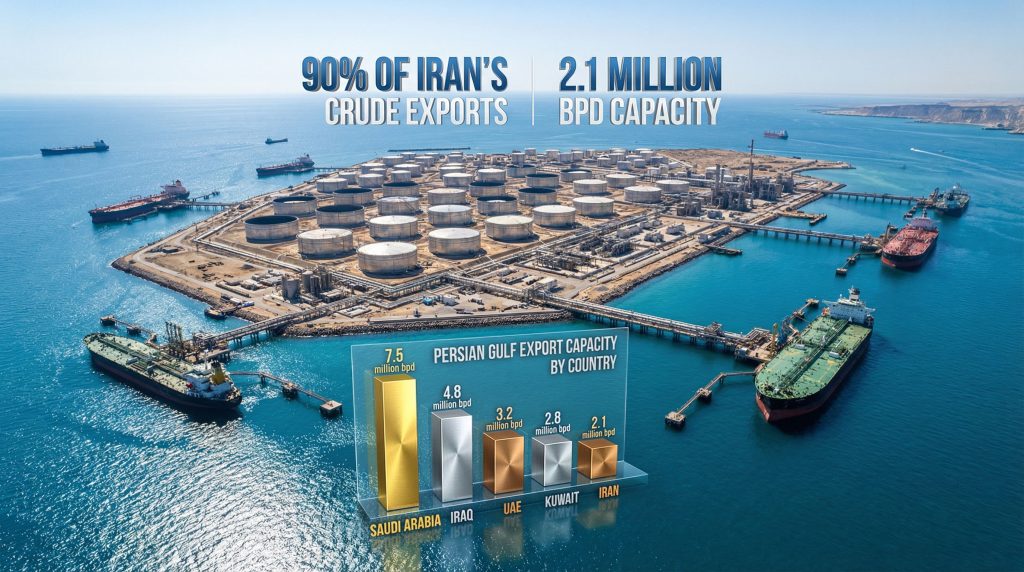
Iran's primary oil export terminal represents one of the Persian Gulf's most strategically significant energy chokepoints. Located approximately 25 kilometers off Iran's coast, this artificial island processes the majority of the nation's crude oil exports through specialized loading facilities designed for supertanker operations.
The facility's strategic importance extends beyond its processing capacity. Geographic positioning within Persian Gulf shipping lanes creates natural bottleneck effects, concentrating energy flows through a limited number of export points. Historical development since the 1960s established Kharg Island as Iran's primary maritime energy gateway, making it indispensable for national oil revenue generation.
Current Infrastructure Specifications and Capacity
Recent operational data reveals the scale of disruption potential. The International Energy Agency warns that current crisis conditions exceed the severity of previous energy shocks from 1973, 1979, and 2022 combined. This assessment positions incidents where strikes target Iran's Kharg Island within a broader pattern of infrastructure targeting affecting regional energy security, particularly considering the OPEC production impact on global supply chains.
Key Infrastructure Metrics:
- Daily processing capacity handling Iran's primary crude export operations
- Multiple deep-water loading berths accommodating Very Large Crude Carriers (VLCCs)
- Extensive pipeline connections linking onshore production to maritime terminals
- Strategic storage facilities buffering supply variations
Regional Export Context and Comparative Analysis
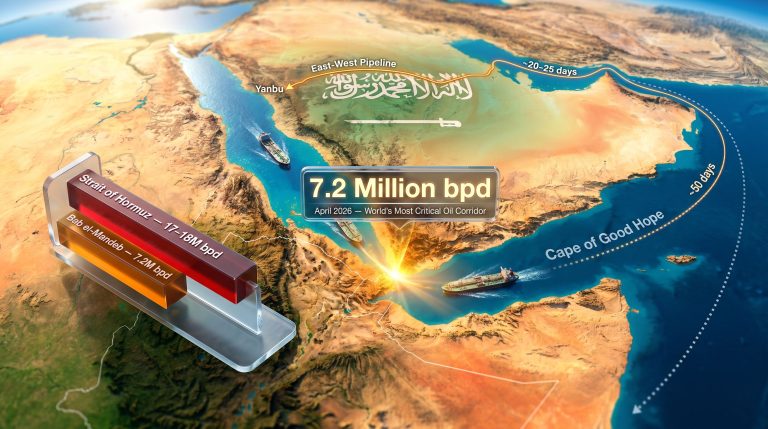
OPEC+ members increased production targets for May 2026 by 206,000 barrels per day despite Middle Eastern countries shutting in more than 10 million barrels per day due to Strait of Hormuz closure. This paradox illustrates the complex relationship between production capacity and export infrastructure availability, particularly affecting broader oil price movements across global markets.
Persian Gulf Export Terminal Comparison:
| Country | Export Capacity | Strategic Vulnerabilities |
|---|---|---|
| Saudi Arabia | 7.5 million bpd | Red Sea route alternatives |
| UAE | 3.2 million bpd | Multiple terminal dispersion |
| Iran | Variable capacity | Single-point concentration risk |
| Iraq | 4.8 million bpd | Hormuz dependency |
| Kuwait | 2.8 million bpd | Limited alternative routes |
Saudi Aramco raised formula prices for Asian buyers by a record $17 per barrel, placing Arab Light grade at a $19.50 per barrel premium to Oman/Dubai averages. This premium reflects supply chain stress caused by infrastructure targeting strategies.
International Legal Framework Governing Energy Infrastructure Attacks
The targeting of energy facilities operates within complex legal frameworks balancing military necessity against civilian protection obligations. International humanitarian law traditionally protects infrastructure primarily serving civilian populations, though dual-use classifications create interpretive challenges.
Geneva Conventions and Dual-Use Facility Status
Recent targeting patterns demonstrate the evolving interpretation of dual-use infrastructure classifications. Iran's Islamic Revolutionary Guard Corps attacked Saudi Arabia's Jubail petrochemical complex, representing the second strike on the $20 billion Sadara joint venture between Aramco and Dow within one week. This escalation followed Israeli strikes on Iranian petrochemical plants, illustrating reciprocal targeting doctrines.
Legal Classification Challenges:
- Civilian infrastructure protection: Energy facilities serving primarily civilian populations
- Military dual-use considerations: Infrastructure supporting military operations
- Proportionality assessments: Balancing military advantage against civilian harm
- State responsibility doctrine: Accountability for infrastructure targeting decisions
International Court of Justice Precedents
The legal framework governing energy infrastructure targeting lacks comprehensive international precedents specifically addressing modern energy warfare scenarios. Existing case law primarily addresses traditional military targets rather than strategic economic infrastructure.
Five EU finance ministers from Germany, Spain, Italy, Portugal, and Austria jointly called for EU-wide windfall profit taxes on energy companies, reflecting policy responses to crisis-driven price volatility. These measures mirror 2022 emergency interventions, indicating established precedents for government emergency powers activation.
Maritime Law and Strait Transit Rights
Iran's selective enforcement of Strait of Hormuz transit restrictions illustrates complex maritime law applications. Iraqi oil exporters received special exemptions for Hormuz shipping, while two Qatari LNG carriers were turned away by Iran's Coast Guard after attempting transit.
Key Maritime Legal Considerations:
- Freedom of navigation principles: International waters transit rights
- Territorial waters sovereignty: Coastal state authority limitations
- Economic blockade legality: Proportionality under international law
- Neutral shipping protection: Rights of non-belligerent vessels
Strategic Doctrine Evolution in Energy Warfare
Military targeting priorities increasingly emphasise economic disruption over traditional kinetic effects. This shift reflects strategic calculations prioritising long-term economic damage over immediate territorial gains.
Economic Warfare Versus Conventional Military Action
Current targeting patterns demonstrate preference for energy chokepoint disruption over direct military engagement. Ukraine's drone strikes on Russian Black Sea port of Novorossiysk temporarily halted 0.5 million barrels per day of oil flows, whilst Baltic Sea ports at Primorsk and Ust-Luga resumed operations following week-long attacks.
Strategic Targeting Evolution:
- Infrastructure focus: Disrupting energy supply chains rather than military formations
- Economic multiplier effects: Single-point failures creating system-wide impacts
- Asymmetric capabilities: Drone technology enabling precision infrastructure targeting
- Deterrence signalling: Selective targeting demonstrating escalation control
Proportionality Calculations in Modern Conflict
The International Monetary Fund indicated plans to lower 2026-2027 economic growth forecasts and raise inflation projections, with formal World Economic Outlook presentation scheduled for April 14. These adjustments quantify proportionality impacts from energy infrastructure targeting, alongside the US oil production decline affecting global supply balances.
Economic Impact Measurements:
- US petrol prices: $4.14 per gallon
- US diesel prices: $5.65 per gallon (approaching all-time highs)
- Expected US March CPI: 0.9% (primarily food and energy)
- Core inflation projection: 0.2-0.3% (excluding energy volatility)
Deterrence Theory Applications to Energy Chokepoints
Iran's selective Hormuz exemption policies demonstrate sophisticated deterrence signalling. Granting Iraqi shipping exceptions whilst blocking Qatari LNG carriers indicates calculated escalation management rather than total blockade implementation.
Regional Energy Security Transformation
Supply chain disruptions are forcing fundamental adaptations in regional energy security strategies. Traditional supply routes face persistent threats, requiring alternative infrastructure development and emergency response capabilities.
Immediate Supply Chain Disruption Evidence
Current Disruption Metrics:
| Metric | Impact | Duration |
|---|---|---|
| Middle Eastern production offline | 10+ million bpd | Ongoing |
| TotalEnergies Qatar field shutdown | 20,000 boe/d | Until security improves |
| UAE al Taweelah smelter damage | Production halt | Up to one year repair |
| Black Sea port disruption | 0.5 million bpd | Temporary |
Alternative Supply Route Development
The Dangote refinery in Nigeria operates at maximum capacity for the first time, ramping up petrol and diesel exports to neighbouring West African countries. This 650,000 barrels per day capacity demonstrates regional supply chain adaptation to Middle Eastern disruptions.
Taiwan Power Company reconsidered heavy reliance on natural gas as LNG prices reached $20 per MMBtu, planning to maximise coal-fired generation by May 2026. This fuel switching illustrates demand-side adaptations to supply constraints.
Strategic Petroleum Reserve Activation Protocols
India's government requested refiners Indian Oil Corp. and Bharat Petroleum to postpone maintenance activities, ensuring adequate refined product supply during crisis conditions. These emergency measures demonstrate coordinated government intervention capabilities.
Government Emergency Response Measures:
- Maintenance deferral: Maximising operational refining capacity
- Import diversification: Securing alternative crude sources
- Fuel switching: Coal generation replacing gas-fired power
- Demand management: Rationing and conservation protocols
International Sanctions Intersection with Military Action
Existing sanctions frameworks interact complexly with military targeting strategies. Pre-existing Iran sanctions since 2018 create legal precedents for economic isolation measures, whilst military action represents escalation beyond diplomatic tools. Furthermore, the oil price stagnation factors complicate how sanctions effectiveness is measured against military intervention outcomes.
Secondary Sanctions and Third-Party Nations
India's shift toward Venezuelan crude as Middle East supply falters illustrates third-party adaptation to sanctions and military disruption combinations. This substitution pattern demonstrates how sanctions frameworks influence military targeting effectiveness, particularly when considering tariffs market impact on global trade flows.
Sanctions Framework Interactions:
- Primary sanctions: Direct restrictions on Iranian oil exports
- Secondary sanctions: Third-party nation compliance requirements
- Humanitarian exemptions: Energy supplies for civilian populations
- Enforcement coordination: Allied nation sanction implementation
Humanitarian Exemptions and Energy Access
The IEA's warning of "high risks of unrest in developing nations" reflects humanitarian concerns over energy access restrictions. Balancing security objectives with civilian energy needs creates policy implementation challenges.
The next major ASX story will hit our subscribers first
Historical Precedents for Energy Infrastructure Targeting
1987 Tanker War Operations Legacy
The current Hormuz crisis draws comparisons to 1987 Tanker War operations, when Iran and Iraq targeted each other's oil exports. Modern targeting capabilities exceed historical precedents through precision-guided drone technology and satellite intelligence.
Historical Comparison Factors:
- Technology evolution: Drone precision versus 1980s capabilities
- International response: Current multilateral coordination efforts
- Economic scale: Global energy market integration levels
- Duration patterns: Extended conflict sustainability assessments
Recent Ukraine Energy Grid Targeting
Ukraine's systematic targeting of Russian energy infrastructure demonstrates contemporary energy warfare applications. Baltic Sea port disruptions and Black Sea terminal attacks illustrate reciprocal targeting strategies becoming normalised.
Strategic Policy Response Framework
Diplomatic De-escalation Mechanisms
Pakistan emerged as a key mediator in efforts to end the Hormuz crisis, with the UK hosting a 36-country summit addressing strait reopening. These multilateral initiatives demonstrate diplomatic tools available for energy security restoration.
Multilateral Coordination Initiatives:
- Regional mediation: GCC and Arab League involvement
- International summits: 36-country cooperation frameworks
- Emergency protocols: UN Security Council procedures
- Humanitarian corridors: Civilian energy supply protection
Economic Stabilisation Measures Implementation
Coordinated Strategic Reserve Utilisation:
| Country/Organisation | Reserve Capacity | Intervention Thresholds |
|---|---|---|
| United States SPR | 400 million barrels | Congressional authorisation |
| IEA Collective Action | Member coordination | Supply disruption triggers |
| Emergency Allocation | Crisis distribution | Humanitarian priorities |
Long-term Energy Security Adaptations
Australia considers emergency powers to protect domestic gas supply, whilst China directs private refiners to maintain fuel output even at financial losses. These measures illustrate government intervention capabilities during energy emergencies.
Infrastructure Protection Standards:
- Critical facility hardening: Physical security enhancements
- Redundant supply routes: Alternative transportation networks
- Emergency response capabilities: Rapid repair and restoration
- International cooperation: Burden-sharing agreements
Global Energy Governance Framework Gaps
Multilateral Protection Mechanism Inadequacies
Current international energy governance lacks adequate protection mechanisms for critical chokepoints. Limited enforcement tools for maritime security create vulnerabilities that military actors exploit through infrastructure targeting.
Governance Framework Deficiencies:
- Legal protection gaps: Energy infrastructure classification ambiguities
- Enforcement limitations: International maritime security coordination
- Emergency response coordination: Supply disruption management protocols
- Dispute resolution mechanisms: Energy conflict mediation frameworks
Future Policy Development Priorities
JP Morgan's projection of $150 oil if Hormuz remains closed through mid-May illustrates the scale of policy response requirements. These price projections assume continued infrastructure targeting without effective international intervention.
Risk Assessment and Scenario Planning
Crisis Escalation Pathways
Escalation Scenario Analysis:
| Scenario Level | Supply Reduction | Price Impact | Policy Response Framework |
|---|---|---|---|
| Limited strikes | 2-3% global | $10-15/barrel | Diplomatic pressure coordination |
| Extended conflict | 8-12% reduction | $25-40/barrel | Strategic reserve deployment |
| Regional war | 15-20% reduction | $50-75/barrel | Emergency rationing protocols |
Contingency Planning Requirements
Israel's Leviathan offshore field resumed natural gas production following a 33-day government-mandated halt, with stakeholders demanding downtime compensation from the state. This precedent establishes frameworks for government emergency powers and private sector compensation.
Emergency Preparedness Elements:
- Government emergency authorities: Energy sector intervention powers
- Private sector coordination: Industry cooperation protocols
- Consumer protection measures: Rationing and price stabilisation
- International burden-sharing: Crisis cost distribution agreements
Market Psychology and Investment Implications
Current market dynamics reflect unprecedented uncertainty in energy security frameworks. The unusual situation of WTI crude oil hitting $115 whilst trading above Brent suggests fundamental supply chain disruptions affecting traditional pricing relationships.
Investment Strategy Considerations:
- Strategic reserve importance: Government stockpile management
- Alternative supply chain development: Non-traditional route investments
- Technology adaptation: Energy security enhancement capabilities
- Geopolitical risk premiums: Long-term price structure changes
Future Energy Security Architecture
The targeting of critical energy infrastructure represents a fundamental shift requiring comprehensive policy responses. Enhanced international legal frameworks must address energy facility protection whilst maintaining legitimate military targeting rights. Supply chain diversification becomes essential for reducing chokepoint vulnerabilities.
Moreover, when strikes target Iran's Kharg Island and similar critical facilities, the global energy system experiences vulnerabilities that extend far beyond immediate production impacts. Consequently, the international community must develop more resilient frameworks that can withstand such targeted disruptions.
Disclaimer: This analysis is based on publicly available information and current market conditions. Energy security assessments involve significant uncertainties, and actual outcomes may differ from projections discussed. Investment decisions should consider comprehensive risk factors and professional financial advice.
The transformation of energy infrastructure from protected civilian assets to legitimate military targets demands urgent international attention. Strengthening legal frameworks, enhancing supply chain resilience, and developing more robust energy security governance mechanisms become critical priorities for maintaining global energy stability in an era of infrastructure warfare. In addition, the precedent set when strikes target Iran's Kharg Island will likely influence future energy security strategies across the Persian Gulf region and beyond.
Looking to Capitalise on Energy Security Market Volatility?
Discovery Alert's proprietary Discovery IQ model delivers real-time alerts on significant ASX mineral discoveries, instantly empowering subscribers to identify actionable opportunities ahead of the broader market during periods of heightened energy sector volatility. Begin your 14-day free trial today and secure your market-leading advantage whilst energy infrastructure targeting continues to reshape investment landscapes globally.