June 6, 2026
The Persian Gulf Energy Security Framework
Global energy markets increasingly operate within a framework where regional security dynamics can trigger cascading economic effects across continents. The intricate relationship between geopolitical stability and energy supply chains has evolved into a complex system where single chokepoints can influence everything from inflation rates to currency valuations. This interconnected reality becomes particularly pronounced when examining how potential US-Iran military conflict and oil prices interact within the broader context of global energy security.
Modern energy infrastructure has created dependencies that extend far beyond traditional supply and demand mechanics. When examining the Persian Gulf region, these dependencies reveal themselves through transportation networks, financial systems, and strategic stockpiles that collectively determine global energy resilience. Furthermore, the relationship between military positioning and market psychology has become so intertwined that even diplomatic communications can trigger significant oil price movements across commodity markets.
When big ASX news breaks, our subscribers know first
Critical Energy Transit Infrastructure
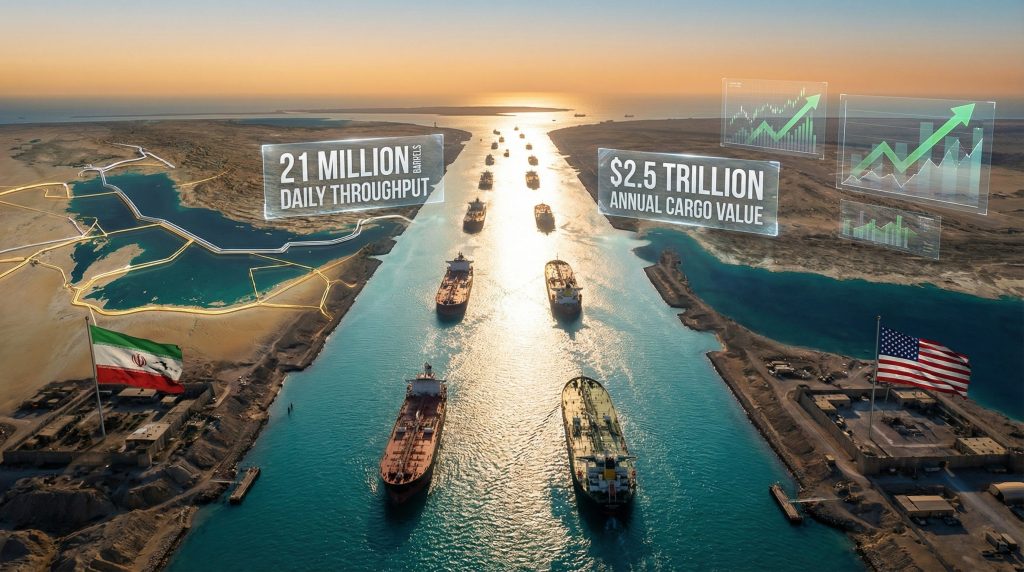
The Strait of Hormuz represents the world's most strategically significant maritime chokepoint for petroleum transit, facilitating approximately 20-21% of globally traded oil according to the U.S. Energy Information Administration. This narrow waterway, measuring just 21 miles at its narrowest point, serves as the primary export corridor for major oil-producing nations including Saudi Arabia, Iraq, the UAE, Kuwait, and Iran.
Recent market dynamics have demonstrated the sensitivity of oil prices to regional tensions. On February 19, 2026, Brent futures climbed $1.11 to $71.46 per barrel whilst WTI crude gained $1.05 to $66.24, representing increases of 1.58% and 1.6% respectively. According to ING analysts, these price movements reflect market concerns over both Iranian oil supply and broader Persian Gulf flow disruptions through the Strait of Hormuz.
Key Strategic Vulnerabilities Include:
- Daily throughput capacity handling approximately 20 million barrels of crude oil and petroleum products
- Limited alternative routing options, with existing overland pipelines bypassing only a fraction of Strait capacity
- Complex insurance market exposures affecting shipping costs and route planning
- Concentrated military positioning along critical coastal areas
The physical characteristics of this transit route create inherent vulnerabilities that extend beyond simple transportation logistics. Iranian state media reported temporary closure of the Strait for several hours in February 2026, demonstrating how quickly regional tensions can translate into actual supply disruptions. In addition, whilst the waterway reportedly reopened, the incident highlighted the fragile nature of global energy security dependencies.
Current geopolitical tension indicators include Iranian rocket launch activities in southern regions, U.S. naval deployments near Iranian waters, and ongoing diplomatic uncertainties. The U.S. Federal Aviation Administration documented Notice to Airmen (NOTAM) filings for Iranian rocket launches scheduled during specific GMT timeframes, indicating continued military activities in the region.
Market Response Mechanisms and Price Dynamics
Energy markets demonstrate sophisticated pricing mechanisms that incorporate both immediate supply risks and longer-term strategic considerations. The February 2026 price movements illustrate how traders price in multiple risk vectors simultaneously, including direct Iranian production impacts and secondary effects on broader regional exports due to security concerns.
Immediate Market Reactions:
| Timeframe | Brent Impact | WTI Impact | Market Drivers |
|---|---|---|---|
| Single Trading Day | +$1.11 (+1.58%) | +$1.05 (+1.6%) | Geopolitical tension escalation |
| Weekly Trend | Approaching 6-month highs | Similar trajectory | Risk premium incorporation |
| Inventory Effects | Contrary to expectations | Demand exceeding projections | Supply chain concerns |
Market participants have demonstrated increasing sensitivity to diplomatic developments, with White House statements regarding Iran negotiations directly influencing trading patterns. Reports of progress in Geneva talks, coupled with expectations for Tehran to provide additional details within weeks, have created volatile trading conditions where diplomatic communications carry substantial market impact.
The inventory dynamics reveal additional complexity in market responses. U.S. crude and gasoline inventories fell contrary to Reuters poll expectations that predicted a 2.1 million barrel increase for the week ending February 13, 2026. This inventory decline occurred alongside geopolitical premium pricing, suggesting that both supply-side concerns and demand-side strength are influencing market conditions simultaneously.
Financial Transmission Mechanisms:
- Currency volatility affecting oil-importing nations' current account balances
- War risk insurance premiums increasing substantially for shipping through affected regions
- Strategic petroleum reserve policy coordination amongst consuming nations
- Central bank communication regarding inflation expectations and monetary policy responses
However, energy market analysts have noted that current pricing reflects assumptions about contained conflict scenarios rather than broader regional disruptions. This suggests that significant price escalation potential exists if potential US-Iran military conflict scenarios progress beyond limited engagement parameters.
Strategic Supply Chain Alternatives
Regional energy infrastructure has evolved to provide multiple export pathways, though capacity limitations restrict the ability to fully compensate for Strait of Hormuz disruptions. The Trans-Arabian Pipeline system, historically handling approximately 5 million barrels per day, represents the most significant alternative routing option for Saudi crude exports.
Alternative Infrastructure Capacity:
- Red Sea Export Terminals: Saudi Arabia maintains significant export capacity through Red Sea facilities, potentially handling majority export volumes during Strait disruptions
- Kirkuk-Ceyhan Pipeline: When operational, this system provides Iraqi crude export alternatives, though capacity remains limited compared to Persian Gulf routes
- East-West Pipeline Networks: Various regional pipeline systems offer partial bypass capabilities for gulf producers
- Enhanced Security Protocols: Regional governments have implemented upgraded protection measures for critical energy infrastructure
The practical limitations of alternative routing become apparent when examining total capacity requirements. With the Strait handling approximately 20 million barrels daily, even optimal utilisation of all alternative routes would leave substantial supply gaps requiring either demand reduction or strategic reserve drawdowns.
Investment patterns in regional infrastructure reflect long-term strategic planning for supply security. Multiple Gulf Cooperation Council nations have announced expansion programmes for non-Strait export capabilities, though construction timelines extend over multiple years. These infrastructure developments represent attempts to reduce single-point-of-failure vulnerabilities in regional energy export systems.
Operational Challenges:
- Pipeline capacity constraints limiting throughput during peak demand periods
- Security requirements increasing operational costs and complexity
- Refinery configuration adjustments needed to handle different crude slate inputs
- Transportation logistics requiring route optimisation and enhanced protection measures
Consequently, the strategic value of alternative infrastructure extends beyond simple capacity calculations to include flexibility in responding to various disruption scenarios. Partial Strait closures, temporary shutdowns, or enhanced security requirements all create different operational challenges requiring distinct infrastructure responses.
Regional Economic Impact Analysis
Gulf Cooperation Council nations have developed comprehensive response frameworks addressing potential supply disruptions through coordinated policy measures and infrastructure investments. These preparations reflect understanding that energy security extends beyond simple production capacity to encompass export logistics, financial market stability, and diplomatic coordination.
Saudi Arabia's Strategic Positioning:
- Maintenance of spare production capacity enabling rapid output increases during supply disruptions
- Diversified export route utilisation through Red Sea terminals reducing Strait dependency
- Enhanced coordination with international partners on production management and strategic reserve policies
- Infrastructure hardening programmes protecting critical energy facilities from potential security threats
The United Arab Emirates has implemented parallel resilience measures including expansion of Fujairah terminal operations for non-Strait exports. Furthermore, they maintain strategic petroleum reserves covering extended consumption periods, and financial hub protection through enhanced cybersecurity measures for energy trading platforms.
Non-Gulf Producer Opportunities:
United States shale producers maintain significant spare capacity that could be activated during global supply disruptions. The Permian Basin export infrastructure has been optimised for maximum Pacific and Atlantic market access. For instance, regulatory frameworks allow for expedited drilling permits during national security circumstances.
Canadian oil sands operations represent another strategic alternative, with the Trans Mountain Pipeline system providing enhanced Pacific export capabilities. When regional supply disruptions occur, Canadian producers typically benefit from sustained higher price environments supporting previously marginal extraction projects.
International Response Coordination:
- Strategic Petroleum Reserve release protocols amongst major consuming nations
- International Energy Agency coordination for emergency response measures
- Enhanced diplomatic engagement to prevent conflict escalation
- Financial market stability measures addressing currency and commodity volatility
The economic implications extend beyond energy markets to encompass broader macroeconomic effects including inflation transmission, currency adjustments, and monetary policy responses. Central banks in major consuming nations maintain enhanced coordination protocols for addressing energy-driven economic disruptions.
Investment Strategy Framework
Energy sector positioning requires comprehensive analysis of both upstream production opportunities and downstream infrastructure investments. Potential US-Iran military conflict and oil prices create investment environments where traditional risk-return calculations must incorporate geopolitical premium assessments and supply security considerations.
Upstream Investment Opportunities:
- North American producers benefit from sustained higher price environments supporting expanded drilling operations
- Norwegian offshore projects gain enhanced strategic value as stable European supply alternatives
- Brazilian pre-salt developments receive accelerated investment due to Western Hemisphere security advantages
- Guyanese offshore operations attract geopolitical premiums for non-Middle Eastern production sources
Infrastructure investments have become increasingly strategic as energy security concerns drive government and private sector capital allocation. LNG terminals, alternative pipeline networks, and strategic storage facilities receive enhanced investment priority due to their critical roles in supply chain resilience.
Portfolio Risk Management Considerations:
| Investment Category | Strategic Positioning | Risk Factors |
|---|---|---|
| Energy Equities | Overweight upstream producers | Commodity price volatility |
| Currency Exposure | Hedge oil-importing nation currencies | Current account pressures |
| Sector Rotation | Reduce consumer discretionary exposure | Inflation transmission effects |
| Geographic Allocation | Increase Western Hemisphere weighting | Supply chain security premiums |
The interconnected nature of modern financial markets means that energy sector investments must consider transmission effects across multiple asset classes. Currency markets, fixed income securities, and equity valuations all demonstrate sensitivity to energy price movements and geopolitical risk assessments.
However, investors increasingly turn to market volatility hedging strategies to manage these complex risk scenarios. Additionally, concerns about oil price stagnation have prompted more sophisticated portfolio approaches.
Long-term Strategic Themes:
- Renewable energy acceleration driven by energy security considerations rather than purely environmental concerns
- Enhanced international cooperation on energy infrastructure protection and emergency response protocols
- Technology transfer acceleration for clean energy alternatives reducing Middle Eastern dependencies
- Strategic reserve expansion becoming standard policy across major consuming nations
The next major ASX story will hit our subscribers first
Diplomatic Resolution Pathways
Sustainable energy market stability requires diplomatic frameworks addressing underlying regional tensions whilst establishing confidence-building measures for crisis prevention. Current negotiation structures demonstrate both progress potential and remaining challenges in achieving lasting regional security arrangements.
Recent diplomatic developments include Geneva-based discussions yielding partial progress according to White House statements, though significant gaps remain on critical issues. The expectation for Tehran to provide additional negotiating details within coming weeks suggests ongoing engagement despite military posturing by multiple parties.
Confidence-Building Framework Components:
- Naval coordination protocols preventing accidental incidents during heightened tension periods
- International maritime security arrangements ensuring civilian shipping protection
- Economic incentive structures linking sanctions relief to verifiable compliance with negotiated agreements
- Regional security cooperation frameworks involving Gulf Cooperation Council coordination
Stakeholder alignment requires addressing diverse national interests including European energy security concerns, Chinese economic stability priorities, Russian market share considerations, and regional alliance security requirements. These multiple stakeholder interests create both challenges and opportunities for comprehensive diplomatic solutions.
The role of international institutions in facilitating dialogue and providing verification mechanisms has become increasingly important as regional tensions affect global economic stability. Energy market participants closely monitor diplomatic communications for signals regarding conflict escalation or resolution pathways.
Long-term Market Structure Evolution
Energy market architecture continues evolving in response to recurring supply security challenges and changing geopolitical relationships. These structural changes affect everything from infrastructure investment priorities to international cooperation mechanisms for crisis management.
Supply Chain Resilience Developments:
- Diversification imperatives reducing single chokepoint dependencies through alternative routing and storage capacity
- Technology acceleration in monitoring systems, alternative energy sources, and supply chain optimisation
- Strategic reserve expansion becoming standard policy framework across consuming nations
- International cooperation enhancement through energy security coordination mechanisms
Geopolitical realignment processes include alliance strengthening around energy security concerns, regional power dynamics shifts as Gulf states enhance military capabilities, economic bloc formation based on energy trading relationships, and clean energy technology transfer acceleration driven by security imperatives.
Investment flows have already begun reflecting these structural changes, with capital allocation favouring projects that enhance supply chain resilience and reduce geographical concentration risks. This trend extends beyond traditional energy investments to encompass infrastructure, technology, and strategic storage capacity development.
The broader implications of these developments extend to global tariff impacts and the emergence of a multipolar global economy where energy security considerations drive policy decisions.
How Will Market Psychology Adapt?
The relationship between geopolitical events and energy price responses has become more sophisticated as market participants develop enhanced analytical frameworks for assessing various risk scenarios. This evolution affects how oil prices respond to diplomatic communications, military positioning, and infrastructure developments.
Trading strategies increasingly incorporate multiple scenario planning approaches rather than single-point forecasts. This reflects understanding that energy markets operate within complex systems where regional conflicts can trigger global economic adjustments through multiple transmission mechanisms.
Furthermore, the Financial Review reports that current tensions have created unprecedented risk premium calculations across multiple asset classes.
Disclaimer: This analysis presents scenario-based assessments that involve significant uncertainty and speculation. Energy market developments depend on numerous variables including geopolitical events, economic conditions, and policy responses that cannot be predicted with certainty. Investment decisions should consider multiple risk factors and professional advice appropriate to individual circumstances.
Understanding the complex dynamics between regional security concerns and global energy markets enables better strategic planning for navigating an increasingly interconnected yet volatile international economic environment. The ongoing evolution of these relationships will continue shaping energy market structure and investment opportunities for years to come.
Looking to Capitalise on Global Energy Market Volatility?
Discovery Alert's proprietary Discovery IQ model delivers real-time alerts on significant ASX mineral discoveries, helping subscribers identify actionable opportunities ahead of broader market movements during periods of geopolitical uncertainty. Begin your 14-day free trial today to position yourself strategically as energy sector dynamics continue reshaping commodity markets worldwide.