August 20, 2026
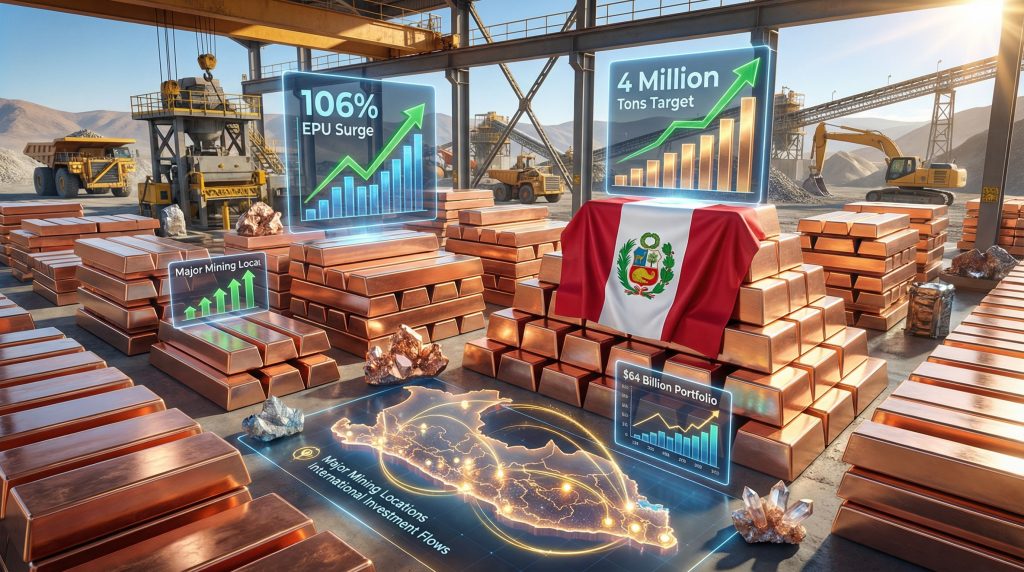
Peru's strategic positioning in the global mining sector reflects broader shifts in energy transition minerals demand patterns. The country's comprehensive approach to attracting international capital demonstrates how established mining jurisdictions must evolve to maintain competitive advantages in an increasingly complex commodity landscape. Peru seeks investment to strengthen leadership in copper and transition minerals, recognising that future mining success requires sophisticated integration of geological resources, regulatory frameworks, and market access strategies.
The Strategic Framework Behind Peru's Copper Investment Drive
Peru seeks investment to strengthen leadership in copper and transition minerals through a comprehensive approach that leverages both existing infrastructure and greenfield opportunities. The country's mining sector has demonstrated exceptional resilience, with the broader resource complex delivering significant returns to investors who understand the cyclical nature of commodity markets. This performance reflects deeper structural advantages that extend beyond short-term price movements.
Furthermore, the strategic framework encompasses lessons learned from successful copper & uranium investment models in other jurisdictions. These examples provide valuable insights into capital allocation strategies and risk management approaches that can be adapted to Peru's specific circumstances.
Supply Chain Vulnerabilities Creating Investment Urgency
Global copper markets face a fundamental imbalance as existing mines reach maturity while new project development timelines extend due to permitting complexities and environmental requirements. The challenge becomes particularly acute when considering that large-scale copper projects typically require 10-15 years from discovery to production, while energy transition demand curves suggest supply shortfalls beginning in the mid-2020s.
This timeline mismatch creates compelling opportunities for jurisdictions capable of accelerating project development through streamlined regulatory frameworks and infrastructure investment. The technical requirements for energy transition infrastructure demand copper grades and volumes that stress existing supply chains.
Electric vehicles require approximately four times more copper than conventional vehicles, while offshore wind installations consume 8-15 tons of copper per megawatt of capacity. These specifications cannot be easily substituted, creating inelastic demand curves that support sustained investment in copper production capacity.
Economic Multiplier Analysis of Mining Investment Expansion
Large-scale mining investments generate cascading economic effects through infrastructure development, skilled employment creation, and technology transfer. The economic multiplier for mining investment in developing economies typically ranges between 1.5-2.5, meaning each dollar invested in mining infrastructure generates additional economic activity worth 1.5-2.5 dollars through supplier networks.
However, successful implementation requires careful attention to permit regulatory insights that can significantly impact project timelines and capital requirements. The employment implications extend beyond direct mining operations to encompass engineering services, logistics networks, and specialized manufacturing.
A single large copper mine typically supports 3,000-5,000 direct jobs while generating 15,000-25,000 indirect employment opportunities across the broader economy. These positions often provide above-average wages in developing economies, creating substantial purchasing power that drives local economic growth.
When big ASX news breaks, our subscribers know first
Investment Mechanisms and Capital Attraction Strategies
Policy Framework Evolution and Regulatory Streamlining
Modern mining investment requires sophisticated regulatory frameworks that balance environmental protection, community engagement, and economic development objectives. Peru seeks investment to strengthen leadership in copper and transition minerals by implementing regulatory mechanisms that provide certainty for long-term capital commitments while maintaining environmental and social standards.
This approach recognizes that successful mining investment requires predictable legal frameworks, transparent permitting processes, and consistent policy application across project lifecycles. The regulatory environment must address complex technical challenges including water management, tailings disposal, and community impact mitigation.
Advanced permitting systems utilise digital platforms for environmental monitoring, stakeholder consultation, and compliance reporting. These technological solutions reduce administrative burden while improving transparency and accountability throughout project development phases.
International Partnership Models and Capital Structure Innovation
Contemporary mining finance increasingly relies on strategic partnerships between host governments, international mining companies, and institutional investors. These partnerships distribute risk while leveraging complementary capabilities in project development, operations, and market access.
Successful models typically involve host country participation through equity stakes, royalty arrangements, or infrastructure development partnerships that align public and private interests. The evolution toward sustainable finance criteria has created new capital sources for mining projects that demonstrate environmental, social, and governance (ESG) compliance.
Green bonds, sustainability-linked loans, and ESG-focused private equity funds provide capital for projects meeting specific environmental and social criteria. This trend particularly benefits copper projects due to the metal's essential role in renewable energy infrastructure, as highlighted by Peru's broader mining development initiatives.
Comparative Analysis of Global Copper Investment Trends
Greenfield Development vs. Existing Asset Optimisation
The global copper industry faces a critical decision between expanding existing operations and developing new mining districts. Each approach presents distinct risk-return profiles and capital requirements.
Greenfield projects offer higher production growth potential but require longer development timelines and greater geological risk. Brownfield expansions provide faster production increases with lower geological uncertainty but may face capacity constraints and declining ore grades.
| Investment Approach | Capital Requirements | Development Timeline | Production Potential | Risk Profile |
|---|---|---|---|---|
| Greenfield Projects | $2-8 billion | 8-15 years | High growth potential | Elevated geological risk |
| Brownfield Expansion | $500M-2 billion | 3-7 years | Moderate growth | Lower geological risk |
| Processing Upgrades | $100-800 million | 2-4 years | Efficiency gains | Technical risk |
Risk-Adjusted Investment Return Analysis
Copper investment returns depend on multiple variables including ore grade, processing costs, transportation access, and regulatory stability. High-grade copper deposits (above 1.5% copper content) typically generate superior returns due to lower processing costs and reduced environmental impact.
However, such deposits are increasingly rare, requiring investors to evaluate lower-grade opportunities with advanced processing technologies. The geographic distribution of copper investments reflects risk-adjusted return calculations that consider political stability, infrastructure quality, and regulatory predictability.
Projects in established mining jurisdictions command lower risk premiums but may face higher labour costs and environmental compliance requirements. Emerging mining regions offer potentially higher returns but require careful assessment of political, regulatory, and operational risks.
Transition Minerals Portfolio and Strategic Diversification
Critical Mineral Integration Beyond Traditional Copper Operations
Peru seeks investment to strengthen leadership in copper and transition minerals by expanding beyond traditional copper production into lithium, rare earth elements, and other materials essential for energy transition technologies. This diversification strategy recognises that future mining operations must produce multiple critical minerals to justify large-scale infrastructure investments.
The approach aligns with successful lithium supply strategy models implemented in other regions, demonstrating how integrated mineral portfolios can enhance project economics and reduce market risks.
Lithium carbonate production from brines requires different processing technologies and market strategies compared to copper extraction. The technical complexity involves evaporation ponds, chemical processing facilities, and quality control systems designed for battery-grade lithium compounds.
These operations typically require 18-24 months for production ramp-up and generate different cash flow profiles compared to copper operations. Rare earth element production presents additional technical challenges due to complex metallurgy and environmental considerations.
Supply Chain Integration and Market Access Strategies
Critical mineral investments require sophisticated market access strategies that connect mining operations with downstream processing and manufacturing networks. The value creation occurs through vertical integration opportunities, strategic partnerships with processing facilities, and long-term supply agreements with technology manufacturers.
This integration model differs significantly from traditional commodity markets where products are sold to multiple buyers through spot market transactions. The geographic proximity to major technology manufacturing centres influences investment economics and supply chain security considerations.
Mining operations positioned within established trade corridors and transportation networks command premium valuations due to lower logistics costs and reduced supply chain risks. These locational advantages become particularly important for minerals with high value-to-weight ratios or specialised handling requirements.
Market Dynamics Supporting Investment Thesis Development
Commodity Price Performance and Investment Return Correlation
The relationship between commodity prices and mining equity performance demonstrates significant leverage effects during price upturns. Mining companies typically experience amplified returns compared to underlying commodity price movements due to operating leverage, where fixed costs remain constant while revenues fluctuate with commodity prices.
This operating leverage creates substantial return potential during commodity bull markets while magnifying losses during downturns. Peru seeks investment to strengthen leadership in copper and transition minerals as global demand fundamentals support sustained price strength across multiple commodity categories, creating compelling investment opportunities for capital deployed in high-quality mining assets.
The volatility characteristics of mining investments require sophisticated portfolio management approaches that consider correlation structures, hedging strategies, and position sizing methodologies. Institutional investors increasingly utilise commodity exposure as portfolio diversification tools and inflation hedges while accepting higher volatility in exchange for return potential and portfolio protection benefits.
Production Capacity Expansion and Market Share Implications
Global copper production capacity must expand significantly to meet projected demand growth from renewable energy infrastructure, electric vehicle adoption, and grid modernisation projects. The scale of required expansion challenges existing mining companies and creates opportunities for new entrants capable of developing large-scale projects efficiently.
This capacity expansion race favours jurisdictions offering competitive advantages in geological resources, infrastructure access, and regulatory frameworks. The timing of capacity additions influences market dynamics and investment returns through supply-demand balance effects.
Early movers in capacity expansion benefit from higher prices during supply-constrained periods while facing construction cost inflation and resource competition. Later entrants may encounter lower commodity prices but benefit from proven technologies, established supply chains, and reduced development risks.
Risk Assessment and Mitigation Strategies
What Are the Key Community Relations Challenges?
Modern mining operations require sophisticated stakeholder engagement strategies that address community concerns while maintaining operational efficiency. The social licence to operate has become as important as regulatory permits for project success, particularly in regions with indigenous populations or previous mining conflicts.
Successful engagement strategies involve early consultation, benefit-sharing arrangements, and long-term community development programs that extend beyond mine lifecycles. The measurement of social impact requires quantitative metrics including employment creation, local procurement spending, infrastructure development, and environmental monitoring results.
These measurements inform adaptive management strategies that respond to changing community needs and concerns throughout project development and operation phases. Technology platforms enable real-time monitoring and transparent reporting of social and environmental performance indicators.
Operational Risk Factors and Infrastructure Dependencies
Large-scale mining operations depend on reliable infrastructure including power supply, water access, transportation networks, and telecommunications systems. Infrastructure constraints often limit production capacity and increase operational costs through system bottlenecks or redundancy requirements.
The assessment of infrastructure risks requires detailed analysis of existing systems, expansion capabilities, and alternative supply sources for critical inputs. Water management represents a particularly complex operational challenge in many mining jurisdictions due to competing uses, environmental restrictions, and climate variability.
Advanced water management systems incorporate recycling technologies, alternative water sources, and integrated watershed management approaches that balance mining requirements with environmental protection and community needs. These systems often require significant capital investment but provide operational resilience and regulatory compliance benefits.
The next major ASX story will hit our subscribers first
Investment Trend Analysis and Capital Flow Patterns
ESG Criteria Integration and Sustainable Finance Evolution
Environmental, social, and governance criteria have become central to mining investment decisions as institutional investors increasingly prioritise sustainable development outcomes. ESG integration affects capital costs, project approval timelines, and market valuations through investor screening processes and regulatory requirements.
Mining companies demonstrating strong ESG performance typically access capital at lower costs while commanding premium valuations in public markets. The quantification of ESG performance requires standardised metrics covering carbon emissions, water usage, waste generation, community impact, and governance structures.
These metrics enable comparative analysis across mining projects and facilitate investor due diligence processes. Third-party ESG rating agencies provide independent assessments that influence institutional investor allocation decisions and borrowing costs for mining companies.
Institutional Investment Patterns and Portfolio Allocation Trends
Institutional investors including pension funds, sovereign wealth funds, and endowments increasingly recognise mining investments as essential portfolio components for inflation protection and commodity exposure. The allocation patterns reflect sophisticated understanding of mining investment cycles, geological risk factors, and operational complexities.
Private equity involvement in mining has evolved toward operational improvement strategies, technology implementation, and ESG enhancement programs that create value through efficiency gains and sustainable development practices. These strategies require deep industry expertise and long-term investment horizons that align with mining development timelines.
Furthermore, the integration of comprehensive critical minerals strategy frameworks provides institutional investors with clearer risk assessment methodologies and performance benchmarks for mining portfolio allocation decisions.
Regional Competition and Market Position Analysis
Competitive Dynamics with Established Mining Jurisdictions
Peru seeks investment to strengthen leadership in copper and transition minerals within a competitive landscape that includes established producers across multiple continents. The competitive positioning depends on production costs, ore quality, infrastructure access, and regulatory stability rather than simply geological endowments.
Successful mining jurisdictions combine favourable geology with supportive policy frameworks, efficient regulatory processes, and competitive operating environments. The comparative analysis of mining jurisdictions requires evaluation of total ownership costs including exploration expenses, development capital, operating costs, transportation charges, and government take through taxes and royalties.
These comprehensive cost analyses inform investment allocation decisions and competitive positioning strategies for mining companies operating across multiple jurisdictions. According to recent analysis, Peru's copper project concentration represents 28.4% of all copper projects in the Americas, highlighting the country's significant regional position.
Technology Transfer and Industry Development Implications
Mining investment catalyses technology transfer and industrial development through supplier networks, engineering services, and specialised equipment requirements. The technology spillover effects benefit broader industrial sectors through capability development, workforce training, and research institution collaboration.
These spillover benefits justify public sector support for mining development through infrastructure investment and regulatory facilitation. The evolution toward automated mining operations, remote monitoring systems, and artificial intelligence applications requires substantial technology investment and specialised workforce development.
Mining jurisdictions providing technology-focused incentives and education programmes attract higher-value mining operations and associated service industries that generate superior economic development outcomes.
Investment Outcome Projections and Strategic Implications
Production Capacity Timeline and Development Sequencing
The successful expansion of mining capacity requires coordinated development of multiple projects with complementary timelines and resource requirements. The sequencing considerations include workforce availability, equipment supply chains, infrastructure capacity, and market absorption rates for increased production volumes.
Optimal development sequencing maximises economic returns while managing construction risks and market timing uncertainties. The infrastructure development requirements for large-scale mining expansion include power generation, transportation networks, processing facilities, and support services.
These infrastructure investments often exceed individual mining project budgets and require coordination between public and private sector entities. The timing and financing of infrastructure development critically influences the viability and returns of associated mining projects.
Market Share Evolution and Strategic Positioning
Peru seeks investment to strengthen leadership in copper and transition minerals through market share expansion that positions the country as a reliable supplier for global commodity markets. The strategic positioning requires consistent production growth, quality maintenance, and supply chain reliability that supports premium pricing and long-term customer relationships.
This positioning strategy differs from cost leadership approaches that prioritise production volumes over relationship building and service quality. The global market share implications extend beyond immediate economic benefits to include geopolitical influence, technology transfer opportunities, and industrial development potential.
Countries achieving significant market positions in critical minerals gain negotiating power in trade relationships and attract downstream processing investments that generate additional economic value from mineral resources. In addition, the strategic implications of Peru's investment drive reflect broader trends in global commodity market restructuring and supply chain resilience requirements.
Investment Disclaimer: This analysis contains forward-looking statements and projections based on current market conditions and industry trends. Mining investments involve significant risks including commodity price volatility, operational challenges, regulatory changes, and geological uncertainties. Past performance does not guarantee future results, and investors should conduct thorough due diligence and consider their risk tolerance before making investment decisions. The information presented should not be considered as personalised investment advice.
Ready to Capitalise on the Next Major Mineral Discovery?
Discovery Alert instantly notifies investors of significant ASX mineral discoveries using its proprietary Discovery IQ model, transforming complex mining announcements into actionable investment opportunities before the broader market reacts. Understand why historic mineral discoveries can generate substantial returns by exploring Discovery Alert's dedicated discoveries page, which showcases exceptional investment outcomes from major finds, then begin your 14-day free trial to position yourself ahead of the market.