June 6, 2026
Peru's copper mining sector stands at a critical juncture where global demand pressures intersect with evolving domestic policy frameworks. The strategic importance of copper in energy transition technologies has transformed how nations approach mineral exploration insights, particularly in regions rich with untapped reserves. This convergence of international market forces and national economic priorities creates unique opportunities for regulatory innovation in the mining sector.
The acceleration of renewable energy deployment worldwide has fundamentally altered copper production outlook, with traditional supply chains struggling to meet anticipated requirements. This market dynamic forces resource-rich nations to reconsider their approaches to project development, balancing immediate economic benefits with long-term strategic positioning in global commodity markets.
Strategic Policy Mechanisms in Mining Development
Peru's regulatory framework for mining project classification represents a sophisticated approach to managing national resource development priorities. The national interest designation system provides a pathway for accelerating critical infrastructure projects while maintaining environmental and social safeguards.
This classification mechanism operates through several key policy instruments:
- Enhanced inter-ministerial coordination protocols
- Streamlined environmental assessment procedures
- Priority scheduling for technical reviews
- Strengthened legal protection against project disruptions
The framework addresses historical challenges in Peru's mining sector, where complex mining permitting processes and social license issues have delayed significant developments. By creating distinct pathways for projects deemed strategically important, the government can balance resource development with community concerns more effectively.
Regulatory Efficiency Improvements
The differentiation between standard mining permits and national interest designations reflects lessons learned from previous project delays. Standard environmental impact assessments typically require 18-24 months for completion, while the enhanced framework provides accelerated review timelines without compromising technical standards.
Furthermore, regional government coordination becomes more streamlined under the national interest classification, reducing bureaucratic delays that have historically affected large-scale mining investments. This approach recognizes that major copper developments require coordinated support across multiple government levels to succeed.
When big ASX news breaks, our subscribers know first
Economic Significance of Large-Scale Copper Development
The Tía María copper project of national interest exemplifies the intersection of global commodity demand with Peru's development priorities. Located in Arequipa's Islay Province, this development represents one of South America's most significant pending copper investments, with implications extending far beyond regional boundaries.
The project's economic profile demonstrates its strategic importance to Peru's mining sector:
| Economic Metric | Projected Impact |
|---|---|
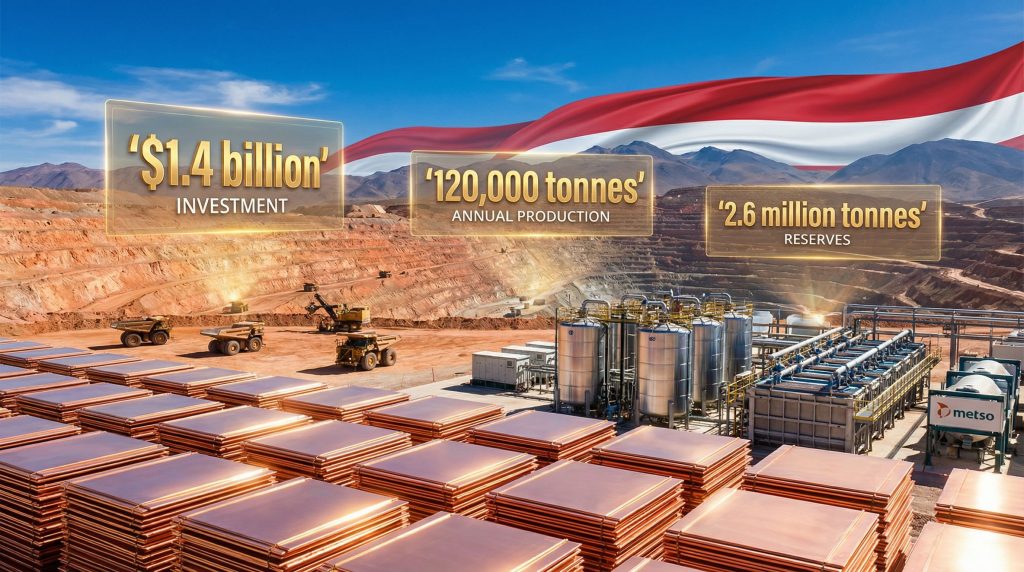
| Capital Investment | $1.4 billion development commitment |
| Annual Production | 120,000 tonnes copper cathodes |
| Mine Life | 20-year operational timeline |
| Reserve Base | 2.6 million tonnes proven reserves |
Revenue Generation Framework
The fiscal impact of the Tía María copper project of national interest extends across multiple economic levels. National royalty payments are projected to generate approximately $150 million annually, representing a significant contribution to Peru's mineral revenue base.
In addition, regional economic transformation potential includes a 40% increase in Arequipa's revenue generation, fundamentally altering the area's economic foundation. This level of regional impact justifies the strategic attention given to the project's development timeline.
Employment creation spans both construction and operational phases:
- 3,500 temporary construction positions during development
- 2,600 permanent operational jobs throughout mine life
- Indirect employment multiplier effects across regional service sectors
Social License Evolution in Peru's Mining Sector
Peru's approach to community engagement in mining development has undergone significant transformation since 2009, when traditional consultation methods proved inadequate for complex projects like the Tía María copper project of national interest. The evolution of social license frameworks reflects broader industry evolution trends in how governments and companies approach community relations.
The historical timeline reveals key learning points:
- 2009: Initial community consultation in Cocachacra resulted in 93% rejection of the project
- 2014: First environmental permit approval despite ongoing local opposition
- 2019: Permit revocation following sustained social unrest in the region
- 2019 (October): Mining Council re-ratification of project permits
- 2026: Advanced technology contract finalisation with Metso
Environmental Governance Innovations
The Tambo River valley water security concerns that emerged during community consultations catalysed broader policy reforms across Peru's mining sector. These environmental challenges drove innovations in several key areas:
- Enhanced monitoring requirements for water resource protection
- Mandatory community benefit-sharing mechanisms in project agreements
- Advanced pollution prevention technology integration requirements
- Stricter environmental baseline studies for sensitive ecosystems
The transformation of Peru's consultation framework demonstrates how regulatory systems can evolve to address legitimate community concerns while maintaining economic development objectives.
Technology Integration in Modern Mining Operations
The €100 million Metso contract for the Tía María copper project of national interest represents a significant advancement in copper processing technology application. The solvent extraction-electrowinning (SX-EW) system addresses both environmental concerns and production efficiency requirements.
Advanced Processing Capabilities
The technology package includes several critical components:
- Acid mist capture systems reducing atmospheric emissions by over 95%
- LME Grade A cathode production meeting international quality standards
- Oxide mineralisation processing optimised for local geological conditions
- Water conservation systems addressing regional resource security concerns
This technological approach directly responds to environmental concerns raised during community consultations. The acid mist capture systems specifically address air quality issues that contributed to local opposition in previous project phases.
Environmental Technology Leadership
The integration of advanced environmental technologies positions the Tía María copper project of national interest as a demonstration case for sustainable mining practices in Peru. The SX-EW process eliminates traditional smelting requirements, significantly reducing atmospheric emissions.
Water management systems incorporate closed-loop processing to minimise fresh water consumption, addressing one of the primary environmental concerns in the arid Tambo River valley region.
Comparative Analysis of Approval Frameworks
Peru's dual-track approach to mining project approvals creates distinct pathways based on strategic importance assessments. Understanding these differences provides insight into how governments can balance development priorities with regulatory efficiency.
Standard Mining Approval Process
Traditional mining permits follow established procedures:
- Environmental Impact Assessment (18-24 month timeline)
- Community consultation requirements per established protocols
- Regional government coordination through standard channels
- Sectoral ministry approvals following sequential review processes
National Interest Enhanced Framework
The accelerated pathway provides several advantages:
- Expedited inter-ministerial coordination reducing approval bottlenecks
- Priority environmental review scheduling without compromising standards
- Enhanced legal protection mechanisms against project disruptions
- Government advocacy support in stakeholder engagement processes
Consequently, this differentiation recognises that projects of exceptional strategic importance may require coordinated government support to overcome traditional development barriers.
Peru's Strategic Copper Development Framework
Peru's position as the world's second-largest copper producer creates both opportunities and responsibilities in global commodity markets. The country's strategic approach must balance immediate economic benefits with long-term sustainability considerations, particularly as energy transition demand accelerates.
Global Market Positioning
Several factors influence Peru's copper investment strategies:
- Maintaining production leadership in increasingly competitive global markets
- Infrastructure development leveraging mining revenues for broader economic benefits
- Energy transition demand meeting growing copper requirements for renewable technologies
- Investment climate stability demonstrating regulatory certainty for international capital
The Tía María copper project of national interest represents a test case for Peru's ability to advance large-scale developments while addressing social and environmental concerns effectively.
Regional Economic Transformation
For instance, the Arequipa region's economic diversification potential through successful copper development extends beyond direct mining activities:
- Enhanced regional infrastructure investment attracting additional industries
- Expanded local supplier networks creating business opportunities
- Increased technical education opportunities developing human capital
- Diversified economic base reducing dependence on traditional agriculture
The next major ASX story will hit our subscribers first
International Mining Investment Strategies
Southern Peru Copper Corporation's approach to the Tía María copper project of national interest illustrates evolving strategies for managing regulatory and social risks in Latin American mining operations. The company's emphasis on collaborative approaches reflects broader industry trends.
Corporate Risk Management Evolution
Modern mining companies operating in Peru adopt sophisticated risk management frameworks:
- Enhanced community engagement protocols moving beyond traditional consultation
- Environmental technology investments demonstrating leadership in sustainable practices
- Government partnership development aligning project benefits with national priorities
- Long-term stakeholder relationship building creating durable social licence foundations
Operational Strategy Adaptation
The timeline for the Tía María copper project of national interest reflects patient capital approaches necessary for complex mining developments in challenging social environments. Companies must balance investor expectations with the time required to build genuine community support.
Investment strategies increasingly emphasise front-end environmental and social planning, recognising that early attention to these factors reduces long-term operational risks and regulatory delays.
Future Implications for Peru's Mining Sector
The Tía María copper project of national interest designation establishes precedents for future mining investment approaches in Peru. The success or failure of this model will influence how subsequent projects navigate regulatory and social challenges.
Policy Framework Development
Several policy areas require continued evolution:
- Proactive environmental planning requiring advanced pollution prevention from project conception
- Community partnership models moving beyond consultation toward genuine benefit-sharing
- Technology integration standards emphasising environmental leadership through advanced processing
- Government collaboration protocols aligning project benefits with national development strategies
Investment Climate Indicators
The successful advancement of the Tía María copper project of national interest would demonstrate several positive indicators for Peru's mining investment climate:
- Regulatory predictability through consistent application of national interest frameworks
- Social licence viability proving that community concerns can be addressed effectively
- Technology adoption leadership showing environmental standards can be exceeded profitably
- Government support reliability indicating sustained political backing for strategic projects
Regional Development Integration
Future mining projects will likely face increasing requirements for regional development integration:
Standardised community benefit-sharing mechanisms, enhanced environmental monitoring requirements, streamlined approval processes for qualified projects, and mandatory regional development integration represent the emerging policy framework for Peru's mining sector.
Sustainable Mining Development Recommendations
However, the lessons emerging from the Tía María copper project of national interest development process provide guidance for future mining policy evolution in Peru and across Latin America.
Policy Innovation Requirements
Effective mining governance requires several coordinated elements:
- Transparent benefit-sharing frameworks ensuring communities receive tangible benefits from resource extraction
- Advanced environmental standards exceeding minimum compliance requirements
- Streamlined approval mechanisms for projects meeting enhanced social and environmental criteria
- Regional development mandates requiring mining projects to contribute to broader economic diversification
The Tía María copper project of national interest represents more than an individual mining development. It embodies Peru's evolving approach to balancing resource extraction with environmental stewardship and community development, creating a model that could influence mining policy across the region.
This analysis is based on publicly available information and policy frameworks. Investment decisions should consider comprehensive due diligence including current market conditions, regulatory changes, and project-specific risk factors. Mining investments carry inherent risks related to commodity prices, regulatory changes, and operational challenges.
Ready to Capitalise on Peru's Strategic Copper Development?
Discovery Alert's proprietary Discovery IQ model delivers real-time alerts on significant copper discoveries across the ASX, instantly empowering subscribers to identify actionable opportunities ahead of the broader market. Begin your 14-day free trial today and secure your market-leading advantage whilst Peru's strategic mining policies reshape global copper markets.