
June 6, 2026
Peru's Copper Mining Regulatory Architecture Under Review
Peru's copper production strategy faces mounting complexity as global demand for the red metal intersects with increasingly sophisticated environmental and social governance requirements. The Southern Copper Tia Maria project review exemplifies how the nation's position as the world's third-largest copper producer rests not merely on geological abundance, but on regulatory frameworks that must balance extraction efficiency with community acceptance and environmental protection. Recent developments in Peru's mining permitting process signal a fundamental shift toward procedural rigour over expedited resource development timelines.
When big ASX news breaks, our subscribers know first
Understanding Peru's Mining Authorisation Framework
What Legal Mechanisms Allow Project Reversals?
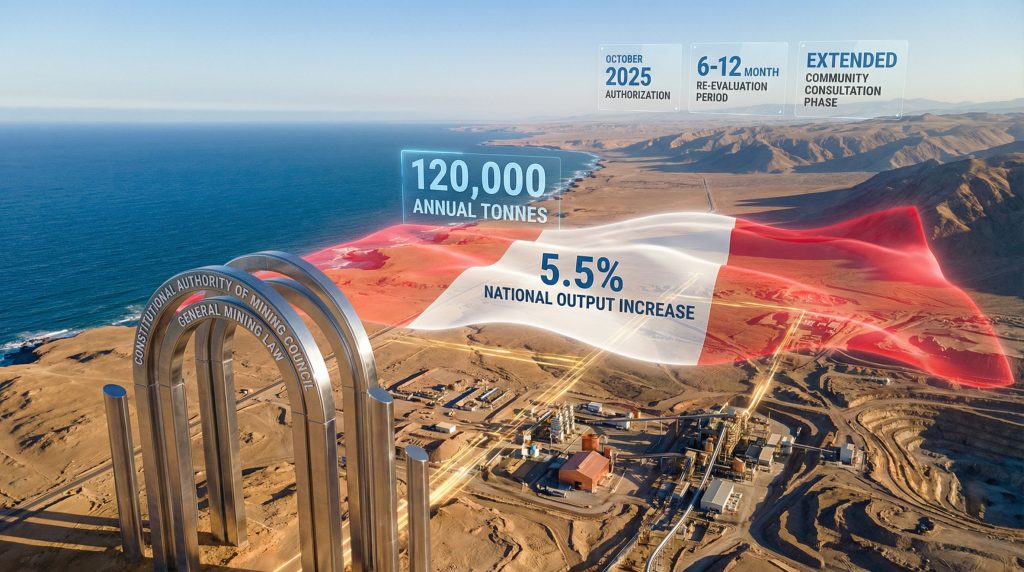
Peru's mining regulatory architecture operates through a multi-layered authorisation system where the Mining Council maintains constitutional authority to nullify operational permits based on procedural compliance reviews. The recent reversal of an October 2025 authorisation demonstrates how administrative oversight mechanisms can intervene in project development cycles, even after initial approvals are granted.
The Mining Council's legal review process represents a critical checkpoint in Peru's regulatory framework, where transparency requirements and legal certainty standards are evaluated against established mining law provisions. This institutional capacity to reverse authorisations reflects Peru's commitment to due process adherence, particularly for projects involving significant environmental and social considerations.
Key regulatory mechanisms include:
- Constitutional Mining Council authority for permit nullification
- Administrative review protocols under Peru's General Mining Law
- Mandatory transparency compliance verification systems
- Legal precedent frameworks for large-scale mineral project interventions
How Does Peru's Mining Approval Process Work?
Peru's mining approval architecture requires projects to navigate multiple authorisation stages from initial exploration through production commencement. Each phase involves distinct regulatory checkpoints designed to ensure environmental, social, and technical compliance before advancing to subsequent development stages.
The authorisation process integrates environmental impact assessment protocols with community consultation obligations, reflecting Peru's adherence to international standards including ILO Convention 169. Water rights certification and agricultural land use conflict resolution form additional layers of regulatory review, particularly relevant for projects in Peru's arid coastal regions where water resource competition remains acute.
Essential approval components include:
- Multi-stage environmental impact assessments
- Community consultation legal obligations
- Water rights certification processes
- Agricultural land use conflict resolution mechanisms
- Technical feasibility verification requirements
Analysing the Tía María Decision Framework
What Triggered the Ministry's Intervention?
The Mining Ministry's intervention in the Southern Copper Tia Maria project review reflects institutional prioritisation of procedural compliance over operational expediency. The ministry explicitly cited ensuring transparency and legal certainty as primary rationales for the regulatory reversal, indicating systemic review of compliance protocols rather than project-specific technical deficiencies.
| Regulatory Factor | Timeline Impact | Compliance Requirement |
|---|---|---|
| Mining Council legal review | 6-month evaluation period | Procedural guidelines adherence |
| Transparency verification | Documentation reassessment | Stakeholder disclosure standards |
| Legal certainty restoration | Extended consultation phase | Community engagement protocols |
The regulatory action demonstrates how Peru's mining authorisation framework functions as a dual-track system where initial approvals remain subject to ongoing compliance verification. This approach reflects institutional commitment to maintaining investor confidence through consistent regulatory standards rather than expedited project approvals that might later face legal challenges.
Why Did Authorities Prioritise Regulatory Compliance Over Production Timelines?
Peru's central bank chief economist Adrian Armas characterised the regulatory intervention as compatible with continued investment momentum, stating that whilst the project remains important for the country, investment projects and updates continue despite individual project delays. This perspective suggests regulatory authorities view procedural rigour as confidence-enhancing rather than investment-deterrent.
The prioritisation of compliance over timeline acceleration reflects several strategic considerations:
- International investment protection through consistent due process application
- ESG alignment with global copper market sustainability standards
- Precedent-setting for Peru's broader mining project pipeline
- Political risk mitigation in regions with historical social tensions
This regulatory approach positions Peru within emerging global trends where mining jurisdictions strengthen procedural integrity to attract long-term institutional investment aligned with environmental and social governance criteria.
Economic Policy Ramifications
How Will This Impact Peru's Copper Production Strategy?
The Tía María project represents 120,000 annual tonnes of copper production capacity within Peru's broader mining development portfolio. This volume constitutes a significant contribution to Peru's national copper output, particularly given the project's $1.8 billion investment value and strategic location in southern Peru's established mining corridor.
Production impact metrics:
- Annual copper capacity: 120,000 metric tonnes
- Project investment: $1.8 billion
- Completion status: Approximately 25% at authorisation reversal
- Target production start: Late 2027 (subject to regulatory clearance)
Furthermore, the regulatory delay creates timeline uncertainty for Peru's copper production growth projections, particularly as global copper demand accelerates driven by renewable energy infrastructure and electric vehicle adoption. The broader copper investment outlook suggests sustained demand pressure that makes projects like Tía María increasingly valuable. However, Peru's position as the world's third-largest copper producer provides buffer capacity through existing operations whilst the Tía María project undergoes regulatory review.
What Are the Broader Investment Climate Implications?
Peru's approach to the Southern Copper Tia Maria project review signals institutional commitment to procedural certainty over expedited approvals. Central bank economist Armas emphasised that investment projects continue despite individual project delays, suggesting authorities view regulatory consistency as foundational to long-term investment confidence.
Strategic Policy Insight: Peru's regulatory reversal demonstrates prioritisation of institutional integrity over short-term production targets, potentially strengthening investor confidence through enhanced legal predictability and stakeholder engagement protocols.
Southern Copper's broader Peru investment portfolio includes Los Chancas and Michiquillay projects as part of a planned $10.3 billion investment over the next decade. The company's continued development commitment despite Tía María delays indicates investor confidence in Peru's long-term regulatory environment and mineral resource potential.
Comparative Regulatory Analysis
How Does This Compare to Other Latin American Mining Jurisdictions?
Peru's regulatory approach reflects broader regional trends toward enhanced environmental and social governance in mining project approvals. In addition, recent developments across Latin America copper dynamics show increased focus on community consultation and environmental compliance. Unlike jurisdictions with streamlined approval processes, Peru's multi-layered review system prioritises stakeholder engagement and environmental compliance verification.
Regional comparison factors:
- Community consultation requirements more comprehensive than standard Latin American frameworks
- Environmental review processes aligned with international best practice standards
- Administrative oversight mechanisms providing institutional checks on initial approvals
- Transparency requirements exceeding minimum regulatory disclosure obligations
This regulatory architecture positions Peru within global investment frameworks that increasingly prioritise ESG compliance and stakeholder engagement over traditional extraction efficiency metrics.
What International Best Practices Apply?
Peru's regulatory framework increasingly aligns with international mining jurisdictions that integrate community consultation and environmental protection into project approval processes. The emphasis on transparency and legal certainty reflects adoption of global best practices in mining regulation, particularly relevant given recent mining permits regulatory review trends in major jurisdictions.
International alignment areas:
- Community engagement protocols consistent with ILO Convention 169
- Environmental impact assessment standards aligned with international frameworks
- Administrative review processes providing institutional oversight
- Transparency requirements supporting stakeholder confidence
Future Regulatory Scenarios
What Are the Potential Outcomes for Tía María?
The Southern Copper Tia Maria project review faces multiple potential regulatory pathways depending on compliance verification outcomes and stakeholder engagement success. Each scenario carries distinct timeline and investment implications for Southern Copper's development strategy.
Potential regulatory outcomes:
- Full re-authorisation with original terms – Subject to compliance verification
- Modified permit conditions – Enhanced environmental or community requirements
- Extended review process – Additional stakeholder consultation phases
The late 2027 target production start remains achievable under expedited regulatory review scenarios, whilst extended consultation requirements could push timelines into 2028 or beyond.
How Might This Influence Peru's Mining Policy Evolution?
The Tía María regulatory review establishes precedent for enhanced procedural rigour in Peru's mining authorisation framework. However, future policy evolution likely emphasises early-stage community engagement and strengthened environmental monitoring protocols.
Policy evolution trends:
- Enhanced community engagement requirements from project initiation
- Strengthened environmental monitoring and compliance verification
- Improved inter-agency coordination for regulatory consistency
- Digital transparency platforms for permit tracking and stakeholder access
The next major ASX story will hit our subscribers first
Strategic Implications for Mining Companies
What Risk Management Strategies Should Operators Adopt?
Mining companies operating in Peru should develop comprehensive compliance documentation systems that exceed minimum regulatory requirements. The Tía María case demonstrates how initial approvals remain subject to ongoing institutional review, requiring proactive risk management strategies.
Consequently, insights from gold‑copper exploration initiatives suggest successful projects require early stakeholder engagement and enhanced environmental monitoring from exploration phases.
Recommended risk management approaches:
- Enhanced legal compliance documentation beyond minimum standards
- Proactive community relations investment programmes
- Regulatory change monitoring and response protocols
- Political risk insurance optimisation for procedural delays
How Should Investors Evaluate Peruvian Mining Opportunities?
Investment evaluation frameworks should incorporate regulatory timeline buffers and enhanced due diligence focus on permit procedural compliance. The Tía María experience demonstrates how procedural gaps can create significant project delays even after initial approvals.
Central bank economist Armas's emphasis that investment projects continue despite individual delays suggests Peru maintains commitment to mining sector development whilst strengthening regulatory consistency.
Investment evaluation criteria:
- Due diligence focus on permit procedural compliance
- Community acceptance assessment methodologies
- Regulatory timeline buffer incorporation in project financing
- ESG criteria alignment with government policy priorities
Regional Development Policy Context
What Role Does Mining Play in Peru's Economic Development Strategy?
Mining operations serve as catalysts for regional economic development in Peru's historically underinvested areas, particularly in southern regions where projects like Tía María provide employment and infrastructure development opportunities.
Peru's copper exports contribute substantially to national foreign exchange earnings, with mining sector performance directly influencing economic stability and development programme funding. The Tía María project's 120,000 annual tonnes capacity represents meaningful contribution to Peru's export revenue generation.
Economic development contributions:
- Foreign exchange earnings from copper exports
- Regional employment creation in underinvested areas
- Infrastructure development catalysed by mining operations
- Tax revenue generation for social programme funding
How Do Environmental Policies Intersect with Mining Regulations?
Environmental policy integration with mining regulations reflects stakeholder concerns about water resource protection and agricultural land preservation. For instance, Southern Copper Corporation's official statements acknowledge local concerns whilst emphasising environmental compliance protocols. Furthermore, local farmers and residents have expressed concerns about pollution and water contamination, leading to violent protests in 2011 and 2015 that resulted in six deaths and dozens injured.
These environmental considerations demonstrate how Peru's regulatory framework must balance mineral extraction priorities with agricultural and water resource protection, particularly in arid coastal regions where water competition remains acute. Additionally, recent Peruvian mining permit developments highlight ongoing tensions between development objectives and environmental protection requirements.
Environmental-mining policy intersections:
- Water resource protection in arid coastal regions
- Agricultural land preservation versus mineral extraction priorities
- Climate change adaptation strategies in mining-dependent regions
- Biodiversity conservation requirements in project planning
The Tía María regulatory review illustrates Peru's evolving approach to mining governance, where environmental and social considerations receive institutional protection through enhanced procedural oversight and community engagement requirements.
Disclaimer: This analysis is based on publicly available information and should not be considered investment advice. Mining project timelines and regulatory outcomes involve inherent uncertainties that may affect actual results. Readers should conduct independent research and consult qualified professionals before making investment decisions.
Ready to Capitalise on the Next Major Mining Discovery?
Discovery Alert's proprietary Discovery IQ model delivers real-time alerts on significant ASX mineral discoveries, instantly empowering subscribers to identify actionable opportunities ahead of the broader market. Begin your 14-day free trial at Discovery Alert today and secure your market-leading advantage whilst major mining discoveries continue generating substantial returns for early investors.