
June 5, 2026
Peru's Political Transformation: Understanding Constitutional Reform and Resource Sovereignty
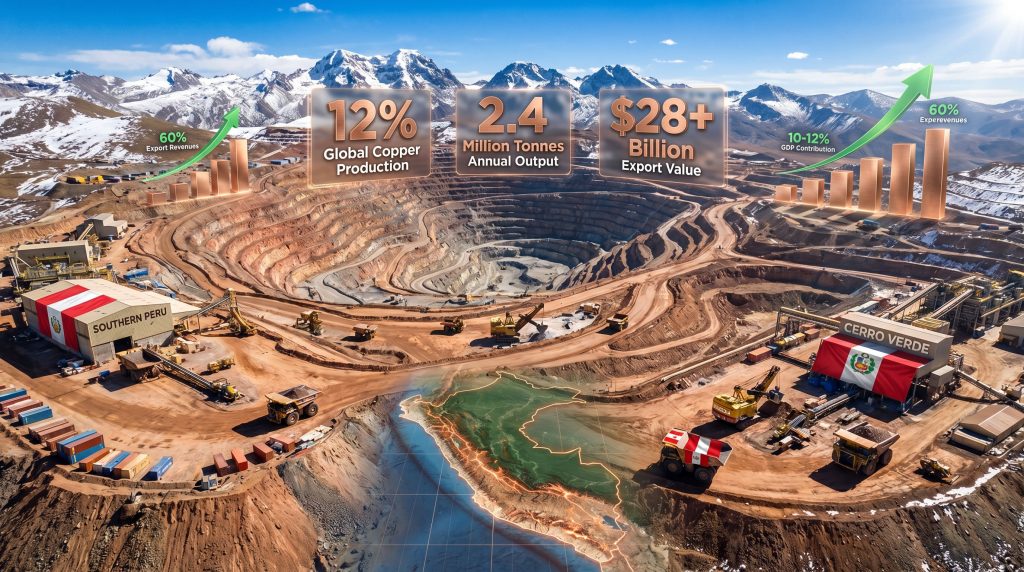
The global copper market finds itself at a critical inflection point as Peru, the world's third-largest copper producer, stands on the brink of substantial political transformation. A leftist candidate Peru new mining rules agenda could reshape the nation's entire resource extraction framework. With mining operations contributing 60% of the nation's export revenues and generating approximately $28 billion annually, any shift in Peru's mining governance framework carries profound implications for international commodity markets.
The convergence of resource nationalism, environmental activism, and economic populism in Latin America's mining-dependent economies reflects broader tensions between traditional extraction models and evolving societal expectations around wealth distribution and environmental stewardship. Furthermore, record copper prices have intensified debates around resource sovereignty and wealth redistribution mechanisms.
When big ASX news breaks, our subscribers know first
Strategic Mining Infrastructure and Global Supply Dependencies
Peru's copper mining sector operates through a sophisticated network of large-scale operations spanning diverse geological environments from coastal desert regions to high-altitude Andean territories. The nation's mining infrastructure supports annual copper output of approximately 2.4 million tonnes, representing roughly 12% of global copper supply forecast capacity.
This substantial output flows through established supply chains serving global manufacturing, with particular emphasis on supporting the rapidly expanding electric vehicle sector and renewable energy infrastructure development. Moreover, copper and uranium investments have become increasingly strategic for nations seeking to secure critical mineral supplies.
Critical Production Statistics:
- Annual copper production capacity: 2.4 million tonnes
- Mining sector GDP contribution: 10-12%
- Direct employment generation: 200,000+ mining workers
- Total export value: $28+ billion annually
The operational landscape encompasses major international players including Glencore, Anglo American, Freeport-McMoRan, and MMG, each maintaining significant production facilities across Peru's mineral-rich territories. These operators have established complex logistical networks connecting remote extraction sites with Pacific coast export terminals.
Geographic Distribution and Operational Complexity
Peru's mining operations span multiple climate zones and geological formations, from sea-level coastal operations to facilities operating above 4,000 meters elevation in the Andes mountains. This geographic diversity requires sophisticated technical solutions for transportation, power generation, and environmental management across varied terrain conditions.
Major Mining Regions:
- Coastal desert operations with proximity to port facilities
- High-altitude Andean mines requiring specialised logistics
- Inter-Andean valley projects with community integration challenges
- Amazon basin periphery operations with environmental sensitivities
In addition, gold and copper exploration activities across these diverse regions continue to identify new resource deposits, further complicating political discussions around extraction rights.
Constitutional Framework Restructuring and Governance Evolution
Roberto Sánchez, the 57-year-old leftist candidate currently positioned for Peru's presidential runoff, advocates comprehensive constitutional reform targeting the nation's market-oriented economic framework. His platform centres on redistributing mining revenues toward rural communities while maintaining operational continuity for existing projects.
According to mining industry reports, Sánchez explicitly states his intention to broaden wealth access through democratic mechanisms rather than pursuing expropriation policies. However, the proposed constitutional restructuring faces significant procedural obstacles, requiring legislative cooperation from conservative congressional majorities.
Current legal frameworks prohibit convening constituent assemblies through referendum mechanisms, necessitating complex legislative manoeuvring to enable constitutional modification processes. Consequently, the leftist candidate Peru new mining rules agenda faces substantial implementation challenges.
Revenue Redistribution Mechanisms
Proposed Constitutional Elements:
- Enhanced state participation in subsurface mineral rights
- Mandatory revenue-sharing formulas prioritising local communities
- Constitutional environmental protection provisions
- Strengthened indigenous territorial recognition frameworks
The constitutional reform agenda reflects broader regional trends toward resource nationalism across Latin America, with similar movements emerging in Chile's lithium sector, Colombia's mining taxation frameworks, and Ecuador's environmental protection initiatives.
Taxation System Transformation and Windfall Capture Strategies
Peru's mining taxation structure faces comprehensive overhaul under proposed leftist governance, with particular emphasis on implementing windfall profit mechanisms during elevated commodity price cycles. The current market environment, with copper trading at $5.6358 per pound and experiencing 2.72% daily gains, provides context for windfall taxation discussions.
Sánchez advocates reviewing existing tax contracts with major mining companies while implementing graduated royalty structures based on operational profitability metrics. These modifications would potentially establish sliding-scale taxation ranging from 5% to 12% based on profit margins and commodity price thresholds.
Taxation Reform Framework:
- Windfall profit taxes activated during high-price market cycles
- Progressive royalty structures tied to profitability metrics
- Enhanced corporate income tax rates for extractive industries
- Community development fund mandatory contributions
Market Response and Currency Impact
Since Peru's April 12 election, the nation's sol currency has emerged as Latin America's worst performer, with government bonds delivering less than 0.3% returns. This market reaction reflects investor concerns regarding policy implementation timelines and the scope of proposed reforms. Furthermore, tariff impacts on copper have added additional uncertainty to Peru's mining sector outlook.
Operational Transformation: From Open-Pit to Underground Extraction
Sánchez's commitment to phasing out open-pit mining operations represents a fundamental challenge to Peru's current production model. Virtually all major copper mines operate using surface extraction methodologies, making this transition technically and economically demanding.
Major Operations Requiring Transformation:
| Mine | Operator | Current Capacity |
|---|---|---|
| Cerro Verde | Freeport-McMoRan | 500,000+ tonnes annually |
| Antamina | Glencore/BHP | 400,000+ tonnes copper equivalent |
| Las Bambas | MMG | 300,000+ tonnes annually |
| Toquepala | Southern Copper | 200,000+ tonnes annually |
Technical and Economic Implications
Transitioning from open-pit to underground methodologies typically increases production costs by 40-60% while reducing extraction rates by 20-30%. These operational constraints could potentially remove 800,000 to 1.2 million tonnes of annual copper capacity from global markets over a 5-7 year transition period.
Underground mining requires substantially different infrastructure including shaft development and ventilation systems, specialised underground transportation networks, enhanced safety protocols, and modified processing facilities for underground ore characteristics.
Macroeconomic Strategy: International Reserves Deployment
Peru maintains approximately $100 billion in international reserves, representing roughly one-third of the nation's GDP. Sánchez proposes utilising these substantial reserves for infrastructure development, healthcare expansion, and educational system improvements rather than prioritising military expenditures.
Proposed Reserve Allocation Framework:
- Infrastructure investment: $30-40 billion over five years
- Healthcare system expansion: $15-20 billion
- Educational infrastructure development: $10-15 billion
- Rural development programmes: $20-25 billion
Central Bank Independence Considerations
Despite criticism of veteran central bank chief Julio Velarde, Sánchez emphasises the importance of preserving institutional autonomy and maintaining macroeconomic stability. This pragmatic approach suggests potential continuity in monetary policy frameworks while implementing expansive fiscal programmes.
The preservation of central bank independence remains crucial for maintaining investor confidence in monetary policy, ensuring inflation targeting effectiveness, preserving international reserve management credibility, and supporting currency stability during political transitions.
The next major ASX story will hit our subscribers first
Mining Contract Renegotiation and International Operator Implications
Existing mining stability agreements provide 15-year tax rate guarantees, streamlined permitting processes, and investment protection mechanisms for major operators. Proposed contract renegotiations would fundamentally alter these arrangements, potentially increasing operational costs and regulatory uncertainty for international companies.
Sánchez also indicates intentions to review free trade agreements and contracts involving the Camisea natural gas fields, which supply the Peru LNG terminal on the Pacific coast. Major Camisea players including Pluspetrol SA and Shell could face contract modifications affecting their operational frameworks.
Revenue Redistribution and Community Benefits
Enhanced community benefit-sharing models would redirect larger portions of mining revenues toward local development projects. These mechanisms aim to ensure mining communities receive direct benefits from resource extraction activities occurring in their territories.
Community Development Priorities:
- Healthcare facility construction in mining regions
- Technical education programmes for local workforce development
- Transportation infrastructure connecting remote areas
- Agricultural diversification initiatives
Regional Development Strategy and Andean Community Investment
Targeted investment in Peru's mineral-rich Andean regions focuses on infrastructure development, healthcare access, and educational opportunities. Sánchez's political identity explicitly connects with Andean regional interests, reflected in his campaign symbolism and policy priorities favouring impoverished highland communities.
Environmental restoration initiatives would address legacy mining impacts while establishing stricter standards for future operations. These programmes include watershed protection, soil remediation, and biodiversity conservation measures designed to mitigate historical environmental damage from extractive activities.
Indigenous Rights and Territorial Recognition
Proposed constitutional reforms include strengthened indigenous territorial rights recognition, potentially affecting mining concession allocation and community consultation requirements. These provisions would establish enhanced legal frameworks for indigenous community participation in resource extraction decisions affecting their traditional territories.
Global Copper Market Response and Supply Chain Implications
Peru's policy changes could trigger significant global copper market adjustments, given the nation's substantial production share and strategic position in international supply chains. Potential supply disruptions would influence pricing dynamics and supply security considerations for major consuming industries.
Market Impact Scenarios:
- Short-term price volatility: 10-15% copper price fluctuations
- Supply chain diversification acceleration toward alternative sources
- Investment capital reallocation to more stable mining jurisdictions
- Strategic stockpiling increases by governments and industrial users
Alternative Supply Development
Policy uncertainty in Peru could accelerate copper development projects in other jurisdictions, including Chile, Democratic Republic of Congo, Mongolia, and emerging African producers. This geographic diversification would reduce market dependence on Peruvian production while potentially increasing development costs in technically challenging locations.
International mining companies may prioritise Chilean operations with established regulatory frameworks, African projects offering resource sovereignty stability, North American developments with USMCA trade protections, and Australian operations benefiting from rule-of-law predictability.
Investment Climate Evolution and Capital Market Dynamics
Mining sector foreign direct investment flows could experience significant volatility depending on policy implementation approaches. Gradual, consultative reform processes would likely maintain investor confidence better than rapid, unilateral changes affecting established operational frameworks.
Investment Climate Factors:
- Regulatory predictability and transparency maintenance
- Contract sanctity and legal framework stability preservation
- Dispute resolution mechanism effectiveness
- Community relations management requirement clarity
Equity Valuation and Capital Market Implications
Peruvian mining companies and international operators with significant Peruvian exposure could experience equity valuation adjustments based on policy implementation timelines and comprehensive reform scope. Market participants will monitor political developments for indicators of regulatory stability and operational continuity.
According to Reuters analysis, "mining investors remain jittery about political developments as Peru's vote count continues, with analysts expressing concerns about potential policy shifts affecting international operators."
Regional Policy Convergence and Latin American Resource Nationalism
Peru's policy evolution could influence similar movements across Latin America, where several countries are reconsidering mining taxation and regulatory frameworks. This regional trend reflects growing demands for enhanced state participation in resource revenues and environmental protection strengthening.
Regional Policy Alignment:
- Chile's lithium nationalisation initiatives and state participation expansion
- Colombia's mining taxation reforms and environmental restrictions
- Ecuador's biodiversity protection measures and extraction limitations
- Bolivia's resource sovereignty policies and foreign operator constraints
International Mining Investment Pattern Shifts
Policy changes in major producing countries like Peru could reshape global mining investment flows, potentially favouring jurisdictions with more stable regulatory environments and established rule-of-law frameworks. This shift would require mining companies to recalibrate risk assessment methodologies and capital allocation strategies.
Long-Term Scenario Analysis and Strategic Implications
The trajectory of Peru's mining sector transformation will depend on implementation methodologies, stakeholder engagement approaches, and economic performance during the transition period. Multiple scenarios present distinct risk-reward profiles for various stakeholder groups.
Gradual Reform Implementation Scenario
A moderate approach involving comprehensive stakeholder consultation and phased implementation could maintain operational continuity while achieving social and environmental objectives. This scenario would preserve investor confidence and production stability while delivering community benefits through enhanced revenue sharing mechanisms.
Gradual Reform Characteristics:
- Five to seven-year implementation timelines
- Stakeholder consultation throughout transition phases
- Grandfathering provisions for existing operations
- Performance-based community benefit delivery
Comprehensive System Overhaul Scenario
Rapid, extensive policy changes could create significant market disruptions while potentially achieving faster social and environmental improvements. This approach carries higher economic risks but might deliver more immediate community benefits and environmental protection enhancements.
Hybrid Development Model Scenario
A balanced framework combining enhanced state participation with continued private sector involvement could optimise both revenue generation and operational efficiency. This model would require sophisticated governance mechanisms and coordinated stakeholder management approaches.
The outcome of Peru's presidential election and subsequent leftist candidate Peru new mining rules implementation will significantly influence global copper markets, regional development patterns, and international mining investment strategies. The balance between social objectives, environmental protection, and economic stability will determine Peru's future position in global commodity markets.
Consequently, this transformation serves as a reference point for other resource-dependent Latin American economies navigating similar challenges. The leftist candidate Peru new mining rules agenda represents a broader shift toward resource nationalism across the region, potentially reshaping international mining investment patterns for years to come.
Disclaimer: This analysis is based on publicly available information and should not be considered investment advice. Political and economic forecasts involve inherent uncertainties, and actual outcomes may vary significantly from projected scenarios. Investors should conduct independent research and consult qualified professionals before making investment decisions.
Ready to Capitalise on South American Mining Opportunities?
Discovery Alert's proprietary Discovery IQ model delivers real-time alerts on significant ASX mineral discoveries, instantly empowering subscribers to identify actionable opportunities ahead of the broader market. While Peru navigates political transformation, explore Discovery Alert's discoveries page to understand how major mineral discoveries can generate substantial returns, then begin your 14-day free trial today to secure your market-leading advantage.