August 24, 2026
Egypt's energy infrastructure sector is experiencing unprecedented momentum through strategic partnerships that extend beyond traditional contracting arrangements. The recent Petrojet EPC contract for Oman gas pipeline development exemplifies how regional energy cooperation has evolved into comprehensive bilateral frameworks that address both immediate infrastructure needs and long-term energy transition requirements. Furthermore, these partnerships reflect broader shifts in Gulf energy investment patterns toward integrated supply networks.
Strategic Partnership Dynamics Between Egyptian and Omani Energy Sectors
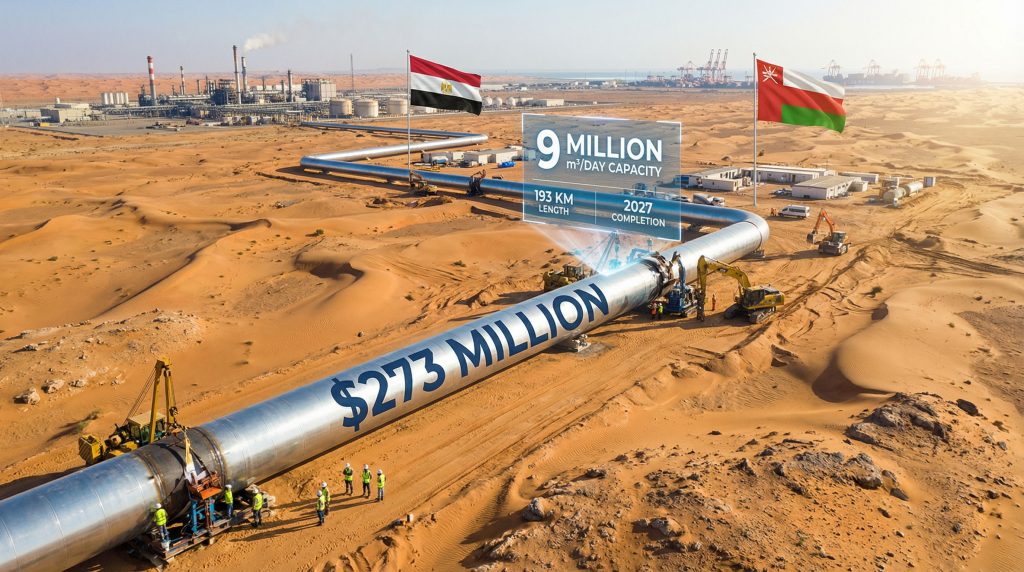
Cross-border energy infrastructure development in the Gulf region has evolved beyond simple contracting arrangements into comprehensive bilateral cooperation frameworks. The recent announcement of a $273 million Petrojet EPC contract for Oman's gas pipeline infrastructure represents a significant milestone in Egyptian-Omani energy collaboration, marking the largest documented Egyptian engineering win in Oman for the 2024-25 period.
This partnership structure involves coordination between Karim Badawi, Egypt's Minister of Petroleum and Mineral Resources, and Mansoor Ali Al Abdali, Managing Director of OQ Gas Networks (OQGN). The arrangement demonstrates high-level government support for bilateral infrastructure investment. Consequently, the collaboration extends beyond the primary natural gas pipeline contract to include a secondary $250 million hydrogen pipeline development, creating a combined investment commitment of $523 million across both traditional and emerging energy sectors.
Risk Allocation and Financial Structuring Framework
The dual-contract approach reflects sophisticated risk management strategies that separate conventional natural gas infrastructure from speculative hydrogen economy investments. This structure allows OQGN to manage technological uncertainty associated with hydrogen pipeline development while securing immediate natural gas capacity expansion through proven engineering methodologies.
Egyptian contractors bring specific advantages to Gulf infrastructure projects, including cost competitiveness relative to Western engineering firms while maintaining technical capabilities comparable to regional competitors. Petrojet's established presence in Abu Dhabi provides operational credibility and local market knowledge. Moreover, this presence reduces project execution risks for Omani infrastructure development.
Government-Level Strategic Coordination
The announcement timing during Oman's Green Hydrogen Summit indicates deliberate strategic coordination between Egyptian and Omani energy policies. This high-profile venue demonstrates both governments' commitment to positioning the partnership within broader regional energy transition narratives. In addition, it potentially attracts additional international investment and technology partnerships.
Concurrent activities by Engineering for the Petroleum and Process Industries (ENPPI) and Egypt Gas through OQGN's Tawreed platform registration suggest systematic Egyptian penetration of Omani energy infrastructure markets. These companies are advancing technical pre-qualification for gas pressure reduction stations at Duqm Refinery. ENPPI is positioned as a primary contender for upcoming project tenders.
When big ASX news breaks, our subscribers know first
Natural Gas Infrastructure Capacity Enhancement Strategy
The 193-kilometre Fahud-Suhar pipeline section represents a critical component of Oman's northern gas network expansion. The pipeline is designed to deliver 9 million standard cubic metres per day of additional capacity. This enhancement directly supports industrial development in the Sohar economic zone while establishing redundant supply pathways that improve overall network reliability.
Current Sohar industrial zone operations include major petrochemical facilities, aluminium smelting operations, and steel production that require consistent natural gas supply. These operations need gas for both process heat and feedstock applications. The additional capacity enables expansion of existing operations while attracting new industrial investments that depend on reliable energy infrastructure.
Technical Integration Challenges
Pipeline integration with existing Sohar infrastructure requires careful coordination of pressure management systems, metering stations, and emergency shutdown protocols. The 193-kilometre route crosses varied terrain including wadis, existing road networks, and potential interference with telecommunications infrastructure. These conditions demand specialised construction methodologies.
Material selection for the pipeline system must account for Oman's harsh environmental conditions, including high temperatures, sand exposure, and potential seismic activity in certain geological zones. Corrosion protection systems and cathodic protection networks require ongoing maintenance capabilities. These maintenance requirements influence long-term operational costs.
Industrial Demand Forecasting
Manufacturing sector growth projections for the Sohar region indicate sustained demand increase through 2030. This growth is driven primarily by petrochemical expansion and potential downstream processing facilities. Aluminium production capacity expansion plans require additional natural gas allocation. Meanwhile, emerging fertiliser production projects represent new demand categories.
Port connectivity at Sohar enables potential liquified natural gas export capabilities. This creates alternative revenue streams for excess pipeline capacity during periods of reduced industrial demand. The flexibility provides economic justification for capacity expansion beyond immediate regional requirements.
Egyptian Engineering Sector Regional Market Positioning
Petrojet's successful contract acquisition demonstrates Egyptian engineering companies' competitive positioning in Gulf infrastructure markets. The company leverages technical expertise developed through domestic energy sector development. Petrojet's existing Abu Dhabi operations provide regional credibility and local supply chain access. This reduces project costs and execution timelines.
Egyptian government initiatives supporting overseas project participation include export credit facilities, technical training programs, and bilateral trade agreements that enhance contractor competitiveness. These support mechanisms enable Egyptian companies to compete effectively against international engineering firms. Furthermore, they maintain profitability margins while doing so.
Technology Transfer and Capability Development
The partnership structure includes implicit technology transfer components, particularly regarding hydrogen pipeline construction methodologies that represent emerging technical capabilities. Egyptian engineers gain exposure to advanced pipeline materials and construction techniques. This exposure enhances future project competitiveness.
ENPPI's positioning for multiple OQGN tenders indicates sustained Egyptian engagement in Omani energy infrastructure development. This diversified approach reduces dependence on individual contract awards while establishing long-term business relationships. The strategy supports ongoing market penetration.
Competitive Advantages in Regional Markets
Egyptian contractors offer several advantages in Gulf markets, including:
• Cost competitiveness relative to European and American engineering firms
• Cultural familiarity and Arabic language capabilities that facilitate project management
• Regional experience gained through domestic energy sector development
• Government support through bilateral trade promotion initiatives
• Skilled workforce availability with relevant technical training and certifications
Economic impact on Egypt's construction sector includes foreign currency earnings, employment generation for technical personnel, and development of specialised capabilities. These capabilities are applicable to domestic infrastructure projects.
Hydrogen Economy Infrastructure Development Framework
OQGN's planned 2,000-kilometre hydrogen pipeline network represents one of the Gulf region's most ambitious hydrogen infrastructure projects. The initial 400-kilometre phase requires $250 million investment. This foundational infrastructure aims to support both domestic hydrogen production and potential export capabilities to international markets.
The hydrogen pipeline development timeline requires coordination with renewable energy production facilities. These particularly include solar and wind projects that provide clean electricity for hydrogen electrolysis. Integration planning must account for fluctuating renewable energy output and corresponding hydrogen production variability.
Technical Specifications and Design Considerations
Hydrogen pipeline design requirements differ significantly from natural gas infrastructure. They demand specialised materials resistant to hydrogen embrittlement and enhanced safety protocols for leak detection. Pipeline diameter and pressure specifications must accommodate hydrogen's lower volumetric energy density compared to natural gas.
Compression and storage systems along the hydrogen network require different technological approaches. These include specialised compressor designs and storage vessel materials that maintain hydrogen purity standards. The systems must meet requirements for industrial applications or export specifications.
Export Market Development Strategy
International hydrogen markets remain largely undeveloped, with European demand projections driving much of the current infrastructure investment rationale. Oman's strategic location enables potential pipeline connections to South Asian markets. It also maintains maritime export capabilities to European and East Asian destinations.
Technology partnerships for hydrogen production, storage, and transportation involve international companies with specialised expertise. These partnerships create additional investment and knowledge transfer opportunities. They extend beyond the basic pipeline infrastructure.
Regional Gas Supply Chain Integration Impact
The Fahud-Suhar pipeline expansion enhances regional gas supply security through improved network interconnection and redundant capacity provision. Emergency supply protocols benefit from additional pipeline capacity during planned maintenance. They also provide support during unexpected disruptions to primary supply routes.
GCC gas network interconnection initiatives support the project's strategic value. They enable potential cross-border gas trading arrangements that optimise regional supply allocation. Oman's position as a gas exporter benefits from enhanced domestic distribution efficiency. This efficiency frees additional volumes for regional or international markets.
Sohar Industrial Zone Development Impact
Enhanced gas supply reliability enables Sohar industrial zone expansion planning, with several major projects dependent on confirmed energy infrastructure availability. Petrochemical expansion projects require long-term gas supply guarantees. The new pipeline capacity can support these guarantees.
Port facilities at Sohar benefit from improved energy infrastructure through enhanced operational reliability and potential for energy-intensive cargo handling capabilities. Liquified natural gas export facilities could utilise excess pipeline capacity. This would occur during periods of reduced industrial demand.
Emergency Supply and Backup Capabilities
Pipeline redundancy improvements enhance overall network resilience, particularly during maintenance periods or unexpected supply disruptions. Multiple supply route availability reduces industrial production risk. It supports continued economic activity during infrastructure emergencies.
The expanded network capacity enables emergency supply allocation to other GCC nations during regional supply shortages. This strengthens Oman's position as a reliable energy partner within Gulf cooperation frameworks.
Investment Risk Assessment and Financial Modelling
The $273 million Petrojet EPC contract represents significant capital commitment requiring comprehensive risk assessment across multiple dimensions. These include construction timeline risks, regulatory compliance requirements, and currency fluctuation exposure. Project completion timeline targeting 2027 aligns with Oman's Vision 2040 strategic milestones.
Financial modelling must account for potential cost overruns, particularly given global inflation pressures affecting materials and labour costs. Contingency provisions typically range from 10-15% for pipeline projects. Additional reserves are required for complex terrain or unexpected geological conditions.
Construction Timeline and Milestone Risks
The 193-kilometre pipeline construction timeline faces several potential delay factors, including:
• Environmental approvals for sensitive ecological areas
• Land acquisition processes involving multiple stakeholders
• Weather conditions affecting construction scheduling
• Material delivery challenges due to global supply chain disruptions
• Workforce availability for specialised pipeline construction tasks
Payment milestone structuring typically involves progress-based disbursements tied to completion percentages. This reduces financial exposure for both contractor and client while maintaining project momentum incentives.
Currency and Commodity Price Exposure
Contract denomination in US dollars provides currency stability for international material purchases. However, it exposes Omani operations to exchange rate fluctuations against the Omani Rial. Commodity price volatility, particularly for steel and specialised pipeline materials, represents additional cost uncertainty.
The current natural gas pricing outlook influences long-term project economics, with higher gas prices improving transportation economics. However, this potentially reduces industrial demand for gas supply expansion.
The next major ASX story will hit our subscribers first
Alignment with Oman's Vision 2040 Economic Diversification
Oman's Vision 2040 strategy emphasises economic diversification away from oil dependence through industrial development and energy infrastructure modernisation. The Petrojet EPC contract for Oman gas pipeline supports these objectives by enhancing manufacturing sector competitiveness through improved energy supply reliability.
Employment generation through infrastructure projects contributes to Vision 2040 goals for job creation in technical sectors. Meanwhile, technology transfer components build domestic capabilities for future energy infrastructure development. Additionally, these projects support broader energy transition outlook objectives.
Industrial Sector Development Acceleration
Enhanced gas infrastructure supports Vision 2040 objectives for petrochemical sector expansion and downstream processing facility development. Reliable energy supply enables attraction of international industrial investments that require consistent operational conditions.
Economic diversification benefits include reduced government dependence on oil revenues through increased industrial tax collection and employment-related economic activity. Manufacturing sector growth creates multiplier effects throughout the domestic economy.
Environmental and Sustainability Considerations
Natural gas infrastructure expansion supports environmental objectives through displacement of liquid fuel consumption in industrial applications. Improved combustion efficiency and reduced emissions contribute to Oman's carbon intensity reduction goals.
Integration planning with renewable energy projects and hydrogen infrastructure demonstrates commitment to energy transition pathways. These pathways align with international climate commitments while maintaining economic competitiveness. The approach mirrors successful renewable energy transformation strategies implemented elsewhere.
Competitive Dynamics in Regional EPC Markets
International contractor selection for Gulf infrastructure projects involves sophisticated evaluation criteria balancing technical capabilities, cost competitiveness, and local content requirements. Egyptian companies compete primarily on cost advantages while maintaining acceptable quality standards and regional experience.
Technology transfer requirements and capability building objectives influence contractor selection. Preference is often given to companies offering knowledge transfer and local workforce development opportunities. These considerations are particularly important given current concerns about global recession forecast impacts on infrastructure investment.
Future Project Pipeline Opportunities
Successful completion of the Petrojet contract positions Egyptian companies for additional OQGN infrastructure tenders. These include potential hydrogen pipeline phases and associated compression facility construction. Regional expansion opportunities extend to other GCC nations pursuing similar energy infrastructure development.
Local content requirements in Gulf energy projects create opportunities for Egyptian companies to establish regional partnerships and supply chain presence. This supports long-term market penetration strategies. Furthermore, successful partnerships often lead to participation in energy fuels partnership opportunities across the region.
International Competition and Market Positioning
European and American engineering companies remain primary competitors for large-scale infrastructure projects, offering advanced technical capabilities and established quality certifications. Asian contractors, particularly from South Korea and China, provide alternative competitive pressures through aggressive pricing and rapid project delivery capabilities.
Egyptian companies differentiate through regional expertise, cultural compatibility, and government-supported financing arrangements. These factors enhance overall project economics for Gulf infrastructure development.
Operational Transformation and Future Energy Landscape
Project completion by 2027 will fundamentally transform Oman's northern gas network capabilities. This enables industrial expansion that supports broader economic diversification objectives. Operational capacity enhancement metrics indicate potential for 15% improvement in northern network gas delivery reliability.
The integrated approach combining natural gas and hydrogen infrastructure development creates foundational capabilities for future energy transition initiatives. It maintains current economic competitiveness through proven hydrocarbon utilisation.
Strategic Positioning for Energy Transition
Dual-purpose infrastructure development provides flexibility for evolving energy market conditions. This enables adaptation to changing demand patterns while maintaining asset utilisation efficiency. Hydrogen capability development positions Oman for potential export market opportunities as international demand develops.
Regional energy hub establishment requires continued infrastructure investment and international partnership development. The Petrojet EPC contract for Oman gas pipeline represents initial steps toward comprehensive energy corridor development.
Disclaimer: This analysis includes forward-looking assessments of energy infrastructure development, regional market dynamics, and international partnership implications that involve inherent uncertainty. Investment decisions should consider comprehensive due diligence and professional financial advice regarding specific project risks, regulatory requirements, and market conditions that may affect actual outcomes.
Ready to Capitalise on Regional Energy Infrastructure Opportunities?
Discovery Alert's proprietary Discovery IQ model delivers real-time alerts on significant ASX mineral discoveries, instantly empowering subscribers to identify actionable opportunities ahead of the broader market. Begin your 30-day free trial today and secure your market-leading advantage by exploring Discovery Alert's dedicated discoveries page showcasing historic examples of exceptional returns.