August 2, 2026
The Strategic Petroleum Chessboard: Understanding Iran's Market Position
Global energy markets operate within a complex web of geopolitical relationships that extend far beyond simple supply and demand fundamentals. Among these relationships, U.S.-Iran oil diplomacy stands as one of the most consequential forces shaping petroleum pricing dynamics across international markets.
Iran's position within global energy networks demonstrates how geographic leverage can amplify economic influence beyond raw production metrics. The Islamic Republic controls approximately 3.2 million barrels per day of crude production capacity, representing roughly 3.2% of global output according to recent U.S. Energy Information Administration assessments. However, this figure understates Iran's strategic significance within global energy security frameworks.
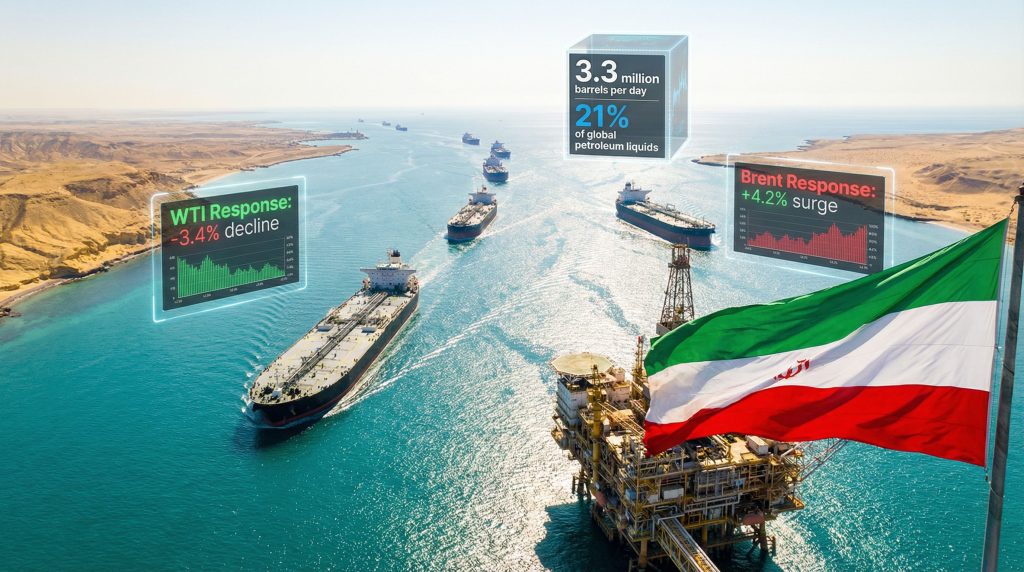
The nation's geographic position creates what energy analysts term leverage asymmetry. Iran sits astride the Strait of Hormuz, a narrow waterway through which approximately 21% of global petroleum liquids transit daily. This 55-kilometer-wide chokepoint represents the world's most critical oil transit route, with tanker traffic confined to two-lane shipping corridors that make the passage exceptionally vulnerable to disruption.
When big ASX news breaks, our subscribers know first
Production Constraints Under Current Framework
Iran's ability to maintain or expand production faces significant structural limitations due to ongoing sanctions regimes. Equipment acquisition restrictions limit access to modern drilling and production technology, while financial constraints reduce capital investment in field maintenance and development. The Iranian oil ministry has indicated that without sanctions relief, production could decline 4-5% annually due to natural field depletion rates.
These technical constraints create a paradox within global energy markets. While Iran maintains substantial theoretical production capacity, actual output remains constrained by technological and financial limitations. This dynamic contributes to price volatility, as markets must simultaneously account for Iran's potential supply contribution and the probability that this potential may never be realised under current diplomatic conditions.
Consequently, analysts focusing on US oil production decline patterns must also consider how Iranian constraints affect global supply balances.
| Iran's Energy Position | Current Status | Global Context |
|---|---|---|
| Production Capacity | 3.2-3.6 million bpd | 3.2% of global output |
| Strait of Hormuz Transit | 55km chokepoint | 21% of global liquids |
| Sanctions Impact | 4-5% annual decline | Technology access limited |
| Regional Refining | 1.6-1.7 million bpd | Domestic processing capacity |
Current Market Dynamics: Volatility Through Diplomatic Uncertainty
Energy markets demonstrate remarkable sensitivity to diplomatic signals between the United States and Iran, with price movements often occurring within hours of policy announcements or negotiation developments. This responsiveness reflects the underlying structural vulnerabilities within global petroleum supply chains that make Iranian diplomatic relations a critical pricing variable.
Recent market behavior illustrates these dynamics in stark terms. During the week ending February 6, 2026, oil prices experienced significant volatility following announcements regarding potential U.S.-Iran discussions. WTI crude fell 4% in a single session after President Trump announced ongoing diplomatic talks, while Brent crude declined 2.8% as geopolitical risk premiums evaporated nearly overnight.
Binary Response Patterns in Energy Markets
The market's reaction patterns to U.S.-Iran oil diplomacy developments follow predictable trajectories. Furthermore, understanding these patterns provides valuable insight into broader market psychology during geopolitical uncertainty periods.
• Diplomatic Progress Signals: Price declines of 3-4% typically occur within 2-3 trading sessions
• Negotiation Breakdown Fears: Price surges of 4%+ often materialise within 1-2 sessions
• Sanctions Escalation: Sustained risk premiums of 2-3% can persist for weeks
These response patterns demonstrate what behavioural economists classify as binary pricing behaviour, where markets rapidly shift between two distinct probability assessments rather than gradually adjusting expectations. When diplomatic progress appears likely, markets immediately reprice supply disruption risks downward. Conversely, signs of diplomatic breakdown trigger rapid repricing of tail-risk scenarios.
Moreover, oil price stagnation insights reveal how diplomatic uncertainty can create prolonged periods of sideways price action as markets await clarity.
Dollar-Denominated Pressure Dynamics
Currency fluctuations add additional complexity to oil price volatility during diplomatic uncertainty periods. A stronger U.S. dollar makes petroleum more expensive for foreign buyers, potentially dampening global demand and weighing on prices. During the February 2026 diplomatic developments, the dollar's rise to a two-week high added another layer of downward pressure on crude oil prices, particularly during sessions when geopolitical concerns were fading.
Inventory Data Context
Fundamental supply data continues to influence pricing even during periods of intense geopolitical focus. EIA reports during the same period showed bigger-than-expected declines in crude oil inventories, with additional drops in distillates while gasoline inventories rose. These inventory adjustments provided technical support for prices and helped limit downside moves during diplomatic announcement-driven selloffs.
In addition, Iran-US diplomatic developments continue to influence market sentiment and trading patterns across global exchanges.
What Are the Economic Mechanisms Behind Oil Price Volatility?
Energy economists utilise sophisticated probabilistic models to quantify geopolitical risk premiums embedded within petroleum pricing. These frameworks combine multiple variables to assess how diplomatic developments translate into market pricing adjustments.
Risk Premium Calculation Components
Professional energy market analysis incorporates several key variables when assessing Iran-related supply risks. However, the complexity of these calculations often obscures the fundamental drivers of price volatility:
• Supply Disruption Probability Assessment: Current market conditions suggest 15-25% probability weightings for significant Iranian supply disruption scenarios
• Alternative Supply Response Capacity: Saudi Arabia maintains approximately 2.0-2.2 million bpd spare capacity, while UAE contributes 0.7-0.8 million bpd additional capacity
• Transit Route Vulnerability Analysis: Strait of Hormuz closure scenarios command $15-25/barrel risk premiums in extended disruption models
• Duration Uncertainty Factors: Market pricing typically incorporates 30-90 day disruption timeline assumptions
Elasticity Constraints and Market Response
Despite theoretical spare capacity availability from Gulf Arab producers, markets discount the reliability of alternative supply during crisis scenarios. Time lags required to activate spare capacity, typically 20-40 days for full production ramping, create what analysts term liquidity premiums for immediate supply concerns.
This elasticity constraint explains why markets exhibit binary response patterns to diplomatic news. Even with spare capacity theoretically available, the uncertainty surrounding rapid supply substitution maintains elevated risk premiums until diplomatic clarity emerges. Consequently, OPEC market influence remains crucial for understanding supply response capabilities.
Shadow Fleet Economics and Sanctions Evasion
Iran's sanctions-evasion infrastructure demonstrates remarkable adaptability and scale. Various intelligence assessments place the shadow fleet at 1,200-1,800 vessels depending on operational definitions, with approximately 40% directly linked to Iranian entities or front companies.
This parallel maritime infrastructure enables continued Iranian oil exports despite comprehensive sanctions regimes. At current price levels of $60-70/barrel and estimated actual export volumes of 1.3 million bpd, Iranian annual oil revenues approximate $31 billion, substantially below pre-sanctions levels but sufficient to maintain economic and political stability.
Geographic Diversification Strategies
Iran's export strategy emphasises Asian market diversification to reduce Western enforcement effectiveness:
• Primary destinations: China receives approximately 60% of Iranian shadow fleet exports
• Secondary markets: India and other Asian buyers absorb remaining volumes through complex trading arrangements
• Payment mechanisms: Alternative financial systems bypass traditional dollar-denominated energy trade
How Do Nuclear Negotiations Impact Energy Security Frameworks?
The structural framework of U.S.-Iran oil diplomacy reveals fundamental misalignments that contribute to persistent energy market volatility. These diplomatic disconnects create inherent instability within petroleum markets, as resolution probability remains consistently low while escalation risks persist.
Negotiation Structure Analysis
Current diplomatic architecture demonstrates irreconcilable position frameworks that complicate market pricing models. For instance, the structural differences between American and Iranian approaches create what game theorists identify as negative-sum negotiation dynamics.
U.S. Approach Components:
• Comprehensive regional security integration requirements
• Maintained sanctions pressure during negotiation periods
• Missile programme limitations as prerequisite conditions
• Multi-lateral enforcement mechanism preferences
Iranian Position Elements:
• Nuclear programme limitations as exclusive negotiation scope
• Complete sanctions relief as negotiation prerequisite
• Bilateral engagement framework preference
• Regional security issues excluded from nuclear discussions
This structural mismatch creates what game theorists identify as negative-sum negotiation dynamics, where concessions by either party generate domestic political costs that exceed diplomatic benefits. These dynamics contribute to the on-again, off-again negotiation patterns that drive market volatility.
Regional Security Integration Challenges
U.S.-Iran oil diplomacy intersects with broader Middle Eastern security frameworks that complicate bilateral negotiation success. Regional allies maintain independent interests that may conflict with diplomatic breakthroughs, creating additional uncertainty layers within energy market pricing models.
Gulf Arab producers, particularly Saudi Arabia and UAE, benefit from Iranian supply constraints through higher market shares and pricing power. These dynamics create implicit resistance to comprehensive U.S.-Iran diplomatic normalisation that could restore Iranian production to pre-sanctions levels.
Furthermore, trade war oil movements demonstrate how broader geopolitical tensions can complicate bilateral diplomatic efforts and market stability.
What Are the Broader Supply Chain Implications?
U.S.-Iran oil diplomacy generates cascading effects throughout global energy supply chains that extend beyond direct Iranian production considerations. These secondary impacts often prove more economically significant than primary supply disruption scenarios.
Direct Supply Chain Channels
Iranian energy infrastructure affects multiple supply network components:
• Crude Oil Export Capacity: 3.3 million bpd theoretical capacity versus 1.3 million bpd actual exports under sanctions
• Regional Gas Pipeline Projects: Cross-border infrastructure development with Iraq, Pakistan, and Turkey
• Refined Product Distribution: Regional gasoline and diesel supply networks serving neighbouring markets
Indirect Market Impact Mechanisms
Secondary supply chain effects often prove more market-sensitive than direct Iranian production changes:
• Saudi/UAE Production Flexibility Requirements: Gulf producers must maintain higher spare capacity levels to compensate for Iranian uncertainty
• Tanker Route Security and Insurance Costs: Persian Gulf transit premiums increase during diplomatic tension periods
• Regional LNG Project Development: Long-term infrastructure investment decisions incorporate Iranian political risk assessments
Market Rebalancing Scenario Analysis
Professional energy analysts project multiple potential outcome pathways with distinct market implications. However, each scenario carries unique risks and opportunities that affect global supply chain planning:
| Diplomatic Scenario | Probability | Price Impact | Supply Response |
|---|---|---|---|
| Comprehensive Breakthrough | 20% | -$8 to -$12/barrel | OPEC+ production coordination |
| Status Quo Continuation | 55% | Current volatility range | Maintained spare capacity levels |
| Escalation/Regional Conflict | 25% | +$15 to +$30/barrel | Emergency strategic reserve releases |
Investment Pattern Distortions
Prolonged U.S.-Iran oil diplomacy uncertainty creates systematic capital allocation distortions throughout global energy markets. Investment flows redirect toward alternative suppliers, while Iranian fields experience declining productivity due to technology access restrictions and maintenance backlogs.
These investment distortions generate long-term supply security implications that extend beyond immediate diplomatic resolution scenarios. Even successful diplomatic breakthroughs require years of capital investment to restore Iranian production capacity to historical levels.
The next major ASX story will hit our subscribers first
How Do Sanctions Affect Global Energy Investment Patterns?
Comprehensive sanctions regimes against Iranian energy infrastructure create systematic market distortions that affect global capital allocation patterns and technology development trajectories. These effects often persist long after diplomatic resolution due to institutional inertia and risk perception changes.
Capital Allocation Redirection Effects
Sanctions-induced investment diversions generate several macro-economic consequences:
• Geographic Investment Concentration: Capital flows increasingly concentrate in Gulf Arab producers and North American unconventional resources
• Technology Development Gaps: Iranian field productivity declines approximately 4-5% annually due to equipment access restrictions
• Market Structure Concentration: Increased global dependence on fewer major producers reduces supply security resilience
Alternative Financial System Development
Iran's shadow fleet economy necessitates parallel financial infrastructure that affects broader energy market operations:
• Currency Diversification: Reduced dollar dependence in energy transactions increases forex volatility
• Insurance Market Fragmentation: Separate risk assessment and coverage systems for sanctioned trade
• Payment System Innovation: Alternative clearing mechanisms that may influence broader commodity trading patterns
Stranded Asset Risk Assessment
Prolonged sanctions create potential stranded asset scenarios that affect long-term energy security planning. Iranian oil field infrastructure faces significant productivity decline without technology refresh cycles, potentially creating permanent capacity losses even after diplomatic resolution.
Energy economists estimate that comprehensive diplomatic breakthrough would require $200-300 billion in infrastructure investment over 7-10 years to restore Iranian production capacity to pre-sanctions levels. This timeline suggests that diplomatic success provides long-term rather than immediate supply security benefits.
What Are the Long-Term Strategic Implications?
U.S.-Iran oil diplomacy intersects with fundamental energy transition dynamics that will reshape global petroleum markets over the next decade. These intersection points create strategic implications that extend beyond traditional geopolitical risk assessment frameworks.
Energy Transition Acceleration Effects
Persistent petroleum price volatility driven by diplomatic uncertainty accelerates alternative energy investment in several key areas:
• Renewable Energy Investment: Price volatility premiums make long-term renewable contracts more attractive to industrial consumers
• Strategic Petroleum Reserve Expansion: Governments increase buffer stock capacity to manage supply disruption risks
• Regional Energy Integration: Reduced dependence on global petroleum trade through local renewable development
Geopolitical Realignment Patterns
Diplomatic outcomes between Washington and Tehran will significantly influence broader alliance structures and energy security relationships. In addition, these patterns affect regional stability and economic development trajectories:
• Gulf Arab Integration: Saudi Arabia and UAE may accelerate economic diversification to reduce dependence on petroleum exports
• Asian Energy Security: China and India develop alternative supply chain relationships that reduce Western energy infrastructure dependence
• European Supply Diversification: Continued focus on reducing Middle Eastern energy dependence through renewable transition and alternative supplier development
Regional Infrastructure Development
Long-term diplomatic resolution scenarios would unlock significant regional energy infrastructure projects currently constrained by sanctions regimes:
• Cross-Border Pipeline Networks: Iran-Iraq, Iran-Pakistan gas pipeline completion
• Regional Refining Capacity: Integrated petrochemical development across Persian Gulf region
• Electricity Grid Integration: Cross-border power sharing arrangements reducing regional energy costs
Market Structure Evolution
The eventual resolution of diplomatic tensions will coincide with broader structural changes in global energy markets. These parallel developments create uncertainty about whether traditional petroleum market dynamics will persist or evolve toward more distributed, resilient supply networks.
Professional forecasting models suggest three potential evolutionary pathways:
-
Traditional Market Restoration: Diplomatic breakthrough restores pre-sanctions market structures with Iranian integration
-
Hybrid System Development: Parallel conventional and alternative energy systems operate simultaneously with reduced interdependence
-
Accelerated Transition: Diplomatic uncertainty accelerates renewable adoption beyond economic optimisation timelines
Technical Analysis and Market Positioning
Current technical indicators suggest oil markets remain in transitional phases that reflect underlying diplomatic uncertainty. Weekly swing chart analysis indicates the main trend remains upward, with light crude oil futures recently crossing above the 52-week moving average at $60.64 and taking out previous swing tops at $65.62.
Support and Resistance Level Analysis
Key technical levels provide insight into market psychology during diplomatic developments:
• Primary Support Cluster: 50% retracement level at $60.59 forms support cluster with 52-week moving average at $60.64
• Resistance Zone: Main range resistance extends from $64.91 to $67.32, with ultimate targets at $75.12
• Neutral Market Indicators: Market currently straddles long-term 50% level at $63.62, indicating balanced or neutral positioning
Volatility Pattern Recognition
Technical analysis reveals that diplomatic news cycles generate predictable volatility patterns that create trading opportunities for sophisticated market participants. Inside week movements suggest investor indecision and potential for continued two-way price action until diplomatic clarity emerges.
The interaction between fundamental supply concerns and technical positioning creates dynamic feedback loops that amplify price movements during diplomatic development periods. Understanding these patterns provides insight into market psychology and positioning strategies.
Moreover, oil price rally analysis suggests that technical indicators must be viewed alongside geopolitical developments to provide accurate market assessments.
Recent developments in Middle East diplomacy continue to influence both fundamental and technical market dynamics.
Disclaimer: The analysis presented in this article is for informational and educational purposes only. Oil market investing involves substantial risk, and past performance does not guarantee future results. Readers should conduct their own research and consider consulting with qualified financial advisors before making investment decisions. Geopolitical forecasts are inherently uncertain and should not be relied upon as definitive predictions of future market movements.
Ready to Invest in the Next Major Mineral Discovery?
Discovery Alert instantly alerts investors to significant ASX mineral discoveries using its proprietary Discovery IQ model, turning complex mineral data into actionable insights. Understand why historic discoveries can generate substantial returns by visiting Discovery Alert's dedicated discoveries page, showcasing exceptional outcomes from past mineral discoveries across the Australian market.