June 23, 2026
Strategic Infrastructure Transitions in Modern PGM Mining Operations
The global platinum group metals sector faces unprecedented operational transformation pressures as surface mining operations encounter grade depletion challenges across established mining districts. Mature open-pit operations increasingly require strategic integration of underground development to maintain production economics and extend mine life cycles. This infrastructure evolution pattern shapes investment priorities across major PGM-producing regions, particularly within South Africa's Bushveld Complex where operational optimisation strategies determine long-term competitive positioning.
Underground development projects in established PGM mining districts represent complex capital allocation decisions involving grade enhancement strategies, technological integration requirements, and multi-decade production planning frameworks. The economic rationale for surface-to-underground transitions centres on accessing higher-grade ore bodies that can improve overall metallurgical recovery rates whilst reducing all-in sustaining costs through strategic ore blending approaches.
When big ASX news breaks, our subscribers know first
Understanding the Strategic Context Behind Mogalakwena's Underground Transition
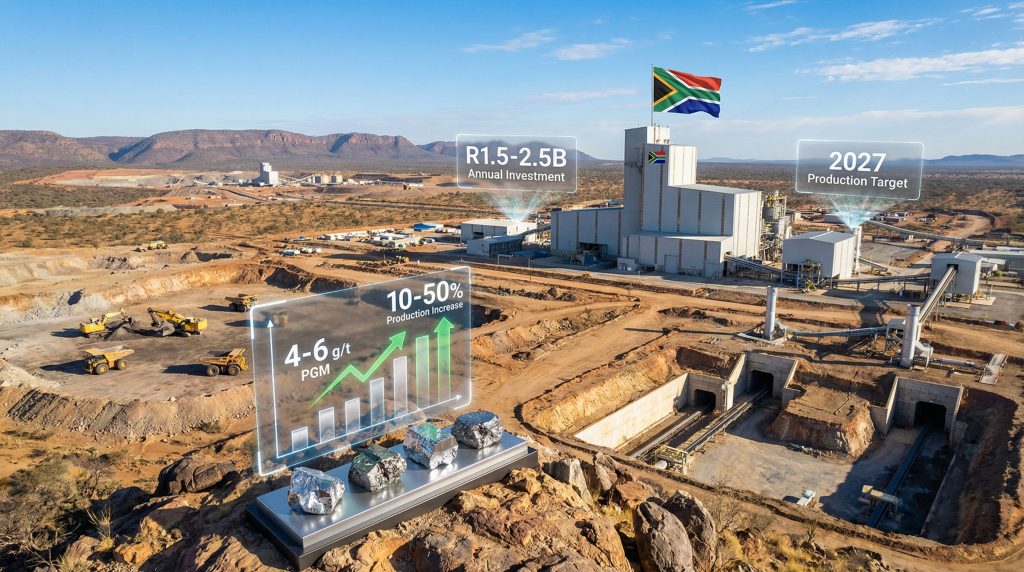
The Mogalakwena mine Sandsloot underground project exemplifies contemporary PGM mining strategy evolution in South Africa's Limpopo Province. Operated by Valterra Platinum (formerly Anglo American Platinum), this development represents a systematic approach to underground integration within existing surface mining operations. The prefeasibility study completed in the first half of 2025 demonstrated what operators describe as compelling investment economics, targeting underground ore grades of 4-6 grams per tonne PGM for blending with existing open-pit material.
Furthermore, the project's development timeline aligns with broader industry evolution trends that emphasise technological integration and operational efficiency improvements.
Why Surface-to-Underground Mining Transitions Define Modern PGM Strategy
Global PGM mining operations demonstrate consistent patterns of grade depletion in surface mining environments over multi-decade operational cycles. As easily accessible, higher-grade surface ore becomes depleted through extraction, mining companies face strategic choices between expanding surface footprints, transitioning to underground operations, or pursuing operational consolidation strategies.
Underground development provides access to ore bodies that may contain grade profiles superior to remaining surface reserves. The Mogalakwena mine Sandsloot underground project targets this opportunity through strategic ore blending, combining higher-grade underground material with existing open-pit ore to improve overall head grades for downstream processing facilities.
Key economic drivers supporting underground transitions include:
• Grade enhancement opportunities through selective extraction of higher-grade underground ore bodies
• Infrastructure leverage utilising existing processing facilities, tailings management systems, and administrative capabilities
• Operational efficiency gains through improved ore quality reducing processing costs and increasing recovery rates
• Mine life extension accessing previously uneconomic reserves through improved grade blending strategies
Moreover, data-driven mining operations are revolutionising how companies approach these underground development decisions. South African PGM operations benefit from established metallurgical expertise, skilled underground mining workforces, and integrated refining infrastructure that creates favourable economic conditions for underground development projects compared to greenfield operations in less developed mining jurisdictions.
Limpopo's Position in Global Platinum Supply Chain Architecture
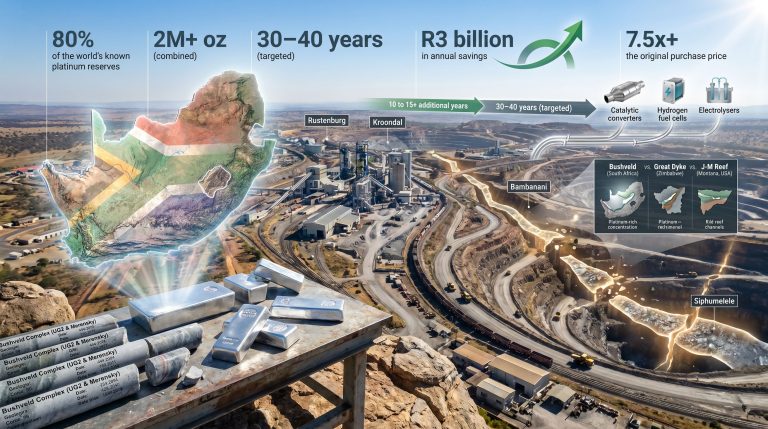
South Africa accounts for approximately 80% of global platinum group metals reserves and produces roughly 70-75% of global platinum supply, according to World Platinum Investment Council market data. This geographic concentration positions South African operational improvements as strategically significant for global PGM supply stability.
Limpopo Province hosts multiple major PGM operations within the Bushveld Complex, creating regional infrastructure advantages including:
• Established power transmission infrastructure connecting to South Africa's national electricity grid
• Skilled mining workforce availability with underground PGM mining experience
• Integrated logistics networks including rail connections to export terminals
• Regulatory familiarity with established permitting and environmental compliance frameworks
The Mogalakwena mine Sandsloot underground project benefits from these regional advantages whilst contributing to broader infrastructure utilisation efficiency across the Limpopo mining district. Additionally, understanding mining permitting essentials becomes crucial for such large-scale underground developments.
How Does the Sandsloot Underground Development Compare to Global PGM Underground Operations?
International Benchmarking Against Leading Underground PGM Mines
Global underground PGM operations demonstrate diverse technological approaches and economic profiles depending on geological conditions, regulatory environments, and infrastructure availability. The Mogalakwena mine Sandsloot underground project employs mechanised bulk mining strategies consistent with contemporary underground PGM operations worldwide.
Comparative Analysis Framework:
| Parameter | Sandsloot Project | Industry Context |
|---|---|---|
| Target Underground Grades | 4-6 g/t PGM | Varies by deposit; typically 3-8 g/t |
| Mining Method | Mechanised bulk mining | Industry standard for new developments |
| Integration Strategy | Blending with surface ore | Common approach for existing operations |
| Capital Deployment | R1.5-2.5 billion annually | Medium-scale mining investment |
International Reference Operations:
Rustenburg Complex (South Africa): Anglo American Platinum's Rustenburg operations include extensive underground mining integrated with surface operations, demonstrating successful surface-underground operational integration within South African regulatory and geological contexts.
Lonmin Impala Shaft Complex (South Africa): Multiple underground shafts producing high-grade PGM ore through mechanised mining systems, providing operational benchmarks for underground PGM extraction efficiency.
Norilsk Operations (Russia): Deep underground nickel-PGM operations representing advanced underground mining technology integration, though specific operational metrics remain proprietary.
Grade Enhancement Economics in Underground PGM Mining
The economic foundation of underground PGM development relies on grade differential economics – the cost-benefit relationship between extraction expenses and ore quality improvements. The Mogalakwena mine Sandsloot underground project targets 10-50% overall increase in metal concentrate production and 10-20% reduction in all-in sustaining costs through strategic grade blending.
Grade Enhancement Strategy Benefits:
• Improved metallurgical recovery through higher head grades reducing processing costs per ounce of PGM produced
• Reduced waste processing by selectively extracting higher-grade material rather than processing marginal surface ore
• Enhanced product quality through improved PGM concentrations in final concentrate products
• Operational efficiency gains from processing fewer tonnes to achieve equivalent or superior metal production
However, implementing such strategies requires comprehensive definitive feasibility studies to ensure economic viability. Grade blending strategies require sophisticated geological modelling to ensure consistent ore quality delivery to processing facilities whilst maintaining underground production scheduling efficiency.
What Technical Innovations Drive Sandsloot's Underground Mining Approach?
Mechanised Bulk Mining Technologies for PGM Extraction
Contemporary underground PGM operations employ mechanised mining systems to achieve safety compliance, operational efficiency, and cost optimisation objectives. The Mogalakwena mine Sandsloot underground project utilises mechanised bulk mining approaches representing industry-standard technology implementation rather than innovative differentiation.
Key Technical Components:
• Load-Haul-Dump (LHD) vehicles for ore extraction and transportation from mine face to underground infrastructure
• Automated drilling and blasting systems for controlled ore fragmentation and mine development
• Real-time geological monitoring enabling selective extraction of higher-grade ore zones
• Integrated safety systems including proximity detection, air quality monitoring, and emergency communication networks
Modern LHD vehicles in PGM underground operations typically feature 2-10 tonne bucket capacities with availability targets of 85-92%. Average production rates range from 500-1,200 tonnes per shift depending on haul distances and geological conditions.
Infrastructure Development Requirements for Deep PGM Access
Underground PGM mining requires substantial infrastructure investment to support safe and efficient operations at depth. The Mogalakwena mine Sandsloot underground project's capital guidance of R1.5-2.5 billion annually reflects these infrastructure requirements across multiple operational systems.
Critical Infrastructure Elements:
Ventilation Systems: Underground operations require sophisticated ventilation to maintain air quality, manage thermal loads from deep rock temperatures, and support diesel equipment operations. Ventilation infrastructure typically represents 8-15% of total underground infrastructure capital expenditure.
Power Distribution: Underground mining systems require high-capacity power distribution for LHD vehicles, pump systems, lighting, and communication networks. Local power substations and backup emergency power systems ensure operational continuity and safety compliance.
Access Development: Underground access through decline systems (gradual slope access) or shaft systems (vertical access) represents fundamental design decisions affecting capital requirements and operational efficiency. Decline systems typically require lower capital investment but greater surface footprint.
Communication Networks: Modern underground operations require integrated communication systems supporting operational coordination, safety monitoring, and emergency response protocols.
Modern underground PGM operations integrate mechanised equipment, real-time monitoring systems, and automated safety protocols to maximise productivity whilst ensuring worker protection in challenging geological environments.
How Will Sandsloot Impact Valterra Platinum's Market Position?
Production Volume Enhancement Strategy Analysis
The Mogalakwena mine Sandsloot underground project targets significant production improvements through strategic ore blending rather than standalone underground operation development. The projected 10-50% concentrate production increase represents substantial operational enhancement for Valterra Platinum's market position within global PGM supply chains.
Strategic Production Benefits:
• Increased market share within global PGM supply through expanded production capacity
• Improved operational flexibility enabling production optimisation based on market conditions
• Enhanced product consistency through controlled ore blending strategies
• Extended mine life accessing previously uneconomic reserves through grade enhancement
Market timing considerations favour PGM production expansion as global demand drivers include growing hydrogen economy development, automotive catalyst requirements, and industrial application expansion. The Mogalakwena mine Sandsloot underground project positions Valterra Platinum to capitalise on these demand trends through expanded supply capability.
Cost Structure Optimisation Through Underground Integration
The targeted 10-20% all-in sustaining cost reduction represents significant competitive advantage development within global PGM markets. Cost reduction through grade enhancement creates sustainable operational improvements rather than temporary efficiency gains.
Cost Optimisation Mechanisms:
• Reduced processing costs per ounce through improved ore quality requiring less material processing
• Enhanced metallurgical recovery increasing PGM extraction efficiency from processed ore
• Operational leverage utilising existing infrastructure capacity more efficiently
• Waste reduction through selective extraction strategies minimising low-grade material processing
Long-term financial sustainability depends on maintaining cost advantages through continued operational optimisation and technological efficiency improvements across integrated surface-underground operations.
What Are the Broader Industry Implications of Sandsloot's Development Model?
PGM Market Dynamics and Underground Mining Trends
Global PGM demand patterns demonstrate increasing pressure on supply chain reliability as automotive industry transitions, hydrogen economy development, and industrial application expansion create sustained demand growth. The Mogalakwena mine Sandsloot underground project represents strategic supply chain positioning within this demand evolution.
In addition, the focus on sustainable mining transformation becomes increasingly important as stakeholders demand environmentally responsible operations.
Market Demand Drivers:
• Hydrogen economy expansion requiring platinum and iridium for electrolysis systems and fuel cell technologies
• Automotive catalyst demand maintaining requirements despite electric vehicle transitions
• Industrial applications including glass manufacturing, petroleum refining, and chemical processing
• Investment demand from PGM-focused investment vehicles and strategic reserves
Underground mining development trends across the global PGM sector reflect similar strategic positioning as mature operations seek production sustainability through grade enhancement and operational efficiency improvements.
South African Mining Sector Transformation Patterns
The Mogalakwena mine Sandsloot underground project contributes to broader South African mining sector transformation toward higher-value, technology-intensive operations supporting economic diversification objectives and employment sustainability.
Sector Transformation Elements:
• Skills development in advanced underground mining technologies and safety systems
• Technology transfer supporting broader mining sector capability development
• Economic multiplier effects through local procurement, services, and infrastructure development
• Export revenue stability through sustained PGM production supporting foreign exchange earnings
Underground development represents capital-intensive job creation in specialised, higher-wage mining operations compared to lower-skill surface mining activities. According to Mining Weekly, such developments are crucial for South Africa's long-term mining competitiveness.
The next major ASX story will hit our subscribers first
Investment and Development Timeline Analysis
Capital Allocation Framework and Investment Decision Criteria
The Mogalakwena mine Sandsloot underground project follows systematic capital allocation methodology with feasibility study completion and investment decision targeted for the first half of 2027. Annual capital guidance of R1.5-2.5 billion positions this development within medium-scale mining investment parameters.
Investment Decision Framework:
• Technical feasibility validation through comprehensive geological, engineering, and operational studies
• Economic viability assessment including net present value, internal rate of return, and sensitivity analysis
• Risk evaluation covering geological, operational, market, and regulatory uncertainties
• Strategic alignment with Valterra Platinum's "value over volume" operational philosophy
Capital allocation depends on alignment with broader company investment priorities and market conditions supporting sustained PGM demand growth projections.
Phased Development Strategy and Milestone Management
The project employs phased development methodology enabling risk management and capital optimisation through staged implementation rather than comprehensive upfront investment.
Development Timeline Framework:
| Phase | Timeline | Key Deliverables | Investment Focus |
|---|---|---|---|
| Feasibility | 2025-2027 | Technical studies, investment decision | Engineering and planning |
| Trial Operations | Late 2026+ | Initial underground extraction | Equipment and infrastructure |
| Full Production | Post-2030 | Scaled concentrate output | Operational optimisation |
Trial operations beginning late 2026 enable operational validation and system optimisation before full-scale production implementation, reducing technical and operational risks associated with underground development.
Risk Assessment and Mitigation Strategies for Underground PGM Development
Technical and Operational Risk Management
Underground PGM development involves complex technical risks requiring comprehensive mitigation strategies to ensure operational success and investment protection. The Mogalakwena mine Sandsloot underground project faces typical underground mining challenges within South African geological and regulatory contexts.
Primary Technical Risks:
• Geological uncertainty affecting ore grade distribution, structural stability, and mining conditions
• Equipment reliability impacting production scheduling and operational efficiency
• Safety compliance meeting South African Mine Health and Safety Act requirements for underground operations
• Environmental management including water treatment, waste disposal, and surface subsidence prevention
Risk Mitigation Approaches:
• Comprehensive geological modelling using advanced drilling and sampling programmes to reduce ore body uncertainty
• Preventive maintenance programmes ensuring equipment availability and operational reliability
• Safety protocol integration employing automated systems and rigorous training programmes
• Environmental monitoring implementing real-time systems for compliance management
Market and Economic Risk Considerations
PGM market volatility creates price risk affecting project economics and investment returns. Currency fluctuations between the South African rand and US dollar impact both capital expenditure costs and revenue realisation.
Economic Risk Factors:
• PGM price volatility affecting revenue projections and investment economics
• Currency fluctuation impacting capital costs and operational expenses
• Interest rate changes affecting financing costs and investment evaluation metrics
• Regulatory modifications potentially altering operational requirements or taxation frameworks
Risk Management Strategies:
• Financial hedging to manage commodity price and currency exposure
• Flexible operational design enabling production optimisation based on market conditions
• Diversified revenue streams through multiple PGM products and customer relationships
• Regulatory engagement maintaining compliance and anticipating regulatory developments
Future Outlook: Sandsloot's Role in Global PGM Supply Evolution
Long-term Production Capacity and Market Integration
The Mogalakwena mine Sandsloot underground project represents strategic positioning within evolving global PGM supply chains as demand patterns shift toward hydrogen economy applications, sustained automotive catalyst requirements, and expanding industrial uses. Full production beginning post-2030 aligns with projected demand growth timelines.
Strategic Market Positioning:
• Supply reliability through integrated surface-underground operations reducing production risk
• Quality consistency via controlled ore blending strategies meeting customer specifications
• Production flexibility enabling response to market demand variations and price cycles
• Cost competitiveness through operational efficiency improvements and grade enhancement strategies
Global PGM supply concentration in South Africa creates strategic importance for individual project success within international supply chain stability. The Mogalakwena mine Sandsloot underground project contributes to maintaining South Africa's dominant position in global PGM production.
Technology Leadership and Innovation Spillover Effects
Successful underground development at Mogalakwena provides demonstration effects for similar projects across South African PGM operations and international underground development initiatives. Technology transfer and best practice development support broader mining sector capability advancement.
Innovation Spillover Opportunities:
• Mechanised mining optimisation developing efficient underground extraction methodologies
• Grade control technologies improving selective ore extraction capabilities
• Safety system integration advancing worker protection in underground environments
• Environmental management developing sustainable underground mining practices
Research and development collaboration opportunities exist through partnerships with technology suppliers, academic institutions, and other mining companies pursuing similar underground development strategies.
Project Development Milestone Summary:
| Milestone | Target Timeline | Strategic Significance |
|---|---|---|
| Feasibility completion | H1 2027 | Investment decision enablement |
| Investment decision | H1 2027 | Capital allocation commitment |
| Trial operations | Late 2026+ | Operational validation |
| Full production | Post-2030 | Strategic market positioning |
Disclaimer: This analysis contains forward-looking statements based on currently available information. Actual development timelines, costs, and operational results may differ materially from projections due to geological, technical, market, or regulatory factors beyond current control or prediction.
The Mogalakwena mine Sandsloot underground project exemplifies strategic underground development within mature PGM mining operations, demonstrating systematic approaches to grade enhancement, cost optimisation, and production sustainability that may influence broader industry development patterns across global PGM supply chains.
Looking for Your Next PGM Investment Opportunity?
Discovery Alert's proprietary Discovery IQ model delivers real-time alerts on significant PGM and mineral discoveries across the ASX, instantly empowering subscribers to identify actionable opportunities ahead of the broader market. With major infrastructure transitions reshaping the mining landscape, stay ahead of emerging opportunities by exploring Discovery Alert's dedicated discoveries page to understand how historic mineral discoveries have generated substantial returns, then begin your 30-day free trial today to position yourself ahead of the market.