June 23, 2026
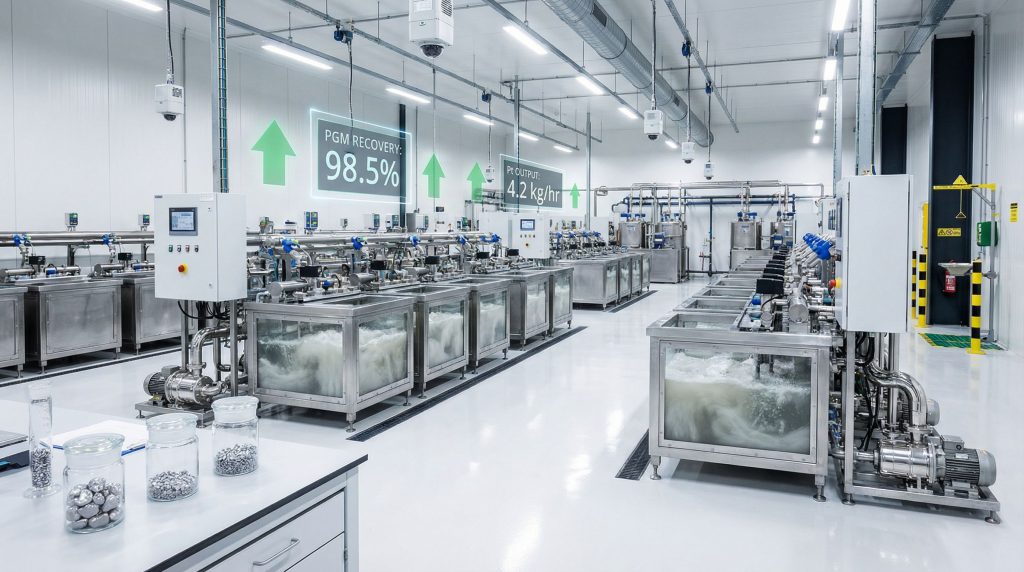
Platinum group metals extraction stands at the intersection of geological complexity and technological precision, where marginal improvements in processing efficiency can translate into millions of dollars in additional revenue. The industry's pursuit of enhanced metal recovery has driven significant mining innovation trends in circuit design, operational optimization, and process control methodologies that extend far beyond conventional mining practices.
Modern PGM processing operations must navigate the inherent challenges of chromitite-hosted ore bodies, where platinum, palladium, and rhodium exist in intimate association with chrome-bearing minerals. This geological reality demands sophisticated separation techniques that maximize the recovery of valuable metals while maintaining economic viability across varying market conditions.
Understanding PGM Recovery Fundamentals in Mining Operations
Defining Recovery Rates and Processing Efficiency Metrics
Recovery rate calculations in PGM operations involve complex mass balance equations that account for feed grade variations, metallurgical losses, and product specifications. The fundamental recovery formula considers the ratio of metal units recovered in final concentrate to total metal units contained in the original ore feed.
Industry practitioners typically measure recovery performance across multiple stages of the processing circuit. Primary flotation circuits generally achieve recovery rates between 75-85%, while secondary scavenging operations can contribute an additional 5-10% to overall metal recovery. These figures vary significantly based on ore mineralogy, particle size distribution, and operational parameters.
Key Performance Indicators for flotation optimization include:
• Metallurgical efficiency (metal recovery percentage)
• Grade-recovery relationships across different operating conditions
• Circuit availability and throughput consistency
• Reagent consumption per unit of metal recovered
Recent operational data from major PGM producers demonstrates the importance of systematic recovery optimization. Tharisa PGM recovery achieved 78.8% during Q1 FY2026, representing performance within the industry standard range while chrome recovery reached 70.3% during the same period. These figures highlight the complexity of dual-product recovery systems where optimization of one metal stream can impact the other.
Critical Factors Affecting Metal Recovery Performance
Ore grade variability presents one of the most significant challenges in maintaining consistent recovery performance. PGM deposits within the Bushveld Complex exhibit considerable grade heterogeneity, requiring sophisticated blending strategies to optimize mill feed characteristics. Furthermore, understanding mineral deposit tiers guide becomes crucial for processing optimization decisions.
Equipment configuration directly influences achievable recovery rates through several mechanisms. Flotation cell design parameters, including cell volume, aeration systems, and impeller configurations, determine residence time distribution and bubble-particle contact efficiency. Circuit configuration decisions, such as the number of flotation stages and the arrangement of rougher, cleaner, and scavenger cells, establish the framework within which recovery optimization occurs.
Operational parameters affecting extraction efficiency encompass:
• Grinding circuit particle size targets (typically -150 μm to -75 μm for effective liberation)
• pH control within optimal ranges (7.5-8.5 for most PGM flotation systems)
• Reagent dosing strategies for collectors, frothers, and modifiers
• Temperature management across processing circuits
• Pulp density optimization for maximum bubble-particle contact
Liberation analysis plays a crucial role in determining achievable recovery limits. PGM minerals often occur as fine inclusions within chrome-bearing phases, requiring careful balance between adequate grinding for liberation and avoiding over-grinding that reduces flotation efficiency.
When big ASX news breaks, our subscribers know first
How Do Modern Processing Plants Achieve Higher PGM Recovery Rates?
Advanced Flotation Technologies and Circuit Design
Multi-stage flotation systems represent the technological foundation of modern Tharisa PGM recovery operations. These circuits typically employ rougher flotation stages to maximize metal capture, followed by cleaner stages that upgrade concentrate quality while maintaining acceptable recovery levels.
Contemporary flotation cell technology incorporates advanced aeration systems designed to optimize bubble size distribution and minimize turbulence that could detach valuable particles. Pneumatic flotation cells, in particular, have gained acceptance in PGM applications due to their gentle treatment of fragile mineral particles and consistent bubble generation characteristics.
Reagent optimization strategies focus on selective collection of PGM minerals while minimizing the flotation of gangue minerals. Modern plants employ sophisticated reagent suites that include primary collectors (typically xanthates or dithiophosphates), frothers for bubble stability, and modifying agents that enhance selectivity between valuable and waste minerals.
Integration of gravity separation with flotation processes offers several advantages:
• Pre-concentration of high-density PGM minerals before flotation
• Recovery of coarse liberated particles that might be lost in conventional flotation
• Reduction of circulating loads in downstream flotation circuits
• Enhanced overall circuit efficiency through complementary separation mechanisms
The implementation of column flotation technology in cleaner circuits has proven particularly effective for PGM applications. These systems provide extended residence times and countercurrent flow patterns that enhance the separation of valuable minerals from closely associated gangue materials.
Grade Control Systems and Real-Time Monitoring
Automated ore characterization systems utilize advanced analytical techniques to assess feed material properties before processing. X-ray transmission sensors, laser-induced breakdown spectroscopy, and rapid assay techniques enable real-time assessment of ore grade and mineralogical characteristics.
Process control algorithms integrate data from multiple sources to optimize recovery parameters continuously. However, data-driven mining operations require sophisticated systems that monitor flotation cell conditions, reagent addition rates, and product quality measurements to maintain optimal operating conditions despite variations in feed characteristics.
Data analytics applications in metallurgical performance improvement include:
• Predictive modeling of recovery performance based on ore characteristics
• Statistical analysis of operational data to identify optimization opportunities
• Machine learning algorithms for automated process control
• Integration of geological models with processing performance data
Real-time monitoring systems track key performance indicators across the processing circuit, enabling rapid response to changes in ore characteristics or equipment performance. Advanced sensor technologies provide continuous measurement of pulp chemistry, particle size distribution, and mineral recovery rates.
What Are the Industry Standards for PGM Processing Efficiency?
Comparative Analysis of Recovery Performance Metrics
| Processing Stage | Typical Recovery Range | Best Practice Targets | Operational Considerations |
|---|---|---|---|
| Primary Flotation | 75-85% | >82% | Depends on ore type and liberation |
| Secondary Recovery | 5-10% additional | >7% | Scavenger circuit efficiency |
| Overall Circuit | 80-90% | >85% | Integrated system performance |
| Chrome Co-Recovery | 65-75% | >70% | Dual product optimization |
These benchmarks reflect industry experience across different geological settings and ore types. Operations processing Merensky Reef ores typically achieve higher recovery rates than those treating UG2 (Upper Group 2) chromitite layers due to differences in mineral associations and liberation characteristics.
Tharisa PGM recovery performance of 78.8% during Q1 FY2026 positions the operation within the lower-to-middle range of industry benchmarks, suggesting potential opportunities for further optimization. The simultaneous achievement of 70.3% chrome recovery demonstrates the complexity of dual-product systems where optimization trade-offs between different metal streams must be carefully managed.
Benchmarking Against Global Operations
Recovery rate comparisons across different geological settings reveal significant variations in achievable performance. South African operations processing Bushveld Complex ores typically achieve different recovery characteristics than Russian operations in the Norilsk region or North American PGM mines in Montana.
Performance variations between surface and underground operations often reflect differences in ore handling, grade control capabilities, and processing plant scale. Surface operations frequently benefit from better grade control and ore blending opportunities, while underground mines may experience more variable feed characteristics.
Impact of ore mineralogy on achievable extraction rates includes:
• Grain size of PGM minerals within host rock matrix
• Association of valuable metals with chrome-bearing minerals
• Presence of clay minerals that affect flotation chemistry
• Oxidation state of sulfide minerals containing PGMs
• Degree of serpentinization in ultramafic host rocks
Market analysts recognize the importance of recovery optimization in current market conditions. Industry experts note that supply constraints and thin above-ground inventories make recovery improvements increasingly valuable from an economic perspective. The structural nature of supply limitations means that incremental recovery improvements can generate substantial value creation opportunities for operators who successfully implement optimization programs.
Which Processing Technologies Drive Superior Metal Recovery?
Crushing and Grinding Optimization Strategies
Comminution circuit design fundamentally determines the success of downstream recovery operations. The primary objective involves achieving adequate liberation of PGM minerals while minimizing the generation of ultrafine particles that are difficult to recover through conventional flotation.
Particle size distribution effects on flotation performance follow well-established principles, with optimal recovery typically achieved for particles in the -150 μm to +20 μm size range. Coarser particles may exhibit insufficient liberation, while ultrafine particles suffer from reduced collision probability with flotation bubbles.
Energy-efficient comminution approaches include:
• High-pressure grinding rolls (HPGR) for pre-crushing applications
• Tower mills for efficient fine grinding with reduced energy consumption
• Stirred media mills for ultra-fine grinding applications
• Integrated crushing and grinding circuits with optimized size reduction stages
Liberation analysis serves as a critical tool for circuit design optimization. Advanced techniques such as QEMSCAN (Quantitative Evaluation of Materials by Scanning Electron Microscopy) provide detailed information about mineral associations and liberation characteristics that guide grinding circuit specifications.
Bond Work Index determinations for chromitite ores typically range from 12-16 kWh/t, reflecting the competent nature of these materials. This data forms the basis for equipment selection and power consumption estimates during plant design phases.
Separation Technology Innovations
Spiral concentration technology offers an effective method for chrome-PGM separation based on density differences. These systems operate without reagent additions and can achieve efficient separation of high-density PGM minerals from lower-density silicate gangue materials.
Spiral concentrator performance characteristics include:
• Feed size range typically -2 mm to +75 μm for optimal separation
• Separation efficiency based on particle density and size
• Low operating costs with minimal maintenance requirements
• Environmentally friendly operation without chemical reagents
Magnetic separation applications in tailings treatment focus on recovering PGM-bearing particles from processing residues. High-intensity magnetic separators can effectively remove strongly magnetic minerals, while rare earth roll separators target weakly magnetic PGM-bearing phases.
Emerging technologies for fine particle recovery include enhanced gravity separators, such as Knelson concentrators and Falcon units, which apply centrifugal forces to improve separation efficiency for particles in the -100 μm size range.
Flotation column technology provides extended residence times and countercurrent flow patterns particularly beneficial for cleaner applications. These systems achieve enhanced selectivity through controlled hydrodynamic conditions that favor the separation of valuable minerals from closely associated waste materials.
How Do Operational Variables Impact PGM Extraction Success?
Feed Grade Management and Blending Strategies
Ore reserve characterization forms the foundation of effective grade control programs. Detailed geological modeling identifies grade variations within the ore body and provides the basis for mine planning decisions that optimize plant feed characteristics.
Stockpile management strategies enable the blending of materials from different mining areas to achieve consistent plant feed grades. Effective stockpile management requires understanding of material behavior under various weathering conditions and the implementation of reclaim strategies that maintain blend homogeneity.
Grade control drilling and sampling protocols encompass:
• Systematic blast hole sampling programs
• Quality assurance and quality control procedures for analytical results
• Statistical analysis of grade distribution patterns
• Integration of grade control data with geological models
• Real-time ore classification and routing decisions
The recent operational performance data illustrates the impact of seasonal factors on production volumes. Tharisa's Q1 FY2026 results showed PGM production of 38,800 ounces (compared to 41,300 ounces in Q4), representing a 6.1% quarter-on-quarter decline. Chrome production decreased 14.2% to 349,400 tons from 407,200 tons. Despite lower throughput volumes, the achievement of improved recovery rates suggests successful optimization of process parameters during periods of reduced capacity operation.
Process Parameter Optimization Techniques
Flotation cell residence time management directly affects recovery performance through its influence on bubble-particle contact opportunities. Typical residence times in PGM flotation circuits range from 15-45 minutes depending on ore characteristics and circuit configuration.
Critical control variables requiring continuous optimization include:
• pH control systems maintaining optimal ranges (typically 7.5-8.5 for PGM flotation)
• Reagent dosing strategies balancing recovery and selectivity objectives
• Aeration rate management for optimal bubble size distribution
• Temperature control affecting reagent effectiveness and mineral surface properties
• Pulp density optimization balancing recovery with circuit capacity
pH control systems utilize automated dosing of lime or caustic soda to maintain optimal conditions for collector adsorption and frother effectiveness. Variations outside the optimal pH range can significantly impact both recovery and concentrate grade.
Reagent consumption optimization focuses on achieving maximum recovery at minimum reagent cost. Typical collector dosages for PGM flotation range from 50-200 g/t depending on ore mineralogy and grade. Frother additions typically range from 20-80 g/t based on water quality and flotation kinetics requirements.
Temperature management becomes particularly important in operations where seasonal variations affect water temperature. Optimal flotation performance typically occurs within 15-25°C temperature ranges, with deviations potentially affecting bubble stability and kinetics.
What Role Does Plant Configuration Play in Recovery Performance?
Multi-Plant Processing Strategies
Parallel processing lines provide operational flexibility and risk mitigation through redundancy. Multiple processing trains enable continued operation during equipment maintenance while providing opportunities for comparative performance evaluation between different circuit configurations.
Specialized circuits for different ore types allow optimization of processing parameters for specific feed characteristics. Some operations maintain separate circuits for high-grade and low-grade materials, enabling different reagent regimes and operating conditions optimized for each ore type.
Integration of chrome and PGM recovery systems requires careful consideration of:
• Sequential processing versus parallel separation approaches
• Reagent interactions between chrome and PGM flotation circuits
• Product handling and storage requirements for dual products
• Market timing considerations for different metal sales
The complexity of dual-product systems is evident in Tharisa's operational results, where Tharisa PGM recovery of 78.8% and chrome recovery of 70.3% represent the outcome of integrated optimization decisions across both metal streams.
Capacity Expansion and Debottlenecking Approaches
Incremental capacity additions offer advantages over complete plant replacements through reduced capital requirements and shorter implementation timelines. Debottlenecking studies identify processing constraints that limit overall circuit throughput and recovery performance.
Technology upgrades for existing processing infrastructure can achieve substantial performance improvements without major capital investments. Examples include flotation cell retrofits with improved aeration systems or the installation of advanced process control systems.
Modular plant design principles enable:
• Phased capacity expansion aligned with market conditions
• Standardized equipment specifications reducing spare parts inventory
• Simplified maintenance procedures and operator training requirements
• Flexibility to incorporate technological advances over time
Tharisa's $380 million Karo Platinum project exemplifies strategic capacity expansion planning. The project targets 400,000 ounces per year production capacity with commissioning scheduled for 2027. The project represents a dedicated new processing facility rather than expansion of existing infrastructure, providing operational independence and risk diversification.
The project's current status involves finalizing fiscal agreements with the Zimbabwe government, highlighting the importance of regulatory frameworks in major capacity expansion decisions. Management indicated expectations for formal agreements in early 2026, enabling progression to final project financing phases.
The next major ASX story will hit our subscribers first
How Do Market Conditions Influence Recovery Optimization Decisions?
Economic Drivers for Processing Improvements
Cost-benefit analysis of recovery enhancement projects must consider both capital investment requirements and ongoing operational cost impacts. Improvements that increase recovery rates may require additional reagent consumption or energy usage that affects overall project economics.
Metal price volatility significantly influences optimization investment decisions. Higher metal prices increase the value of incremental recovery improvements, while price declines may defer optimization projects with longer payback periods.
Capital allocation strategies for processing upgrades typically prioritise:
• High-impact improvements with short payback periods
• Technology upgrades with proven performance records
• Investments that enhance operational flexibility
• Projects that improve product quality specifications
Recent market developments have created favourable conditions for recovery optimization investments. PGM basket prices increased 37% quarter-on-quarter to $2,208/oz compared to $1,615/oz in the previous quarter, according to Tharisa's operational update. This price improvement enhances the economic value of recovery enhancement initiatives.
Market analysts express optimism about sustained PGM pricing. Industry experts suggest that structural supply constraints, combined with resilient automotive demand and thin above-ground inventories, create conditions favourable for continued strong pricing that supports recovery optimization investments.
Strategic Planning for Long-Term Recovery Optimization
Investment priority frameworks guide resource allocation decisions across multiple improvement opportunities. Systematic evaluation processes consider factors including technical risk, implementation complexity, and expected return on investment.
Strategic investment priorities typically follow this hierarchy:
- Operational improvements requiring minimal capital investment
- Equipment upgrades with established performance benefits
- Process technology advances offering competitive advantages
- Research and development programmes for next-generation techniques
Long-term planning must anticipate technological evolution and changing market conditions. Strategic plans often include provisions for emerging technologies such as AI-enabled mining technology applications in process control and advanced sensor systems for real-time optimization.
Tharisa's financial position, with $47 million net cash at the end of Q1 FY2026, provides flexibility for strategic investments in recovery optimization. The company's FY2026 production guidance of 145,000 to 165,000 ounces PGM production and 1.5 to 1.65 million tons chrome production establishes performance targets that drive optimization priorities.
What Are the Future Trends in PGM Recovery Technology?
Emerging Technologies and Innovation Pathways
Artificial intelligence applications in process optimization represent a significant technological frontier for PGM recovery enhancement. Machine learning algorithms can analyse vast datasets from process sensors to identify optimization opportunities that exceed human analytical capabilities.
AI-driven optimization systems offer several advantages:
• Continuous analysis of multivariable process relationships
• Predictive maintenance scheduling based on equipment performance patterns
• Real-time adjustment of operating parameters for changing ore characteristics
• Integration of geological data with processing performance metrics
Advanced sensor technologies enable real-time monitoring of process streams with unprecedented precision. Online analysers for particle size distribution, mineral liberation, and chemical composition provide data for immediate process adjustments.
Sustainable processing methods increasingly influence technology development priorities. Environmental considerations drive research into reagent alternatives, energy efficiency improvements, and waste minimisation strategies that align with corporate sustainable mining transformation objectives.
Sustainable processing innovations include:
• Bio-flotation techniques using microbial collectors
• Electromagnetic separation methods reducing chemical reagent consumption
• Closed-loop water systems minimising environmental impact
• Energy recovery systems for grinding circuit optimization
Industry Evolution and Competitive Advantages
Digital technology integration transforms traditional metallurgical operations through enhanced data collection, analysis, and process control capabilities. Digital twin technologies enable virtual testing of optimization strategies before implementation in operational circuits.
Collaborative research initiatives between mining companies, equipment manufacturers, and academic institutions accelerate technology development. These partnerships leverage combined expertise and resources to address complex technical challenges that individual organisations cannot solve independently.
Skills development requirements for advanced processing systems encompass:
• Data analytics and statistical process control
• Digital system integration and cybersecurity
• Advanced metallurgical modelling techniques
• Environmental impact assessment and management
• Financial analysis of process optimization investments
The evolution toward autonomous mining operations requires processing systems that can operate with minimal human intervention while maintaining optimal performance. This trend drives development of robust process control systems and advanced sensor networks.
Industry consolidation trends may influence technology development priorities as larger organisations pursue standardised processing approaches across multiple operations. Conversely, specialised technology providers may identify niche opportunities in customised solutions for specific ore types or operating conditions.
Key Takeaways for PGM Recovery Optimization
Critical Success Factors Summary
Systematic approaches to process optimization require integration of geological understanding, metallurgical expertise, and operational experience. Successful optimization programmes typically combine theoretical knowledge with practical implementation experience gained through systematic testing and evaluation.
Essential elements of successful recovery optimization include:
• Comprehensive ore characterisation and mineralogical understanding
• Systematic testing programmes to evaluate improvement opportunities
• Integration of grade control with processing optimization
• Continuous monitoring and performance measurement systems
• Investment in technology upgrades and human capital development
Continuous improvement culture represents a fundamental requirement for sustained performance enhancement. Organisations that systematically evaluate performance, identify improvement opportunities, and implement optimization strategies typically achieve superior long-term results compared to those focused solely on maintaining existing performance levels.
Performance monitoring systems must provide timely, accurate data that enables rapid response to changing conditions. Effective monitoring encompasses both technical performance metrics and economic indicators that guide optimization investment decisions.
Implementation Roadmap for Recovery Enhancement
Phase-based approaches to processing improvements enable systematic evaluation and risk management during optimization programmes. Initial phases typically focus on low-risk operational improvements before progressing to more complex technology implementations.
Recommended implementation phases include:
- Assessment phase: Comprehensive evaluation of current performance and improvement opportunities
- Quick wins phase: Implementation of low-cost improvements with immediate benefits
- Technology upgrade phase: Installation of proven technologies with established performance benefits
- Innovation phase: Testing and implementation of emerging technologies
Risk management strategies for operational changes must balance the potential benefits of improvements against operational disruption risks. Pilot testing programmes enable evaluation of new technologies or operating procedures before full-scale implementation.
Performance measurement and validation protocols ensure that optimization initiatives achieve expected benefits. Regular performance reviews compare actual results against projected improvements and identify additional optimization opportunities.
Validation protocols typically include:
• Statistical analysis of performance data before and after changes
• Economic evaluation of costs versus benefits achieved
• Comparison of results against industry benchmarks
• Documentation of lessons learned for future optimization efforts
The platinum group metals industry continues to evolve through technological advancement and operational optimization. Companies that successfully implement systematic recovery enhancement programmes position themselves advantageously for sustained profitability in dynamic market conditions. Leading companies demonstrate how effective recovery optimization can drive significant value creation during favourable market conditions.
Disclaimer: This analysis is based on publicly available information and industry reports. Mining operations involve inherent risks, and actual recovery rates may vary significantly based on geological conditions, equipment performance, and operational factors. Investment decisions should be based on comprehensive due diligence and professional advice.
Want to capitalise on the next major mineral discovery?
Discovery Alert instantly alerts investors to significant ASX mineral discoveries using its proprietary Discovery IQ model, turning complex processing data like PGM recovery optimisation into actionable investment insights. Begin your 30-day free trial today at Discovery Alert and position yourself ahead of the market before the next breakthrough in mining technology transforms industry returns.