July 22, 2026
The platinum fuel cell technology in space exploration sector represents a critical convergence point where terrestrial mining resources enable humanity's most ambitious ventures beyond Earth's atmosphere. As space exploration transitions from experimental missions to sustained operational programmes, the electrochemical properties that make platinum invaluable for automotive catalysts and industrial processes have found essential applications in the extreme environments of deep space missions.
Understanding Platinum's Role in Space Power Generation
Space missions present unique power generation challenges that conventional terrestrial energy systems cannot address. The vacuum of space, extreme temperature fluctuations, and absence of atmospheric oxygen create operating conditions where traditional combustion engines fail completely. Furthermore, this environment demands electrochemical energy conversion systems that can function reliably without maintenance for extended periods.
Platinum's catalytic properties have proven essential for space fuel cell technology since the early days of human space exploration. The Apollo programme utilised three alkaline fuel cells in each service module, providing approximately 600-2,000 watts of continuous power for lunar missions lasting 8-14 days. These systems employed platinum-based catalysts at loading rates of 1-2 mg/cm², significantly lower than modern requirements but sufficient for the alkaline electrolyte chemistry used during that era.
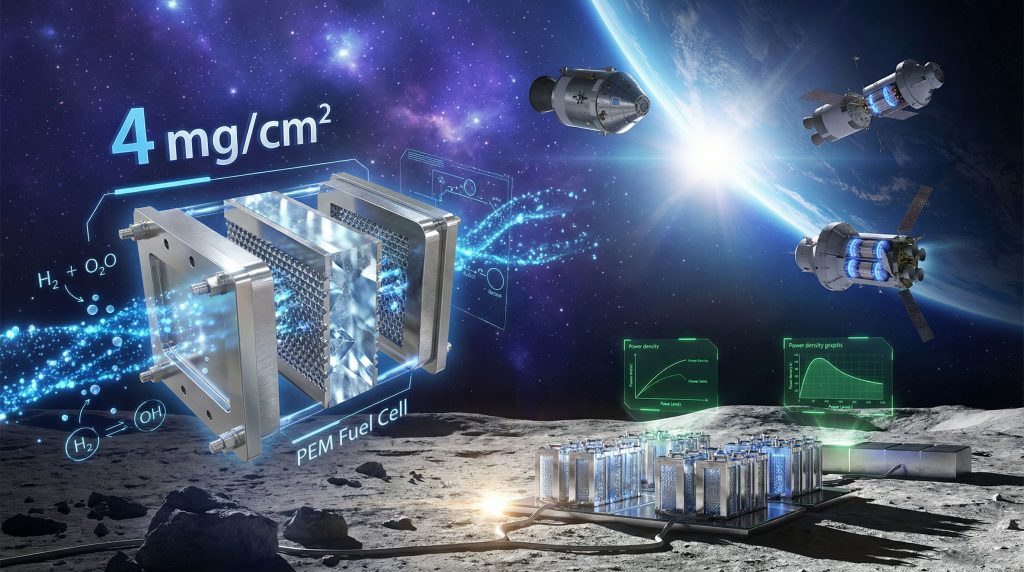
The evolution from Apollo-era alkaline systems to contemporary Proton Exchange Membrane technology represents a fundamental shift in catalyst requirements. Modern space applications demand platinum loadings of up to 4 mg/cm² on cathode surfaces, reflecting the need for enhanced performance density and operational reliability in extended mission profiles.
Historical Validation Through Mission Success
The Gemini programme (1965-1966) provided initial validation of fuel cell technology for human spaceflight, with missions Gemini 5 through 12 successfully demonstrating alkaline fuel cell operation in microgravity environments. This early success established platinum-catalysed electrochemical systems as viable alternatives to solar panels combined with batteries for missions requiring continuous power generation regardless of solar illumination angles.
The Apollo-Soyuz Test Project in 1975 marked the final use of Apollo-era fuel cell technology, with three fuel cell units providing reliable power throughout the nine-day mission. Water produced as a byproduct served multiple functions including crew consumption and thermal management, demonstrating the multifunctional advantages of platinum-catalysed fuel cell systems in resource-constrained environments.
When big ASX news breaks, our subscribers know first
What Makes Platinum Essential for Proton Exchange Membrane Systems?
Platinum's electronic structure provides unique advantages for the electrochemical reactions required in space fuel cells. The metal's d-band configuration, with its partially filled d-orbitals (electron configuration: [Xe]4f¹⁴5d⁹6s¹), creates optimal binding energies for intermediate species in both hydrogen oxidation and oxygen reduction reactions.
The hydrogen oxidation reaction at the anode proceeds through a two-electron pathway (H₂ → 2H⁺ + 2e⁻) with platinum achieving near-theoretical exchange current densities. This efficiency becomes critical in space applications where power system weight directly impacts mission capability and launch costs. Every kilogram of spacecraft mass requires approximately $10,000-20,000 in launch expenses, making catalyst efficiency a primary economic consideration.
Oxygen Reduction Reaction Performance
The cathode oxygen reduction reaction represents the most challenging aspect of fuel cell operation, requiring four-electron coordination (O₂ + 4H⁺ + 4e⁻ → 2H₂O). Platinum achieves the lowest overpotential for this reaction among all known catalysts, maintaining current densities of 10-100 mA/cm² at 0.8V depending on nanostructure optimisation and carbon support materials.
Space applications require platinum loadings of 4 mg/cm² on cathode surfaces to ensure reliable operation across temperature ranges from -40°C to +120°C. These loadings represent approximately 10 times higher catalyst density than terrestrial automotive applications, reflecting the zero-maintenance requirements and extended operational lifetimes demanded by space missions.
However, the platinum & palladium dynamics in precious metals markets continue to influence material availability for space applications. Alternative noble metals including palladium and iridium offer partial catalytic activity but lack platinum's comprehensive electrochemical profile. Platinum maintains crystalline stability across extreme temperature cycling while providing resistance to carbon support oxidation at potentials below 1.2V, critical factors for missions lasting months or years without maintenance opportunities.
How Do Regenerative Fuel Cells Transform Lunar Energy Storage?
Lunar exploration presents extraordinary energy storage challenges due to the moon's 29.54-day rotation period, creating approximately 14.77 Earth days of continuous sunlight followed by an equivalent period of darkness. Traditional lithium-ion battery systems prove inadequate for these extended night periods, both due to weight constraints and the massive energy storage capacity required.
Regenerative fuel cell systems offer a transformative approach to lunar energy management through closed-loop operation. During the 14-day lunar daylight period, solar arrays generate electrical power that drives platinum-catalysed electrolysers, splitting stored water into hydrogen and oxygen gases. These gases are stored under pressure (typically 350-700 bar using aerospace-grade pressure vessels) throughout the lunar day.
Closed-Loop Power System Architecture
When lunar night begins, the stored hydrogen and oxygen gases feed into platinum-catalysed fuel cell stacks, generating electricity and producing water as the only byproduct. This water returns to the electrolysis system for the next solar cycle, creating a theoretically infinite energy storage loop limited only by system component degradation.
The energy density advantages become apparent when comparing system masses:
| Energy Storage System | Energy Density (Wh/kg) | Cycle Life | Maintenance Requirements |
|---|---|---|---|
| Lithium-ion batteries | 150-250 | 1,000-3,000 cycles | Periodic replacement |
| RFC with platinum catalysts | 600-1,000 | >10,000 cycles | Minimal degradation |
| Solar + battery backup | 100-200 | Limited by battery cycles | Regular battery replacement |
Regenerative fuel cell systems achieve energy densities of 600-1,000 Wh/kg when accounting for complete system integration including reactant storage, thermal management, and power conditioning electronics. This represents a 3-4x improvement over lithium-ion battery arrays while providing virtually unlimited cycling capability.
Water as Multifunctional Resource
The byproduct water from fuel cell operation serves multiple critical mission functions beyond energy storage. Life support systems require approximately 2-3 litres per person per day for drinking, food preparation, and hygiene. Thermal management systems utilise water for radiator coolant in temperature regulation loops. Emergency oxygen generation can be achieved through additional electrolysis, providing backup breathing gas supplies.
For permanent lunar installations, water represents a potential propellant source through electrolysis into hydrogen and oxygen for ascent vehicles or surface rovers. This in-situ resource utilisation capability transforms what would otherwise be mission consumables into renewable resources, dramatically reducing logistics requirements for sustained lunar operations.
What Are the Strategic Applications Across Space Programmes?
Contemporary space programmes have embraced fuel cell technology across multiple mission architectures, building upon decades of operational experience from Apollo through Space Shuttle programmes. NASA's Artemis programme represents the most ambitious current implementation, targeting sustainable human presence on the lunar south pole with missions planned through the 2030s.
The Artemis lunar Gateway outpost requires 40-50 kWe continuous baseload power with peak demands reaching 60-80 kWe during crew operations. Solar arrays provide primary power generation, but energy storage for eclipse periods and deep space operations relies heavily on advanced fuel cell systems with platinum catalysts optimised for long-duration missions.
Historical Mission Integration Patterns
The Space Shuttle programme operated advanced alkaline fuel cells for missions lasting up to 30 days, representing a significant operational extension beyond Apollo's 8-14 day missions. Three fuel cell units provided primary electrical power while producing approximately 120 gallons of water per day for crew consumption and orbiter thermal management systems.
Shuttle fuel cells demonstrated the scalability of platinum-catalysed systems for larger spacecraft with higher power demands. Each unit generated 2-7 kilowatts of continuous power, supporting life support, communications, navigation, and payload operations throughout mission durations that would be impossible using battery-only systems.
Mars Mission Preparation Requirements
Future Mars missions present even greater challenges due to transit times of 6-9 months each direction plus surface operations lasting 12-18 months. Total mission durations of 2.5-3 years exceed the practical limits of any battery-based energy storage system, making regenerative fuel cells virtually mandatory for crew safety and mission success.
Mars atmospheric conditions include dust storms that can block solar arrays for weeks at a time, requiring energy storage systems capable of sustained operation without solar input. Regenerative fuel cells with platinum catalysts provide this capability while generating water for life support and propellant production from the Martian atmosphere's CO₂ content.
How Does Space Technology Drive Platinum Demand Projections?
Space programme platinum consumption represents a specialised but growing segment of total platinum demand, with unique technical specifications that command premium pricing. Aerospace-grade platinum requires purity levels exceeding 99.99% with stringent quality control documentation and traceability throughout the supply chain.
Current space missions consume relatively modest platinum quantities compared to automotive catalytic converter production, estimated at 5-10 tonnes annually across all global space programmes. However, the expansion of commercial space activities and planned lunar industrialisation could dramatically increase these requirements over the next decade.
Market Impact Analysis Across Sectors
The technology transfer potential between space and terrestrial applications creates multiplicative effects on platinum demand. Catalyst formulations developed for space fuel cells often find applications in stationary power systems, industrial hydrogen processing, and next-generation automotive fuel cells with enhanced performance characteristics.
Space-qualified platinum catalysts typically cost 3-5 times more than automotive-grade materials due to additional purification, testing, and certification requirements. However, the performance improvements achieved often justify adoption in high-value terrestrial applications including backup power systems for data centres, hospitals, and critical infrastructure.
Commercial Space Industry Growth Implications
The emergence of private space companies has accelerated development timelines and expanded market opportunities for platinum-based fuel cell systems. Companies planning asteroid mining advances and orbital manufacturing facilities require reliable power systems that can operate for years without maintenance.
Constellation deployment for satellite internet services represents a potentially massive platinum consumption driver, with thousands of satellites requiring fuel cell systems for orbital manoeuvring and station-keeping operations. Each satellite may require 100-500 grams of platinum catalyst material, creating cumulative demand measured in tonnes for large constellation deployments.
What Challenges Shape Next-Generation Space Fuel Cell Development?
Contemporary research focuses on reducing platinum catalyst loadings while maintaining or improving performance characteristics. Current space fuel cells employ 4 mg/cm² platinum loadings that represent significant material costs and supply chain dependencies for large-scale space industrialisation.
Alternative catalyst support materials show promise for reducing platinum requirements while enhancing durability. Nitrogen-doped carbon supports provide increased surface area and improved metal-support interactions, potentially reducing platinum loadings to 2-3 mg/cm² without performance penalties.
Technical Optimisation Priorities
Catalyst poisoning resistance remains a critical concern for space applications where feedstock purity cannot be guaranteed throughout multi-year missions. While spacecraft systems typically utilise high-purity hydrogen (>99.99%), contamination from outgassing materials, solar wind interactions, or equipment degradation could introduce carbon monoxide or hydrogen sulfide that deactivates platinum catalysts.
Advanced fuel cell technology formulations incorporating ruthenium or iridium show enhanced poisoning tolerance and improved oxygen reduction activity. These alloys maintain platinum's fundamental catalytic advantages while providing resistance mechanisms against common poisons encountered in space environments.
Operational Resilience Requirements
Temperature cycling durability represents another major development focus, particularly for missions involving planetary surface operations. Lunar surface temperatures range from +120°C during daylight to -170°C during night periods, creating thermal stress cycles that can degrade catalyst nanostructures through sintering and particle growth.
Performance maintenance under elevated potentials becomes critical during system startup and shutdown procedures, when fuel cells may experience voltages approaching 1.0-1.2V that can oxidise carbon support materials. Platinum's resistance to oxidation below 1.2V provides protection, but repeated cycling can gradually degrade carbon supports and reduce catalyst utilisation efficiency.
The next major ASX story will hit our subscribers first
How Do Space Applications Influence Terrestrial Fuel Cell Innovation?
Technology transfer from space fuel cell development drives innovation across multiple terrestrial markets, particularly in stationary power generation and automotive applications. Space-qualified catalyst formulations often achieve 2-3x higher activity per gram of platinum compared to conventional terrestrial catalysts, justifying adoption in high-value applications despite higher material costs.
The extreme durability requirements for space missions translate into enhanced lifetime performance for terrestrial systems. Fuel cells incorporating space-derived catalyst technologies demonstrate operational lifetimes exceeding 40,000-60,000 hours compared to 5,000-8,000 hours for conventional automotive fuel cells.
Research and Development Synergies
Shared catalyst development programmes between aerospace and automotive industries accelerate innovation while distributing research costs across multiple market segments. Nanostructured platinum catalysts developed for space applications find immediate applications in automotive fuel cells requiring rapid startup capability and high power density operation.
Cross-industry performance benchmarking establishes new technical standards that benefit all market segments. Space fuel cell operating conditions represent extreme test cases that validate catalyst durability under conditions far exceeding typical automotive or stationary power requirements.
Cost Reduction Pathway Identification
Mass production techniques developed for automotive catalyst manufacturing can reduce costs for space-grade platinum materials through economies of scale. While space applications require enhanced quality control and testing protocols, fundamental catalyst synthesis and nanostructure optimisation techniques transfer directly between markets.
Advanced manufacturing methods including atomic layer deposition and controlled atmosphere processing, initially developed for space applications, now enable precise control of platinum catalyst properties for terrestrial fuel cells at reduced material loadings and improved performance.
What Does the Future Hold for Platinum in Space Exploration?
Emerging mission architectures for deep space exploration will dramatically expand platinum requirements for fuel cell systems. Interplanetary transport vehicles require propulsive capabilities that solar electric systems cannot provide, making nuclear thermal or chemical propulsion systems necessary for outer planet missions lasting 5-10 years or longer.
Asteroid mining operations represent potentially massive platinum consumption opportunities, both for spacecraft fuel cells and for processing extracted materials in space-based refineries. Platinum group metal asteroids could provide raw materials for catalyst production directly in space, reducing launch costs and enabling large-scale space industrialisation.
Strategic Resource Planning Considerations
Platinum recycling from decommissioned spacecraft presents both challenges and opportunities for sustainable space operations. Catalyst recovery from end-of-life fuel cell systems could provide recycled platinum for new spacecraft, reducing dependence on Earth-based supplies and minimising launch mass requirements.
In-situ resource utilisation potential extends to catalyst material production, particularly for Mars missions where local materials could supplement Earth-launched supplies. While Mars contains limited platinum group metals, recycling and conservation strategies become essential for sustained operations independent of Earth supply chains.
Supply Security for Critical Space Infrastructure
Space-based manufacturing facilities and orbital industrial platforms will require reliable power systems capable of decades-long operation without maintenance opportunities. In addition to power requirements, the mining industry innovation driving space resource extraction will depend heavily on platinum catalyst materials.
The development of space-based catalyst manufacturing capabilities could transform both space and terrestrial platinum markets. Microgravity environments offer unique opportunities for nanoparticle synthesis and catalyst optimisation that may achieve superior performance compared to Earth-based manufacturing processes.
Investment and Industry Implications
The intersection of space exploration and platinum demand creates unique investment opportunities across multiple market segments. Aerospace companies developing fuel cell technologies require platinum supply agreements that guarantee delivery of materials meeting stringent quality specifications throughout multi-year development programmes.
Strategic stockpiling considerations affect both government space agencies and private companies planning extended space operations. Platinum price volatility and supply concentration in specific geographic regions create risks that space mission planners must address through long-term supply agreements or strategic material reserves.
Supply Chain Quality Assurance Requirements
Aerospace-grade platinum specifications require comprehensive documentation and traceability throughout the supply chain, from mining through catalyst synthesis to final system integration. Quality assurance protocols include chemical composition verification, purity testing, and performance validation that exceed requirements for terrestrial applications.
Certification requirements for space-qualified platinum materials create barriers to entry that limit supplier options while ensuring material reliability. These requirements often necessitate partnerships between platinum producers, catalyst manufacturers, and aerospace prime contractors throughout development and production phases.
Market Development Patterns
Government funding for space exploration creates stable but specialised demand for platinum catalyst materials, with procurement cycles typically extending 3-5 years from initial contracts to material delivery. Private space industry growth accelerates these timelines while expanding market opportunities for catalyst suppliers and technology developers.
International collaboration on space exploration programmes creates opportunities for cross-border technology transfer and shared material procurement strategies. The global resources innovation expo regularly showcases advancements in platinum catalyst technologies developed for space programmes that often find applications in international partner missions, expanding market reach for specialised suppliers.
Furthermore, the broader mining sustainability transformation taking place across the industry influences how platinum for space applications is sourced and processed, with increasing emphasis on environmentally responsible extraction methods that meet both commercial and space qualification requirements.
Conclusion: The Future of Platinum in Space Technology
The convergence of space exploration ambitions with platinum's unique catalytic properties creates a specialised but strategically important market segment. As humanity's presence beyond Earth expands from experimental missions to sustained operations, platinum fuel cell technology in space exploration will likely play an increasingly critical role in enabling reliable power generation across the solar system.
The lessons learned from decades of space fuel cell development continue to drive innovations that benefit both space exploration and terrestrial energy systems, establishing platinum as an essential element for humanity's expansion into space. With the integration of advanced space technology applications and growing commercial space sector demands, platinum's role in enabling sustainable space operations becomes increasingly vital for future mission success.
Disclaimer: This analysis contains forward-looking statements regarding space exploration programmes, platinum demand projections, and technology development timelines. Actual outcomes may vary significantly due to technical challenges, funding constraints, political decisions, and market conditions beyond current forecasting capabilities. Investment decisions should not be based solely on speculative projections about future space industry developments.
Ready to Invest in the Next Major Mineral Discovery?
Discovery Alert instantly alerts investors to significant ASX mineral discoveries using its proprietary Discovery IQ model, turning complex mineral data into actionable insights. Understand why historic discoveries can generate substantial returns and begin your 14-day free trial today to position yourself ahead of the market.