June 21, 2026
The Long-Game Logic of Large-Scale Lithium: Why Pre-FID Capital Is the Most Strategic Spend in Mining
In commodity markets, the companies that build lasting competitive advantages rarely do so at the top of the price cycle. They do it when the crowd is cautious, when headlines are focused on near-term softness, and when the capital commitment required demands a conviction in long-term demand that the current spot price doesn't always reflect. This is precisely the lens through which the PLS P2000 expansion at Pilgangoora should be understood — not as a reaction to current lithium prices, but as a deliberate positioning play for where the market is heading by the end of the decade.
When big ASX news breaks, our subscribers know first
What Is the PLS P2000 Expansion at Pilgangoora — and Why Does It Matter for Global Lithium Supply?
The Strategic Logic Behind Expanding Pilgangoora to 2 Mtpa
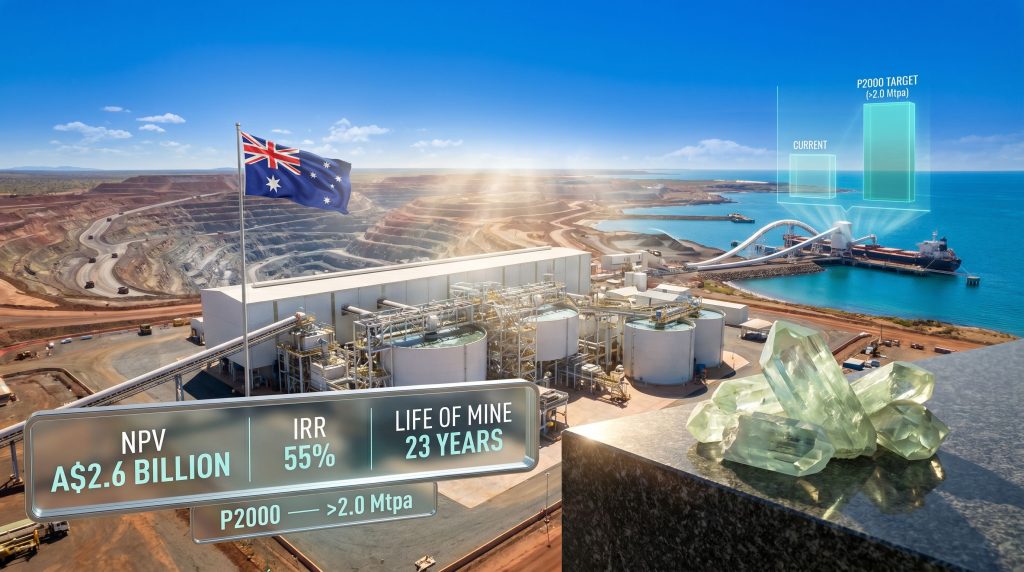
Pilgangoora is already one of the most significant hard-rock lithium deposits on the planet by reserve scale and production volume. The P2000 project represents a proposed step-change in that operation's output capacity, targeting annual spodumene concentrate production of more than 2.0 million tonnes per annum (Mtpa). To contextualise that figure: it would position the expanded Pilgangoora operation among the highest-capacity single-site hard-rock lithium producers in the world.
What makes this expansion strategically significant extends beyond the raw tonnage. Spodumene extraction, the process by which Pilgangoora produces its primary feedstock, supplies lithium hydroxide and lithium carbonate conversion facilities concentrated across Asia, particularly in China. These downstream chemicals are the building blocks of battery-grade lithium used in electric vehicles and grid-scale energy storage systems. By materially increasing spodumene output, PLS Group would be expanding its upstream influence over a supply chain that underpins one of the fastest-growing industrial transitions in modern history.
The pre-feasibility study for P2000 revised Pilgangoora's life of mine to 23 years under the expansion scenario, underscoring that the ore reserve base comfortably supports the scale of ambition on the table.
Understanding the Pre-FID Framework: How Major Mining Expansions Are Staged
What Does Pre-FID Capital Expenditure Actually Mean?
A Final Investment Decision (FID) is the formal board-level approval to commit full project capital. Pre-FID spending covers preparatory work — engineering studies, long-lead procurement, and early site works — that reduces execution risk and compresses the timeline to production once full FID is granted. It preserves schedule optionality without locking in the full capital commitment.
For investors unfamiliar with how large mining projects are structured, the pre-FID phase is often misread. It is neither a full green light nor an indefinite delay. It is a deliberate mechanism to advance a project along its critical path while retaining the board's ability to hold or accelerate the final commitment based on market conditions, study outcomes, and funding readiness.
Why Staged Capital Deployment Reduces Execution Risk in Large-Scale Mining Projects
The rationale for spending capital before a formal FID is grounded in procurement and scheduling realities that are specific to large-scale mineral processing projects:
- Pre-FID commitments allow operators to lock in critical equipment and contractor pricing before broader construction market conditions shift
- Engineering and procurement lead times for processing plants — particularly flotation circuits and associated infrastructure — routinely exceed 24 to 36 months, making early engagement with equipment manufacturers essential
- Early works on site directly reduce the critical path duration once formal FID is granted, compressing the time between sanction and first ore
- Balance sheet flexibility is preserved during the pre-FID window, because the full capital commitment remains contingent rather than locked in
This staged approach is increasingly the norm across the global mining sector precisely because it gives operators genuine optionality: momentum without overcommitment.
The Three Work Streams Driving PLS's $175 Million Pre-FID Commitment
PLS Group's board has approved approximately $175 million in pre-FID capital expenditure to be deployed across FY27, structured across three distinct work streams:
| Work Stream | Allocated Capital | Strategic Purpose |
|---|---|---|
| Processing plant procurement and engineering | ~$100 million | Secures long-lead equipment and locks in plant design |
| On-site early works and operational preparation | ~$60 million | Reduces mobilisation time post-FID |
| Wodgina Road East infrastructure | ~$15 million | Enables seasonal construction windows |
| Total Pre-FID Capex | ~$175 million | Positions FID readiness by Q4 2026 |
The processing plant procurement component at roughly $100 million is the most capital-intensive element because it addresses the longest lead-time items in the project's supply chain. Whole-of-ore flotation plants of this scale require specialised equipment — including large-format flotation cells, thickening systems, and associated reagent handling infrastructure — that must be ordered well in advance of construction commencement.
A lesser-known complexity of projects in the Pilbara region is the role seasonal conditions play in construction scheduling. The Wodgina Road East infrastructure allocation of approximately $15 million directly addresses this challenge by enabling work to be executed within optimal seasonal construction windows, reducing weather-related delays that have historically added cost and time to large remote-area mining developments in Western Australia.
How Big Is the P2000 Project? Production Capacity and Feasibility Metrics Explained
Scaling Pilgangoora: From Current Operations to 2 Million Tonnes Per Annum
The production profile underpinning the P2000 business case is notable for its sustained output trajectory:
- Annual concentrate production targeted at more than 2.0 Mtpa at capacity
- Average production forecast of approximately 1.9 Mtpa across the first 10 years following ramp-up
- Output expected to exceed 2.0 Mtpa for the first six years of full operation
- Ore reserves sufficient to support a 23-year mine life under the pre-feasibility study scenario
A critical but underappreciated element of P2000's production design is the use of whole-of-ore flotation as the core processing technology. Unlike conventional dense medium separation (DMS) circuits that process only a fraction of the ore stream, whole-of-ore flotation processes the entire ore feed, capturing lithium-bearing minerals that would otherwise report to tailings in a DMS-only circuit. This approach can meaningfully improve lithium recovery rates and extend the effective productive life of ore reserves — a technical advantage that makes the production forecasts more defensible over the project's full mine life.
What Infrastructure Does the P2000 Expansion Require?
Beyond the core processing plant, P2000 requires a network of supporting infrastructure:
- Construction of a new whole-of-ore flotation plant as the primary processing addition
- Expanded maintenance facilities and upgraded operational support infrastructure at the Pilgangoora site
- A new storage and outloading facility at Lumsden Point to handle materially increased export volumes through Port Hedland
- Substantially increased ore throughput rates requiring elevated mining activity, with FY27 material movement approximately 50% greater than FY26 levels
The Lumsden Point outloading facility expansion is a strategically significant infrastructure element. Downstream processing constraints at port have historically created logistical bottlenecks for high-volume bulk mineral exporters operating out of Port Hedland. Investing in dedicated outloading capacity mitigates this risk and gives PLS greater control over its export supply chain at scale. Furthermore, according to details on the P2000 expansion project, the development also aligns with broader Australian industry participation frameworks for major critical minerals projects.
P2000 vs. Pilgangoora's Existing Production Phases: A Comparative View
| Metric | Current Operations | P2000 Expansion Target |
|---|---|---|
| Annual concentrate output | Sub-1 Mtpa range | >2.0 Mtpa |
| Processing approach | Existing concentrators | New flotation plant added |
| Life of mine | Established | Extended to 23 years (PFS) |
| Estimated total project capex | — | ~A$1.2 billion (full build) |
| Pre-FID capex committed | — | ~A$175 million (FY27) |
What Are the Economics of the P2000 Expansion at Pilgangoora?
Incremental Value Creation: NPV and IRR Metrics from the Pre-Feasibility Study
The financial metrics from the P2000 pre-feasibility study make a compelling case for the expansion on paper:
- Incremental net present value (NPV) of A$2.6 billion
- Internal rate of return (IRR) of 55%, reflecting strong capital efficiency relative to the estimated project cost
- Full project capital cost estimated at approximately A$1.2 billion, with pre-FID spending representing roughly 14.6% of total estimated capex
Investor Note: An IRR of 55% is a headline figure that deserves careful contextualisation. Pre-feasibility study IRRs are calculated using assumed commodity price decks that may not reflect prevailing spot prices at the time of FID or first production. In lithium specifically, where price cycles have demonstrated extreme volatility, investors should stress-test these metrics across a range of spodumene price scenarios — not treat them as fixed outcomes. The full feasibility study, expected in Q4 2026, will provide a refined set of economic parameters.
How Does Pre-FID Spending Generate Long-Term Shareholder Value?
The shareholder value argument for pre-FID capital deployment rests on several interconnected mechanics:
- Locking in equipment and engineering commitments now reduces exposure to cost escalation during a future construction cycle when demand for mining contractors and equipment typically intensifies
- Maintaining schedule optionality positions PLS to target a FID in the December Quarter 2026, with first ore targeted for mid-2029 if the project is sanctioned
- Capital discipline is preserved because the full FID remains conditional on three simultaneously satisfied criteria: positive feasibility study outcomes, demonstrated funding capacity, and supportive market conditions
- The pre-FID spend of $175 million functions as a real option — it buys the right to move quickly without obligating the company to do so
What Is the Timeline for the PLS P2000 Expansion Decision?
Key Milestones and Decision Gates on the Path to First Ore
- FY27 pre-FID capital deployment — $175 million across processing procurement, early works, and Wodgina Road East infrastructure
- P2000 feasibility study completion — outcomes expected in the December Quarter 2026
- FID consideration — subject to positive study results, funding readiness, and market conditions (target: Q4 2026)
- Construction commencement — conditional on FID approval by the PLS Board
- First ore target — mid-2029, contingent on FID being sanctioned on schedule
What Conditions Must Be Met Before a Final Investment Decision Is Made?
PLS has been explicit about the conditionality structure around the FID. Three criteria must be satisfied simultaneously:
- Positive outcomes from the full feasibility study currently in progress
- Demonstrated funding capacity, which may include engagement with financing institutions relevant to large-scale critical minerals projects in Australia
- Supportive lithium market conditions at the time of FID
Risk Framework: The conditional structure of P2000's FID is not a weakness — it is a deliberate architecture designed to protect shareholder capital. Pre-FID spending should be understood as an option-preserving investment. If any of the three criteria are not met simultaneously, the board retains full authority to defer. This approach reflects a level of capital discipline that distinguishes mature resource operators from pure-growth development-stage companies.
The next major ASX story will hit our subscribers first
Why Is Pilgangoora Strategically Positioned for a Major Capacity Expansion?
Pilgangoora's Geological Advantages and Ore Quality Considerations
Not all spodumene deposits are equal, and understanding what makes Pilgangoora a tier-one asset requires looking at geological characteristics that rarely feature in mainstream coverage. The Pilgangoora lithium-tantalum deposit sits within a pegmatite-hosted ore body that offers several distinct advantages:
- The deposit supports large-scale bulk mining methods with relatively consistent grade distribution, which reduces processing variability compared to more erratic pegmatite systems
- Whole-of-ore flotation, as planned for P2000, is particularly well-suited to pegmatite ore bodies where lithium mineralisation is distributed across a range of grain sizes and mineral associations that DMS circuits cannot efficiently capture
- The ore reserve base at Pilgangoora is sufficiently large to sustain a 23-year mine life at expanded throughput, which is a geological advantage that very few hard-rock lithium deposits globally can credibly match at this scale
Supply-Side Constraints and Long-Term Demand: The Strategic Case for Acting Now
Global lithium demand projections through the 2030s are underpinned by EV adoption trajectories and grid-scale battery storage deployment across multiple major economies. The supply side, however, faces structural constraints that make pre-emptive capacity expansion a rational strategic posture. The ongoing lithium market downturn has, in fact, created a window of opportunity for well-capitalised operators to secure equipment and contractor capacity at more competitive rates.
Hard-rock lithium project development timelines from discovery to first production typically span seven to fifteen years, creating inherent supply-side inertia. Permitting processes, infrastructure development requirements in remote locations, and capital availability cycles mean that new supply cannot be switched on quickly in response to demand signals. By committing pre-FID capital in the current period, PLS preserves the ability to deliver additional spodumene supply by mid-2029 — ahead of what multiple industry forecasters project to be a period of intensifying demand growth.
How Does the P2000 Expansion Strengthen PLS's Competitive Position?
- Doubling-plus of production capacity at an established, operating site reinforces PLS's position as a large-scale, low-cost hard-rock lithium producer
- Increased throughput scale typically improves unit cost economics, compressing the cost-per-tonne of spodumene concentrate produced and enhancing margin resilience across price cycles
- Expanding dedicated export infrastructure at Lumsden Point addresses a real bottleneck constraint and provides greater logistical certainty at higher volumes
- Operating from existing Pilgangoora infrastructure — with established road networks, power, water, and workforce accommodation — substantially reduces the greenfield development risk premium that applies to new project sites in the Pilbara
In addition, innovations in underground lithium mining at other Australian operations have demonstrated how existing site infrastructure can be leveraged to reduce both capital intensity and execution risk on major capacity expansions — a parallel dynamic that benefits PLS at Pilgangoora.
Frequently Asked Questions: PLS P2000 Expansion at Pilgangoora
What is the PLS P2000 expansion project?
The P2000 project is a proposed major expansion of PLS Group's Pilgangoora lithium operation in Western Australia, targeting annual spodumene concentrate production capacity of more than 2.0 Mtpa. The core processing addition is a new whole-of-ore flotation plant, supported by expanded operational and export infrastructure.
How much will the P2000 expansion cost in total?
The full estimated capital cost is approximately A$1.2 billion based on pre-feasibility study estimates. PLS has approved approximately $175 million in pre-FID capital for deployment across FY27.
When will PLS make a Final Investment Decision on P2000?
PLS is targeting a Final Investment Decision in the December Quarter 2026, contingent on positive feasibility study outcomes, funding capacity, and supportive market conditions.
When could P2000 first ore production begin?
If the FID is sanctioned by the board in Q4 2026, first ore from P2000 is targeted for mid-2029.
What are the NPV and IRR metrics for P2000?
The pre-feasibility study returned an incremental NPV of A$2.6 billion and an IRR of 55%. These figures are subject to revision in the full feasibility study expected in Q4 2026 and are sensitive to spodumene price assumptions.
What is the life of mine for Pilgangoora under the P2000 scenario?
The pre-feasibility study revised Pilgangoora's life of mine to 23 years under the P2000 expansion scenario.
The Broader Significance of P2000 for Australia's Critical Minerals Sector
What P2000 Signals About Capital Discipline in a Volatile Lithium Market
The decision to commit meaningful pre-FID capital during a period of lithium price softness carries a specific message about investment philosophy. Rather than waiting for spot prices to recover before acting, PLS is deploying capital against a long-cycle thesis that targets market conditions three or more years forward. This approach reflects a well-established pattern in major resource investment: the most consequential capacity additions are typically committed during periods of price weakness, when contractor availability is higher, equipment costs are more competitive, and the noise of short-term market sentiment is lowest.
For investors assessing the PLS P2000 expansion at Pilgangoora, the pre-FID capital structure offers a useful analytical frame. It is not a bet on current lithium prices. It is an investment in schedule optionality — the ability to move faster than competitors when market conditions align. In an industry where development timelines are measured in years, that optionality has genuine and often underappreciated economic value. Furthermore, the Australia lithium industry is increasingly supported by government policy frameworks and tax incentives that enhance the long-term investment case for major domestic producers.
The structured, conditional approach to FID simultaneously demonstrates how major resource companies can balance growth ambition with financial prudence across commodity price cycles. Moreover, emerging processing technologies such as direct lithium extraction continue to reshape the broader competitive landscape, reinforcing why scale and cost-efficiency at established hard-rock operations like Pilgangoora remain strategically important. Consequently, P2000 stands as a compelling case study in disciplined long-cycle capital deployment that extends well beyond the lithium sector.
This article is for informational purposes only and does not constitute financial or investment advice. Readers should conduct their own research and consult a licensed financial adviser before making any investment decisions. Forward-looking statements, NPV figures, IRR estimates, and production forecasts referenced in this article are based on pre-feasibility study outcomes and are subject to change pending completion of the full feasibility study.
Want to Spot the Next Major ASX Mineral Discovery Before the Broader Market Does?
Discovery Alert's proprietary Discovery IQ model delivers real-time alerts on significant ASX mineral discoveries, instantly translating complex data across more than 30 commodities into clear, actionable insights for both short-term traders and long-term investors — explore historic examples of major discovery returns to understand what early positioning can mean, then begin your 14-day free trial at Discovery Alert to secure your market-leading edge.