June 9, 2026
When Momentum Meets Reality: Decoding the Lithium Cycle Before Chasing PLS Shares
Few dynamics in equity markets generate as much investor fascination as a commodity supercycle in motion. Lithium has been at the centre of one of the most debated resource stories of the 2020s, oscillating between extraordinary boom periods and gut-wrenching corrections that have left retail investors questioning whether commodity miners belong in long-term portfolios at all. Understanding where a company sits within that cycle is far more important than understanding what the company does. For anyone asking whether PLS shares represent a smart buy or a risky move in 2026, that framing is the right place to start.
When big ASX news breaks, our subscribers know first
The Operational Engine Powering a 299% Return
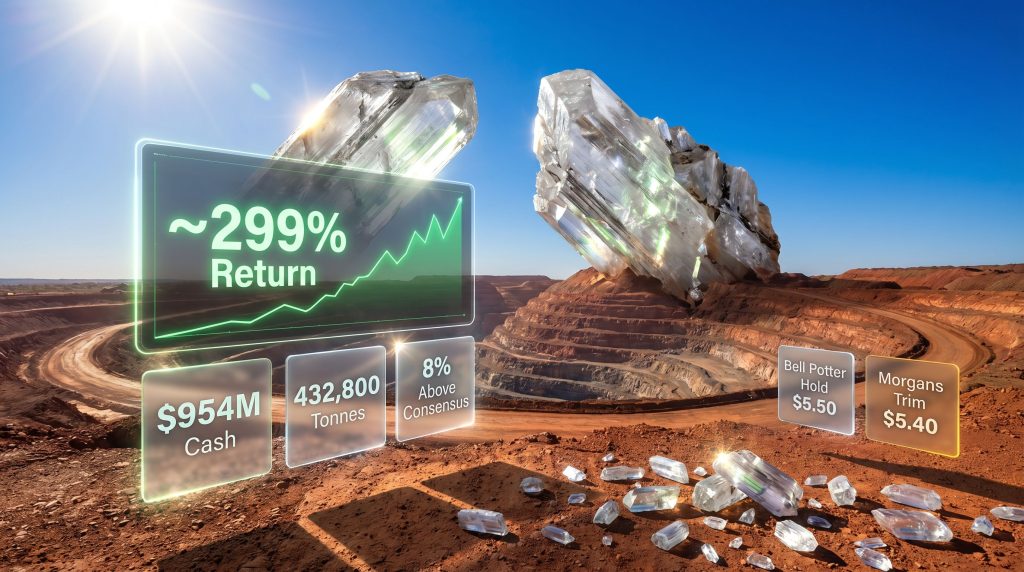
Pilbara Minerals (ASX: PLS) delivered something that commodity equity analysts rarely see in a single reporting period: a simultaneous beat on both production volume and cost control. The March Quarter FY2026 update showed record quarterly output running approximately 8% above analyst consensus expectations, while unit production costs came in roughly 13% below forecast. In an industry where input costs spanning energy, labour, and consumables have remained stubbornly elevated since 2022, that cost performance is particularly striking.
The compounding effect of these two variables on earnings models was significant. Higher-than-expected volume multiplied by lower-than-expected costs creates a margin expansion story that institutional investors respond to decisively, especially when it validates a broader re-rating thesis for the stock. Furthermore, our PLS share analysis highlights why these operational metrics matter so deeply to long-term holders.
In commodity mining, beating on both volume and cost efficiency in the same quarter is statistically uncommon. When both variables move favourably at once, it tends to accelerate institutional re-rating events well beyond what either variable would generate independently.
How Does Pilgangoora's Geology Support These Results?
To understand why this matters technically, it helps to understand how Pilgangoora's ore body works. The deposit is a pegmatite-hosted lithium system, a geological formation characterised by coarse-grained, spodumene-bearing granitic rock bodies. The process of spodumene extraction within these pegmatite intrusions yields grades typically ranging from 1.0% to 1.5% Li2O in the ore, which is then processed into spodumene concentrate grading approximately 6% Li2O for sale to downstream converters.
The geological consistency of pegmatite deposits is one reason Pilgangoora is considered a tier-one asset. Unlike brine-based lithium operations, where evaporation rates and brine chemistry can introduce significant production variability, hard-rock spodumene mining offers more predictable throughput, which makes operational beats against consensus more achievable when management execution is strong.
PLS also extracts from both high-grade spodumene pegmatite zones and lower-grade aplite zones within the deposit, with operational management separating ore types to optimise processing plant feed and maintain concentrate quality. This blending strategy contributes to cost stability across variable ore zones and is a less commonly understood aspect of how Pilgangoora maintains competitive unit economics.
| Operational Metric | Detail |
|---|---|
| March Quarter Production vs. Consensus | ~8% above forecast |
| Cost Performance vs. Forecast | ~13% below forecast |
| H1 FY2026 Production Volume | ~432,800 tonnes spodumene concentrate |
| Cash Position (31 March 2026) | ~$954 million |
| Total Liquidity | ~$1.6 billion |
| 12-Month Share Price Return | ~299% |
Balance Sheet Resilience and Geographic Expansion
Beyond production performance, PLS carries approximately $954 million in cash and $1.6 billion in total liquidity as of 31 March 2026. This balance sheet position is strategically important for reasons that extend beyond optics. Lithium prices have historically exhibited violent cyclicality, and producers with thin liquidity buffers have been forced into dilutive capital raises or asset sales during price troughs.
The PLS balance sheet provides meaningful runway to sustain operations, fund expansion capital, and pursue strategic acquisitions across a full price cycle without becoming a forced seller. Consequently, this financial resilience is one of the key factors separating PLS from many of its listed peers.
The acquisition of Latin Resources and its Colina lithium project in Brazil represents a deliberate move toward geographic diversification. Colina hosts spodumene mineralisation within pegmatitic environments similar to Australian hard-rock operations, and its development adds resource optionality in a jurisdiction attracting increased upstream lithium investment. Reducing single-country asset concentration also lowers regulatory and sovereign risk exposure, particularly as lithium supply chains face increasing geopolitical scrutiny from consuming nations.
Understanding Lithium's Structural Demand Architecture
The long-term demand thesis for lithium rests on two pillars that are reinforcing rather than independent. Electric vehicle adoption and grid-scale battery energy storage deployment both require lithium-ion battery capacity, and both are expanding simultaneously across the 2020s and into the 2030s.
Global EV sales reached approximately 14 million units in 2023, representing roughly 18% of total vehicle sales, according to the International Energy Agency's Global EV Outlook 2024. Each kilowatt-hour of battery capacity requires approximately 0.08 kg of lithium carbonate equivalent (LCE), which means that as average EV battery pack sizes increase toward 80-100+ kWh in next-generation platforms, per-vehicle lithium intensity is rising even as total vehicle counts grow. Understanding the lithium carbonate dynamics at play in this market is therefore essential for any investor assessing PLS.
Grid-scale battery storage deployments reached approximately 42 GWh globally in 2023, with IEA projections pointing toward over 400 GWh annually by 2030 under accelerated climate scenarios. This demand stream is structurally different from EV demand because grid storage projects are capital expenditure decisions made by utilities and energy developers over multi-year horizons, creating more sustained and forecastable procurement patterns.
However, two less commonly discussed variables introduce meaningful uncertainty into these projections:
- Battery chemistry transitions: Lithium-iron-phosphate (LFP) battery chemistry has been gaining market share over nickel-cobalt lithium-ion chemistries, particularly in Chinese EV manufacturing and grid storage applications. LFP cells contain less lithium per kWh than higher-energy-density chemistries, meaning widespread LFP adoption could reduce per-kWh lithium intensity even as total deployments grow.
- Recycled lithium supply emergence: First-generation EV batteries are beginning to reach end-of-life after 8-10 years of service, meaning meaningful volumes of recycled lithium will enter supply chains from the late 2020s onward. Industry estimates suggest recycled lithium could supply 10-15% of total demand by 2030-2035, representing a structural headwind to primary mine supply growth that is often underweighted in bullish demand forecasts.
The Supply-Side Equation That Bullish Investors Often Overlook
Strong demand projections do not automatically translate into sustained high commodity prices. The variable that determines whether lithium producers capture structural demand growth in their earnings is the relationship between supply additions and demand growth rates.
Australia hosts approximately 55% of global hard-rock lithium mining output, according to the U.S. Geological Survey's Mineral Commodity Summaries 2025. Beyond PLS, significant capacity from established operators and incoming projects across Australia, Chile, Argentina, Canada, and China is progressively coming online. IEA's Critical Minerals Market Review 2024 estimated that announced lithium projects globally could add 2.5-3.0 million tonnes of LCE annual capacity by 2030, representing approximately 2.5-3x 2023 production levels.
Strong operational performance does not insulate a commodity producer from external price shocks. Any sustained deterioration in spodumene or lithium carbonate spot prices flows directly into revenue and margins, regardless of how efficiently the company is managed. Investors evaluating PLS must form a view on lithium pricing, not just company execution.
The lithium market downturn between 2022 and 2024 demonstrated precisely this dynamic, when lithium carbonate prices collapsed from peaks above USD 80,000 per tonne to below USD 10,000 per tonne within roughly 18 months. Spodumene concentrate spot prices followed a parallel trajectory, catching many investors off guard.
The speculative but increasingly discussed view within geological and supply-chain circles is that lithium's structural demand floor has been permanently elevated by EV adoption, meaning future price corrections may be shallower than historical cycles. However, this remains a contested thesis, and positioning a portfolio around it without acknowledging the counter-argument carries material risk.
Valuation After a Near-300% Rally: Where Does the Risk-Reward Sit?
The central investment question for anyone considering whether PLS shares represent a smart buy or a risky move is not whether Pilbara Minerals is a quality operator. The operational evidence strongly suggests it is. The real question is whether the current share price already reflects the optimistic scenario, and what margin of safety remains for new investors entering at these levels.
At a recent trading price of approximately $5.93, PLS is trading above the current price targets of both major broker analysts who have recently published updated assessments. Assessing PLS's valuation after its significant capital moves provides additional context on where the market currently sits.
| Broker | Rating | Price Target | Implied Move from ~$5.93 |
|---|---|---|---|
| Bell Potter | Hold | $5.50 | ~-7.5% |
| Morgans | Trim (Downgrade) | $5.40 | ~-9.0% |
Bell Potter's Hold rating with a $5.50 target implies approximately 7.5% downside from the trading price at the time of analysis. Morgans went further, downgrading from Hold to Trim with a $5.40 target, a signal that in their assessment the current valuation already prices in the favourable operational scenario with little buffer remaining.
A broader 17-analyst consensus skews toward Buy ratings with an average price target of approximately A$2.06, though this figure reflects a wider dataset spanning periods when lithium prices and share price valuations were substantially different, making direct comparison complex. The divergence across analyst communities reflects genuine disagreement about where lithium prices settle over the next 12-18 months rather than differing views on PLS's operational quality.
The next major ASX story will hit our subscribers first
Technical Signals and Market Psychology
What Are the RSI Readings Telling Investors?
Beyond fundamental valuation, the technical picture for PLS shares carries several signals worth examining carefully. The RSI14 (Relative Strength Index) has moved above 80, a level that historically precedes either consolidation or a corrective phase in high-momentum stocks. RSI measures the velocity and magnitude of recent price changes, and readings above 70 are conventionally interpreted as overbought conditions.
Daily price volatility has been elevated, with single-session moves of approximately 6.85% and weekly swings around 8.16% observed in recent trading periods. This pattern is characteristic of stocks being driven by momentum and sentiment flows as much as fundamental reassessment. In addition, innovations such as direct lithium extraction technology are beginning to reshape the competitive landscape, adding another layer of complexity to the investment picture.
There is a well-documented psychological dynamic at work in situations like this. When a stock appreciates by nearly 300% over 12 months, it attracts a specific category of investor: those entering because the price is rising rather than because of an independently assessed valuation argument. This momentum-driven capital is inherently unstable and tends to exit rapidly when the narrative shifts.
A technical pivot established in mid-2025 represents the base from which PLS shares have appreciated approximately 69.6% to recent highs, providing a longer-term reference point for understanding the current rally's structure.
Bull Case vs. Bear Case: A Structured Framework
The bull case for PLS shares rests on several interconnected pillars:
- Pilgangoora is a globally significant pegmatite-hosted lithium deposit with reserve life measured in decades, providing genuine long-term production visibility
- Consistent operational beats on both volume and cost metrics demonstrate management's execution capability and operational discipline
- The $1.6 billion total liquidity position provides a meaningful cyclical buffer, distinguishing PLS from leveraged peers who face refinancing stress during price downturns
- Geographic diversification through the Colina project in Brazil reduces single-asset concentration risk and extends the resource growth runway
- Structural EV and battery storage demand tailwinds support multi-year lithium demand growth at a trajectory that primary supply may struggle to match simultaneously
The bear case centres on valuation and cycle timing:
- Both Bell Potter and Morgans see downside from current trading levels, with the stock above both broker price targets
- Lithium's documented boom-bust cyclicality remains intact, and any sustained spodumene price decline flows directly into PLS margins regardless of operational efficiency
- RSI above 80 and elevated daily volatility indicate momentum-driven conditions where sentiment reversals can be abrupt
- Stocks that appreciate by 300% in 12 months frequently attract speculative capital that exits quickly when the next catalyst fails to materialise
- Global lithium supply additions across Australia, South America, and China could compress spot prices over a 12-24 month horizon, irrespective of long-term demand trajectories
Matching Investor Profile to Risk Tolerance
Not all investors should approach a position decision on PLS the same way. The appropriate action, if any, depends heavily on individual circumstances, time horizon, and existing portfolio context. Why some investors hold PLS for a decade illustrates precisely this longer-term conviction-based approach.
PLS may be better suited to investors who:
- Hold a 5+ year investment horizon and maintain conviction in the structural EV and battery storage demand thesis
- Already hold PLS at significantly lower entry prices and are evaluating whether to hold through volatility rather than initiating new positions
- Actively manage positions using defined technical stop-loss levels and can absorb a 10-20%+ drawdown without disrupting broader financial plans
PLS carries elevated risk for investors who:
- Prioritise capital preservation and cannot absorb a meaningful drawdown in the near term
- Are considering entry at current elevated valuations without a specific catalyst thesis for further re-rating beyond the existing operational story
- Have limited familiarity with commodity cycle dynamics and the amplified volatility inherent in lithium equity investments
The decision framework ultimately reduces to a single diagnostic question: does the current price offer sufficient margin of safety given the range of possible lithium price outcomes over the next 2-3 years? If your honest answer involves assuming a favourable price outcome is required for the investment to work, that assumption needs to carry significant weight in your risk assessment.
Frequently Asked Questions About PLS Shares
What Does PLS Stand for on the ASX?
PLS is the ticker code for Pilbara Minerals Ltd, a Western Australian lithium mining company operating the Pilgangoora project in the Pilbara region, one of the world's largest independent hard-rock lithium operations.
Why Have PLS Shares Risen so Sharply Over the Past 12 Months?
The approximately 299% return reflects a combination of record quarterly production running 8% above analyst consensus, cost performance landing roughly 13% below forecast, renewed institutional interest in lithium demand exposure, and broader momentum-driven capital flows into the sector.
What Are the Main Geological Strengths of the Pilgangoora Project?
Pilgangoora is a pegmatite-hosted spodumene deposit, a geological classification associated with long mine life, predictable ore body geometry, and scalable hard-rock processing. The deposit contains both high-grade spodumene pegmatite zones and lower-grade aplite zones, which are blended operationally to optimise processing efficiency and concentrate grade.
What Do Broker Analysts Currently Think About PLS Shares?
As of the most recent published assessments, Bell Potter maintains a Hold rating with a $5.50 price target and Morgans has downgraded to Trim with a $5.40 target. Both targets sit below the approximately $5.93 trading price, implying downside of 7.5-9.0% respectively from current levels.
What Are the Key Risks for PLS Shareholders?
The primary risks include lithium price cyclicality, increasing global supply from competing projects, overbought technical conditions indicated by RSI above 80, elevated share price volatility, the possibility that current valuations already reflect the optimistic operational scenario, and longer-term structural headwinds from LFP battery chemistry adoption and recycled lithium supply growth.
Is PLS a Suitable Long-Term Investment?
PLS operates a world-class asset with genuine long-term demand exposure and a strong balance sheet. However, whether it delivers long-term investment returns from current entry levels depends materially on where lithium prices trend over the next 3-5 years, a variable subject to significant uncertainty that should form the centrepiece of any investment assessment.
Key Risk-Reward Considerations Before Making a Position Decision
Evaluating whether PLS shares represent a smart buy or a risky move requires holding two truths simultaneously. The company is a high-quality operator with a tier-one geological asset, a strong balance sheet, and demonstrated operational discipline. What is in dispute is whether $5.93 per share is the right price to own those qualities at, given where broker targets sit, where technical momentum indicators are positioned, and what lithium's supply-demand balance may look like across the next pricing cycle.
Key considerations worth anchoring any decision to:
- Both active broker analysts covering PLS see downside from current trading levels, with targets of $5.50 and $5.40 respectively
- The RSI above 80 and high daily volatility signal overbought momentum conditions that historically precede consolidation phases
- Global lithium supply additions of 2.5-3x current capacity are in the development pipeline, representing a structural price headwind over the medium term
- The $1.6 billion liquidity position provides material cycle resilience, but liquidity does not protect equity value if lithium prices deteriorate significantly
- Long-term structural demand from EVs and grid storage remains intact, but LFP adoption trends and recycled lithium supply emergence introduce complexity into simple demand-equals-price growth projections
This article contains general information only and does not constitute financial advice. Investors should consider seeking independent financial advice tailored to their personal circumstances before making any investment decision. Past share price performance is not indicative of future returns. All financial data referenced reflects information available as of April 2026.
Want to Catch the Next Major ASX Mineral Discovery Before the Market Moves?
Discovery Alert's proprietary Discovery IQ model delivers real-time alerts on significant ASX mineral discoveries, cutting through complex data to surface actionable opportunities the moment they are announced — explore historic examples of major discovery returns to understand what early positioning can mean, then start a 14-day free trial at Discovery Alert to gain a market-leading edge on the next major find.