August 24, 2026
How Political Upheaval Reshapes Precious Metals Markets
Investor sentiment drives precious metals markets with an intensity that often defies traditional economic logic. When political uncertainty combines with leveraged speculation, the resulting volatility can create unprecedented market movements that challenge even experienced traders' risk management strategies. The Trump gold silver volatility demonstrates how the intersection of psychology, policy expectations, and technical positioning creates a complex web of forces that can amplify both rallies and crashes beyond what fundamental analysis might predict.
Understanding these psychological drivers becomes crucial during periods of political transition, when investors must navigate between conflicting signals about monetary policy, fiscal spending, and institutional credibility. The precious metals complex serves as a unique barometer of investor confidence, reflecting deeper concerns about currency stability and asset preservation that extend far beyond simple supply and demand dynamics.
When big ASX news breaks, our subscribers know first
How Trump's Federal Reserve Nomination Triggered Historic Precious Metals Volatility
The Kevin Warsh Appointment Shock Wave
The announcement of Kevin Warsh as Federal Reserve chair nominee created an immediate shift in market expectations that reverberated through precious metals trading floors globally. Warsh, who served as Fed Governor from 2006-2011, brought credibility as an inflation fighter that fundamentally altered investor calculations about future monetary policy direction.
This policy pivot represented a dramatic reversal from the currency debasement concerns that had driven the historic gold surge throughout late 2025. When Trump announced he would nominate Kevin Warsh to chair the US Federal Reserve, the debasement trade began to unravel as many investors drew comfort from the fact that Warsh, a former Fed governor, was less likely to go easy on inflation, according to analysis from SCMP.
The speed of the sentiment shift highlighted how quickly political announcements can restructure market positioning. Investors who had positioned for ongoing dollar weakness and negative real interest rates suddenly faced the prospect of a more hawkish Federal Reserve under experienced leadership with established anti-inflation credentials.
Market Psychology Behind the 27% Silver Crash
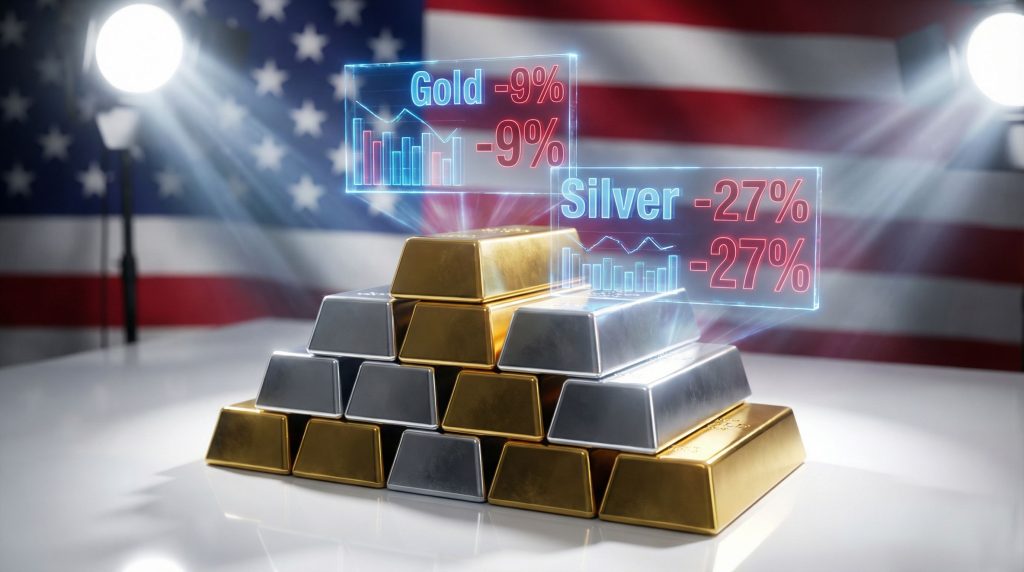
Silver experienced its most severe single-day decline since the Hunt Brothers crisis of March 1980, losing 27% of its value in a massive liquidation event. This extreme volatility reflected the metal's position as the more speculative component of the precious metals complex, attracting leveraged capital that amplified both the preceding rally and subsequent crash.
The psychological drivers behind this collapse centred on the unwinding of highly leveraged positions concentrated in Asian markets. The surge in gold and silver was amplified by highly leveraged bets, with a significant portion of the borrowed money located in Asia, particularly China, which has become the world's top buyer of gold in recent years and therefore its price setter.
Technical factors compounded the psychological selling pressure as stop-loss orders triggered cascading liquidations. The combination of margin calls, forced selling by leveraged speculators, and algorithmic trading systems created a self-reinforcing downward spiral that overwhelmed any fundamental support levels.
Gold's Worst Single-Day Performance Since 1980
Gold's 9% decline represented its steepest single-day fall since early 1980, marking the end of a rally that had seen the metal gain approximately 16% since December 1, 2025. This historical comparison underscores the exceptional nature of the volatility, placing the current market stress in the context of previous crisis periods.
The intensity of gold's decline reflected its status as the primary hedge against currency debasement and institutional instability. When the Warsh nomination signalled potential monetary policy normalisation, gold's fundamental investment thesis underwent rapid reassessment by institutional and retail investors alike.
Unlike silver's more speculative positioning, gold's crash represented a broader shift in risk assessment regarding US dollar stability and Federal Reserve credibility. The metal's traditional role as a store of value came under pressure as investors recalibrated expectations for real interest rates and inflation control.
What Drives Investor Behavior During Political Uncertainty?
Safe Haven Asset Rotation Patterns
Political uncertainty creates distinctive patterns of capital rotation as investors seek assets that can preserve value during periods of institutional instability. The precious metals rally leading up to the crash reflected the dwindling number of safe assets amid mounting concern about the US dollar and Treasury bonds since President Trump returned to the White House.
This rotation pattern follows a predictable sequence during political transitions:
- Initial flight from traditional safe havens (Treasury bonds) due to policy uncertainty
- Accumulation in alternative stores of value (precious metals, real assets)
- Leveraged speculation amplifies the initial rotation
- Policy clarification triggers rapid unwinding of speculative positions
The speed and magnitude of these rotations depend heavily on the degree of leverage employed and the concentration of positioning in specific geographic regions or investor types.
Dollar Strength vs. Precious Metals Correlation
The inverse relationship between dollar strength and precious metals prices intensified during the Trump gold silver volatility period. When Warsh's nomination suggested potential monetary tightening, dollar expectations strengthened rapidly, creating immediate headwinds for gold and silver valuations.
This correlation operates through multiple channels:
- Interest rate expectations: Higher real rates reduce the opportunity cost of holding non-yielding assets
- Currency competition: A stronger dollar makes dollar-denominated commodities more expensive for foreign buyers
- Risk sentiment: Dollar strength often coincides with risk-on periods that reduce safe haven demand
Furthermore, understanding this relationship helps explain why political announcements that signal monetary policy changes can trigger such rapid precious metals repricing.
Institutional vs. Retail Investor Response Mechanisms
Institutional and retail investors demonstrated markedly different response patterns to the Warsh nomination announcement. Institutional investors, with greater access to policy analysis and faster execution capabilities, initiated the initial selling wave that triggered broader market liquidation.
Retail investors, often employing higher leverage ratios and less sophisticated risk management, found themselves forced into selling positions at unfavourable prices as margin calls materialised. This dynamic created a two-phase selling process that extended the duration and intensity of the market decline.
The geographic concentration of retail leverage in Asian markets added a timezone dimension to the volatility, with forced selling in Asian hours creating negative momentum that carried into Western market sessions.
Understanding the Pre-Crash Rally: Why Gold and Silver Soared
Inflation Hedge Positioning Strategy
The dramatic rally in precious metals reflected widespread investor concern about currency debasement and inflation risks under expanded fiscal policy. Many investors worried about the debasement of mainstream assets amid hefty fiscal stimulus in advanced economies, the threat posed by inflation and the erosion of governance standards and institutional autonomy in the United States, making gold prices as an inflation hedge an attractive diversifier.
This positioning strategy gained momentum as traditional safe haven assets like Treasury bonds faced credibility challenges. Investors systematically reallocated portfolios away from interest rate sensitive assets toward real assets that could potentially maintain purchasing power during inflationary periods.
Pre-Rally Performance Metrics (December 2025 – January 2026)
| Metal | Peak Price | % Gain from December | Key Drivers |
|---|---|---|---|
| Gold | $5,200/oz | 16% | Central bank buying, inflation fears |
| Silver | $105/oz | 50% | Industrial demand, speculation |
Central Bank Buying Pressure Analysis
Central bank accumulation patterns provided fundamental support for the precious metals rally, with China emerging as the dominant price-setting force in global gold markets. China's position as the world's top buyer of gold in recent years established it as the marginal price setter, creating sustained upward pressure on valuations.
This institutional demand differed qualitatively from speculative flows, representing strategic reserve diversification by monetary authorities concerned about dollar-denominated asset concentration. Central bank buying typically exhibits less price sensitivity and greater persistence compared to investor flows.
The concentration of central bank demand in specific geographic regions also created supply/demand imbalances that amplified price movements, particularly when combined with leveraged speculation in the same directional positioning.
Asian Market Leverage Impact on Price Discovery
Asian markets played a disproportionate role in amplifying both the rally and subsequent crash through concentrated leverage deployment. The surge in gold and silver was amplified by highly leveraged bets, with a significant portion of the borrowed money in Asia, particularly China.
This leverage concentration created several market structure vulnerabilities:
- Geographic risk concentration: Asian timezone trading could influence global price discovery
- Margin requirement differences: Varying leverage limits across exchanges created arbitrage opportunities
- Forced liquidation timing: Asian margin calls occurred during lower liquidity periods
The interaction between fundamental central bank demand and leveraged speculation created an unstable equilibrium that proved vulnerable to rapid unwinding when policy expectations shifted.
How Do Political Announcements Create Market Volatility?
Trump Policy Uncertainty Framework
Political announcements during the Trump administration created volatility through multiple transmission mechanisms that affected investor expectations about monetary policy, fiscal spending, and regulatory frameworks. The Federal Reserve nomination represented a concrete policy signal that allowed investors to reassess previous uncertainty.
This uncertainty framework operates through several channels:
- Policy signalling effects: Announcements provide information about future policy direction
- Institutional credibility assessment: Markets evaluate the competence and independence of appointed officials
- Timeline expectations: Investors adjust their forecasts for policy implementation speed
- Secondary market effects: Policy changes in one area affect related markets and asset classes
The Warsh nomination was particularly significant because it addressed investor concerns about Federal Reserve independence and inflation-fighting credibility simultaneously.
Federal Reserve Independence Concerns
Prior to the Warsh nomination, markets had priced in considerable uncertainty about Federal Reserve independence and monetary policy effectiveness. Concerns about the erosion of governance standards and institutional autonomy in the United States had contributed to flight from traditional safe haven assets.
The appointment of a former Fed governor with established credibility addressed these concerns by signalling:
- Technical competence: Warsh's previous Fed experience demonstrated understanding of monetary policy tools
- Inflation-fighting commitment: His policy record suggested willingness to prioritise price stability
- Market communication skills: Previous experience in Fed communication protocols
Consequently, this credibility restoration triggered immediate reassessment of precious metals valuations that had incorporated significant institutional risk premiums.
Tariff Threat Impact on Currency Markets
Trump's broader policy framework, including tariff threats and trade policy uncertainty, created complex cross-currents in currency markets that affected precious metals pricing. While trade tensions typically support safe haven demand, the prospect of dollar strengthening through economic nationalism created competing forces.
For instance, the tariffs impact on markets influence precious metals through multiple pathways:
- Dollar demand: Trade barriers can strengthen the domestic currency
- Inflation expectations: Import tariffs create cost-push inflation pressure
- Global growth concerns: Trade restrictions reduce international economic activity
- Retaliation risks: Trading partner responses affect overall market stability
The interaction between these factors created uncertain net effects on precious metals demand that contributed to overall market volatility.
What Technical Factors Amplified the Precious Metals Crash?
Leveraged Position Unwinding Mechanics
The technical amplification of the precious metals crash resulted from systematic unwinding of leveraged positions that had accumulated during the preceding rally. When policy expectations shifted following the Warsh nomination, highly leveraged investors faced immediate margin pressure that forced rapid liquidation.
The unwinding process followed a predictable sequence:
- Initial price decline triggered margin calls on leveraged long positions
- Forced selling created additional downward pressure
- Stop-loss activation generated cascading liquidation orders
- Algorithmic trading amplified volatility through systematic selling programmes
This mechanical selling overwhelmed fundamental demand and created price discovery based on liquidation pressure rather than investment value assessment.
Stop-Loss Cascade Effects
Technical trading systems and risk management protocols created predetermined selling pressure that accelerated the market decline. As prices fell through technical support levels, automated stop-loss orders triggered additional selling waves that fed on themselves.
The cascade effect was particularly severe in silver, where the 27% single-day decline represented the largest fall since March 1980. This extreme volatility reflected:
- High leverage ratios in silver speculation
- Concentrated positioning among momentum-following algorithms
- Thin liquidity during forced liquidation periods
- Cross-asset correlation with broader commodity selling
Margin Call Liquidation Patterns
Margin call liquidations followed geographic and temporal patterns that extended the volatility across multiple trading sessions. Asian markets, where significant leverage was concentrated, initiated forced selling during lower liquidity periods that established negative momentum for subsequent Western trading sessions.
"Markets experiencing forced liquidation often see selling pressure persist for 8-9 weeks as overleveraged positions are systematically unwound across various timeframes and investor categories."
The liquidation pattern was characterised by:
- Immediate selling to meet margin requirements
- Voluntary position reduction by investors seeking to reduce risk
- Secondary effects as correlated assets faced selling pressure
- Liquidity provision challenges as market makers withdrew during extreme volatility
The next major ASX story will hit our subscribers first
Why Asian Markets Played a Critical Role in the Volatility
China's Position as Global Price Setter
China's emergence as the world's top buyer of gold in recent years established it as the primary price-setting influence in global precious metals markets. This dominance created conditions where Chinese investor sentiment and positioning could determine worldwide price discovery mechanisms.
China's price-setting authority operates through several channels:
- Volume leadership: Chinese purchases represent the largest marginal demand source
- Central bank reserves: Official sector buying provides sustained fundamental support
- Retail investment demand: Individual investor participation adds volatility and momentum
- Industrial consumption: Manufacturing demand creates baseline consumption levels
When Chinese investors shifted from buying to selling, the impact reverberated through global markets with amplified effect due to this concentrated influence.
Leveraged Trading Concentration Risks
The concentration of leveraged precious metals positions in Asian markets created systemic vulnerability that amplified both the preceding rally and subsequent crash. Significant portions of borrowed money were located in Asia, particularly China, where leverage ratios and margin requirements differed from Western markets.
This concentration created several risk factors:
| Risk Factor | Description | Market Impact |
|---|---|---|
| Geographic clustering | Leveraged positions concentrated in specific regions | Synchronised selling pressure |
| Timezone effects | Asian liquidations during low Western liquidity | Momentum transmission |
| Margin requirement differences | Varying leverage limits across exchanges | Arbitrage-driven flows |
| Currency exposure | Cross-currency funding costs | Additional volatility sources |
Regional Safe Haven Demand Patterns
Asian safe haven demand patterns differ systematically from Western investor behaviour, creating distinct market dynamics during stress periods. Cultural preferences for physical precious metals ownership, different regulatory frameworks, and varying economic policy concerns contribute to unique demand characteristics.
Regional demand patterns include:
- Physical ownership preference: Higher allocation to physical metals versus paper instruments
- Cultural significance: Traditional store of value perception across Asian societies
- Policy response differences: Varying government attitudes toward precious metals ownership
- Economic development factors: Emerging market characteristics affecting investment flows
Understanding these regional differences helps explain why Asian market developments can have disproportionate global impact during volatility periods.
How Should Investors Navigate Trump-Era Precious Metals Volatility?
Risk Management Strategies for Political Uncertainty
Navigating precious metals volatility during political uncertainty requires sophisticated risk management approaches that account for leverage effects, geographic concentration, and policy transmission mechanisms. Investors must balance the legitimate hedging benefits of precious metals against the amplified volatility created by speculative positioning.
Essential risk management components include:
- Position sizing: Limiting precious metals allocation to levels that can withstand extreme volatility
- Leverage constraints: Avoiding borrowed money that could force liquidation during stress periods
- Geographic diversification: Spreading exposure across different markets and instruments
- Timeline management: Aligning holding periods with fundamental rather than technical factors
The January 30th crash demonstrated how quickly leveraged positions can face margin pressure, making conservative positioning essential for gold investment strategies.
Portfolio Allocation Adjustments
Portfolio allocation decisions must account for the dual nature of precious metals as both safe haven assets and volatile commodities. The extreme price movements during the Trump gold silver volatility period highlighted how political developments can rapidly shift the risk/return characteristics of gold and silver investments.
Recommended allocation adjustments include:
- Core holdings: Maintain baseline precious metals exposure for inflation protection
- Tactical positioning: Adjust allocations based on policy uncertainty levels
- Instrument selection: Choose between physical metals, ETFs, and mining stocks based on objectives
- Rebalancing protocols: Establish triggers for increasing or decreasing exposure
Even after the 27% silver decline and 9% gold crash, both metals remained substantially above December 2025 baseline levels, suggesting that fundamental demand factors continued to provide support despite technical selling pressure.
Long-term vs. Short-term Investment Approaches
The extreme volatility during the Trump administration period illustrated the importance of distinguishing between long-term strategic positioning and short-term tactical trading in precious metals markets. Long-term investors with appropriate risk management could potentially benefit from the volatility through systematic accumulation strategies.
Strategic vs. Tactical Comparison:
| Approach | Timeline | Risk Level | Leverage Use | Volatility Response |
|---|---|---|---|---|
| Strategic | 3-10 years | Moderate | None/Minimal | Opportunity for accumulation |
| Tactical | 3-12 months | High | Moderate | Active position management |
| Speculative | Days-Weeks | Very High | Maximum | Extreme volatility exposure |
Long-term investors focused on currency debasement protection and inflation hedging could view the crash as a correction within an ongoing secular trend driven by fiscal and monetary policy concerns.
What Historical Patterns Reveal About Political Volatility in Precious Metals
Presidential Election Cycle Effects
Historical analysis of precious metals performance during presidential election cycles reveals consistent patterns of increased volatility around policy transition periods. The current Trump administration period fits within established patterns where political uncertainty drives initial safe haven flows followed by policy clarification that can trigger rapid reversals.
Key historical patterns include:
- Pre-election uncertainty: Rising precious metals prices as policy outcomes remain unclear
- Post-election clarification: Volatility spikes as markets reassess policy implications
- Implementation phase: Gradual stabilisation as actual policies replace speculation
- Mid-term adjustments: Secondary volatility as policy effectiveness becomes apparent
The Warsh nomination represented a transition from uncertainty to clarification that historically generates significant short-term volatility.
Federal Reserve Chair Transition Impact
Federal Reserve leadership transitions historically create substantial precious metals volatility as markets reassess monetary policy frameworks. Previous chair appointments demonstrate that market reaction depends heavily on perceived inflation-fighting credibility and policy independence.
Historical precedents show:
- Volcker appointment (1979): Initial gold surge followed by massive decline as credibility established
- Greenspan transition (1987): Moderate volatility during policy continuity period
- Bernanke appointment (2006): Increased volatility during financial crisis management
- Powell nomination (2018): Limited precious metals impact due to policy continuity expectations
The Warsh nomination appeared to follow the Volcker precedent, where initial uncertainty about inflation-fighting commitment resolved in favour of monetary credibility.
Comparative Analysis with Previous Trump Administration
Comparing the current precious metals volatility with the 2017-2021 Trump administration period reveals both similarities and differences in market dynamics. The previous administration also generated substantial precious metals volatility, though through different transmission mechanisms.
Comparison Summary:
| Period | Primary Drivers | Peak Volatility | Resolution Mechanism |
|---|---|---|---|
| 2017-2019 | Trade wars, Fed policy | Moderate | Gradual accommodation |
| 2020-2021 | Pandemic response, fiscal stimulus | High | Monetary expansion |
| 2025-2026 | Fed independence, inflation fears | Extreme | Policy credibility restoration |
The current period appears more focused on monetary policy credibility, whereas previous Trump volatility centred on trade and fiscal policy uncertainty.
Which Economic Indicators Signal Future Precious Metals Movements?
Dollar Index Correlation Analysis
The relationship between precious metals and dollar strength provides reliable signals for future price movements, particularly during periods of policy transition. The Warsh nomination triggered immediate dollar strength expectations that correctly predicted precious metals weakness.
Key dollar-related indicators include:
- DXY momentum: Strong dollar trends typically predict precious metals headwinds
- Real interest rate differentials: Higher US real rates support dollar strength
- Policy divergence: Relative monetary policy stances across major economies
- Safe haven flows: Crisis periods can override normal correlation patterns
Monitoring these relationships helps investors anticipate precious metals directional moves based on currency market developments.
Real Interest Rate Sensitivity
Real interest rates (nominal rates minus inflation expectations) represent the primary fundamental driver of precious metals valuations over medium-term periods. The Warsh nomination signalled potential increases in real rates that directly threatened precious metals investment thesis.
Real rate transmission mechanisms include:
- Opportunity cost: Higher real rates increase the cost of holding non-yielding assets
- Investment flows: Rising real rates attract capital away from inflation hedges
- Currency effects: Higher real rates typically strengthen the dollar
- Economic growth: Positive real rates can indicate healthy economic conditions
Tracking real interest rate expectations provides advance warning of potential precious metals volatility.
Inflation Expectation Metrics
Inflation expectations measured through TIPS breakevens, survey data, and market-based indicators offer crucial signals for precious metals demand. The Warsh nomination affected inflation expectations by suggesting more credible monetary policy implementation.
Critical inflation metrics include:
- 5-year TIPS breakeven rates: Market-based long-term inflation expectations
- Consumer inflation expectations: Survey data on household inflation perceptions
- Central bank inflation targets: Policy maker guidance on acceptable inflation levels
- Commodity inflation pressure: Broad-based price pressures across raw materials
Rising inflation expectations typically support precious metals demand, whilst falling expectations create selling pressure.
How Do Tariff Policies Affect Precious Metals Demand?
Trade War Safe Haven Dynamics
Trade policy uncertainty creates complex effects on precious metals demand through competing safe haven and currency strength mechanisms. Trump's tariff policies generate both inflation concerns that support precious metals and dollar strength factors that create headwinds.
Trade war effects include:
- Global growth concerns: Trade restrictions reduce international economic activity
- Currency retaliation: Trading partners may devalue currencies or impose counter-tariffs
- Inflation transmission: Import tariffs create domestic cost-push inflation
- Market uncertainty: Trade negotiations generate ongoing policy volatility
However, the net effect depends on which factors dominate during specific periods, creating ongoing uncertainty for precious metals investors. Additionally, US-China trade strategies can significantly influence global market dynamics.
Currency Debasement Concerns
Tariff policies can contribute to currency debasement concerns through fiscal impacts and monetary policy responses. If tariffs reduce economic efficiency or trigger retaliatory measures, they may ultimately weaken rather than strengthen the implementing country's currency.
Debasement transmission channels include:
- Fiscal deterioration: Trade wars can reduce government revenues and increase spending
- Economic inefficiency: Protectionism typically reduces overall economic productivity
- Monetary accommodation: Central banks may ease policy to offset trade war economic damage
- International cooperation: Trade conflicts can undermine international monetary coordination
These factors support the fundamental case for precious metals as protection against currency instability.
Industrial Silver Demand Implications
Silver's dual role as both precious metal and industrial commodity creates unique exposure to trade policy through supply chain and manufacturing demand effects. Tariff policies can disrupt silver supply chains whilst simultaneously affecting industrial demand patterns.
Industrial demand factors include:
- Electronics manufacturing: Trade disruptions affect silver-intensive technology production
- Solar panel production: Renewable energy policies intersect with trade considerations
- Automotive applications: Electric vehicle development affects silver demand growth
- Medical devices: Healthcare technology growth creates ongoing silver consumption
Understanding these industrial applications helps explain why silver experienced more extreme volatility than gold during the recent period.
What Recovery Scenarios Exist for Gold and Silver Markets?
Bull Case: Continued Geopolitical Uncertainty
The bull case for precious metals recovery centres on persistent geopolitical uncertainty that maintains safe haven demand despite improved monetary policy credibility. Multiple conflict zones, international tensions, and domestic political instability could support continued precious metals accumulation.
Bull case supporting factors include:
- Ongoing geopolitical risks: International conflicts maintain uncertainty
- Fiscal sustainability concerns: Government debt levels continue rising
- Currency instability: Multiple currencies face debasement pressures
- Central bank demand: Official sector accumulation provides price support
This scenario suggests the January 30th crash represented a correction within an ongoing secular bull market rather than a fundamental trend reversal.
Bear Case: Strong Dollar and Rising Rates
The bear case envisions successful monetary policy normalisation under Fed leadership that restores dollar strength and eliminates the fundamental drivers of precious metals demand. Effective inflation control and economic stability could reduce safe haven requirements.
Bear case factors include:
- Successful inflation control: Fed credibility restoration reduces debasement concerns
- Economic growth acceleration: Strong growth supports risk asset preferences
- Dollar strength persistence: Relative US economic outperformance continues
- Alternative asset competition: Other investments offer better risk-adjusted returns
Under this scenario, precious metals could face extended pressure as fundamental investment thesis weakens.
Base Case: Gradual Stabilisation Timeline
The most probable outcome involves gradual market stabilisation as policy uncertainty resolves and leveraged speculation unwinds completely. This process typically requires several months to complete as forced sellers exit and fundamental demand reasserts influence.
Analyst Price Targets Post-Volatility:
| Institution | Gold Target | Silver Target | Timeline | Key Assumptions |
|---|---|---|---|---|
| JPMorgan | $6,300/oz | $95/oz | End 2026 | Continued central bank demand |
| UBS | $6,200/oz | $88/oz | Q1-Q3 2026 | Fed policy normalisation |
Disclaimer: Price targets represent analyst opinions and do not constitute investment advice. Actual prices may differ materially from forecasts due to unforeseen market developments.
Base case stabilisation includes:
- Leverage normalisation: Excessive speculation eliminated through forced liquidation
- Policy clarity: Federal Reserve direction becomes established
- Fundamental reassertion: Investment flows based on economic factors rather than speculation
- Volatility reduction: Normal trading ranges resume as uncertainty resolves
This timeline suggests 8-12 weeks for initial stabilisation with gradual trend resumption thereafter, as reported by Barron's analysis of market recovery patterns.
Key Takeaways for Precious Metals Investors
Risk Assessment Framework
Successful precious metals investing during political uncertainty requires comprehensive risk assessment that accounts for leverage effects, geographic concentration, and policy transmission mechanisms. The January 30th crash demonstrated how rapidly market conditions can change when political signals affect monetary policy expectations.
Essential risk assessment components:
- Policy sensitivity analysis: How do different political outcomes affect precious metals fundamentals?
- Leverage exposure evaluation: What is the risk of forced liquidation during volatility periods?
- Geographic diversification review: Are positions concentrated in markets with higher risk profiles?
- Timeline alignment: Do investment horizons match with expected volatility patterns?
Diversification Strategies
Portfolio diversification must address both traditional financial risks and the unique characteristics of precious metals markets during political transition periods. The extreme volatility demonstrated the importance of position sizing and instrument selection.
Effective diversification includes:
- Multiple instruments: Physical metals, ETFs, mining stocks offer different risk/return profiles
- Geographic spread: Exposure across different markets and regulatory environments
- Timeline diversification: Combining strategic holdings with tactical positioning
- Correlation monitoring: Understanding how precious metals correlate with other portfolio components
Monitoring Political Development Indicators
Staying ahead of precious metals volatility requires systematic monitoring of political developments that affect monetary policy, fiscal spending, and institutional credibility. Key indicators provide advance warning of potential market shifts.
Critical monitoring areas include:
- Federal Reserve communications: Policy signals and forward guidance changes
- Political appointment announcements: Key positions affecting economic policy
- Fiscal policy developments: Spending programmes and tax policy changes
- International relations: Trade policies and geopolitical tensions
The Trump gold silver volatility period illustrated how quickly political announcements can trigger massive market movements, making proactive monitoring essential for risk management and opportunity identification. Furthermore, understanding these dynamics provides valuable insight for navigating future political transition periods.
Disclaimer: This analysis is provided for educational purposes only and does not constitute investment advice. Precious metals investments carry significant risks including price volatility, liquidity constraints, and potential total loss of capital. Past performance does not guarantee future results. Investors should conduct thorough due diligence and consider consulting with qualified financial advisors before making investment decisions.
Ready to Capitalise on Precious Metals Market Volatility?
Discovery Alert's proprietary Discovery IQ model delivers real-time notifications on significant ASX mineral discoveries, instantly empowering subscribers to identify actionable opportunities ahead of the broader market. Explore how major mineral discoveries can generate substantial returns by visiting Discovery Alert's dedicated discoveries page and begin your 14-day free trial today to position yourself ahead of market volatility.