
June 23, 2026
Power System Vulnerabilities in Central Asian Energy Infrastructure
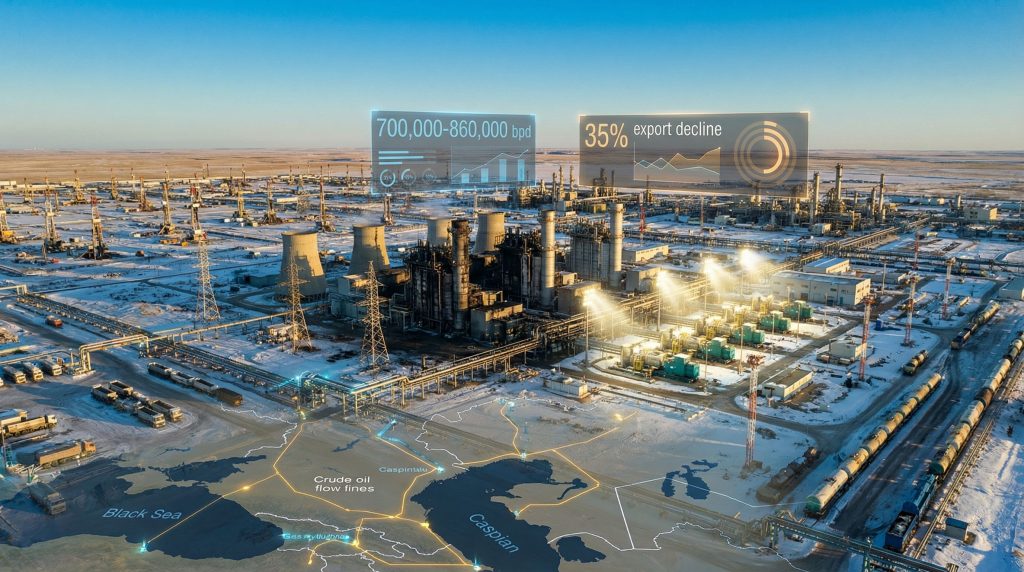
Remote oilfield operations across Central Asia face critical infrastructure dependencies that create cascade risks throughout global energy supply chains. The Chevron-led Tengiz oilfield offline after fire represents a prime example of how single-point failures can rapidly escalate into market-disrupting events affecting millions of barrels per day of crude oil throughput.
The strategic positioning of major production assets in isolated geographic regions amplifies these vulnerabilities, particularly when facilities rely on dedicated power generation infrastructure without adequate redundancy systems. Analysis of industrial power configurations reveals that gas-turbine thermal power plants serving remote oilfields operate under heightened risk profiles compared to facilities connected to diversified grid networks.
When big ASX news breaks, our subscribers know first
Gas-Turbine Dependencies Create Single Point of Failure
Technical assessment of remote oilfield power systems shows that dedicated thermal power plants represent fundamental architectural vulnerabilities. Unlike urban industrial facilities with multiple grid connections, isolated production sites depend entirely on on-site generation capacity for continuous operations.
Gas-turbine power plants serving major oilfields typically operate in configurations where backup systems provide limited duration coverage, often measured in hours rather than days. The complexity of turbine repair following fire damage involves specialised components with extended sourcing timelines, particularly for high-temperature alloy parts and control system electronics.
Winter conditions in Kazakhstan present additional constraints on power system restoration, with ambient temperatures of -10°C to -20°C limiting outdoor construction activities and potentially extending repair schedules beyond standard industry timelines.
Production Capacity Analysis and Market Position
Kazakhstan's energy infrastructure supports approximately 1.7 million barrels per day of total crude production, with the facility's output representing a substantial portion of national output. Industry data indicates the facility's production capacity ranges between 700,000 to 860,000 barrels per day, positioning it as the country's largest single crude oil asset.
The facility's output accounts for nearly 50% of Kazakhstan's total production, creating substantial exposure to supply chain disruptions when operational incidents occur. This concentration risk extends beyond national boundaries through integration with the Caspian Pipeline Consortium export infrastructure, which channels Kazakhstani crude to international markets via Black Sea terminals.
Furthermore, the US oil production decline in 2025 has amplified global supply constraints, making incidents like the Tengiz disruption more significant for overall market stability.
| Production Metric | Volume | Strategic Impact |
|---|---|---|
| Tengiz Daily Output | 700k-860k bpd | 50% of Kazakhstan total |
| National Production | 1.7 million bpd | Regional export capacity |
| Export Dependency | 35% decline observed | Black Sea terminal flows |
Joint Venture Structure and Risk Allocation
The Tengiz joint venture operates under a partnership structure that distributes both operational responsibility and financial exposure across multiple international stakeholders. Industry records indicate Chevron holds 50% ownership, carrying primary operational responsibility, while ExxonMobil maintains 25%, KazMunayGas controls 20%, and Lukoil retains 5% of the venture.
This ownership distribution creates differentiated risk exposure profiles across partners, with Chevron bearing the greatest operational and financial impact from extended outages. ExxonMobil's significant production loss affects quarterly results, while KazMunayGas faces national energy security implications as the state-owned partner.
Sanctions considerations add complexity to Lukoil's operational role, as Western sanctions on Russian entities may constrain the company's ability to participate in technical decision-making or provide equipment support during restoration activities.
Market Response Mechanisms and Price Volatility
Energy markets demonstrate distinct response patterns to unexpected production shutdowns, with volatility typically correlating to outage duration expectations and available alternative supply sources. Current market pricing shows Brent crude at $65.04 per barrel and WTI at $60.42 per barrel, indicating relatively muted impact from the Kazakhstani disruption.
Trading desk analysis suggests market participants expect resolution within a contained timeframe, as evidenced by headlines indicating traders are "looking past Kazakhstan disruption". This market sentiment reflects confidence in either rapid restoration or adequate substitute supply availability.
Export terminal data reveals more significant impacts, with January 2026 showing a 35% reduction in export flows during the first 12 days of the month. This decline demonstrates the compound effects of simultaneous production and infrastructure challenges affecting crude delivery to international markets. In addition, recent OPEC production impact decisions have affected global supply dynamics.
Cascading Supply Chain Impacts
Infrastructure failures at major production facilities create ripple effects throughout global energy markets that extend far beyond immediate production losses. The interconnected nature of pipeline networks, storage systems, and refinery operations means that disruptions cascade through multiple market layers with amplifying effects.
Export Terminal Bottleneck Amplification
The Caspian Pipeline Consortium system represents a critical chokepoint for Kazakhstani crude exports, channeling production from multiple fields through shared infrastructure to Black Sea terminals. When major producers like Tengiz experience outages, the reduced utilisation of pipeline capacity creates operational inefficiencies across the entire export system.
Black Sea terminal capacity constraints become more pronounced during disruptions, as remaining producers compete for reduced throughput slots while storage facilities experience inventory drawdowns. Alternative export routes through the Baku-Tbilisi-Ceyhan pipeline or Atyrau-Samara system require longer lead times and different crude specifications, limiting their effectiveness as immediate substitutes.
The geographic isolation of Central Asian production creates particular vulnerability to infrastructure bottlenecks, as producers have limited alternative routing options compared to regions with multiple pipeline networks or direct maritime access.
Downstream Supply Chain Adjustments
Refinery operations dependent on Kazakhstani crude face immediate challenges in crude slate optimisation when supply disruptions occur. Facilities configured for heavy sour crude processing must rapidly identify alternative feedstock sources or adjust processing units to accommodate different crude specifications.
Long-term supply agreements create additional complications, as refiners must balance contractual obligations with operational constraints during extended outages. Force majeure declarations may protect against penalty provisions, but do not address the fundamental challenge of maintaining refinery utilisation rates with substitute feedstock.
Transportation logistics require immediate rerouting through alternative pipeline systems, creating temporary capacity pressures on competing infrastructure. Shipping schedules for crude tankers experience delays and rerouting, affecting freight rates and delivery timelines to international markets.
The next major ASX story will hit our subscribers first
Historical Precedents and Recovery Projections
Analysis of comparable infrastructure incidents provides insight into potential restoration timelines and operational restart procedures. Fire damage to thermal power plants typically involves complex repair processes that depend on the extent of equipment damage and availability of replacement components.
Power System Restoration Benchmarks
Historical data from similar incidents at major energy facilities indicates repair timelines ranging from several weeks to multiple months, depending on equipment damage severity. According to Kazakhstan's Chevron-led oilfield suspends output after the power facility fire, gas turbine restoration following fire events requires detailed inspection of high-temperature components, electrical systems, and control infrastructure.
Component sourcing timelines represent critical path dependencies, particularly for specialised turbine parts manufactured by limited global suppliers. Lead times for major components can extend 12-16 weeks under normal conditions, with potential delays during peak maintenance seasons or supply chain disruptions.
Weather constraints in Kazakhstan's January conditions add complexity to repair operations, as outdoor installation work faces temperature limitations and reduced daylight hours. Construction activities involving welding, heavy lifting, and electrical installation typically require temperature modifications or seasonal delays.
Production Restart Protocols
Oilfield restart procedures following power infrastructure incidents involve systematic safety verification and gradual production ramp-up phases. Initial restart activities focus on critical systems testing, pressure system verification, and process control validation before production commencement.
Industry protocols typically require phased production restart beginning at reduced capacity levels to verify system stability and identify potential complications. Full production restoration may take several additional days beyond initial startup, depending on facility complexity and safety verification requirements.
Safety system certification following fire-related incidents demands comprehensive inspection and testing protocols that cannot be accelerated without compromising operational integrity. Regulatory approval processes in Kazakhstan may require additional documentation and verification steps beyond standard restart procedures.
Strategic Risk Exposure Assessment
The Chevron-led Tengiz oilfield offline after fire incident highlights differentiated risk exposure across stakeholder categories, with implications extending beyond immediate production losses to long-term strategic positioning and market access capabilities.
Partner Risk Profiles and Mitigation Options
Chevron's 50% operational leadership position creates maximum exposure to both production losses and restoration costs, but also provides decision-making authority over repair timelines and technical approaches. The company's diversified global portfolio offers alternative supply sources to partially offset Tengiz production losses.
ExxonMobil's 25% stake represents significant quarterly earnings exposure, particularly given the company's focus on high-margin international assets. Alternative supply access through the company's global operations provides some mitigation, but cannot fully offset the production volume impact.
KazMunayGas faces national energy security implications beyond financial exposure, as the state-owned company manages broader responsibilities for domestic energy supply and export revenue generation. The company's 20% stake represents substantial fiscal impact to government revenues.
Lukoil's 5% ownership creates limited direct financial exposure, but the Russian company faces potential operational constraints due to Western sanctions affecting technical cooperation and equipment sourcing capabilities.
Insurance and Risk Transfer Mechanisms
Business interruption insurance coverage for major oilfield operations typically includes power system failures, but policy specifics determine coverage scope and timing for claim payments. Deductible structures and waiting periods may limit immediate financial relief during restoration phases.
Insurance premium implications for remote infrastructure operations face reassessment following major incidents, with underwriters evaluating backup power requirements and business continuity planning as risk factors. Future coverage terms may include mandatory redundancy requirements or higher premium structures for single-source power dependencies.
Joint venture insurance arrangements distribute risk across partners according to ownership percentages, but operational responsibility for insurance management typically falls to the operator partner. Claim processing and distribution procedures can create timing differences in financial recovery across partners.
Geopolitical Risk and Energy Security Strategy
The Tengiz incident occurs within broader geopolitical dynamics affecting Central Asian energy exports and Kazakhstan's strategic positioning between Russian and Western energy markets.
Export Route Diversification Imperatives
Kazakhstan's dependence on Russian-controlled pipeline infrastructure for crude exports creates strategic vulnerability that extends beyond technical reliability to geopolitical risk management. The Caspian Pipeline Consortium route through Russian territory subjects Kazakhstani exports to potential political interference or sanctions complications.
Alternative export route development becomes increasingly strategic following infrastructure incidents that highlight single-point-of-failure risks. The Baku-Tbilisi-Ceyhan pipeline offers western-oriented export capacity, but requires additional investment and contractual arrangements to accommodate increased Kazakhstani volumes.
Arctic shipping routes present long-term possibilities for northern export access, but face seasonal limitations and infrastructure development requirements that limit near-term viability. Chinese pipeline connections offer eastward export alternatives but create different geopolitical dependencies.
Investment Protection and Infrastructure Resilience
Foreign investment in Kazakhstan's energy sector faces heightened infrastructure risk following incidents that demonstrate vulnerability to operational disruptions. International oil companies reassess risk-adjusted returns for Central Asian investments based on operational reliability and geopolitical stability factors.
Backup power system requirements emerge as critical investment priorities for future facility development and existing infrastructure upgrades. Redundant power generation capability reduces single-point-of-failure risks but requires substantial capital investment and ongoing maintenance costs.
Regional grid interconnection opportunities provide alternative power sourcing options, but require coordination with Kazakhstan's national electricity system and potentially cross-border infrastructure development. Integration with Atyrau region power systems could provide backup capacity for coastal production facilities.
Regional Energy Infrastructure Implications
Central Asian energy infrastructure faces broader resilience challenges that extend beyond individual facility incidents to systemic vulnerabilities affecting regional energy security and international market access.
Cross-Border Infrastructure Cooperation
Regional energy infrastructure projects require enhanced coordination mechanisms to provide mutual backup capacity during facility outages. Emergency response protocols between Kazakhstan, Turkmenistan, and Azerbaijan could facilitate temporary production increases to offset disrupted supply from affected facilities.
Technology transfer initiatives for power system reliability improvement benefit from international cooperation and expertise sharing. Western engineering firms and equipment manufacturers provide technical capabilities for infrastructure hardening and redundancy system development.
Standardisation of emergency response procedures across regional producers enables more effective market communication during supply disruptions, reducing uncertainty and price volatility during incident management phases.
Investment Risk Reassessment Framework
Capital allocation priorities for Central Asian energy infrastructure shift toward operational resilience and backup system development following major incidents. International energy companies evaluate infrastructure reliability as core investment criteria alongside geological and commercial factors.
ESG considerations increasingly emphasise operational continuity planning and infrastructure resilience as components of responsible investment practices. Backup power systems and emergency response capabilities become standard requirements for major facility development projects.
Geographic risk concentration limits for energy portfolios receive enhanced scrutiny from institutional investors seeking to limit exposure to single-country or single-asset operational risks. Diversification requirements may influence future investment flows to Central Asian energy projects.
Market Scenario Analysis and Forward Projections
Energy market participants monitor multiple scenario pathways for production restoration and long-term infrastructure development implications following the Chevron-led Tengiz oilfield offline after fire incident.
Short-Term Price Impact Modeling
Brent crude price sensitivity to Kazakhstan supply variations demonstrates markets' assessment of substitute supply availability and strategic petroleum reserve utilisation capabilities. Current price levels suggest confidence in contained disruption duration or adequate alternative sourcing.
However, the broader context includes oil price rally analysis related to tariff policies and natural gas price trends affecting energy market dynamics. Regional price differential changes during outages reflect transportation cost variations and crude quality specifications for alternative supply sources. Asian markets may experience greater impact due to longer shipping distances from substitute suppliers.
Inventory drawdown rates at key storage facilities provide indicators of supply chain stress and market tightness during extended outages. Cushing, Rotterdam, and Qingdao storage levels offer insight into regional supply adequacy and price pressure points.
Medium-Term Supply Rebalancing Dynamics
Alternative crude source activation requires lead times for contract negotiations, transportation arrangements, and refinery crude slate adjustments. Middle Eastern producers with spare capacity represent most likely substitute sources, but face their own infrastructure and political constraints.
OPEC+ production adjustment considerations evaluate whether supply disruptions warrant production quota modifications or if market mechanisms provide adequate rebalancing. Current spare capacity levels and member country political dynamics influence response decisions.
Strategic petroleum reserve utilisation scenarios remain available for severe or extended disruptions, but face political and economic constraints that limit deployment except in extreme market stress situations.
Investment Decision Framework Updates
The Tengiz infrastructure incident provides lessons for energy sector investment decision-making and risk assessment methodologies across remote oilfield operations globally.
Infrastructure Reliability as Investment Criteria
Power system redundancy requirements become standard due diligence components for oilfield investment evaluation. Single-source power dependencies receive heightened risk assessment and potential investment discount applications.
Technology investment priorities shift toward operational continuity systems including backup power generation, advanced monitoring systems, and remote diagnostic capabilities. Preventive maintenance and early warning systems receive enhanced budget allocation priorities.
Supply chain diversification strategies for crude buyers emphasise contract portfolio optimisation and alternative sourcing arrangements to reduce dependence on individual suppliers or geographic regions. Long-term agreement structures include force majeure provisions and supply substitution mechanisms. Furthermore, investment diversification strategies become more critical for managing energy sector exposure.
Emergency Response Planning Integration
Risk management frameworks incorporate infrastructure vulnerability assessment methodologies that evaluate single-point-of-failure scenarios and develop mitigation strategies. Business continuity planning extends beyond individual facilities to encompass supply chain integration and market access maintenance.
Operational resilience metrics become key performance indicators for energy infrastructure investment, with backup system availability and restoration timeline capabilities influencing asset valuation and investment return projections.
Geographic risk concentration limits for institutional energy portfolios reflect lessons learned from infrastructure incidents and geopolitical supply disruptions. Portfolio diversification requirements may influence capital allocation patterns toward more resilient infrastructure configurations.
Disclaimer: This analysis is based on publicly available information and industry assessments. Production figures, ownership percentages, and timeline projections should be verified through official company statements and regulatory filings. Infrastructure investment decisions should consider comprehensive risk assessments and professional engineering evaluations.
Ready to Capitalise on Energy Market Opportunities?
The Tengiz incident demonstrates how unexpected infrastructure disruptions create immediate market opportunities across energy commodities and related mining sectors. Discovery Alert's proprietary Discovery IQ model delivers instant notifications on significant ASX mineral discoveries, providing subscribers with rapid insights that enable informed decisions during volatile market conditions.