
July 16, 2026
The Evolution of Precious Metals Investment in an Era of Monetary Uncertainty
The global financial landscape continues to experience unprecedented shifts as traditional monetary frameworks face mounting pressures from inflation, currency devaluation, and geopolitical tensions. Within this environment, precious metals have emerged as critical portfolio components, with institutional forecasters increasingly recognizing their role as strategic assets rather than merely speculative investments.
Financial institutions worldwide are reassessing their precious metals outlooks, with many revising their projections upward despite short-term market volatility. This trend reflects a deeper understanding of the structural forces reshaping global monetary systems, particularly as central banks accelerate their diversification away from traditional reserve assets.
When big ASX news breaks, our subscribers know first
Understanding the Structural Drivers Behind Long-Term Precious Metals Appreciation
Central Bank Reserve Diversification Accelerates Globally
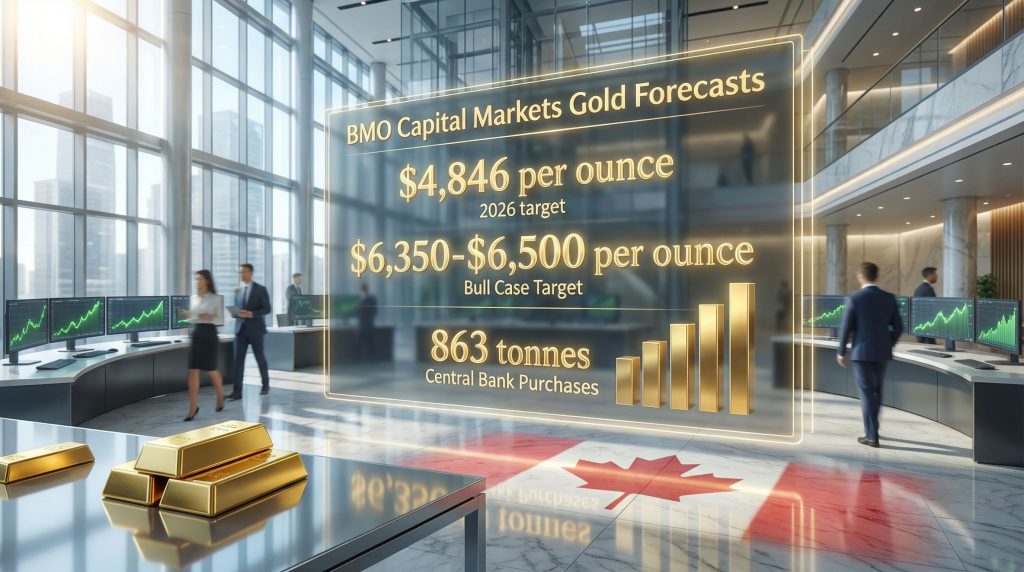
The most significant structural shift supporting precious metals prices stems from central bank purchasing patterns. Global monetary authorities have dramatically increased their gold acquisitions, with 863 tonnes purchased in 2025 alone, representing one of the highest annual totals in recent decades.
This purchasing activity extends beyond traditional buyers, with countries like Poland and Kazakhstan leading accelerated acquisition programs. The strategic nature of these purchases suggests a fundamental shift in how central banks view gold's role within their reserve portfolios.
Key factors driving central bank demand include:
- Diversification away from USD-denominated assets
- Hedge against currency debasement risks
- Insurance against geopolitical sanctions
- Long-term store of value preservation
The Retail Investment Revolution in Gold Markets
A fundamental transformation in gold's investor base has occurred, with retail investors now comprising approximately 60% of Gold ETF inflows. This demographic shift creates entirely new price dynamics driven by factors that differ substantially from institutional investment patterns.
Retail investor behavior introduces several new variables:
- Momentum-based trading patterns
- Social media-influenced sentiment swings
- Enhanced accessibility through digital platforms
- Different risk tolerance and time horizons
This evolution means that gold prices may become more sensitive to sentiment shifts and momentum trading, creating both opportunities and risks for investors positioned in the precious metals space. Furthermore, effective gold investment strategies must now account for these new market dynamics.
How Major Financial Institutions Are Positioning for Higher Gold Prices
BMO Capital Markets' Updated Forecast Framework
BMO Capital Markets has significantly revised its BMO gold price forecast projections upward, reflecting the bank's confidence in precious metals despite recent market volatility. Their updated commodity outlook presents compelling arguments for sustained gold appreciation through 2027.
BMO's Base Case Gold Price Projections:
| Period | Average Price | Revision from Previous Forecast |
|---|---|---|
| Q3 2026 | $4,800/oz | +7% increase |
| Q4 2026 | $4,900/oz | +9% upward revision |
| Full Year 2026 | $4,846/oz | +6.5% increase |
| Full Year 2027 | $5,125/oz | +26% increase |
The bank's bullish scenario envisions gold reaching $6,350-$6,500 per ounce by late 2026, with peak potential extending to $8,650/oz by Q4 2027 under sustained demand conditions. These projections align with broader gold price forecast trends showing unprecedented bullish sentiment among major financial institutions.
Silver Market Dynamics Present Different Risk-Reward Profile
While maintaining optimism about precious metals broadly, BMO differentiates between gold and silver based on their distinct market characteristics. Silver projections show substantial upward revisions but with greater volatility expectations.
BMO Silver Price Forecasts:
- Q3 2026: $70.60/oz (28% increase from previous estimate)
- Q4 2026: $68.10/oz (31% upward revision)
- Full Year 2026: $74.50/oz (32% above previous forecast)
- Full Year 2027: $64.20/oz (42% increase, but lower than 2026)
The bank's more cautious long-term silver outlook reflects expectations that the physical silver market will return to surplus conditions, potentially moderating price appreciation despite strong near-term fundamentals. However, analysts continue monitoring potential silver market squeeze conditions that could dramatically alter these projections.
Geopolitical Factors Reshaping Precious Metals Demand Patterns
Middle East Conflicts Create Complex Market Dynamics
Current regional tensions present a nuanced influence on precious metals markets. Rather than providing simple upward price pressure, geopolitical conflicts create volatility through competing forces.
According to BMO's analysis, gold's rise is "not over, just paused during Middle East war", highlighting how geopolitical events can temporarily interrupt long-term appreciation trends.
Short-term volatility drivers:
- Risk-on/risk-off sentiment oscillations
- Flight-to-quality episodes during escalation
- Profit-taking during perceived de-escalation
Long-term structural support factors:
- Increased safe-haven asset allocation
- Strategic diversification away from geopolitically sensitive assets
- Enhanced insurance premium for portfolio protection
Dedollarization Trends Provide Fundamental Support
The gradual shift away from USD-denominated reserves represents one of the most significant long-term drivers for gold demand. This trend extends across multiple categories of international actors:
BRICS+ member nations actively reduce USD reserve concentrations while increasing gold holdings as part of broader monetary sovereignty initiatives.
Commodity-exporting economies seek alternatives to USD-based trade settlements, with gold providing a neutral store of value that avoids currency risk exposure.
Countries facing sanctions risks view gold as insurance against potential exclusion from USD-based financial systems.
Investment Strategy Considerations for Precious Metals Exposure
Portfolio Allocation Approaches Based on Market Scenarios
Investors considering precious metals exposure must evaluate their positioning based on different market outcome scenarios. The following framework provides guidance for allocation decisions:
| Market Scenario | Gold Allocation | Silver Allocation | Strategic Rationale |
|---|---|---|---|
| Base Case Growth | 5-10% | 1-3% | Steady appreciation with managed volatility |
| Inflation Acceleration | 10-15% | 3-5% | Enhanced purchasing power protection |
| Economic Contraction | 8-12% | 2-4% | Safe-haven demand increases |
| Currency Crisis | 15-20% | 5-7% | Alternative monetary asset premium |
In addition, understanding gold stock cycles becomes crucial for investors seeking exposure through mining equities rather than physical metals or ETFs.
Timing and Implementation Strategies
Rather than attempting to time precise market entry points, successful precious metals investing often relies on systematic approaches that account for volatility while capturing long-term appreciation trends.
Dollar-cost averaging remains particularly effective for precious metals given their tendency toward extended price cycles rather than linear appreciation patterns.
Rebalancing triggers should be established at significant technical levels to capture profits during momentum phases while maintaining core strategic positions.
Diversification within precious metals can include physical holdings, ETFs, mining equities, and futures contracts, each offering different risk-return characteristics.
Comparative Analysis of Institutional Precious Metals Forecasts
How BMO's Projections Compare to Peer Institutions
BMO's BMO gold price forecast positions the bank among the most optimistic major financial institutions regarding precious metals appreciation potential. This comparative analysis reveals the spectrum of professional opinion:
Bull Case Gold Price Targets (2026):
- BMO Capital Markets: $6,350-$6,500/oz
- J.P. Morgan: $6,300/oz
- UBS: $6,200/oz
- Deutsche Bank: $6,000/oz
- Goldman Sachs: $5,400/oz
This positioning reflects BMO's confidence in structural demand factors overcoming potential headwinds from monetary policy normalization or economic growth surprises. Moreover, some forecasting models suggest even higher potential, with bull case scenarios projecting gold reaching beyond $6,000 this year.
Consensus Areas and Divergence Points
Despite varying price targets, institutional forecasters generally agree on several key themes:
Areas of consensus:
- Central bank demand provides structural price support
- Geopolitical tensions increase safe-haven premiums
- Currency debasement concerns drive strategic allocation
- Retail investor participation creates new market dynamics
Areas of divergence:
- Timeline for peak price achievement
- Sensitivity to interest rate changes
- Impact of economic growth on precious metals demand
- Relative performance of gold versus silver
The next major ASX story will hit our subscribers first
Risk Factors That Could Challenge Bullish Precious Metals Scenarios
Federal Reserve Policy Pivot Scenarios
The most significant near-term risk to precious metals appreciation stems from potential Federal Reserve policy shifts. Key scenarios that could pressure prices include:
- Unexpected interest rate increases responding to persistent inflation
- Accelerated quantitative tightening reducing liquidity in financial markets
- Stronger-than-expected USD performance reducing gold's attractiveness to international buyers
Economic Growth Surprise Potential
Robust global economic expansion could reduce safe-haven demand for precious metals through several mechanisms:
- Risk asset outperformance drawing capital away from defensive allocations
- Reduced inflation hedging needs if growth occurs without price pressures
- Central bank policy normalization removing accommodative monetary conditions
However, the role of gold as an inflation hedge analysis remains critical even during periods of economic growth, particularly when monetary expansion continues alongside real economic activity.
Technology Disruption Considerations
While less probable in the near term, technological developments could theoretically challenge gold's monetary role:
- Central bank digital currencies (CBDCs) potentially altering reserve asset preferences
- Cryptocurrency adoption providing alternative stores of value
- Mining technology advances significantly increasing gold supply
Market Psychology and Behavioral Factors in Precious Metals Trading
Understanding Retail Investor Sentiment Patterns
The increased participation of retail investors in precious metals markets creates new behavioral dynamics that sophisticated investors must understand. Unlike institutional investors who typically maintain strategic long-term positions, retail participants often exhibit:
Momentum chasing behavior during periods of rapid price appreciation, potentially creating temporary overvaluation conditions.
Panic selling during corrections when prices decline sharply, offering opportunity for strategic accumulation.
Social media influence amplifying both positive and negative sentiment beyond fundamental justification.
Professional vs. Amateur Investment Approaches
The contrast between professional and amateur precious metals investing approaches offers insights for individual investors seeking to improve their strategies:
Professional characteristics:
- Focus on multi-year holding periods
- Systematic rebalancing protocols
- Integration with broader portfolio objectives
- Risk management through position sizing
Amateur characteristics:
- Emotional response to short-term price movements
- All-or-nothing allocation decisions
- Limited understanding of market cycles
- Insufficient diversification within precious metals
Technical Analysis and Market Timing Considerations
Key Technical Levels for Gold and Silver Markets
While long-term fundamental factors provide the primary investment thesis for precious metals, technical analysis can inform tactical positioning decisions:
Gold Technical Framework:
- Support levels around $4,200-$4,300/oz provide defensive positioning opportunities
- Resistance zones near $5,000/oz may trigger profit-taking activities
- Momentum indicators suggest consolidation before potential breakout attempts
Silver Technical Considerations:
- Higher volatility creates wider trading ranges requiring larger position sizing adjustments
- Industrial correlation means silver often lags gold during initial safe-haven rallies
- Catch-up potential exists when precious metals momentum accelerates
Implementation Tactics for Different Investment Approaches
Physical Precious Metals Holdings
Direct ownership of gold and silver provides the purest exposure to precious metals price movements while offering several strategic advantages:
Benefits of physical ownership:
- No counterparty risk exposure
- Tangible asset during crisis periods
- Privacy and control over holdings
- Potential tax advantages in certain jurisdictions
Practical considerations:
- Storage and insurance costs
- Liquidity limitations during disposal
- Authentication and purity verification
- Transaction costs for buying and selling
Exchange-Traded Fund (ETF) Strategies
Precious metals ETFs provide convenient exposure while addressing many of the practical challenges associated with physical ownership:
Advantages of ETF investing:
- High liquidity for position changes
- Professional storage and insurance
- Lower transaction costs
- Easy integration with brokerage accounts
ETF selection criteria:
- Expense ratios impact long-term returns
- Tracking accuracy to underlying metal prices
- Fund size affects liquidity and stability
- Physical backing versus synthetic exposure
Long-Term Portfolio Integration Strategies
Precious Metals as Portfolio Insurance
Rather than viewing precious metals purely as return-generating investments, many institutional investors incorporate them as portfolio insurance against specific risks:
Currency debasement insurance: Gold and silver provide protection against loss of purchasing power during periods of monetary expansion or currency crisis.
Geopolitical risk hedging: Precious metals often appreciate during international tensions when other assets may decline.
System stability insurance: Physical precious metals retain value even during financial system disruptions that might affect paper assets.
Integration with Other Alternative Assets
Precious metals work most effectively as part of a broader alternative asset allocation that might include:
- Real estate investments for inflation protection and income generation
- Commodity exposure through energy and agricultural markets
- Infrastructure assets providing both inflation hedging and yield
- Collectibles or art for diversification and potential appreciation
Future Market Development Scenarios
Bullish Scenario Progression
Under favourable conditions, precious metals markets could experience sustained appreciation through several phases:
Phase 1 (2026): Continued central bank accumulation drives steady price gains, with gold reaching $4,800-$5,000/oz range.
Phase 2 (2027): Retail investor FOMO creates momentum acceleration, pushing gold toward $6,000-$6,500/oz targets.
Phase 3 (2028+): Currency crisis or major geopolitical disruption could drive parabolic price movements exceeding institutional forecasts.
Bearish Scenario Considerations
Conversely, several developments could pressure precious metals prices below current expectations:
Economic boom scenario: Sustained global growth with contained inflation could reduce safe-haven demand significantly.
Technology disruption: Major supply increases from mining advances or recycling breakthroughs might overwhelm demand growth.
Policy shock: Aggressive central bank tightening combined with fiscal austerity could create deflationary pressures.
Conclusion: Navigating the Precious Metals Investment Landscape
The convergence of structural factors supporting precious metals demand creates a compelling investment environment, despite short-term volatility that may test investor patience. BMO Capital Markets' revised forecasts reflect sophisticated analysis of these underlying trends, positioning gold and silver as strategic portfolio components rather than speculative trades.
Successful precious metals investing requires understanding the distinction between cyclical price movements and secular demand shifts. While geopolitical events and monetary policy changes will continue creating volatility, the fundamental drivers of central bank diversification, retail investor adoption, and currency debasement concerns appear likely to support higher price levels over multi-year time horizons.
Investors considering precious metals exposure should focus on strategic allocation decisions rather than tactical timing attempts, implementing systematic approaches that account for volatility while capturing long-term appreciation potential. The BMO gold price forecast and similar institutional analysis provide valuable frameworks for understanding potential price trajectories, but individual investment decisions must account for personal risk tolerance, time horizon, and portfolio diversification objectives.
Disclaimer: This analysis is for informational purposes only and does not constitute investment advice. Precious metals investing involves significant risks, including the potential for substantial losses. Past performance does not guarantee future results. Investors should conduct thorough due diligence and consider consulting with qualified financial advisors before making investment decisions.
Ready to Capitalise on the Next Major Precious Metals Discovery?
Discovery Alert instantly alerts investors to significant ASX mineral discoveries using its proprietary Discovery IQ model, turning complex mineral data into actionable insights across gold, silver, and other precious metals opportunities. Understand why historic discoveries can generate substantial returns by visiting Discovery Alert's dedicated discoveries page and begin your 14-day free trial today to position yourself ahead of the market.