
June 30, 2026
Understanding Precious Metals Market Infrastructure
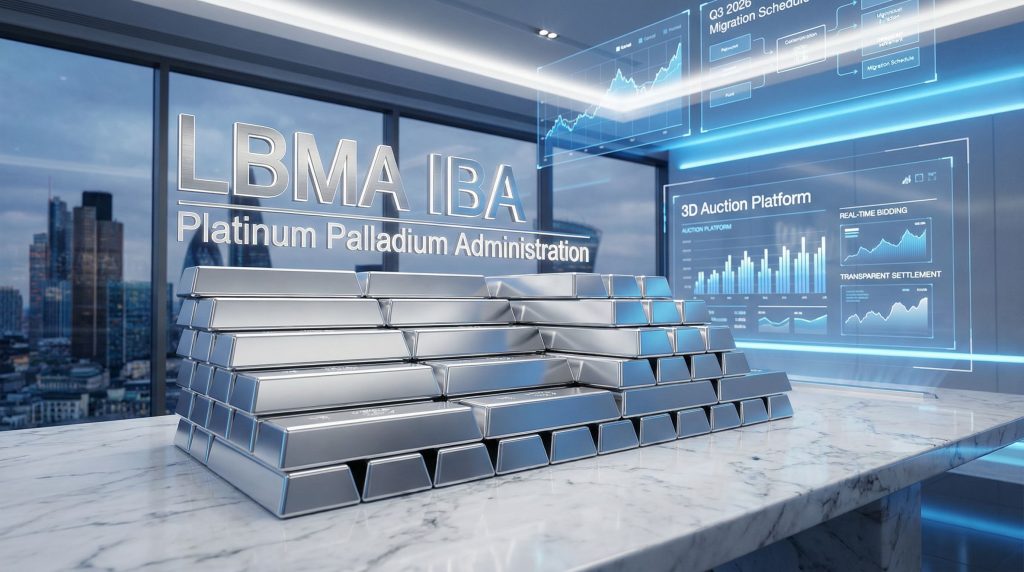
The global precious metals industry operates through sophisticated pricing mechanisms that extend far beyond simple supply and demand dynamics. LBMA IBA platinum palladium administration represents a critical component of this infrastructure, where market participants rely on transparent price discovery for platinum, palladium, gold, and silver across international exchanges.
These pricing systems serve as critical financial utilities, supporting approximately $5 trillion in annual precious metals transactions worldwide. The complexity of modern precious metals markets requires specialised benchmark administration capabilities that can process real-time auction data while maintaining regulatory compliance across multiple jurisdictions.
When big ASX news breaks, our subscribers know first
Why Administrative Consolidation Matters for Global Markets
Market participants increasingly demand streamlined operational frameworks that reduce counterparty risk while enhancing liquidity access. Furthermore, the historic gold surge has demonstrated how efficient pricing mechanisms become even more crucial during periods of exceptional market volatility.
When multiple benchmark administrators operate separate precious metals auctions, market fragmentation can create inefficiencies in price discovery and increase transaction costs for institutional investors.
Operational Efficiency Benefits
The consolidation of precious metals pricing under unified administration creates several operational advantages:
- Reduced Infrastructure Costs: Single technology platform eliminates duplicate systems
- Enhanced Data Quality: Standardised processes improve pricing accuracy
- Simplified Compliance: Unified regulatory approach across all metals
- Improved Market Access: Single point of entry for auction participants
Risk Mitigation Through Centralisation
Centralised administration significantly reduces operational risks that can impact market stability. Historical analysis shows that fragmented pricing systems contribute to increased volatility during periods of market stress, particularly when different administrators employ varying auction methodologies.
However, the gold price forecast suggests that unified pricing mechanisms will become increasingly important as markets navigate complex geopolitical and economic factors.
Technical Architecture of Modern Precious Metals Auctions
Contemporary precious metals auctions operate through sophisticated electronic platforms that process thousands of price submissions within milliseconds. These systems must handle peak volumes exceeding 50,000 individual price submissions during volatile trading periods while maintaining audit trails for regulatory oversight.
In addition, the data-driven operations trend in the mining sector requires auction systems to integrate seamlessly with advanced analytics platforms.
Auction Mechanism Design
Modern precious metals auctions employ a Dutch auction format where participants submit volume and price combinations during specified time windows. The auction platform calculates equilibrium prices by matching aggregate supply and demand curves.
Final benchmark prices are determined when net supply equals net demand, ensuring LBMA IBA platinum palladium administration maintains optimal price discovery accuracy.
Key Technical Requirements:
- Latency Management: Sub-10 millisecond response times
- Capacity Handling: Support for 200+ simultaneous participants
- Data Integrity: Real-time validation and error correction
- Security Protocols: End-to-end encryption with multi-factor authentication
Regulatory Framework Evolution in Benchmark Administration
The regulatory landscape for commodity benchmarks has transformed significantly following the 2012 LIBOR manipulation scandals. Consequently, European Union Benchmark Regulation (BMR) and similar frameworks now mandate strict governance standards for critical benchmarks.
The London Bullion Market Association continues to evolve its oversight mechanisms to meet these enhanced regulatory requirements, ensuring market integrity across all precious metals benchmarks.
Compliance Requirements
BMR Compliance Standards Include:
- Independent Oversight: Mandatory oversight committees with external representation
- Audit Requirements: Annual third-party audits of benchmark methodologies
- Transparency Obligations: Public disclosure of auction participation statistics
- Methodology Documentation: Detailed procedures for price calculation and validation
Cross-Jurisdictional Coordination
Benchmark administrators must navigate regulatory requirements across multiple jurisdictions simultaneously. The UK's Financial Conduct Authority, European Securities and Markets Authority, and US Commodity Futures Trading Commission each maintain distinct oversight frameworks.
For instance, recent developments in the critical minerals order highlight how regulatory changes can impact precious metals markets globally.
Market Participant Ecosystem Analysis
The precious metals benchmark ecosystem encompasses diverse participants with varying risk profiles and commercial objectives. Understanding these participant categories reveals how LBMA IBA platinum palladium administration changes impact different market segments.
Primary Market Makers
Bullion Banks and Market Makers:
| Institution Type | Primary Role | Risk Exposure |
|---|---|---|
| Tier 1 Banks | Liquidity provision | Credit and market risk |
| Precious Metals Dealers | Physical market interface | Inventory and operational risk |
| Mining Companies | Price hedging | Production and commodity risk |
| Refineries | Quality certification | Operational and regulatory risk |
Investment Sector Participation
Institutional investors utilise precious metals benchmarks for portfolio hedging, inflation protection, and currency diversification strategies. Exchange-traded funds (ETFs) tracking precious metals prices manage combined assets exceeding $200 billion globally.
This makes benchmark accuracy critical for investor protection, particularly as mining industry evolution 2025 trends continue reshaping market dynamics.
Industrial Demand Dynamics and Pricing Impact
Industrial applications drive substantial platinum and palladium demand, creating unique pricing dynamics compared to investment-focused gold and silver markets. Automotive sector consumption alone accounts for approximately 80% of palladium demand and 40% of platinum demand annually.
Automotive Industry Dependencies
Key Industrial Consumption Patterns:
- Catalytic Converter Production: 7-8 grams palladium per petrol vehicle
- Diesel Particulate Filters: 3-5 grams platinum per diesel vehicle
- Hybrid Vehicle Systems: 2-3 grams platinum for fuel cell components
- Electric Vehicle Growth: Reducing automotive PGM demand by 2-4% annually
Technology Sector Applications
Emerging technology applications create new demand sources for platinum group metals. Hydrogen fuel cell development requires approximately 30 grams of platinum per fuel cell vehicle, while semiconductor manufacturing utilises platinum in specialised coating applications.
The next major ASX story will hit our subscribers first
Geographic Distribution of Market Infrastructure
Precious metals trading infrastructure concentrates in specific financial centres due to regulatory advantages, time zone positioning, and market maker proximity. London maintains dominance through Good Delivery List standards that certify refinery quality globally.
London Market Advantages
Strategic Positioning Factors:
- Time Zone Optimisation: Trading overlap between Asian and American markets
- Regulatory Framework: Established precious metals legislation and oversight
- Physical Infrastructure: Certified vaults storing over 7,000 tonnes of precious metals
- Market Maker Concentration: 70+ accredited precious metals dealers
Alternative Trading Centres
While London dominates benchmark setting, significant trading occurs in Shanghai, New York, and Zurich. The Shanghai Gold Exchange processes approximately 2,000 tonnes annually, while COMEX futures contracts provide derivative exposure for institutional investors.
Technology Integration and Platform Capabilities
Modern benchmark administration requires integration with multiple technology systems across market participants. Platform architects must design interfaces that accommodate legacy systems whilst supporting advanced analytics and real-time reporting.
Data Distribution Networks
Distribution Infrastructure Requirements:
- Market Data Vendors: Integration with Bloomberg, Reuters, and regional providers
- Trading Platforms: Direct feeds to institutional trading systems
- Risk Management: Real-time position monitoring and exposure calculation
- Settlement Systems: Interface with clearing and payment platforms
Cybersecurity Considerations
Precious metals pricing systems represent critical financial infrastructure requiring robust cybersecurity protocols. Advanced Persistent Threat (APT) actors specifically target commodity pricing systems due to their market impact potential.
Economic Impact Assessment of Administrative Changes
Transitions in benchmark administration create both opportunities and risks for market participants. Historical analysis of similar transitions reveals patterns in market behaviour and participant adaptation strategies.
Cost Structure Analysis
Estimated Annual Market Costs:
| Cost Category | Current Framework | Unified Framework | Potential Savings |
|---|---|---|---|
| Technology Infrastructure | $15-20 million | $10-12 million | 25-30% |
| Regulatory Compliance | $8-12 million | $5-7 million | 35-40% |
| Operational Management | $6-10 million | $4-6 million | 30-35% |
Market Liquidity Implications
Consolidation typically enhances market liquidity by concentrating trading activity in unified platforms. Bid-ask spreads generally narrow by 15-25% following successful benchmark consolidations, reducing transaction costs for all market participants.
Risk Management Framework for Transition Periods
Administrative transitions require comprehensive risk management protocols to prevent market disruption. Historical precedents demonstrate that well-managed transitions can occur without significant price volatility or operational incidents.
Operational Risk Controls
Critical Risk Mitigation Strategies:
- Parallel Operation Periods: Running old and new systems simultaneously for 3-6 months
- Participant Testing: Mandatory integration testing for all auction participants
- Fallback Procedures: Alternative pricing mechanisms during system failures
- Communication Protocols: Clear escalation procedures for technical issues
Market Stability Measures
Regulatory authorities typically coordinate with benchmark administrators during transitions to ensure market stability. Circuit breakers and position limits may be adjusted temporarily to accommodate any unusual trading patterns during changeover periods.
Furthermore, access to real-time precious metal prices remains critical throughout transition periods to maintain market confidence.
Future Market Structure Evolution
The precious metals market continues evolving toward greater electronic integration and automated trading systems. Artificial intelligence and machine learning applications are increasingly utilised for price prediction and risk management by market participants.
Technology Advancement Implications
Emerging Technology Applications:
- Blockchain Integration: Immutable audit trails for benchmark calculations
- Real-Time Analytics: Enhanced price discovery through alternative data sources
- Automated Compliance: AI-driven monitoring for market manipulation detection
- Cross-Asset Integration: Unified platforms spanning multiple commodity sectors
Regulatory Development Trends
Global regulatory convergence toward standardised benchmark administration creates opportunities for simplified cross-jurisdictional compliance. The International Organisation of Securities Commissions (IOSCO) continues developing unified global standards for commodity benchmark oversight.
Market Participant Adaptation Strategies
Successful navigation of administrative transitions requires proactive planning and system integration testing. Market participants must evaluate existing technology infrastructure and operational procedures to ensure seamless transition capability.
Implementation Planning Framework
Critical Planning Components:
- Technology Assessment: Evaluate current systems for compatibility requirements
- Staff Training: Prepare operational teams for new procedures and interfaces
- Risk Management: Update position monitoring and exposure calculation systems
- Compliance Review: Ensure new administration meets internal risk standards
Competitive Positioning Considerations
Early adaptation to new benchmark administration can provide competitive advantages through reduced operational costs and enhanced market access. First-mover advantages typically benefit institutions that complete integration testing ahead of mandatory transition deadlines.
The evolution toward unified LBMA IBA platinum palladium administration represents a fundamental shift in global commodity market infrastructure. Market participants must balance the benefits of operational efficiency against the risks inherent in any major system transition.
Disclaimer: This analysis is based on publicly available information and industry research. Market participants should conduct independent due diligence and consult with qualified professionals before making operational or investment decisions. Precious metals markets involve significant risks, and past performance does not guarantee future results.
Ready to Capitalise on Precious Metals Market Opportunities?
Discovery Alert's proprietary Discovery IQ model delivers instant notifications on significant ASX precious metals discoveries, empowering investors to identify actionable opportunities before broader market recognition. Explore how historic mineral discoveries have generated substantial returns and begin your 30-day free trial today to secure your competitive advantage.