
June 9, 2026
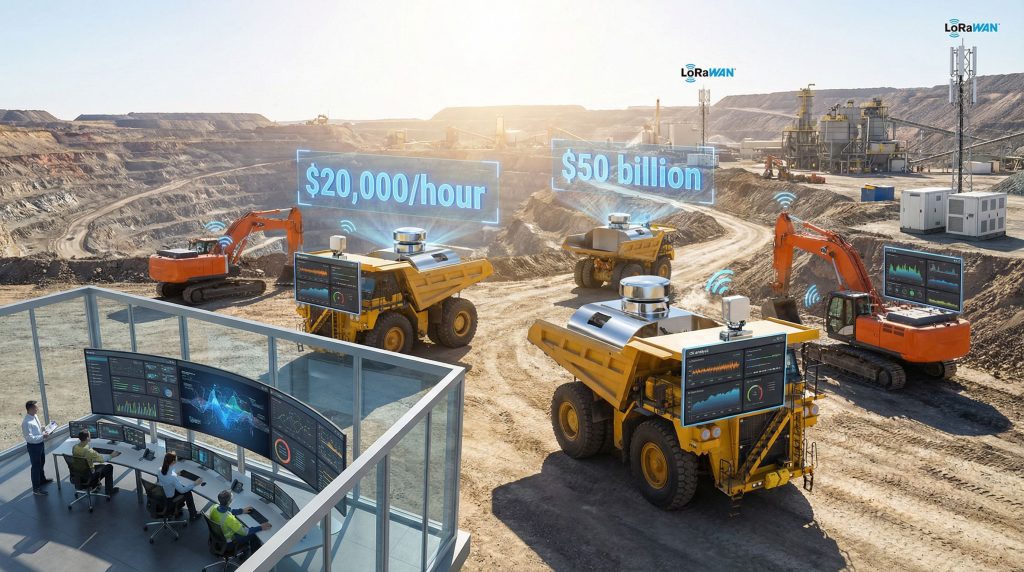
Mining operations across the globe are experiencing a revolutionary shift in asset management strategies, with predictive maintenance solutions in the mining industry emerging as the cornerstone of modern operational excellence. These advanced systems leverage cutting-edge sensor technology, artificial intelligence, and real-time data analytics to transform traditional reactive maintenance approaches into proactive, intelligence-driven strategies that deliver substantial improvements in equipment reliability and operational efficiency.
Maintenance philosophies in industrial mining operations have evolved through distinct technological waves, each driven by equipment complexity and economic pressures. Understanding these evolutionary patterns reveals why predictive maintenance solutions represent more than incremental improvement – they constitute a fundamental shift in asset management methodology that addresses systemic inefficiencies plaguing traditional reactive approaches.
The transition from scheduled maintenance intervals to condition-based monitoring reflects broader industry evolution trends that recognise equipment degradation follows non-linear patterns influenced by operational variables, environmental conditions, and material characteristics unique to each mining operation.
Critical Economic Drivers Behind Predictive Maintenance Adoption
Quantifying Operational Loss Mechanisms in Heavy Equipment
Heavy mobile equipment downtime creates cascading economic impacts that extend beyond immediate repair costs. When a single haul truck experiences unplanned failure, operations face $20,000 per hour in lost productivity, a figure that encompasses production delays, crew idle time, and secondary equipment impacts. This cost structure becomes exponentially more severe when multiple units fail simultaneously or when failures occur during critical production periods.
Mining operations typically maintain fleet utilisation targets of 85-95%, meaning even modest increases in unplanned downtime directly impact quarterly production targets. A mid-sized mining operation with 75 haul trucks experiencing just 2% additional unplanned downtime annually faces potential revenue losses exceeding $26 million, creating compelling economic justification for predictive maintenance investments.
| Maintenance Strategy | Average Cost per Event | Typical Warning Period | Success Rate |
|---|---|---|---|
| Reactive (Run-to-Fail) | $45,000-$125,000 | 0 hours | 100% failure |
| Scheduled Preventive | $8,000-$25,000 | Predetermined intervals | 15-25% unnecessary |
| Predictive Condition-Based | $5,000-$18,000 | 1-4 weeks advance notice | 80-95% accuracy |
The global mining industry experiences approximately $50 billion in annual productivity losses attributed to suboptimal maintenance practices. This staggering figure encompasses not only direct repair costs but also secondary impacts including emergency procurement premiums, expedited logistics, and production schedule disruptions that affect downstream processing operations.
Safety Risk Mitigation Through Remote Monitoring Systems
Traditional maintenance inspection protocols require technicians to conduct visual and manual assessments in environments characterised by multiple hazard categories: unstable ground conditions, atmospheric contamination, extreme temperatures, and proximity to massive moving equipment. Furthermore, predictive maintenance solutions in the mining industry fundamentally eliminate human exposure to these risks by replacing manual inspection routines with continuous digital monitoring capabilities.
Underground operations present particularly acute safety challenges where technicians historically performed diagnostic work in confined spaces with limited egress options. Remote monitoring systems enable centralised assessment of equipment health from surface-based control centres, reducing underground technician exposure by 60-80% for routine diagnostic activities.
Statistical analysis across major mining jurisdictions indicates that predictive maintenance implementation correlates with 25-35% reduction in maintenance-related incidents, primarily through elimination of high-risk manual inspection procedures and improved scheduling that avoids emergency repair conditions. This aligns with comprehensive safety risk strategies being adopted across the industry.
When big ASX news breaks, our subscribers know first
Sensor Technology Architecture for Mining Applications
Multi-Parameter Sensor Integration Strategies
Industrial IoT sensor deployment in mining environments requires robust solutions capable of withstanding extreme conditions while providing reliable data transmission across challenging terrain. Modern sensor packages integrate multiple measurement technologies into unified platforms, reducing installation complexity and improving data correlation capabilities.
Vibration Analysis Sensors form the cornerstone of rotating equipment monitoring, measuring acceleration across multiple axes at sampling frequencies ranging from 1-20 kHz. These sensors detect characteristic failure signatures:
- Unbalance conditions produce vibration peaks at exactly rotational frequency (1X)
- Shaft misalignment generates peaks at both 1X and 2X rotational speeds
- Bearing wear creates broadband frequency elevation across 2-10 kHz ranges
- Gear tooth damage produces sidebands around gear mesh frequencies
Acoustic Monitoring Systems capture high-frequency sound emissions (100-1000 kHz) generated by material stress and friction within equipment components. These systems excel at detecting incipient failures in bearing races and gear tooth surfaces weeks before vibration sensors register anomalies. Acoustic signatures provide 2-6 week advance warning for bearing spalling conditions that would otherwise progress to catastrophic failure.
Thermal Imaging Integration monitors electrical component health through temperature profiling, identifying hotspots that indicate increased resistance, loose connections, or insulation degradation. Industrial equipment operates within defined temperature envelopes; sustained operation above threshold temperatures accelerates component degradation exponentially.
Oil Analysis Integration provides comprehensive insight into internal component condition through particulate contamination measurement, viscosity monitoring, and wear metal concentration analysis. This approach identifies internal degradation 4-8 weeks before external sensors detect mechanical changes, enabling proactive intervention strategies.
Wireless Connectivity Solutions for Remote Operations
Mining operations span vast geographic areas, often in locations with limited telecommunications infrastructure. Effective sensor deployment requires connectivity solutions adapted to these constraints while maintaining reliable data transmission for real-time monitoring applications.
LoRaWAN Implementation provides extended-range wireless coverage suitable for remote mining sites without cellular infrastructure. This low-power wide-area network technology achieves transmission distances exceeding 15 kilometres in optimal conditions, enabling comprehensive site coverage with minimal infrastructure investment.
Cellular Connectivity Options leverage LTE and emerging 5G networks for high-bandwidth real-time data streaming applications. These solutions excel in areas with existing telecommunications infrastructure, providing immediate data transmission capabilities for time-sensitive monitoring requirements.
Edge Computing Capabilities process sensor data locally, reducing bandwidth requirements while enabling immediate automated responses to critical fault conditions. In addition, edge processing systems analyse incoming sensor streams in real-time, triggering immediate alerts for dangerous operating conditions without waiting for cloud-based analysis.
Artificial Intelligence Methodologies in Fault Detection
Baseline Learning Systems and Equipment Fingerprinting
Advanced predictive maintenance systems employ machine learning algorithms that establish unique operational baselines for individual equipment units, recognising that identical equipment models demonstrate different operational characteristics based on application, environment, and maintenance history.
No-Model AI Approaches eliminate the requirement for extensive historical failure datasets by learning normal operational patterns during initial deployment phases. These systems establish equipment-specific baselines over 1-6 month periods, then identify deviations from learned normal patterns with 85-95% accuracy rates.
Sensor Fusion Methodologies integrate data streams from multiple sensor types, analysing relationships between disparate parameters to identify subtle anomalies invisible to single-sensor approaches. A typical sensor fusion implementation processes 50-500+ individual sensor channels per equipment unit, creating comprehensive health assessments that account for operational complexity.
Digital Twin Integration creates virtual representations of physical assets that simulate equipment responses under various operational scenarios. These digital models enable engineers to predict how operational changes (such as ore hardness variations or processing speed modifications) affect equipment lifespan before implementing physical changes.
Advanced Fault Classification Algorithms
Modern predictive maintenance solutions in the mining industry employ sophisticated algorithms that not only detect anomalies but classify specific fault types, enabling targeted maintenance interventions rather than broad diagnostic procedures. These systems leverage AI transforming mining operations across multiple applications.
Random Forest Algorithms identify complex nonlinear relationships between input parameters, proving particularly effective for equipment operating under variable load conditions. These algorithms achieve fault classification accuracy rates of 80-90% across multiple equipment types.
Gradient Boosting Methods excel at processing imbalanced datasets where normal operation data vastly outnumbers failure examples. These algorithms achieve high prediction accuracy even when failure events represent less than 1% of total operational data.
Long Short-Term Memory (LSTM) Neural Networks process sequential time-series data to identify gradual degradation patterns that develop over weeks or months. LSTM applications prove particularly valuable for bearing wear progression modelling and remaining useful life calculations.
Equipment-Specific Applications and Monitoring Strategies
Heavy Mobile Equipment Health Management
Heavy mobile equipment represents the highest-value assets in most mining operations, where individual units cost $3-8 million and generate daily production values exceeding $100,000. Effective monitoring of these assets requires comprehensive sensor deployment and sophisticated analysis capabilities.
| Equipment Category | Primary Monitoring Parameters | Typical Failure Modes | Prediction Lead Time |
|---|---|---|---|
| Haul Trucks | Engine oil analysis, transmission temperature, brake system pressure | Engine wear, transmission failure, brake degradation | 2-4 weeks |
| Excavators | Hydraulic pressure, boom cylinder temperature, swing motor vibration | Hydraulic system failure, structural fatigue | 1-3 weeks |
| Wheel Loaders | Drivetrain vibration, hydraulic contamination, cooling system temperature | Differential failure, hydraulic contamination | 2-3 weeks |
| Bulldozers | Track tension sensors, engine performance parameters, hydraulic pressure | Track system wear, engine degradation | 1-4 weeks |
Haul Truck Monitoring Systems focus on engine health, transmission condition, and brake system integrity. Engine monitoring analyses oil contamination, temperature profiles, and combustion efficiency parameters. Transmission monitoring tracks shift quality, temperature variations, and hydraulic pressure consistency. Brake system monitoring prevents catastrophic failure through temperature tracking and hydraulic pressure analysis.
Excavator Health Assessment emphasises hydraulic system monitoring due to the high-pressure, high-flow characteristics of these systems. Hydraulic monitoring detects contamination, pressure fluctuations, and component wear through integrated sensor systems. Structural monitoring uses strain gauges and accelerometers to detect fatigue development in boom and stick assemblies.
Processing Plant Asset Optimisation
Processing plant equipment operates under continuous high-stress conditions, processing thousands of tonnes of abrasive material daily. Equipment failures in processing applications create immediate production stoppage affecting entire operations. However, advanced data-driven operations are revolutionising how these facilities manage their assets.
Conveyor Belt System Monitoring prevents catastrophic belt failures through real-time tension monitoring, motor torque analysis, and thermal imaging of drive components. Belt tear detection systems use acoustic sensors to identify tear initiation before propagation causes complete belt failure. A single conveyor belt failure in major processing plants costs $500,000-$2,000,000 in lost production plus emergency repair expenses.
Crusher Health Management focuses on bearing condition, liner wear progression, and structural integrity monitoring. Crusher bearing failures progress rapidly from initial deterioration to complete destruction within 3-7 days once initiated, requiring continuous monitoring for effective intervention. Liner wear monitoring uses load analysis and power consumption patterns to predict liner replacement timing, optimising maintenance scheduling with production requirements.
SAG Mill Optimisation employs comprehensive monitoring of motor condition, gearbox health, and shell integrity. SAG mills represent critical bottlenecks in processing operations; unplanned failures typically require 7-14 days for emergency repairs, creating severe production impacts. Advanced monitoring systems predict liner wear, bearing condition, and structural fatigue development enabling planned maintenance during scheduled shutdowns. These systems integrate with AI mill drive optimization technologies for enhanced performance.
Technology Provider Approaches and Implementation Strategies
Enterprise Integration vs. Rapid Deployment Solutions
Mining operations face strategic decisions between comprehensive enterprise-level monitoring systems and rapid-deployment sensor packages. Each approach offers distinct advantages depending on operational requirements, existing infrastructure, and implementation timelines.
Plug-and-Play Solutions enable immediate monitoring capability for high-priority assets without extensive system integration requirements. These solutions typically achieve installation and commissioning within 1-2 weeks, providing immediate visibility into equipment health. Rapid deployment approaches excel for organisations requiring quick wins or proof-of-concept demonstrations before larger investments.
Enterprise Integration Platforms provide comprehensive fleet management capabilities through integration with existing SCADA, ERP, and maintenance management systems. These solutions require 3-12 month implementation periods but deliver unified asset health visibility across entire operations. Enterprise platforms excel for large mining companies managing multiple sites with standardised equipment fleets.
Hybrid Implementation Approaches combine rapid sensor deployment with gradual enterprise integration, enabling immediate monitoring capability while building toward comprehensive fleet management. This approach allows organisations to demonstrate value quickly while developing long-term monitoring strategies.
OEM-Integrated vs. Third-Party Monitoring Solutions
Equipment manufacturers increasingly offer integrated monitoring systems embedded within equipment control systems, while third-party providers offer flexible solutions compatible with multi-vendor fleets. Consequently, operations must evaluate which approach best suits their specific requirements.
OEM-Integrated Advantages include equipment-specific algorithms calibrated to manufacturer specifications, warranty integration, and seamless parts/service coordination. OEM solutions monitor thousands of internal equipment parameters unavailable to external sensor systems, enabling detection of incipient failures weeks before external symptoms appear.
Third-Party Flexibility enables standardised monitoring approaches across multi-vendor fleets, reducing training requirements and simplifying maintenance procedures. Third-party solutions often provide more rapid innovation cycles and specialised applications not available from equipment manufacturers.
The choice between OEM-integrated and third-party solutions often depends on fleet composition, with operations running standardised equipment fleets from single manufacturers benefiting from OEM integration, while operations with diverse equipment requiring unified monitoring approaches favouring third-party solutions.
Implementation Framework and Deployment Methodology
Assessment and Asset Prioritisation Strategies
Successful predictive maintenance solutions in the mining industry implementation requires systematic assessment of existing assets, infrastructure capabilities, and operational priorities. Organisations achieve optimal return on investment through strategic asset prioritisation rather than comprehensive fleet-wide deployment.
Critical Equipment Identification employs structured analysis of equipment downtime costs, failure frequency, and operational impact. High-priority assets typically include:
- Single-point-of-failure equipment where breakdown stops entire operations
- High-value assets with individual replacement costs exceeding $2 million
- Safety-critical systems where failure creates personnel hazard exposure
- Long-lead-time equipment where replacement parts require weeks or months procurement
Existing Infrastructure Assessment evaluates current data collection capabilities, network connectivity, and integration potential with existing systems. Organisations with established SCADA infrastructure often achieve faster implementation through integration with existing data platforms.
ROI Calculation Methodology establishes quantitative justification for technology investments through structured analysis of maintenance cost reduction, production improvement, and risk mitigation benefits. Typical ROI calculations demonstrate payback periods of 8-18 months for comprehensive implementations.
Phased Deployment Approach
Phase 1: Pilot Implementation (2-4 months)
- Selection of 5-15 critical assets for initial monitoring
- Baseline establishment and algorithm calibration
- Proof-of-concept demonstration and stakeholder buy-in
- Initial technician training and process development
Phase 2: Fleet Expansion (6-12 months)
- Deployment across 40-60% of prioritised asset base
- Integration with existing maintenance management systems
- Development of standardised monitoring procedures
- Advanced technician training and certification programmes
Phase 3: Optimisation and Advanced Analytics (12-18 months)
- Algorithm refinement based on operational experience
- Predictive accuracy improvement through machine learning
- Integration with supply chain and inventory management systems
- Development of autonomous maintenance scheduling capabilities
Phase 4: Enterprise-Wide Implementation (18+ months)
- Comprehensive fleet monitoring deployment
- Multi-site integration and centralised monitoring capabilities
- Advanced analytics including remaining useful life prediction
- Full integration with business planning and financial systems
The next major ASX story will hit our subscribers first
Performance Measurement and Success Metrics
Key Performance Indicators for Maintenance Transformation
Effective measurement of predictive maintenance success requires comprehensive metrics that capture operational, financial, and safety improvements. Organisations typically track both leading indicators (predictive system performance) and lagging indicators (operational outcomes).
Mean Time Between Failures (MTBF) Improvement measures equipment reliability enhancement through predictive maintenance implementation. Successful programmes typically achieve 20-40% MTBF improvement within 12-18 months of deployment. MTBF improvements directly correlate with production reliability and equipment utilisation rates.
Planned vs. Unplanned Maintenance Ratio tracks the conversion of reactive maintenance events to scheduled interventions. Industry best practice targets 80% planned maintenance, 20% unplanned maintenance. Furthermore, predictive maintenance systems typically improve this ratio by 15-25 percentage points within the first operational year.
Overall Equipment Effectiveness (OEE) Enhancement provides comprehensive measurement of equipment performance improvement through availability, performance, and quality metrics. Predictive maintenance implementations typically deliver 3-8% OEE improvement through reduced unplanned downtime and optimised maintenance scheduling.
Cost per Tonne Reduction measures maintenance efficiency improvement through total maintenance cost divided by production volume. Effective predictive maintenance programmes achieve 8-15% reduction in maintenance cost per tonne through improved scheduling, reduced emergency repairs, and optimised parts inventory.
Advanced Analytics and Reporting Capabilities
Real-Time Dashboard Development provides maintenance teams with immediate visibility into fleet health status, enabling proactive intervention before failures occur. Effective dashboards present information hierarchically, from fleet overview to individual equipment detail, enabling efficient prioritisation of maintenance activities.
Predictive Accuracy Scoring measures algorithm performance through tracking of prediction success rates, false positive rates, and prediction timing accuracy. High-performing systems achieve 85-95% fault prediction accuracy with false positive rates below 10%.
Cross-Site Comparison Tools enable multi-location operations to identify best practices and optimise maintenance strategies across different operational environments. These tools reveal how environmental factors, operational practices, and equipment configurations affect maintenance requirements.
Integration Challenges and Solution Strategies
Legacy System Compatibility and Data Standardisation
Mining operations typically employ diverse equipment from multiple manufacturers, each with proprietary communication protocols and data formats. Successful predictive maintenance implementation requires integration strategies that accommodate this technological diversity.
SCADA System Integration enables predictive maintenance systems to leverage existing operational data while contributing equipment health information to centralised monitoring platforms. Integration typically requires protocol conversion and data mapping to ensure compatibility between predictive maintenance systems and existing control infrastructure.
Data Format Standardisation addresses the challenge of integrating information from equipment manufacturers using different communication standards. Successful implementations employ middleware solutions that translate between proprietary formats and standardised data models, enabling unified analysis across diverse equipment fleets.
Cybersecurity Considerations for connected mining equipment require comprehensive security frameworks that protect operational technology from cyber threats while enabling necessary data sharing. Implementation typically includes network segmentation, encrypted communications, and access control systems that maintain operational security.
Workforce Development and Change Management
Technical Skill Development for maintenance teams focuses on transitioning from traditional diagnostic approaches to data-driven decision making. Effective training programmes combine theoretical knowledge of predictive maintenance principles with hands-on experience using monitoring systems and analysis tools.
Cultural Transformation from reactive to proactive maintenance philosophies requires sustained change management efforts. Organisations achieve success through leadership commitment, clear communication of benefits, and demonstration of system effectiveness through pilot programmes.
Mobile Application Deployment enables field technicians to access predictive maintenance information directly at equipment locations, improving diagnostic efficiency and enabling immediate intervention when problems are detected. Mobile systems typically integrate with existing work order management systems for seamless workflow integration.
Emerging Technologies and Future Development Pathways
Next-Generation AI and Machine Learning Applications
Federated Learning Approaches enable predictive maintenance algorithms to improve through shared learning across multiple mining operations without compromising proprietary operational data. This collaborative approach accelerates algorithm development and improves prediction accuracy through exposure to diverse operational scenarios.
Computer Vision Integration applies image recognition technology to visual equipment inspection, automating assessment tasks traditionally performed manually. Computer vision systems identify corrosion, structural damage, and component wear through automated image analysis, reducing inspection time while improving detection accuracy.
Natural Language Processing applications analyse maintenance reports, technician notes, and operational logs to identify patterns and correlations not apparent through sensor data alone. NLP systems extract insights from unstructured text data, improving root cause analysis and failure prediction capabilities.
Autonomous Maintenance and Supply Chain Integration
Predictive Parts Ordering systems integrate failure prediction algorithms with inventory management systems, automatically ordering replacement parts based on predicted failure probabilities. This approach reduces inventory carrying costs whilst ensuring parts availability for predicted maintenance interventions.
Automated Work Order Generation creates maintenance tasks automatically based on predictive system alerts, integrating with existing computerised maintenance management systems (CMMS) for seamless workflow integration. Automated systems optimise maintenance scheduling based on production requirements, parts availability, and technician resources.
Integration with Autonomous Vehicle Systems for maintenance delivery enables predictive maintenance systems to coordinate parts and technician transport for remote equipment locations. This integration particularly benefits underground operations and remote surface mining locations where traditional maintenance logistics prove challenging.
Financial Analysis and Investment Decision Framework
Comprehensive ROI Modelling for Predictive Maintenance Investment
Initial Technology Investment Analysis encompasses hardware costs (sensors, communication equipment), software licensing, system integration expenses, and training requirements. Typical implementations require $50,000-$200,000 initial investment per 100 monitored assets, depending on system sophistication and integration complexity.
Long-Term Operational Savings Quantification includes reduced unplanned downtime costs, optimised maintenance scheduling, extended equipment life, and improved technician productivity. Comprehensive implementations typically generate 15-30% reduction in total maintenance costs within 18-24 months of deployment.
Payback Period Calculations vary significantly based on equipment criticality and failure costs. High-value equipment with severe downtime consequences (such as primary crushers or main haul routes) often demonstrate payback periods of 6-12 months. Less critical equipment typically shows 18-36 month payback periods.
Risk Mitigation Value Quantification measures the insurance value of predictive maintenance through reduced catastrophic failure probability, improved safety performance, and enhanced regulatory compliance. These benefits often provide substantial value that traditional ROI calculations underestimate.
Industry Benchmarking and Performance Comparison Framework
Mining organisations increasingly recognise predictive maintenance solutions as essential competitive advantages rather than optional technology improvements. Industry leaders consistently outperform competitors through superior asset reliability, reduced operating costs, and improved safety performance achieved through comprehensive predictive maintenance programmes.
Best Practice Implementation Examples demonstrate that successful predictive maintenance deployment requires sustained organisational commitment extending beyond initial technology deployment. For instance, top predictive maintenance solutions showcase how organisations achieving exceptional results typically maintain dedicated predictive maintenance teams, establish clear performance metrics, and integrate predictive maintenance decision-making into operational planning processes.
Scalability Considerations for growing mining operations emphasise the importance of selecting predictive maintenance solutions capable of expanding with operational growth. Scalable systems accommodate fleet expansion, additional site integration, and evolving technology requirements without requiring complete system replacement.
This analysis represents current industry practices and emerging trends in predictive maintenance solutions for the mining industry. Actual implementation results may vary based on specific operational requirements, existing infrastructure, and organisational factors. Organisations considering predictive maintenance investments should conduct comprehensive assessments of their specific operational requirements and constraints before making technology decisions.
Considering investing in mining technology stocks?
Discovery Alert delivers real-time notifications of significant ASX mineral discoveries using its proprietary Discovery IQ model, enabling investors to capitalise on breakthrough technologies and operational innovations across the mining sector. Discover how major mining discoveries can generate exceptional market returns by exploring Discovery Alert's comprehensive discoveries page, then begin your 14-day free trial to position yourself ahead of emerging opportunities.