June 20, 2026
Production Capacity Management During Volatile Commodity Cycles
The lithium sector's inherent volatility requires sophisticated operational strategies that extend beyond traditional mining approaches. Processing facilities must navigate complex market signals while maintaining technical readiness for rapid production scaling. Companies that preserve operational infrastructure during downturns position themselves strategically for market recovery phases, creating competitive advantages through maintained expertise and equipment readiness.
Care-and-maintenance programs represent calculated risk management rather than simple cost reduction. These strategies preserve critical processing knowledge, maintain equipment integrity, and retain workforce connections that prove invaluable during restart phases. The technical complexity of lithium processing facilities makes preservation strategies particularly valuable, as complete facility reconstruction typically requires 18-24 months compared to 5-6 month restart timelines.
When big ASX news breaks, our subscribers know first
Market Recovery Validation Through Multi-Factor Analysis
Lithium producers employ comprehensive evaluation frameworks to identify sustainable market recovery signals rather than relying solely on price indicators. Customer contracting emerges as the primary validation mechanism, providing forward-looking demand visibility that enables confident restart decisions. Furthermore, long-term offtake agreements offer pricing certainty and volume commitments that justify capital raising strategies for facility reactivation.
Key Market Recovery Indicators:
- Customer contract commitment levels – provide demand certainty
- Downstream capacity utilisation rates – indicate sustainable consumption
- Supply chain inventory normalisation – signals genuine market tightening
- Battery manufacturer order volumes – demonstrate end-user demand strength
The Pilbara Minerals Ngungaju plant restart demonstrates practical application of this evaluation framework. Management explicitly cited customer contracting support and strengthening market fundamentals as primary justification factors, rather than commodity price recovery alone. This approach reflects industry best practice in cycle management, prioritising demand-side validation over volatile spot pricing signals.
Operating cost management during restart preparation requires careful planning. The company expects unit costs toward the upper end of the $560-$600 per tonne guidance range during the preparation phase, demonstrating transparent cost communication during transitional periods.
Technical Infrastructure Assessment and Optimisation
Processing plant restart complexity extends far beyond simple equipment reactivation. Comprehensive technical evaluations must assess mechanical systems, electrical infrastructure, and process control capabilities that may have experienced degradation during idle periods. In addition, equipment optimisation during shutdown phases can enhance restart efficiency and long-term operational performance.
Critical Infrastructure Components Requiring Assessment:
- Primary processing equipment (crushers, mills, flotation systems)
- Electrical distribution systems (power supply, motor controls, instrumentation)
- Hydrometallurgical circuits (leaching tanks, separation equipment)
- Environmental management systems (tailings, water treatment, emissions control)
The Pilbara Minerals Ngungaju plant restart incorporates crusher upgrade implementation as part of readiness activities, demonstrating proactive equipment enhancement during restart phases. This capital discipline approach targets highest-value improvements that maximise efficiency gains relative to investment requirements, particularly relevant for projects requiring battery-grade lithium refinery specifications.
Production restart timeline typically follows structured phases spanning approximately 20-22 weeks total. Equipment commissioning and testing requires 4-6 weeks for technical teams to activate critical systems and conduct validation protocols. Workforce recruitment and training extends 6-8 weeks, encompassing specialised operator hiring and process-specific capability development.
Process optimisation and ramp-up phases require 8-12 weeks for gradual throughput increases and operational maturation. Quality certification and customer approval processes complete the restart sequence over 2-4 weeks, ensuring product specifications meet contractual requirements.
Capital Efficiency and Financial Planning
Restart capital requirements typically represent 15-25% of original facility construction costs, creating substantial economic advantages compared to new facility development. Companies maintaining equipment through care-and-maintenance programs achieve lower restart expenditures and faster production timelines than competitors requiring complete facility reconstruction.
Capital Expenditure Categories for Facility Restarts:
| Component | Typical Range | Primary Focus |
|---|---|---|
| Equipment commissioning | $2-4M | System activation and testing |
| Process rehabilitation | $3-6M | Mechanical and hydraulic overhauls |
| Equipment upgrades | $2-5M | Performance enhancement projects |
| Compliance certification | $1-3M | Environmental and safety systems |
| Infrastructure maintenance | $2-4M | Building and utility system repairs |
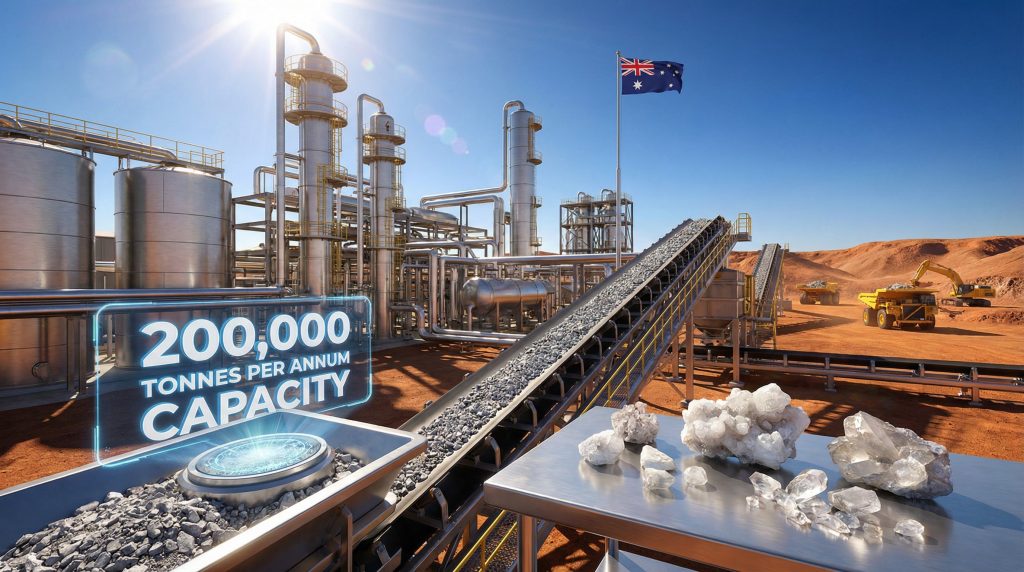
The Pilbara Minerals Ngungaju plant restart demonstrates disciplined capital management by incorporating restart expenditure within existing FY26 guidance parameters. This approach avoids supplementary capital raising requirements while enabling approximately 200,000 tonnes per annum additional production capacity activation, supporting broader australia lithium innovations across the sector.
However, balance sheet strength becomes critical for through-cycle strategies that preserve operational capability during market downturns. Companies lacking adequate financial resources may face permanent facility closure, creating competitive disadvantages when markets recover.
Supply Chain Dynamics and Volume Leverage
Additional spodumene concentrate capacity of 200,000 tonnes per annum provides material volume leverage in regional lithium markets. This capacity magnitude influences pricing negotiations through increased supply availability and enables flexible customer allocation strategies based on market conditions and contractual commitments.
Production restart timing coordination with market recovery phases maximises volume leverage benefits. Early July 2026 production resumption positions capacity addition during mid-calendar year periods when downstream battery manufacturing typically strengthens seasonal demand patterns, addressing supply chain dynamics challenges.
Strategic Volume Leverage Applications:
- Enhanced negotiating position with downstream customers requiring volume commitments
- Market share optimisation through production flexibility during high-demand periods
- Revenue diversification across multiple customer contracts and geographic markets
- Competitive positioning against producers with fixed production profiles
Consequently, regional market share distribution among lithium producers experiences rebalancing when significant capacity returns to operation. Companies with multiple processing lines can optimise production allocation based on customer requirements and market pricing dynamics.
Growth Planning and Feasibility Coordination
Major lithium producers coordinate multiple feasibility studies to sequence capacity expansions with market development timelines. The P2000 Pilgangoora expansion feasibility study represents potential production scaling to 2.0 million tonnes per annum, requiring careful market timing analysis and capital allocation prioritisation.
For instance, international project integration adds complexity to growth planning processes. The Colina Project feasibility study extension to December quarter 2027 incorporates additional drilling programs and optimisation work, supporting enhanced project economics and resource confidence levels.
Feasibility Study Coordination Elements:
- Market demand projection alignment with expansion timelines
- Capital availability sequencing across multiple project opportunities
- Operational capability development for increased production complexity
- Customer contract negotiation for expanded supply commitments
Companies balance restart capital requirements with expansion study investments to optimise shareholder returns across different market scenarios. This strategic approach ensures capital deployment flexibility during uncertain commodity market conditions.
The next major ASX story will hit our subscribers first
Mid-Stream Processing Value Enhancement
Mid-stream processing capabilities enable lithium producers to develop higher-value products beyond traditional spodumene concentrate sales. These capabilities create additional revenue streams and reduce dependence on commodity pricing cycles through product differentiation strategies, particularly important for critical minerals & energy transition objectives.
Value-Added Processing Benefits:
- Premium pricing for specialised lithium compounds compared to raw concentrate
- Supply chain integration with battery manufacturers requiring specific specifications
- Technology development capabilities for next-generation lithium products
- Market positioning enhancement during competitive industry periods
Demonstration plant operations provide technology validation and customer qualification pathways for commercial-scale mid-stream processing implementation. These facilities enable product testing and optimisation without full-scale capital commitment risks.
Companies with mid-stream processing capabilities better serve downstream customers requiring specific lithium compound specifications, creating competitive advantages during market recovery periods through differentiated product offerings.
Industry Cycle Management and Investment Returns
Through-cycle strategies that preserve operational capability during downturns generate superior shareholder returns when markets recover compared to competitors requiring new facility construction. This approach demands patient capital and long-term strategic vision that extends beyond quarterly earnings optimisation.
Return on Investment Analysis Framework:
- Restart capital efficiency versus new facility construction costs and timelines
- Time-to-production advantages in capturing market recovery value
- Operational flexibility premiums during volatile commodity cycles
- Competitive positioning benefits from preserved market presence
Balance sheet discipline becomes essential for maintaining restart optionality during extended market downturns. Companies demonstrating effective cycle management through preserved operational capability may command valuation premiums from investors recognising strategic flexibility value.
Regulatory Compliance and Environmental Considerations
Lithium processing facilities must maintain environmental and safety compliance standards even during care-and-maintenance periods. Regulatory requirements influence restart timelines through permitting processes and environmental impact assessments, particularly when facility modifications or capacity increases are planned.
Compliance maintenance costs typically represent 8-12% of original construction costs annually during care-and-maintenance phases. These expenditures preserve operational licences and environmental permits essential for restart authorisation processes.
Regulatory Compliance Categories:
- Environmental monitoring and reporting obligations
- Safety system maintenance and inspection requirements
- Operational licensing preservation and renewal processes
- Community engagement and stakeholder communication protocols
Facility restart approval processes may require updated environmental assessments and community consultation phases, extending restart timelines beyond pure technical preparation requirements.
Long-Term Industry Supply Security
Preserved processing capacity enhances supply chain resilience across the global lithium industry by reducing dependence on new facility construction during demand recovery periods. This capability becomes increasingly valuable as battery technology adoption accelerates across automotive and energy storage sectors.
Technology evolution during shutdown periods provides opportunities for operational optimisation and efficiency enhancement implementation during restart phases. Advanced process control systems, automation upgrades, and digital monitoring capabilities can improve long-term competitiveness and operational reliability.
The lithium industry's inherent cyclical nature requires sophisticated capacity management strategies balancing production flexibility with cost optimisation objectives. Companies demonstrating effective through-cycle operational management establish competitive advantages that extend beyond individual market cycles.
Furthermore, the strategic importance of lithium processing capacity preservation aligns with broader industry supply chain security requirements as demand fundamentals strengthen globally.
"The ability to preserve and restart processing capacity during market cycles represents a critical competitive advantage in the lithium sector, enabling companies to capture recovery value while competitors face extended development timelines for new facilities."
Disclaimer: This analysis contains forward-looking statements regarding market conditions, production capacity, and investment returns that involve inherent risks and uncertainties. Actual results may differ materially from projections due to market volatility, operational challenges, regulatory changes, and other factors beyond company control.
Want to capitalise on the next lithium sector recovery?
Discovery Alert's proprietary Discovery IQ model delivers real-time notifications when significant mineral discoveries hit the ASX, empowering subscribers to identify actionable opportunities ahead of the broader market. Explore historic examples of how major discoveries have generated substantial returns, then begin your 14-day free trial today to secure your market-leading advantage.