

July 10, 2026
Global liquefied natural gas markets face unprecedented structural realignment as regional supply chains adapt to emerging vulnerabilities in traditional energy corridors. Energy infrastructure dependencies that developed over decades now confront evolving geopolitical dynamics, forcing market participants to reassess fundamental assumptions about supply security and pricing mechanisms. The QatarEnergy LNG market shift exemplifies these complex interdependencies that extend far beyond immediate supply-demand calculations.
Market participants increasingly recognise that energy security frameworks must evolve beyond historical models based on long-term contractual relationships and predictable supply flows. The specialised nature of LNG infrastructure, combined with extended development timelines and substantial capital requirements, amplifies the significance of disruptions to established production centres. Understanding these dynamics requires comprehensive energy security analysis of how market forces respond to supply shocks.
Understanding the Scale of Qatar's LNG Market Dominance
Qatar's position within global LNG markets reflects decades of strategic investment in natural gas infrastructure and geographic advantages that enable cost-effective production and export operations. The country's export capacity represents a substantial portion of international LNG trade flows, creating interdependencies between Qatari production facilities and energy security in major importing regions. This concentration of production capacity in a single geographic location generates both efficiency benefits and systemic vulnerabilities that influence global market dynamics.
Qatar's Strategic Position in Global Energy Supply Chains
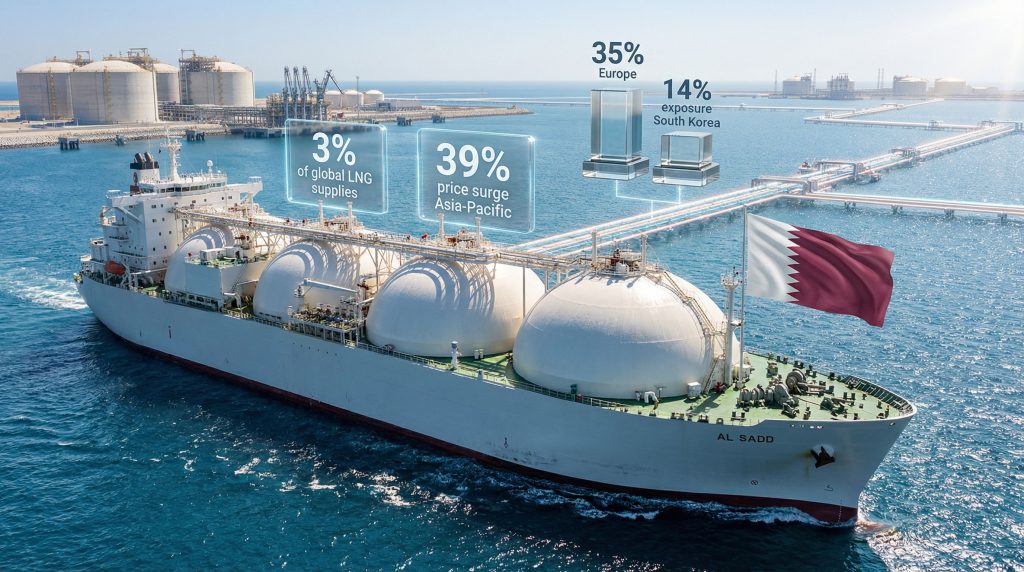
The March 18, 2026 disruption at Ras Laffan Industrial City highlighted Qatar's central role in global LNG supply networks. The incident affected 17 percent of Qatar's total LNG export capacity, translating to approximately 3 percent of worldwide LNG supplies. This scale of impact demonstrates how concentrated production facilities create systemic dependencies within international energy markets.
QatarEnergy CEO Saad Al-Kaabi quantified the financial implications at $20 billion in annual revenue loss, underscoring the economic magnitude of supply chain disruptions. The repair timeline extends between 3 to 5 years for critical infrastructure components, creating an extended period of reduced global capacity that forces market adaptation mechanisms into operation.
The facility's dual-train configuration means that simultaneous disruption creates cascading operational challenges beyond simple production arithmetic. Joint venture partnerships with international energy companies like ExxonMobil add complexity layers to repair coordination, resource allocation, and decision-making processes during restoration efforts.
Production Capacity Analysis: Pre-Disruption Baseline Metrics
Qatar's LNG infrastructure represents one of the world's most technologically advanced natural gas processing complexes. The Ras Laffan facility integrates multiple production trains with specialised components that require years to manufacture and install. Air separation units, identified by industry analysts as critical engineering systems, demand three to four years for reconstruction independently of other facility components.
| Production Metrics | Qatar Baseline | Global Impact | Recovery Timeline |
|---|---|---|---|
| Export Capacity Loss | 17% of Qatar total | 3% global supply | 3-5 years |
| Annual Revenue Impact | $20 billion | Regional price volatility | Extended |
| Train Configuration | Dual-train system | Cascading effects | Sequential restoration |
| Technical Complexity | Integrated processing | Specialised components | Phased reconstruction |
Export Volume Distribution Across Key Regional Markets
Qatar's export relationships create asymmetric dependencies across different regional markets. South Korea imports approximately 14 percent of its LNG requirements from Qatari facilities, representing moderate but meaningful exposure. Asian markets generally demonstrate higher dependency levels compared to European importers, who maintain access to alternative supply sources including Norwegian pipeline gas and North African LNG exports.
The QatarEnergy LNG market shift affects regional markets differently based on existing supply diversification, storage capacity, and demand flexibility. Countries with limited alternative sourcing options face greater vulnerability to Qatari supply disruptions, whilst markets with robust storage infrastructure and multiple supplier relationships can better absorb temporary capacity reductions.
When big ASX news breaks, our subscribers know first
What Economic Forces Drive LNG Price Volatility During Supply Shocks?
Energy price formation during supply disruptions operates through multiple interconnected mechanisms that extend beyond simple supply-demand accounting. Price discovery processes incorporate forward-looking risk assessments, inventory adjustment strategies, and demand elasticity responses that create complex feedback loops throughout regional markets. Understanding these dynamics requires analysis of how different market segments respond to perceived supply constraints and the timeline over which various adjustment mechanisms activate.
Price Elasticity Mechanisms in Global Gas Markets
The March 2026 Qatar disruption triggered asymmetric price responses across regional markets, demonstrating how supply chain dependencies translate into market volatility. European natural gas prices experienced 35 percent increases, whilst Asia-Pacific markets registered 39 percent price surges during the immediate post-disruption period.
These price movements reflect structural differences in regional market characteristics. European markets face constraints from limited alternative supply sources, creating steeper demand curves during shortage periods. Asia-Pacific regions maintain access to multiple LNG suppliers, providing greater sourcing flexibility that moderates but does not eliminate price volatility.
Energy economists emphasise that price-led demand adjustment represents the primary market equilibrium mechanism during supply shocks. Industrial consumers reduce consumption through efficiency improvements, fuel switching, or temporary production curtailments rather than accepting unlimited price increases. This demand destruction pathway provides market clearing mechanisms that prevent extreme price escalation.
Regional Price Differential Analysis: Europe vs Asia-Pacific
Regional price differentials during the Qatar disruption illustrate how geographic market segmentation affects price formation during supply constraints. European markets demonstrated greater price sensitivity due to infrastructure limitations and reduced supply diversification options. Asia-Pacific markets, despite higher absolute price increases, maintain more robust adjustment mechanisms through alternative supplier relationships.
| Region | Price Surge % | Supply Dependency | Alternative Sources | Adjustment Mechanisms |
|---|---|---|---|---|
| Europe | 35% | Medium-High | Norway, US, Algeria | Limited flexibility |
| Asia-Pacific | 39% | High | Australia, Malaysia | Multiple suppliers |
| South Korea | 14% exposure | Moderate | Spot market access | Storage buffers |
| China | Reduced sensitivity | Declining | Domestic production | Energy diversification |
Market analysts identify €40 ($46.20) as sustainable equilibrium pricing that balances supply constraints with demand destruction mechanisms. This price level reflects the point where industrial consumption adjustments provide sufficient demand reduction to clear markets without triggering broader economic disruption.
Demand Destruction Thresholds and Market Response Patterns
Demand destruction operates through heterogeneous pathways across different consumer segments. Major industrial users with long-term contracts demonstrate lower price sensitivity compared to spot market participants, creating segmented response patterns during price volatility periods. Korea Gas Corporation exemplifies this dynamic, maintaining purchasing volumes whilst smaller market participants adjust consumption levels.
China's evolving energy profile reduces traditional LNG demand elasticity through domestic production increases, coal supply adequacy, renewable energy expansion, and nuclear capacity growth. These structural changes diminish China's contribution to global LNG demand volatility, shifting market balancing responsibilities to other regional consumers.
Industrial demand elasticity demonstrates three distinct response thresholds: immediate efficiency improvements at 20-30% price increases, fuel switching mechanisms at 40-50% elevations, and production curtailments beyond 60% price surges. Current market conditions remain below the most severe adjustment threshold.
South Korea's response strategy illustrates coordinated demand management approaches. The country increased coal and nuclear power generation to reduce gas-fired electricity production, demonstrating fuel switching mechanisms that provide alternatives to pure consumption reduction. State-run utilities maintain inventory levels above regulatory requirements, creating strategic buffers that moderate supply shock impacts.
How Do Infrastructure Vulnerabilities Create Systemic Market Risks?
Critical energy infrastructure represents singular points of potential failure that can generate market-wide consequences disproportionate to their individual capacity contributions. The technical complexity, geographic concentration, and specialised supply chain requirements of LNG facilities create vulnerability profiles that extend beyond traditional risk assessment frameworks. Understanding these systemic exposures requires analysis of how infrastructure dependencies interact with geopolitical dynamics and market response mechanisms.
Critical Chokepoint Analysis in Gulf Energy Corridors
The Ras Laffan Industrial City disruption exemplifies how geographic concentration creates systemic vulnerabilities within global energy supply chains. The facility's location within the Persian Gulf region positions critical infrastructure within areas subject to regional political tensions and military conflicts. Single-location concentration of 17 percent of Qatar's export capacity demonstrates how production efficiency strategies can inadvertently generate market-wide risk exposure.
Technical analysis reveals that air separation units represent particularly vulnerable infrastructure components due to their specialised engineering requirements and limited global manufacturing capacity. Industry experts characterise these systems as critical engineering installations requiring three to four years for replacement, creating extended vulnerability windows during which markets operate below normal capacity levels.
The specialised nature of LNG infrastructure extends vulnerability beyond immediate production facilities. Supply chain dependencies for critical components, specialised maintenance expertise, and integrated processing systems create multiple potential failure points that can cascade through entire production complexes.
Geopolitical Risk Premium Calculations for Energy Assets
Market participants increasingly incorporate geopolitical risk premiums into long-term energy pricing frameworks, extending cost implications beyond immediate supply disruption periods. Energy analysts emphasise that precedent-setting infrastructure attacks fundamentally alter buyer risk perception, creating persistent pricing premiums that endure beyond physical restoration timelines.
The QatarEnergy LNG market shift reflects this risk premium evolution as market participants reassess fundamental assumptions about infrastructure security. Buyers price vulnerability risk into contract negotiations and strategic planning processes, generating structural cost increases that persist independently of current operational status.
Risk assessment frameworks must account for second-order effects including delayed investment projects, labour market disruptions, and supply chain reallocation decisions. The Qatar disruption potentially affects North Field expansion timelines due to resource competition for reconstruction activities, extending market supply constraints beyond the immediate facility damage.
Insurance Market Response to Energy Infrastructure Threats
Insurance markets provide early indicators of evolving risk assessments through premium adjustments and coverage modifications for energy infrastructure assets. The demonstration of successful attacks on critical LNG facilities influences insurance underwriting standards, creating additional cost pressures for infrastructure operators and investors.
Coverage gaps emerge when traditional insurance frameworks cannot adequately address emerging threat profiles, forcing infrastructure operators to internalise greater risk exposure or seek alternative risk mitigation strategies. These dynamics influence capital allocation decisions for new infrastructure investments and expansion projects.
| Risk Category | Pre-2026 Assessment | Post-Disruption View | Premium Impact | Coverage Adjustments |
|---|---|---|---|---|
| Infrastructure Security | Low-Medium | High | Significant increases | Reduced coverage limits |
| Geographic Concentration | Acceptable | Heightened concern | Regional premiums | Diversification requirements |
| Technical Complexity | Standard industrial | Critical dependency | Specialised rates | Enhanced specifications |
| Reconstruction Timeline | 12-18 months | 3-5 years | Extended coverage | Timeline contingencies |
What Alternative Supply Mechanisms Can Absorb Market Disruptions?
Global LNG markets maintain multiple adjustment mechanisms that can partially offset regional supply disruptions through capacity expansion, inventory deployment, and demand reallocation strategies. These adaptive systems operate across different timelines, with immediate responses focusing on inventory management and spot market transactions, whilst medium-term adjustments involve capacity additions and contract modifications. Understanding these mechanisms provides insight into market resilience capabilities and the structural changes required to maintain energy security.
North American LNG Export Capacity Expansion Timeline
North American LNG infrastructure development represents a primary offset mechanism for global supply disruptions. Industry analysis identifies approximately 10 percent capacity expansion expected from new terminals through early 2027, providing incremental supply that significantly exceeds the 3 percent global shortage created by Qatar facility damage.
The Golden Pass LNG project exemplifies strategic partnership approaches to capacity development. This facility represents collaboration between QatarEnergy and ExxonMobil, creating potential coordination opportunities for expedited supply replacement. The project's startup timeline positions it as a meaningful contributor to market rebalancing during the Qatar facility restoration period.
North American capacity expansion benefits from established infrastructure foundations, regulatory frameworks that support project development, and technical expertise concentrated in major energy companies. These advantages enable more rapid deployment compared to greenfield developments in regions without existing LNG infrastructure.
African Terminal Development and Production Scaling
African LNG projects contribute additional capacity expansion that enhances global supply diversification. These developments provide geographic alternatives to traditional Middle Eastern and Asia-Pacific production centres, reducing concentration risk whilst expanding total market capacity.
Terminal development in Africa faces different technical and logistical challenges compared to North American projects, including infrastructure development requirements, political risk considerations, and financing complexity. However, successful project completion provides meaningful contributions to global capacity that enhance market resilience against future disruptions.
The timeline for African capacity additions aligns with medium-term market rebalancing requirements, offering supply alternatives that reduce dependence on any single geographic region or production facility.
Inventory Management Strategies Across Major Importing Nations
Strategic inventory management provides immediate response capability during supply disruptions, offering buffer mechanisms that moderate price volatility and maintain supply security during temporary shortages. Korea Gas Corporation demonstrates this approach by maintaining inventory levels above mandatory requirements, creating operational flexibility during market disruption periods.
Market rebalancing mechanisms operate through three primary channels: price-led demand reduction, alternative supply activation, and strategic reserve deployment. Current market conditions suggest adequate capacity buffers from new terminals and inventory management to address short-term supply constraints.
Inventory strategies vary significantly across importing nations based on storage infrastructure, regulatory requirements, and strategic planning approaches. Countries with robust storage capacity can maintain larger strategic reserves, providing greater protection against supply disruptions and enhanced negotiating flexibility in contract discussions.
| Supply Mechanism | Capacity Addition | Timeline | Geographic Diversification | Market Impact |
|---|---|---|---|---|
| North American LNG | 10% global expansion | Early 2027 | Atlantic Basin growth | Major offset potential |
| African Terminals | Incremental additions | 2026-2028 | Sub-Saharan development | Regional diversification |
| Golden Pass LNG | Major facility startup | Near-term | US Gulf Coast | Direct Qatar offset |
| Strategic Reserves | Existing inventory | Immediate | Global distribution | Price stabilisation |
Advanced inventory management incorporates seasonal demand patterns, contract flexibility provisions, and spot market arbitrage opportunities. Sophisticated importers coordinate inventory deployment with alternative sourcing strategies, maximising supply security whilst minimising cost implications during market disruption periods.
Why Are Long-Term Structural Changes More Significant Than Immediate Price Spikes?
Energy market disruptions generate immediate price responses that capture market attention, but the most consequential impacts often emerge through structural adjustments that reshape investment flows, contract frameworks, and strategic planning assumptions over extended periods. These long-term adaptations influence market architecture more profoundly than temporary price volatility, creating persistent changes in how energy markets function and how participants manage risk exposure.
Investment Flow Redirection in Global Energy Infrastructure
The demonstration of infrastructure vulnerability fundamentally alters investment decision frameworks across global energy markets. Capital allocation processes increasingly incorporate enhanced security requirements, geographic diversification considerations, and infrastructure resilience specifications that influence project selection and development priorities.
Investment redirection operates through multiple channels including accelerated development of alternative production facilities, enhanced security infrastructure at existing facilities, and strategic reserve capacity expansion in importing nations. These adjustments require substantial capital commitments that extend over multi-year development cycles.
Private energy companies reassess portfolio concentration risks, leading to geographic diversification strategies that may sacrifice some operational efficiency for enhanced risk management. State-owned enterprises similarly adjust strategic planning to emphasise supply chain resilience alongside traditional cost optimisation objectives.
Contract Renegotiation Trends and Security Premium Integration
Long-term LNG supply contracts incorporate evolving risk assessments through modified pricing mechanisms, enhanced force majeure provisions, and alternative supply guarantees that reflect heightened infrastructure vulnerability awareness. These contractual adjustments create persistent cost structures that extend beyond immediate disruption periods.
Security premiums become embedded in contract pricing through risk adjustment factors, insurance requirement modifications, and contingency planning obligations that increase baseline costs for LNG transactions. Buyers accept these cost increases in exchange for enhanced supply security guarantees and alternative sourcing commitments.
Contract renegotiation processes accelerate as existing agreements confront changed risk environments, leading to modified terms that better address infrastructure vulnerability concerns. These adjustments influence market pricing structures for years beyond the original disruption events.
Strategic Reserve Policy Evolution Among Major Economies
Major LNG importing nations reconsider strategic reserve policies in response to demonstrated supply chain vulnerabilities, leading to expanded storage capacity requirements and enhanced inventory management mandates. These policy adjustments create sustained demand for storage infrastructure and strategic inventory accumulation.
Strategic reserve evolution involves both quantitative expansions in required inventory levels and qualitative improvements in reserve management capabilities, including enhanced distribution systems, emergency deployment protocols, and inter-agency coordination mechanisms.
Policy development processes incorporate lessons learned from recent supply disruptions, leading to more comprehensive risk management frameworks that address multiple potential disruption scenarios. These policy changes influence market structure through regulatory requirements and government procurement strategies.
| Structural Change Category | Short-term Impact | Long-term Transformation | Market Architecture Effect |
|---|---|---|---|
| Investment Priorities | Project delays | Geographic diversification | Reduced concentration risk |
| Contract Frameworks | Emergency provisions | Permanent risk premiums | Higher baseline costs |
| Strategic Reserves | Inventory draw-down | Capacity expansion | Enhanced market stability |
| Infrastructure Security | Immediate assessments | Comprehensive upgrades | Systemic resilience improvement |
How Will Energy Security Concerns Reshape Global LNG Trade Patterns?
Energy security considerations increasingly influence LNG trade relationship development, moving beyond traditional cost optimisation toward comprehensive risk management frameworks that emphasise supply diversification, strategic partnerships, and infrastructure resilience. These evolving priorities reshape bilateral trade agreements, regional energy cooperation mechanisms, and long-term strategic planning approaches across major importing and exporting nations.
Diversification Strategies Among Major LNG Importing Nations
Major LNG importing nations accelerate supply source diversification to reduce dependence on any single producer or geographic region. This strategic reorientation involves developing relationships with multiple suppliers, investing in flexible import infrastructure, and creating redundant supply chain pathways that enhance overall system resilience.
South Korea exemplifies sophisticated diversification strategies through maintaining relationships with multiple suppliers whilst developing domestic alternative energy capabilities. The country's ability to increase coal and nuclear power generation during LNG supply constraints demonstrates how energy portfolio diversification enhances security during market disruptions.
Import infrastructure investments increasingly emphasise flexibility and connectivity that enable rapid sourcing adjustments during supply disruptions. Terminal designs incorporate enhanced storage capacity, multiple berthing facilities, and interconnected distribution systems that support diverse supply sources.
Regional Energy Partnership Development and Bilateral Agreements
Regional energy partnerships emerge as mechanisms for coordinating supply security strategies among allied nations, creating shared strategic reserves, emergency allocation protocols, and coordinated procurement approaches that enhance collective energy security. These partnerships extend beyond simple commercial relationships toward comprehensive energy cooperation frameworks.
Bilateral agreements increasingly incorporate security provisions including alternative supply guarantees, emergency support commitments, and joint infrastructure development projects that create redundant supply pathways. These agreements reflect recognition that energy security requires cooperative approaches rather than purely competitive market mechanisms.
The QatarEnergy LNG market shift accelerates regional partnership development as nations seek to reduce vulnerability to single-source disruptions through coordinated diversification strategies and shared risk management approaches.
Technology Investment Priorities for Supply Chain Resilience
Technology investments focus on enhancing supply chain transparency, developing alternative production technologies, and creating adaptive infrastructure that can respond rapidly to changing market conditions. These technological approaches provide long-term solutions to supply chain vulnerability challenges.
Advanced monitoring systems, predictive maintenance technologies, and automated response capabilities enhance infrastructure resilience whilst reducing vulnerability to both accidental failures and intentional disruptions. Investment in these technologies represents recognition that technical solutions can partially address geopolitical risk exposure.
Alternative production technologies including smaller-scale LNG facilities, floating production platforms, and modular processing systems provide additional optionality that reduces dependence on large, centralised infrastructure that presents attractive targets for potential disruption.
The next major ASX story will hit our subscribers first
What Investment Implications Emerge From Energy Infrastructure Vulnerabilities?
Infrastructure vulnerability recognition creates substantial investment implications across energy markets, influencing capital allocation decisions, risk assessment methodologies, and portfolio construction strategies for both institutional investors and energy companies. These evolving investment frameworks incorporate enhanced security requirements, geographic diversification mandates, and technological innovation priorities that reshape how capital flows through global energy markets.
Capital Allocation Shifts Toward Diversified Energy Portfolios
Investment strategies increasingly emphasise geographic diversification and technological diversity as primary risk management tools, moving away from concentration strategies that may offer operational efficiency advantages but create vulnerability to systemic disruptions. This strategic reorientation influences both corporate investment decisions and institutional portfolio construction approaches.
Energy companies adjust capital allocation to balance operational efficiency with strategic resilience, leading to investment in multiple production regions, diverse technology platforms, and redundant infrastructure systems. These adjustments may reduce short-term returns whilst enhancing long-term sustainability and risk management capabilities.
Institutional investors incorporate energy infrastructure vulnerability assessments into portfolio risk management frameworks, leading to modified allocation strategies that emphasise diversification across producers, geographic regions, and technology approaches. These adjustments reflect recognition that traditional risk assessment models may inadequately address emerging security concerns.
Infrastructure Security Investment Requirements and Cost Analysis
Enhanced security requirements generate substantial additional capital requirements for energy infrastructure development and operation, creating new cost categories that influence project economics and investment return calculations. These security-related expenditures represent permanent additions to infrastructure cost structures rather than temporary adjustments.
Security investment encompasses physical protection systems, cybersecurity capabilities, redundant operational systems, and emergency response infrastructure that collectively increase capital requirements for LNG facility development. Cost analysis must incorporate these security premiums into project feasibility assessments and financing structures.
| Security Investment Category | Capital Requirement | Operational Impact | ROI Timeline | Risk Mitigation Benefit |
|---|---|---|---|---|
| Physical Protection Systems | High initial cost | Ongoing maintenance | Long-term | Direct threat reduction |
| Cybersecurity Infrastructure | Moderate capital | Continuous updates | Medium-term | Digital threat protection |
| Redundant Operational Systems | Substantial investment | Enhanced resilience | Extended payback | Operational continuity |
| Emergency Response Capabilities | Significant upfront | Training and readiness | Risk-dependent | Damage limitation |
Renewable Energy Acceleration as Risk Mitigation Strategy
Furthermore, renewable energy solutions receive additional investment momentum as a strategic response to fossil fuel infrastructure vulnerability, providing diversification benefits that reduce exposure to geopolitical risks associated with concentrated production facilities. This acceleration extends beyond environmental considerations toward comprehensive energy security frameworks.
Investment in renewable energy technologies, energy storage systems, and grid modernisation creates alternative energy pathways that reduce dependence on vulnerable LNG infrastructure whilst providing long-term cost advantages. These investments benefit from both security considerations and improving technology economics.
The strategic value of renewable energy as a risk mitigation tool enhances investment returns through reduced exposure to supply chain disruptions, price volatility, and geopolitical risk factors that affect traditional energy infrastructure investments.
How Do Macroeconomic Conditions Amplify or Dampen Energy Market Disruptions?
Macroeconomic environments significantly influence how energy market disruptions propagate through broader economic systems, with factors including industrial demand patterns, currency market dynamics, and monetary policy responses creating amplification or dampening effects on energy price volatility and supply chain adjustments. Understanding these interactions provides insight into how energy market shocks translate into broader economic consequences.
Industrial Demand Elasticity During Economic Uncertainty
Industrial energy consumption demonstrates varying elasticity based on broader economic conditions, with economic uncertainty creating additional pressure for energy cost optimisation among manufacturing and processing industries. During economic stress periods, industrial consumers exhibit greater sensitivity to energy price increases, accelerating demand destruction mechanisms.
Economic uncertainty enhances the impact of energy supply disruptions by reducing industrial tolerance for elevated energy costs. Companies facing margin pressure from multiple economic factors respond more aggressively to energy price increases through production adjustments, efficiency improvements, or temporary facility closures.
The cumulative effect of economic uncertainty and energy supply disruptions creates amplified adjustment responses that exceed the sum of individual factor impacts, generating more substantial demand destruction than would occur under normal economic conditions.
Currency Market Interactions and Energy Price Transmission
Currency market dynamics influence how regional energy price shocks transmit across international markets, with exchange rate movements either amplifying or moderating the local currency impact of USD-denominated energy price changes. These currency effects create asymmetric regional impacts from global energy market disruptions.
Countries with strengthening currencies relative to the USD experience moderated energy cost increases, whilst nations with weakening exchange rates face amplified price impacts that exceed the underlying commodity price movements. These currency-mediated effects influence regional demand responses and adjustment mechanisms.
Central bank policy responses to energy-driven inflation can influence currency values, creating feedback loops between monetary policy, exchange rates, and energy cost impacts that complicate macroeconomic adjustment processes during energy market disruptions.
Central Bank Policy Responses to Energy-Driven Inflation
Central banks face complex policy challenges when energy supply disruptions generate inflationary pressures, particularly when energy cost increases occur during periods of economic uncertainty or existing inflationary concerns. Policy responses must balance inflation control objectives with economic growth support requirements.
Energy-driven inflation presents unique challenges because it results from supply constraints rather than demand excess, limiting the effectiveness of demand-focused monetary policy tools. Central banks may adopt differentiated approaches that acknowledge temporary energy cost impacts whilst maintaining longer-term inflation expectations.
| Macroeconomic Factor | Disruption Amplification | Disruption Dampening | Policy Response Options |
|---|---|---|---|
| Industrial Demand Patterns | Economic uncertainty increases elasticity | Stable demand provides resilience | Targeted industrial support |
| Currency Market Dynamics | Weak currencies amplify costs | Strong currencies moderate impact | Coordinated intervention |
| Monetary Policy Framework | Inflation targeting creates constraints | Flexible approaches allow adaptation | Modified policy objectives |
| Fiscal Policy Coordination | Budget constraints limit responses | Strategic reserves enable action | Emergency allocation mechanisms |
Additionally, understanding current tariff impact analysis becomes crucial as trade policy measures can amplify energy market disruptions through additional cost pressures and supply chain complications.
What Lessons Can Energy Markets Learn From Historical Supply Disruptions?
Historical energy market disruptions provide valuable analytical frameworks for understanding current supply chain vulnerabilities and effective response mechanisms, with previous incidents offering insights into market adaptation patterns, policy response effectiveness, and long-term structural adjustments. Comparative analysis reveals consistent patterns in market behaviour whilst highlighting unique characteristics of contemporary energy infrastructure and geopolitical risk environments.
Comparative Analysis: 2022 European Energy Crisis vs Current Situation
The 2022 European energy crisis provides relevant comparative context for understanding current LNG market dynamics, though significant differences in disruption mechanisms, market structure, and response options create distinct challenges and opportunities. The 2022 crisis primarily involved pipeline gas supply constraints, whilst current disruptions focus on LNG processing facility damage with different restoration requirements.
European markets demonstrated substantial adaptive capacity during the 2022 crisis through demand destruction, alternative sourcing, and emergency policy responses that successfully avoided catastrophic shortages despite severe supply constraints. These experiences provide confidence that markets possess adjustment mechanisms sufficient to address current disruption levels.
Key differences include improved LNG import infrastructure in Europe since 2022, enhanced strategic reserve policies, and greater supplier diversification that collectively provide enhanced resilience compared to pre-2022 conditions. However, current disruptions affect global LNG markets more broadly rather than focusing primarily on European supply chains.
Market Memory and Risk Premium Evolution Patterns
Energy markets demonstrate persistent memory effects from major supply disruptions, with risk premiums remaining elevated for extended periods beyond physical supply restoration. Market participants incorporate historical disruption experiences into forward-looking risk assessments, creating structural pricing adjustments that reflect enhanced vulnerability awareness.
Risk premium evolution follows predictable patterns including immediate spike responses, gradual normalisation processes, and residual elevation that persists as a permanent adjustment to baseline pricing assumptions. The QatarEnergy LNG market shift demonstrates these patterns through sustained price premiums that exceed immediate supply deficit calculations.
Market memory effects influence investment decisions, contract negotiations, and strategic planning processes for years beyond initial disruption events, creating lasting changes in market structure and participant behaviour that extend far beyond temporary supply constraints.
Policy Response Effectiveness Across Different Disruption Types
Policy response effectiveness varies significantly based on disruption characteristics, with infrastructure damage requiring different intervention approaches compared to geopolitical supply restrictions or demand surge scenarios. Current LNG facility disruptions present unique policy challenges that require coordinated international responses rather than purely domestic adjustments.
Successful policy responses typically combine immediate market intervention measures with longer-term structural adjustment support, including emergency inventory deployment, alternative supply facilitation, and strategic infrastructure investment acceleration. The effectiveness of these responses depends on existing institutional frameworks and international cooperation mechanisms.
Historical analysis reveals three critical success factors for energy disruption management: rapid policy response activation, coordinated international cooperation, and strategic reserve deployment combined with demand management measures. Current market conditions benefit from enhanced institutional frameworks developed through previous crisis experiences.
Emergency allocation mechanisms, price stabilisation tools, and alternative supply coordination demonstrate varying effectiveness based on market conditions and policy implementation quality. Learning from historical experiences enables more sophisticated and effective policy responses to current market challenges.
Navigating the New LNG Market Reality
The evolution of global LNG markets reflects fundamental shifts in how energy infrastructure vulnerability intersects with geopolitical risk, creating new frameworks for market analysis, investment decision-making, and strategic planning. These changes extend beyond temporary supply adjustments toward structural market modifications that influence long-term energy security planning and economic development strategies.
Strategic Recommendations for Energy Market Participants
Market participants should prioritise geographic diversification strategies that reduce concentration risk whilst maintaining operational efficiency, developing supplier relationships across multiple regions and production technologies to enhance supply security. Investment decisions should incorporate enhanced security requirements and infrastructure resilience considerations as permanent factors rather than temporary adjustments.
Contract negotiation strategies should emphasise flexibility provisions, alternative sourcing guarantees, and force majeure protection that address evolving infrastructure vulnerability concerns. Long-term agreements require modification to reflect changing risk environments whilst maintaining commercial viability for all participants.
Strategic planning frameworks must integrate enhanced risk assessment methodologies that account for infrastructure vulnerability, geopolitical instability, and market concentration risks that may not be adequately captured by traditional risk models. These assessments should influence capital allocation, operational planning, and emergency response preparation.
Moreover, monitoring oil price movements and natural gas trends remains essential as these commodities often exhibit correlated behaviour during supply disruptions, particularly in regions where fuel switching capabilities exist.
Long-term Outlook for Global Energy Security Architecture
Global energy security architecture continues evolving toward enhanced diversification, improved technology resilience, and strengthened international cooperation mechanisms that collectively reduce systemic vulnerability to supply chain disruptions. This evolution requires coordinated efforts among producing nations, consuming countries, and international organisations.
Technology advancement provides opportunities for enhanced energy security through improved infrastructure resilience, alternative production methods, and enhanced monitoring capabilities that reduce both accidental failure risks and intentional disruption vulnerabilities. Investment in these technologies represents strategic priorities for maintaining energy security.
International cooperation frameworks require enhancement to address emerging vulnerability patterns, including coordinated emergency response protocols, shared strategic reserve systems, and joint infrastructure protection initiatives that strengthen collective energy security capabilities.
Industry experts have noted significant implications for global supply chains, as detailed by Qatar LNG damage reports. Furthermore, comprehensive analysis of the broader energy security implications highlights the interconnected nature of global energy infrastructure vulnerabilities.
Investment Opportunities in Energy Infrastructure Resilience
Investment opportunities emerge across multiple categories including enhanced security technology, diversified production infrastructure, strategic storage capacity expansion, and alternative energy development that collectively contribute to more resilient energy systems. These investments benefit from both security considerations and improving economic returns.
Infrastructure resilience investments encompass physical security systems, cybersecurity capabilities, redundant operational systems, and emergency response infrastructure that provide both risk mitigation benefits and operational efficiency improvements. The business case for these investments strengthens as markets increasingly value supply security alongside cost optimisation.
| Investment Opportunity | Risk Mitigation Benefit | Economic Return Potential | Strategic Value | Implementation Timeline |
|---|---|---|---|---|
| Diversified Production Assets | Geographic risk reduction | Stable long-term returns | Enhanced market position | 3-7 years |
| Security Technology Systems | Direct threat protection | Cost savings through efficiency | Competitive advantage | 1-3 years |
| Strategic Storage Infrastructure | Supply chain buffer capacity | Arbitrage opportunities | Market stabilisation | 2-5 years |
| Alternative Energy Development | Systemic risk reduction | Improving technology economics | Future positioning | 5-10 years |
The convergence of energy security requirements and technological advancement creates investment opportunities that address both immediate market needs and longer-term structural transformation requirements, positioning participants for success in evolving energy market environments whilst contributing to enhanced overall system resilience.
Disclaimer: This analysis contains forward-looking statements and market projections that involve inherent risks and uncertainties. Energy market conditions can change rapidly due to geopolitical events, technological developments, and regulatory changes. Readers should conduct their own research and consult qualified professionals before making investment decisions based on this information.
Looking for Emerging Investment Opportunities in Energy Infrastructure?
Discovery Alert's proprietary Discovery IQ model delivers real-time alerts on significant mineral discoveries across the ASX, transforming complex resource data into actionable investment insights for the evolving energy transition landscape. Explore Discovery Alert's dedicated discoveries page to understand why major mineral discoveries can drive substantial market returns, then begin your 14-day free trial today to gain a competitive edge in identifying tomorrow's critical energy infrastructure opportunities.