May 20, 2026
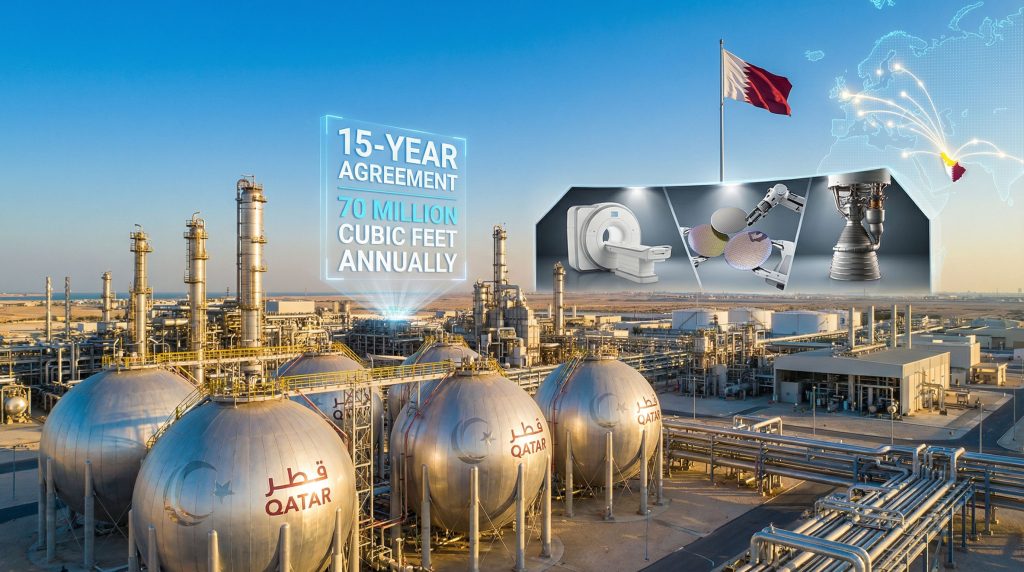
QatarEnergy's breakthrough helium supply agreement with Uniper represents a pivotal moment in global specialty gas markets, transforming how critical industrial commodities flow through international supply chains. This QatarEnergy helium supply agreement with Uniper extends beyond traditional bilateral commercial arrangements, signalling fundamental shifts in strategic resource allocation across technology-dependent industries.
The transformation reflects broader patterns where traditional energy producers diversify into specialty gas markets, leveraging existing infrastructure to capture premium valuations. Furthermore, the convergence of semiconductor demand growth, space technology expansion, and medical imaging advancement creates sustained upward pressure on helium supply requirements across developed economies. Additionally, these dynamics mirror trends observed in natural gas price trends affecting various energy sectors globally.
Strategic Alliance Framework and Market Entry Analysis
The QatarEnergy helium supply agreement with Uniper establishes a direct producer-to-distributor relationship that bypasses traditional commodity trading intermediaries. This 15-year sales and purchase agreement for 70 million cubic feet per annum starting September 2025 represents Uniper's first direct sourcing relationship with QatarEnergy's helium operations.
Partnership Structure Elements:
- Long-term contractual commitment providing supply certainty
- Direct relationship eliminating commodity market volatility exposure
- European distribution network integration through Uniper's wholesale infrastructure
- Risk-sharing mechanisms through fixed annual volume commitments
Uniper Global Commodities SE operates as a bulk wholesale helium distributor with established international market presence. Consequently, this partnership proves strategically significant for European industrial supply chain security, particularly as regional markets face ongoing energy export challenges across multiple commodity sectors.
Contract Structure and Commercial Terms Analysis
The agreement's 15-year duration provides substantial revenue visibility for QatarEnergy while ensuring supply security for Uniper's European customer base. This timeframe aligns with typical industrial gas infrastructure investment cycles and technology sector planning horizons.
Key Commercial Framework:
- Annual volume: 70 million cubic feet
- Delivery commencement: September 2025
- Source: QatarEnergy facilities in Ras Laffan
- Distribution: Uniper's wholesale network across European markets
According to QatarEnergy's official statement, HE Eng. Saad Sherida Al Kaabi characterised the partnership as welcoming Uniper as a trusted off-taker. Moreover, he emphasised QatarEnergy's commitment to supporting industries dependent on reliable helium from trusted sources like Qatar.
When big ASX news breaks, our subscribers know first
How Critical Is Helium Supply Security in Today's Technology-Driven Economy?
Industrial helium applications span critical technology sectors where supply disruptions create cascading effects across manufacturing operations. Unlike many industrial gases, helium's unique properties make substitution extremely difficult or impossible in most applications.
Industrial Application Demand Drivers
| Industry Sector | Primary Applications | Supply Criticality |
|---|---|---|
| Healthcare | MRI scanner cooling systems | Essential – no substitutes |
| Semiconductors | Crystal growth, wafer processing | Critical for precision manufacturing |
| Space Technology | Rocket fuel pressurisation | Required for launch operations |
| Fiber Optics | Cable manufacturing processes | Necessary for telecommunications infrastructure |
Healthcare Sector Dependencies:
Medical imaging facilities require consistent helium supply for Magnetic Resonance Imaging systems, where helium coolant enables superconducting magnet operations. Supply interruptions directly impact diagnostic capabilities across hospital networks.
Semiconductor Manufacturing Requirements:
Chip production processes utilise helium for creating controlled atmospheric conditions during crystal growth and wafer fabrication. The semiconductor industry's expansion, particularly in advanced node production, drives sustained helium demand growth.
Supply Chain Vulnerability Assessment
Geographic Concentration Risks:
Global helium production concentrates in a limited number of facilities, creating potential supply chain vulnerabilities. Qatar's position as a major producer through natural gas processing operations provides alternative sourcing for European markets historically dependent on other regional suppliers.
Strategic Reserve Considerations:
Industrial users increasingly recognise helium as a strategic input requiring long-term supply agreements rather than spot market procurement. In addition, the technology sector's growing dependence on helium-enabled processes makes supply security a competitive advantage factor.
"Qatar's helium extraction benefits from natural gas processing synergies, providing cost efficiencies that standalone helium operations cannot achieve. This co-production model enables competitive pricing while ensuring supply reliability for critical technology applications."
Why Is Qatar Positioned as a Dominant Force in Global Helium Markets?
Qatar's helium production infrastructure leverages the world's largest natural gas field operations to extract helium as a valuable byproduct. This integration provides significant cost advantages compared to standalone helium production facilities. However, these advantages mirror broader regional developments, including Saudi exploration licenses 2025 initiatives affecting Middle Eastern energy markets.
Ras Laffan Production Infrastructure Analysis
The Ras Laffan Industrial Complex houses Qatar's primary helium extraction capabilities, integrated with liquefied natural gas processing operations. This co-location enables helium recovery during natural gas liquefaction, creating operational synergies that reduce per-unit extraction costs.
Infrastructure Advantages:
- Helium extraction integrated with LNG processing
- Dual-plant operations maximising extraction efficiency
- Existing transportation and storage infrastructure
- Established international distribution relationships
Technical Production Benefits:
The natural gas processing infrastructure at Ras Laffan enables helium separation through established cryogenic systems. Consequently, this eliminates the need for dedicated helium-only facilities, providing cost efficiencies while maintaining production flexibility.
Competitive Positioning Against Alternative Suppliers
Qatar's market position reflects several competitive advantages over alternative global helium suppliers:
Cost Structure Benefits:
- Co-production with LNG reduces standalone extraction costs
- Existing infrastructure minimises additional capital requirements
- Scale advantages through high-volume natural gas processing
- Established customer relationships through energy sector partnerships
Supply Reliability Factors:
- Long-term natural gas reserves supporting sustained helium production
- Political stability ensuring consistent operations
- Investment in infrastructure maintenance and expansion
- Government support for energy sector diversification
Recent Partnership Expansion Strategy
The QatarEnergy helium supply agreement with Uniper represents the second confirmed German market partnership, following previous arrangements with other European distributors. This expansion strategy targets key industrial markets with growing helium demand.
Strategic Expansion Elements:
- European distribution network development
- Customer diversification across industrial sectors
- Long-term relationship building with wholesale distributors
- Market share growth in premium specialty gas segments
What Are the Broader Implications for Energy Sector Investment Strategies?
Specialty gas market dynamics offer energy sector participants opportunities to capture premium valuations through product diversification. The QatarEnergy-Uniper partnership demonstrates how traditional energy producers can leverage existing infrastructure for higher-margin products. Furthermore, these opportunities align with broader trends discussed in comprehensive investment strategy guide frameworks for energy sector participants.
Specialty Gas Market Dynamics
Revenue Diversification Benefits:
Long-term helium supply agreements provide revenue streams with different risk profiles compared to conventional natural gas sales. The 15-year contract duration offers predictable cash flows while premium pricing structures enhance overall project economics.
Market Characteristics:
- Premium pricing relative to conventional natural gas
- Long-term contract structures reducing price volatility
- Growing demand correlation with technology sector expansion
- Limited alternative supply sources creating pricing power
Geopolitical Supply Chain Considerations
European Industrial Input Security:
The partnership with Uniper reflects European industrial sectors' strategic emphasis on diversifying critical input sources. Supply security considerations increasingly influence procurement decisions for specialty gases supporting technology manufacturing.
Middle East Export Diversification:
Qatar's helium expansion demonstrates energy exporters' strategies to diversify beyond traditional hydrocarbon products. This approach reduces dependence on oil and gas price cycles while capturing value from existing infrastructure investments.
Investment Strategy Implications:
- Infrastructure utilisation optimisation for multiple product streams
- Premium market positioning through specialty gas production
- Long-term contract strategies reducing revenue volatility
- Geographic diversification of customer relationships
How Does This Agreement Reflect Evolving Industrial Gas Market Trends?
Direct partnership models increasingly replace traditional commodity market structures in specialty gas trading. The QatarEnergy-Uniper arrangement exemplifies how producers and distributors establish direct relationships to optimise cost structures and ensure supply reliability.
Partnership Model Innovation
Structural Evolution:
The agreement eliminates traditional commodity trading intermediaries, enabling cost savings and enhanced supply chain transparency. This direct producer-to-distributor model provides both parties with greater control over commercial terms and delivery coordination.
Risk Management Advantages:
- Long-term volume commitments reducing market uncertainty
- Direct communication channels improving operational coordination
- Shared planning capabilities for capacity expansion
- Reduced transaction costs through elimination of intermediaries
Technology Sector Supply Chain Integration
Manufacturing Synchronisation:
Industrial gas supply arrangements increasingly align with customer production cycles and capacity expansion plans. The semiconductor and medical device sectors require predictable input availability to support manufacturing scale-up and new facility development.
Supply Security Premium:
Technology manufacturers demonstrate willingness to pay premium pricing for supply security guarantees, particularly for inputs without readily available substitutes. This trend supports long-term contract structures with established producers. However, these dynamics are influenced by broader energy market developments, including US natural gas forecast 2025 trends affecting global commodity pricing.
"The QatarEnergy-Uniper helium agreement represents a strategic shift toward direct industrial partnerships, eliminating intermediary costs while ensuring supply security for critical technology applications including semiconductor manufacturing and medical imaging systems."
What Investment Opportunities Emerge from Helium Market Consolidation?
Infrastructure development requirements in the helium supply chain create investment opportunities across multiple segments. The growing importance of supply security drives capital allocation toward specialised transportation, storage, and processing capabilities.
Infrastructure Development Requirements
Specialised Transportation Systems:
Helium transport requires specialised containers and logistics networks capable of maintaining gas purity and pressure specifications. Investment opportunities exist in developing enhanced transportation infrastructure connecting production facilities with distribution networks.
Storage and Distribution Facilities:
Regional storage hubs enable inventory management and supply continuity during maintenance periods or demand fluctuations. Distribution infrastructure investment supports market expansion and customer service capabilities.
Processing Technology Advancement:
Helium separation and purification technologies continue evolving to improve extraction efficiency and reduce processing costs. Technology development investments support competitive positioning and operational optimisation.
Market Entry Barriers and Competitive Moats
Capital Intensity Considerations:
Helium production facilities require substantial initial investments in specialised equipment and infrastructure. These capital requirements create natural barriers to market entry while protecting returns for established operators.
Technical Expertise Requirements:
Gas separation technology, cryogenic systems management, and quality assurance processes require specialised knowledge accumulated over years of operations. This expertise barrier provides competitive advantages for experienced operators.
Long-term Contract Relationships:
Established supply agreements with industrial customers create sustainable competitive moats. The 15-year QatarEnergy-Uniper partnership demonstrates how long-term relationships provide revenue stability and market position protection.
Investment Strategy Framework:
- Infrastructure development supporting specialty gas supply chains
- Technology advancement improving extraction and processing efficiency
- Strategic partnerships with industrial end-users
- Geographic expansion into growing demand markets
The next major ASX story will hit our subscribers first
Frequently Asked Questions About Global Helium Supply Dynamics
Why is helium considered a strategic industrial commodity?
Helium's strategic importance derives from its unique physical properties and essential role in multiple critical applications. Unlike many industrial gases, helium cannot be substituted in most applications due to its inert characteristics and extremely low boiling point.
Strategic Applications Include:
- Medical imaging systems requiring superconducting magnet cooling
- Semiconductor manufacturing processes demanding ultra-pure atmospheric conditions
- Space technology applications for rocket fuel pressurisation
- Fiber optic cable manufacturing requiring precision atmospheric control
The limited number of global production sources and growing technological dependence make helium supply security increasingly important for industrial competitiveness.
How does Qatar's helium production compare to other global suppliers?
Qatar's helium production benefits from integration with the world's largest natural gas processing operations at Ras Laffan. This co-production model provides cost advantages and production scale that many standalone helium facilities cannot match.
Comparative Advantages:
- Natural gas processing synergies reducing extraction costs
- Large-scale production capabilities through LNG integration
- Established international distribution infrastructure
- Political stability ensuring consistent operations
Other major global suppliers include facilities in the United States, Russia, and Poland, each with different cost structures and market access capabilities.
What factors drive long-term helium demand growth?
Helium demand growth correlates strongly with technology sector expansion and industrial manufacturing advancement. Key growth drivers include:
Technology Sector Expansion:
- Semiconductor manufacturing capacity growth globally
- Advanced medical imaging facility development
- Space technology and satellite deployment acceleration
- Fiber optic infrastructure expansion supporting digital communications
Industrial Manufacturing Trends:
- Precision manufacturing processes requiring controlled atmospheres
- Quality assurance applications in advanced materials production
- Research and development activities in technology sectors
How do supply agreements like this impact technology sector costs?
Long-term supply agreements provide cost predictability for technology manufacturers while potentially offering volume discounts compared to spot market procurement. The QatarEnergy helium supply agreement with Uniper enables downstream cost planning and budget certainty for industrial customers.
Cost Impact Factors:
- Elimination of spot market price volatility
- Volume discounts through long-term commitments
- Reduced procurement administrative costs
- Supply security premium potentially offset by operational benefits
Technology sectors increasingly view supply agreements as strategic investments in operational continuity rather than purely transactional relationships. For more information on industry developments, readers can explore detailed reports on energy market trends published by regional energy authorities.
Investment Disclaimer: This analysis is for informational purposes only and does not constitute investment advice. Helium market investments involve risks including commodity price volatility, regulatory changes, and supply-demand imbalances. Readers should conduct independent research and consult qualified financial advisors before making investment decisions.
Ready to Capitalise on Critical Resource Supply Agreements?
Discovery Alert's proprietary Discovery IQ model delivers real-time alerts on significant ASX mineral discoveries, instantly empowering subscribers to identify actionable opportunities ahead of the broader market. Begin your 30-day free trial today and secure your market-leading advantage.