May 21, 2026
Queensland's mining sector faces mounting pressure to demonstrate long-term environmental stewardship as global scrutiny intensifies around post-extraction land management. This challenge has sparked innovative funding mechanisms designed to bridge the gap between academic research and practical rehabilitation outcomes. The intersection of regulatory compliance, technological advancement, and community expectations creates a complex landscape where evidence-based solutions become essential for sustainable resource development, particularly through mine reclamation innovation.
Policy Framework Driving Queensland's Environmental Research Investment
Queensland's approach to mine rehabilitation funding represents a sophisticated regulatory mechanism that transforms industry obligations into research opportunities. The Coal Minesite Rehabilitation Trust Fund, established in 2007, operates as a dedicated financial instrument coordinated by the Queensland Resources Council, creating a direct pathway between industry contributions and environmental science advancement.
This nearly two-decade-old system demonstrates how policy frameworks can evolve beyond simple compliance requirements into dynamic drivers of innovation. The Queensland mine rehabilitation scholarships emerge from this regulatory foundation, channeling resources toward critical knowledge gaps that affect both environmental outcomes and industry innovation trends.
Minister for Natural Resources and Mines Dale Last emphasises how these scholarships advance responsible resource development while creating employment opportunities in post-mining landscapes. The initiative reflects broader governmental recognition that environmental restoration requires specialised expertise developed through sustained academic investigation, particularly through initiatives like the regen scholarship program.
When big ASX news breaks, our subscribers know first
Research Priorities Aligned with Environmental Management Objectives
Queensland mine rehabilitation scholarships target specific research domains that address the most challenging aspects of post-mining landscape restoration. These priority areas reflect both regulatory requirements and practical industry needs, creating a research portfolio with direct application potential.
Native Ecosystem Restoration Research
Biodiversity rehabilitation represents one of the most complex challenges in mine closure planning. Queensland's unique ecological systems require specialised knowledge about species reestablishment, habitat connectivity, and long-term ecosystem stability. Research in this area focuses on:
• Species selection criteria for different climatic zones and soil conditions
• Monitoring protocols that track ecosystem development over extended timeframes
• Success metrics that align with regulatory expectations and ecological principles
• Integration strategies linking restored areas with existing conservation networks
Agricultural Land Rehabilitation Studies
Post-mining agricultural productivity assessment addresses the economic dimension of land restoration, particularly relevant for communities dependent on primary production. Furthermore, these studies incorporate advanced waste management solutions to optimise restoration outcomes. Research priorities include:
• Soil quality restoration techniques using innovative amendment strategies
• Subsidence impact mitigation approaches for underground mining areas
• Water management systems supporting sustainable agricultural practices
• Economic viability assessments comparing different restoration approaches
Water Resource Management Research
Water quality and quantity management remains central to successful mine rehabilitation, with cumulative impacts requiring sophisticated understanding. Dr. Leigh Stitz's research on macro-invertebrate indicators in ephemeral streams exemplifies this priority area, demonstrating how biological monitoring can inform rehabilitation practices.
Surface water quality improvement methodologies focus on treatment systems, natural attenuation processes, and integrated landscape approaches. Groundwater research addresses contamination remediation, flow pattern restoration, and long-term monitoring frameworks essential for regulatory compliance.
Financial Structure and Investment Framework
Queensland mine rehabilitation scholarships provide substantial financial support designed to attract high-calibre researchers to environmental restoration challenges. The funding structure reflects recognition that complex environmental problems require sustained investigation over multiple years, particularly in areas such as sustainability transformation.
| Funding Component | Specification |
|---|---|
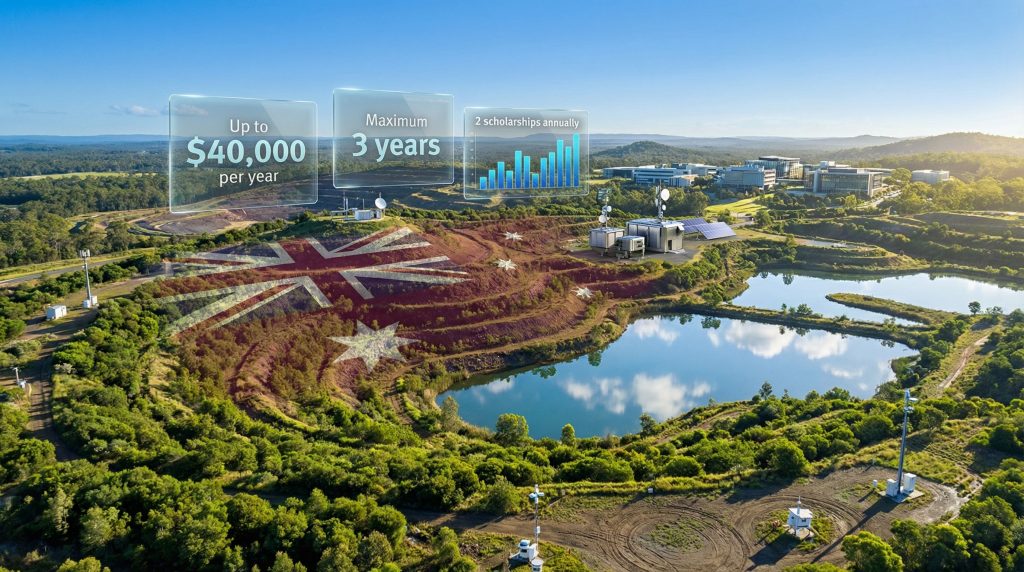
| Annual Value | Up to $40,000 per recipient |
| Maximum Duration | 3 years per scholarship |
| Annual Allocation | 2 scholarships awarded annually |
| Total Program Investment | $240,000 per complete cycle |
| Funding Source | Coal Minesite Rehabilitation Trust Fund |
This investment level positions Queensland competitively within the national research landscape, providing recipients with resources necessary for comprehensive field studies, laboratory analyses, and extended data collection periods. The multi-year commitment enables longitudinal studies essential for understanding ecosystem development and rehabilitation effectiveness.
Queensland Resources Council CEO Janette Hewson notes that this financial commitment has supported innovation in mine rehabilitation for nearly two decades, extending the state's environmental science capability while delivering practical benefits to both industry and regional communities.
Eligibility Criteria and Application Requirements
Queensland mine rehabilitation scholarships target early-career researchers positioned to make significant contributions to environmental restoration science. Eligibility encompasses both academic qualifications and research focus alignment with program priorities.
Academic Qualification Requirements
• PhD candidates enrolled at Queensland universities with research projects addressing rehabilitation challenges
• Master's degree students pursuing research-focused programs in environmental sciences
• Early-career researchers transitioning into specialised environmental restoration fields
• Both domestic and international students meeting specific residency requirements
Research Institution Partnerships
Successful applications require formal partnerships with recognised Queensland universities, ensuring appropriate supervisory support and research infrastructure access. This requirement maintains academic standards while connecting industry-relevant research with institutional expertise.
Application documentation includes a comprehensive research proposal limited to 10 pages, completed application forms, academic transcripts, and supervisor endorsement letters. This streamlined process balances thoroughness with accessibility for prospective researchers.
Assessment Framework and Selection Criteria
Queensland mine rehabilitation scholarships undergo rigorous evaluation designed to identify research projects with maximum potential for practical application and scientific advancement. Assessment criteria reflect the programme's dual focus on academic excellence and industry relevance, particularly considering innovations showcased at events like the global innovation expo.
Primary Evaluation Factors
• Research alignment with Trust Fund priorities and regulatory frameworks
• Scientific methodology rigour and innovation potential
• Practical application prospects for industry implementation
• Contribution potential to Queensland's environmental management objectives
• Researcher capability and institutional support quality
The assessment process emphasises projects addressing critical knowledge gaps identified through industry consultation and regulatory experience. Research proposals demonstrating clear pathways from investigation to practical application receive preferential consideration.
Industry Knowledge Gap Analysis
Queensland mine rehabilitation scholarships specifically target research areas where limited knowledge constrains rehabilitation effectiveness. These priority domains reflect both regulatory requirements and practical challenges encountered during mine closure planning and implementation.
Critical Research Priorities
Final Void Management: Long-term stability assessments, water quality modelling, and ecosystem development potential in permanently flooded excavations represent ongoing challenges requiring sophisticated research approaches.
Non-Use Management Area Designation: Criteria development for areas unsuitable for post-mining productive use requires integration of geological, hydrological, and ecological factors into standardised assessment frameworks.
Community Transition Planning: Post-mining economic development strategies need research support to identify sustainable alternatives for mining-dependent communities, particularly in regional Queensland.
Innovative Landform Design: Advanced approaches to creating stable, functional landscapes from mining-disturbed areas require integration of engineering principles with ecological restoration concepts.
Industry Collaboration Mechanisms
Scholarship recipients gain access to active mining operations for field research, creating partnerships between academic institutions and industry practitioners. This collaboration model ensures research relevance while providing companies with evidence-based guidance for rehabilitation planning.
Knowledge transfer mechanisms include industry workshops, technical publications, and direct consultation arrangements connecting research outcomes with operational decision-making processes.
The next major ASX story will hit our subscribers first
Long-Term Policy Impact Assessment
The nearly two-decade operation of Queensland mine rehabilitation scholarships has generated measurable impacts on both regulatory frameworks and industry practices. These outcomes demonstrate how sustained research investment can drive policy evolution and improve environmental management standards.
Regulatory Enhancement Outcomes
Research findings from scholarship recipients have informed updates to rehabilitation assessment criteria, monitoring protocols, and closure planning requirements. This evidence-based policy development ensures regulatory frameworks reflect current scientific understanding and technological capabilities.
Dr. Leigh Stitz's macro-invertebrate research illustrates this impact pathway, with findings contributing to enhanced understanding of cumulative mining impacts on waterways and subsequent improvements in rehabilitation practices across Queensland operations.
Economic Development Benefits
The scholarship programme has contributed to regional Queensland's economic diversification by developing specialised environmental services capabilities. Research-trained professionals remain in regional areas, supporting both mining operations and broader environmental management activities.
Investment attraction benefits include positioning Queensland as a centre of excellence for mine rehabilitation research, drawing additional funding and expertise to the state's environmental science sector.
Comparative Analysis with National and International Approaches
Queensland's trust fund mechanism for financing rehabilitation research represents an innovative approach within Australia's mining regulation landscape. This model contrasts with direct government funding approaches used in other jurisdictions, creating different incentive structures and accountability mechanisms.
Funding Model Innovation
The industry-contribution model ensures direct connection between resource extraction activities and environmental restoration research. This approach creates stakeholder alignment whilst maintaining research independence through academic institutional partnerships.
Compared to government-funded programmes, the trust fund mechanism provides more stable, predictable research financing less subject to political budget pressures. This stability enables longer-term research commitments essential for understanding complex environmental processes.
International Best Practice Integration
Queensland's approach incorporates elements from global rehabilitation frameworks whilst addressing local environmental conditions and regulatory requirements. The scholarship programme facilitates knowledge exchange with international research communities, ensuring access to global best practices and emerging technologies.
Cross-jurisdictional learning opportunities include collaboration with Canadian mine closure research, South African rehabilitation programmes, and European post-mining landscape management initiatives.
Success Stories and Research Translation
Queensland mine rehabilitation scholarships have produced numerous examples of research successfully translating into practical applications and policy improvements. These success stories demonstrate the programme's effectiveness in addressing real-world environmental challenges.
Case Study: Waterway Health Indicator Research
Dr. Leigh Stitz's 2014 scholarship research on macro-invertebrates in ephemeral streams of Tropical Queensland exemplifies successful research translation. Her investigation of water bug populations as waterway health indicators provided enhanced understanding of cumulative mining impacts on aquatic ecosystems.
This research contributed directly to improved rehabilitation practices by establishing biological monitoring protocols that inform restoration planning and success assessment. The work demonstrates how scholarship-supported research can bridge the gap between academic investigation and practical environmental management.
Stitz emphasises the scholarship's personal impact, enabling her to balance research commitments with family responsibilities whilst pursuing career development in environmental science. Her current position as QRC Policy Director Environment illustrates career progression opportunities for scholarship recipients within the industry-research interface.
Research Uptake by Industry
Scholarship research findings have been adopted by Queensland mining operations through various knowledge transfer mechanisms. These include technical workshops, industry publications, and direct consultation arrangements connecting academic researchers with operational decision-makers, as highlighted by initiatives from the Queensland Resources Council.
Environmental outcome improvements attributable to scholarship research include more effective rehabilitation monitoring systems, improved species selection for ecosystem restoration, and enhanced water quality management approaches.
Strategic Application Guidance for Prospective Researchers
Successful Queensland mine rehabilitation scholarship applications require strategic alignment between research interests, programme priorities, and practical application potential. Understanding these requirements enables prospective applicants to develop competitive proposals.
Research Focus Optimisation
Competitive applications address clearly identified industry knowledge gaps whilst maintaining rigorous scientific methodology. Research proposals should demonstrate:
• Direct relevance to current rehabilitation challenges facing Queensland mining operations
• Innovation potential through novel approaches or technologies
• Practical application pathways for research outcomes
• Regulatory alignment with current and anticipated policy requirements
Application Strengthening Strategies
Early engagement with potential academic supervisors helps ensure research proposal viability and institutional support quality. Industry partnership development prior to application submission demonstrates practical relevance and implementation potential.
Clear articulation of policy relevance strengthens applications by connecting research objectives with regulatory priorities and community expectations. This alignment demonstrates understanding of the broader context within which rehabilitation research operates.
Professional Development and Support Resources
Queensland mine rehabilitation scholarships provide access to professional development opportunities extending beyond direct research funding. These resources support recipient career development whilst building Queensland's environmental science capability.
Information and Guidance Resources
The Queensland Resources Council provides comprehensive guidance materials for prospective applicants, including detailed information about research priorities, application processes, and assessment criteria. University research offices offer additional support through proposal development workshops and administrative assistance.
Previous scholarship recipients serve as valuable resources for understanding programme expectations and successful application strategies. Their experiences provide insights into research project development and career trajectory opportunities within the environmental restoration field.
Professional Development Opportunities
Scholarship recipients gain access to industry networking events, policy engagement training, and research methodology workshops. These opportunities develop skills essential for translating academic research into practical applications whilst building professional networks spanning academia, industry, and government.
Policy engagement training particularly benefits recipients interested in careers at the interface between research and regulation, developing skills necessary for effective communication with diverse stakeholder groups.
This article is provided for informational purposes and does not constitute financial or investment advice. Readers should conduct their own research and consult qualified professionals before making any investment decisions. All financial figures and projections mentioned are subject to market conditions and regulatory changes.
Ready to Discover the Next ASX Mining Breakthrough?
Discovery Alert's proprietary Discovery IQ model delivers instant alerts on significant ASX mineral discoveries, empowering investors to identify actionable opportunities ahead of the broader market. Explore why major mineral discoveries can lead to exceptional returns and begin your 14-day free trial today to secure your market-leading advantage.