May 17, 2026
Queensland's Advanced Processing Infrastructure Revolution
The transformation of raw mineral extraction into high-value processed products represents one of the most significant opportunities facing Australia's resources sector. Advanced processing capabilities determine whether nations capture maximum value from their geological endowments or remain trapped in low-margin commodity export cycles. Queensland's emerging infrastructure ecosystem positions the state at the forefront of this technological evolution, establishing frameworks that bridge laboratory innovation with commercial deployment through mining industry innovation initiatives.
Modern mineral processing facilities operate as complex technical environments where experimental methodologies transition into scalable industrial processes. These installations require sophisticated analytical capabilities, flexible equipment configurations, and collaborative frameworks that enable multiple users to advance their technologies simultaneously. The integration of shared-access models with cutting-edge processing equipment creates unprecedented opportunities for innovation acceleration across Queensland's critical minerals sector.
When big ASX news breaks, our subscribers know first
Understanding Queensland's Strategic Minerals Processing Ecosystem
Queensland's approach to minerals processing infrastructure reflects a comprehensive understanding of value chain optimisation. The state's $8 billion investment over two decades in research and innovation demonstrates sustained commitment to technological advancement. This substantial financial commitment has established Queensland as a leader in bridging research institutions with commercial mining operations, creating pathways for technology transfer that significantly reduce investment risks for emerging processing technologies.
Defining Next-Generation Minerals Processing Capabilities
Advanced minerals processing facilities distinguish themselves through integrated analytical and testing frameworks that enable rapid technology validation. These installations typically feature:
• Pilot-scale processing equipment capable of handling diverse mineral types and processing methodologies
• Advanced analytical instrumentation providing real-time monitoring and quality control
• Flexible configuration systems allowing rapid reconfiguration for different mineral processing requirements
• Quality assurance protocols ensuring consistent and reliable testing outcomes
• Data collection and analysis capabilities supporting technology optimisation and commercialisation decisions
The technical specifications of these facilities enable companies to transition from laboratory-scale research to commercial implementation with reduced technical and financial risk. Furthermore, processing capabilities typically encompass flotation, leaching, separation, and concentration technologies applicable to critical minerals including lithium, rare earth elements, and specialty metals.
Queensland's Geographic Advantages for Critical Minerals Processing
Queensland's strategic positioning provides multiple competitive advantages for minerals processing development. The state's proximity to major mining operations reduces transportation costs and logistics complexity, while established transport infrastructure enables efficient movement of materials and processed products. In addition, access to skilled workforce through established mining education programmes and research institutions creates a foundation for technical capability development.
The Asia-Pacific positioning offers particular advantages for critical minerals processing, given the region's concentration of manufacturing industries requiring processed mineral inputs. Consequently, Queensland's established trade relationships and port infrastructure provide direct access to key markets, supporting the economic viability of downstream processing operations.
What Makes Modern Minerals Processing Facilities "Cutting Edge"?
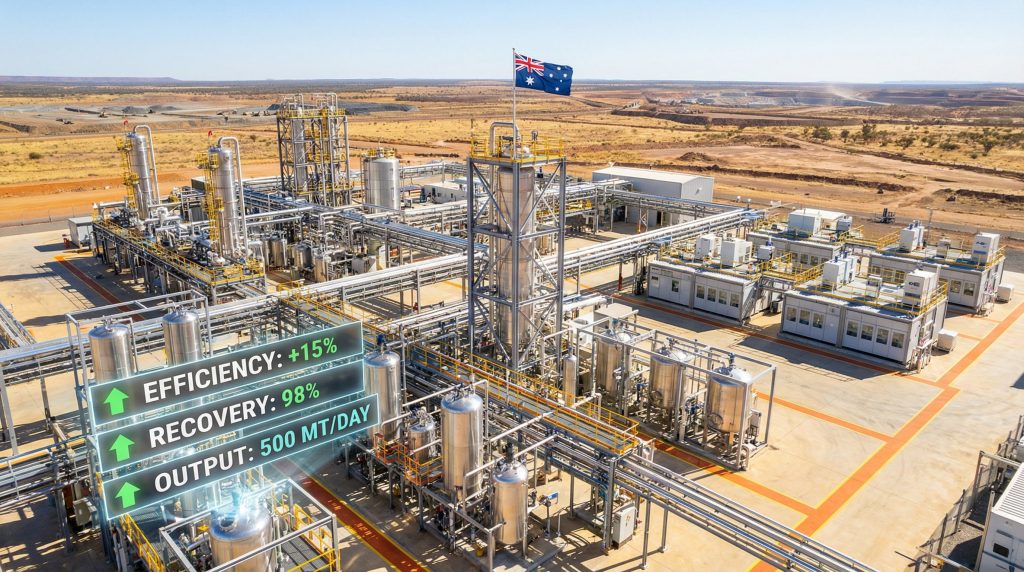
Contemporary processing installations integrate multiple technological systems to create comprehensive testing and development environments. The cutting edge mining lab in Queensland represents this integration approach, combining processing equipment with analytical capabilities and collaborative frameworks to accelerate technology development through data-driven operations.
Core Technical Infrastructure Requirements
Modern facilities require sophisticated technical infrastructure spanning multiple operational domains:
Processing Equipment Specifications:
• Flotation systems with variable cell configurations and chemical dosing capabilities
• Leaching vessels supporting different chemical processes and temperature requirements
• Separation equipment including magnetic, gravity, and density-based systems
• Concentration technologies for mineral purification and grade enhancement
• Material handling systems ensuring sample integrity throughout processing workflows
Analytical and Characterisation Capabilities:
• X-ray diffraction systems for mineral identification and quantification
• Electron microscopy facilities providing detailed structural analysis
• Chemical analysis equipment supporting elemental composition determination
• Physical property testing including density, magnetic susceptibility, and particle size distribution
• Process monitoring instruments enabling real-time optimisation
Innovation Acceleration Methodologies
The effectiveness of advanced processing facilities depends significantly on their operational methodologies for supporting innovation. Risk reduction frameworks enable companies to validate technologies before committing to full-scale implementation. However, these frameworks typically include staged testing protocols, performance benchmarking against established processes, and economic modelling to support investment decisions.
Collaborative research protocols facilitate knowledge sharing between facility users while protecting proprietary information. For instance, industry-academia partnership models create opportunities for fundamental research to inform practical processing challenges, while ensuring academic research addresses commercially relevant problems.
How Do Shared-Access Processing Facilities Transform Mining Innovation?
Shared-access facilities fundamentally alter the economics of technology development by distributing costs across multiple users while providing access to expensive, specialised equipment. This model enables smaller companies and research organisations to access capabilities that would otherwise require prohibitive capital investments.
Common-User Facility Operating Models
Successful shared-access facilities implement comprehensive operational frameworks addressing scheduling, resource allocation, and quality assurance. Cost-sharing structures typically reflect equipment utilisation rates, technical support requirements, and facility maintenance costs. These models must balance accessibility with operational efficiency while ensuring all users receive adequate technical support.
Key Operational Elements:
• Scheduling systems coordinating equipment access across multiple concurrent projects
• Resource allocation protocols ensuring fair access to limited specialised equipment
• Quality assurance standards maintaining consistent testing conditions across different users
• Technical support frameworks providing expertise for equipment operation and data interpretation
• Data management systems protecting proprietary information while enabling collaborative research
Technology Transfer and Commercialisation Pathways
The transition from pilot-scale testing to commercial deployment represents a critical challenge in minerals processing innovation. Effective facilities provide structured pathways supporting this transition through staged scaling approaches, investment de-risking mechanisms, and intellectual property protection frameworks.
Furthermore, commercialisation support typically includes economic modelling assistance, process optimisation services, and connections with potential investors or partners. These services bridge the gap between technical validation and commercial viability assessment, enabling companies to make informed decisions about technology deployment.
What Role Does Workforce Development Play in Advanced Processing?
Advanced processing facilities serve dual functions as technology development centres and workforce training environments. The specialised nature of modern mineral processing requires continuous skills development to maintain technical competency with evolving processing methodologies.
Skills Training and Capacity Building Programmes
Workforce development programmes typically address multiple skill categories:
Technical Competency Development:
• Equipment operation training for specialised processing and analytical equipment
• Process optimisation methodologies supporting efficiency improvements and cost reduction
• Quality control procedures ensuring consistent processing outcomes
• Safety protocols for handling hazardous materials and operating complex equipment
• Data analysis techniques supporting technology optimisation and troubleshooting
Training programmes integrate theoretical knowledge with practical application, utilising operational equipment to provide hands-on experience. This approach ensures workforce development directly translates into operational capability enhancement.
Industry-Education Collaboration Models
Collaboration between processing facilities and educational institutions creates pathways for knowledge transfer and career development. University partnerships typically encompass research project collaboration, student internship programmes, and faculty exchange initiatives. However, these relationships ensure academic research addresses industry-relevant challenges while providing students with exposure to commercial processing environments.
Practical training opportunities within operational facilities offer students and early-career professionals exposure to advanced processing technologies and commercial operational requirements. Consequently, these experiences develop technical capabilities while building understanding of industry practices and professional standards.
Queensland's Broader Critical Minerals Processing Landscape
Queensland's processing infrastructure development occurs within a broader ecosystem of research institutions, government support programmes, and industry partnerships. For instance, the Resources Centre of Excellence in Mackay represents a focal point for this ecosystem, connecting research, technology, and education to support the resources sector's future development.
Complementary Research Infrastructure
Queensland's university-based research capabilities provide fundamental research support for processing technology development. Specialised analytical and characterisation facilities across multiple institutions create a comprehensive analytical infrastructure supporting advanced processing research. The Julius Kruttschnitt Mineral Research Centre exemplifies this collaborative approach, bridging academic research with industry applications.
Research Infrastructure Components:
| Institution Type | Capabilities | Focus Areas |
|---|---|---|
| Universities | Fundamental research, analytical services | Process chemistry, materials science |
| Government laboratories | Standardised testing, certification | Quality assurance, regulatory compliance |
| Industry facilities | Applied research, commercial validation | Technology scaling, process optimisation |
| Collaborative centres | Cross-sector projects, knowledge sharing | Innovation acceleration, workforce development |
Integration between these facilities enables comprehensive research programmes addressing fundamental scientific questions and practical implementation challenges simultaneously. This integrated approach accelerates technology development by ensuring research outcomes translate into commercially viable processing improvements.
Government Investment and Policy Framework
Government support for processing infrastructure development encompasses direct funding, policy frameworks, and regulatory support for emerging technologies. Queensland's sustained investment demonstrates long-term commitment to value-added processing capabilities, while policy frameworks provide clarity for industry investment decisions.
Strategic alignment with national critical minerals objectives ensures Queensland's infrastructure development supports broader supply chain security goals. This alignment creates opportunities for additional federal support while positioning Queensland as a key component of Australia's strategic minerals reserve.
The next major ASX story will hit our subscribers first
Economic Impact Analysis of Advanced Processing Infrastructure
Advanced processing infrastructure creates multiple economic benefits through value chain enhancement, investment attraction, and regional development opportunities. The transition from raw mineral exports to processed products significantly increases value capture within Queensland's economy.
Value Chain Enhancement Opportunities
Downstream processing capabilities enable Queensland to capture additional value from raw mineral outputs while reducing dependence on international processing facilities. Import substitution opportunities exist for processed mineral products currently sourced from overseas suppliers, while export competitiveness improves through value-added product development.
Economic Value Creation Mechanisms:
• Increased processing margins compared to raw mineral exports
• Employment generation in high-skilled technical roles
• Technology development creating intellectual property and licensing opportunities
• Supply chain localisation reducing dependence on international processing services
• Regional economic diversification supporting mining-dependent communities
Investment Attraction and Industry Development
Advanced processing infrastructure attracts foreign direct investment by demonstrating technical capabilities and reducing investment risks for processing technology development. Local supply chain development opportunities emerge as processing facilities require specialised services, equipment, and materials.
Manufacturing capability development creates foundations for broader industrial expansion, while regional economic diversification reduces dependence on raw commodity price cycles. These developments support long-term economic stability and growth in Queensland's resources regions.
Future Technology Integration and Expansion Potential
Queensland's processing infrastructure development creates foundations for continuous technology integration and capacity expansion. Emerging processing technologies offer opportunities for efficiency improvements, environmental performance enhancement, and expanded processing capabilities.
Emerging Processing Technologies on the Horizon
Next-generation separation and purification techniques promise improved recovery rates and reduced environmental impacts. Automation and digitalisation integration enables improved process control, reduced operating costs, and enhanced safety performance. For instance, direct lithium extraction technologies demonstrate how advanced processing methods can revolutionise traditional mineral recovery approaches.
Technology Development Priorities:
• Advanced separation techniques improving recovery rates for critical minerals
• Process automation systems reducing labour requirements and improving consistency
• Environmental monitoring technologies supporting regulatory compliance and sustainability goals
• Energy efficiency improvements reducing processing costs and carbon footprints
• Waste minimisation strategies improving resource utilisation and environmental performance
Scalability and Network Development
Queensland's processing infrastructure development creates potential for network expansion across the state and integration with interstate and international processing centres. Long-term capacity expansion planning ensures infrastructure development aligns with resource development timelines and market demand projections.
Network development opportunities include specialised facilities focusing on specific mineral types, regional processing centres serving multiple mining operations, and research collaborations with international processing development programmes. These networks create economies of scale while maintaining technical specialisation capabilities.
Key Performance Metrics and Success Indicators
Effective measurement of processing facility performance requires comprehensive metrics addressing innovation output, industry engagement, economic impact, and workforce development outcomes.
Measuring Facility Effectiveness
| Metric Category | Key Performance Indicators | Measurement Frequency |
|---|---|---|
| Innovation Output | Patents filed, technologies commercialised, research publications | Quarterly |
| Industry Engagement | Companies utilising facilities, projects completed, user satisfaction | Monthly |
| Economic Impact | Investment leveraged, job creation, revenue generation | Annually |
| Workforce Development | Training programmes delivered, participants certified, employment outcomes | Quarterly |
| Technical Performance | Equipment utilisation rates, project success rates, processing efficiency | Monthly |
Performance measurement systems must balance quantitative metrics with qualitative assessments of technology development progress and industry satisfaction. Regular benchmarking against international facilities ensures Queensland's infrastructure maintains competitive positioning.
Comparative Analysis with Global Processing Hubs
International benchmarking provides insights into competitive positioning and improvement opportunities. Global processing centres in Canada, South Africa, and other mineral-rich regions offer models for operational excellence and technology development approaches.
Competitive Advantage Factors:
• Technical capabilities relative to international facilities
• Cost structures and accessibility for industry users
• Integration with research institutions and knowledge networks
• Government support and policy frameworks
• Market access and supply chain integration opportunities
Strategic Recommendations for Maximising Impact
Queensland's processing infrastructure development requires strategic approaches to optimise facility utilisation, ensure long-term sustainability, and maximise economic and technological benefits.
Optimisation Strategies for Facility Utilisation
Enhanced marketing and outreach initiatives should target potential users across Australia and internationally, emphasising Queensland's unique capabilities and competitive advantages. Streamlined access procedures reduce barriers to facility utilisation while maintaining quality and safety standards.
Utilisation Enhancement Approaches:
• International marketing campaigns targeting overseas mining companies and research institutions
• Simplified access procedures reducing administrative barriers for facility users
• Expanded service offerings including consulting, training, and technology commercialisation support
• Partnership development with equipment manufacturers and technology vendors
• Performance guarantees providing confidence to facility users regarding testing outcomes
Long-term Sustainability and Growth Planning
Diversification of funding sources beyond government support ensures long-term operational viability while reducing dependence on political budget cycles. Self-sustaining revenue models through user fees, research contracts, and technology licensing create financial independence.
Strategic partnerships with international processing centres enable knowledge sharing, technology exchange, and collaborative research programmes. These relationships enhance Queensland's technical capabilities while providing access to global markets and investment opportunities through comprehensive energy transition strategy alignment.
The cutting edge mining lab in Queensland ecosystem represents a transformative approach to minerals processing infrastructure development. Through integrated research capabilities, industry collaboration, and strategic government investment, Queensland positions itself as a global leader in advanced minerals processing technologies. This infrastructure development creates foundations for sustainable economic growth while supporting Australia's critical minerals security objectives.
Disclaimer: This analysis contains forward-looking statements and projections based on current industry trends and government policy announcements. Actual outcomes may differ significantly due to market conditions, technological developments, regulatory changes, and other factors beyond current prediction capabilities. Economic projections and investment figures should be considered illustrative rather than definitive forecasts. Readers should conduct independent research and seek professional advice before making investment or business decisions based on this information.
Ready to Stay Ahead of Queensland's Mining Innovation Boom?
Discovery Alert's proprietary Discovery IQ model delivers instant notifications on significant ASX mineral discoveries, helping subscribers identify actionable opportunities in Queensland's rapidly advancing processing sector before the broader market catches on. Begin your 14-day free trial today and discover why major mineral discoveries can generate substantial returns when timing and technology converge.