May 22, 2026
Queensland's resource sector stands at a critical juncture where traditional extraction methods must evolve to meet changing global demands and technological capabilities. The convergence of established mining expertise with emerging innovation frameworks represents a fundamental shift in how regional economies approach long-term sustainability and workforce development. Furthermore, navigating the complex mining permitting process requires strategic coordination between multiple stakeholders and regulatory bodies.
Understanding Queensland's Innovation Precinct Framework
Queensland's innovation precinct strategy establishes specialised economic zones that integrate research facilities, educational institutions, and commercial operations within coordinated geographic locations. These environments are designed to accelerate technology transfer between established resource operations and emerging clean technology sectors while maintaining regional competitive advantages during energy transition cycles.
The strategic framework operates through the Queensland Innovation Precincts and Places Strategy (2022-2032), which provides structured pathways for regional development through targeted funding mechanisms. This approach represents a significant departure from traditional resource sector development models by emphasising collaborative innovation over isolated operational expansion.
Funding Architecture and Investment Models
The Queensland Government has established a three-tier funding system designed to support different phases of precinct development. Additionally, understanding various capital raising methods becomes crucial for private sector participation in these initiatives.
| Funding Stream | Maximum Investment | Primary Focus | Target Recipients |
|---|---|---|---|
| Stream 1 | $300,000 | Planning and feasibility studies | Early-stage developers |
| Stream 2 | Variable amounts | Industry networking and collaboration | Professional associations |
| Stream 3 | $3,000,000 | Infrastructure and technology deployment | Regional operators |
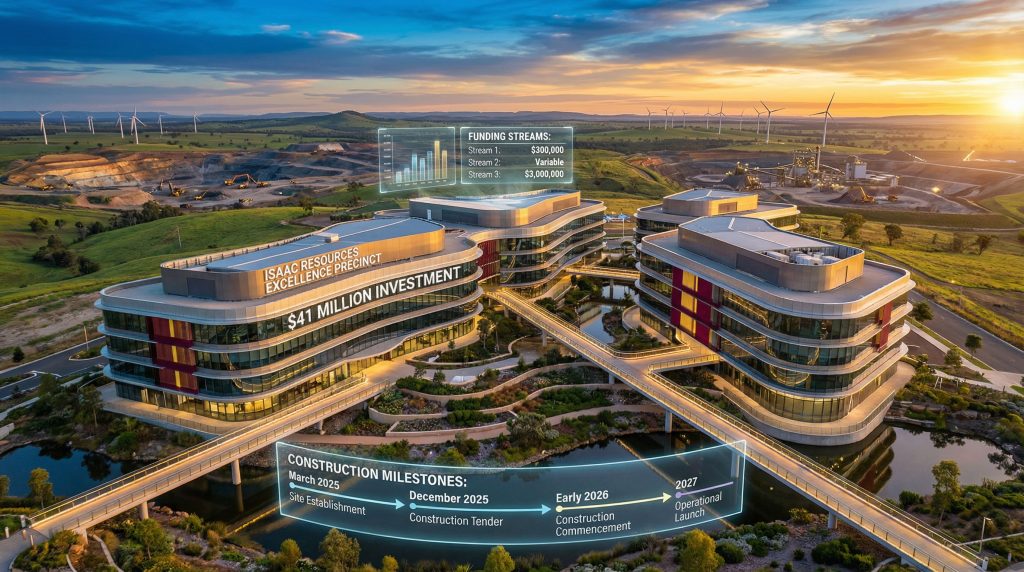
This structured approach enables projects to progress through development phases with appropriate financial support while maintaining accountability through milestone-based funding releases. The Isaac Resources Excellence Precinct exemplifies this model with its $41 million total investment commitment from combined Queensland and Australian Government sources.
When big ASX news breaks, our subscribers know first
Regulatory Pathways for Approvals in Queensland Resources Innovation Projects
The approval process for Queensland innovation precincts involves coordination across multiple regulatory frameworks, including Environmental Protection Act compliance, resource tenure regulations, and federal environmental assessments where cross-jurisdictional impacts are identified. Moreover, the integration of AI in mining operations requires additional consideration within existing regulatory structures.
Projects must navigate a complex approval matrix that balances economic development objectives with environmental protection requirements and community engagement protocols. The Isaac Regional Council's involvement in IREP demonstrates how local government coordination facilitates streamlined processing while ensuring regional development priorities align with state-level strategic objectives.
Critical Timeline Considerations
The IREP project timeline provides insights into efficient regulatory processing within Queensland's framework:
- March 2025: Site establishment completion and ceremonial groundbreaking
- December 2025: Final design approvals and construction tender releases
- Christmas 2025: Expected tender finalisation
- Early 2026: Construction commencement target
- 2027: Projected operational launch
This 21-month progression from site establishment to operational launch demonstrates the potential for coordinated approval processing when stakeholder alignment is achieved early in the development cycle.
Strategic Significance of the Isaac Resources Excellence Precinct
The Isaac Resources Excellence Precinct represents a $41 million investment in regional economic transformation, positioned within a geographic cluster that includes 31 active coal mining operations and 26 renewable energy projects in various development stages. This dual-commodity environment provides unique opportunities for technology demonstration and workforce transition planning.
Isaac Regional Council Mayor Kelly Vea Vea emphasised that finalising designs and progressing to tender stage represents a major milestone demonstrating clear progress in bringing transformational infrastructure to the region. The Mayor highlighted that the precinct focuses on long-term economic strength while ensuring workforce resilience and readiness for future operational models.
Multi-Faceted Facility Integration
The precinct will incorporate several specialised components designed to maximise synergies between educational, research, and commercial activities:
- Learning environments combining academic and vocational training programmes
- Research and development laboratories for technology testing and validation
- Industry collaboration spaces facilitating knowledge transfer between operators
- Mining heritage interpretation centres preserving regional operational knowledge
- Technology demonstration areas showcasing emerging equipment and processes
This integrated approach ensures that traditional resource sector expertise is preserved and enhanced rather than replaced, creating pathways for technological advancement within established operational frameworks.
Economic Transformation Through Innovation Infrastructure
Innovation precincts function as economic diversification tools that reduce regional dependency on single-commodity cycles while maintaining established resource sector expertise. The Isaac region's concurrent operation of traditional coal mining alongside renewable energy development demonstrates the practical reality of energy transition within existing resource clusters.
The precinct model creates platforms for developing adjacent industries including advanced materials processing, clean technology development, and specialised equipment manufacturing. These sectors benefit from proximity to established mining operations while contributing to regional economic resilience through diversified revenue streams. In addition, the development of Australia's critical minerals reserve supports these diversification efforts.
Technology Transfer Mechanisms
The integration of research institutions with commercial mining operations facilitates several forms of knowledge exchange:
- Direct collaboration on operational efficiency improvements
- Joint development of specialised equipment for specific geological conditions
- Workforce cross-training between traditional and emerging technology applications
- Shared research on sustainable extraction and processing methods
- Collaborative development of export market strategies for new commodities
These mechanisms ensure that innovation infrastructure delivers practical benefits to existing operations while building capacity for future technological advancement.
Success Factors for Resources Innovation Precinct Development
Effective innovation precinct development requires coordination across multiple stakeholder categories, each with distinct priorities and operational requirements. The IREP example demonstrates successful alignment between Queensland Government strategic priorities, Australian Government funding frameworks, local council development objectives, industry partner requirements, and educational institution capabilities.
Stakeholder Coordination Framework
The multi-level coordination model incorporates:
State Level Integration
- Alignment with Queensland's long-term economic development strategy
- Coordination with existing resource sector regulatory frameworks
- Integration with state-level education and training initiatives
Federal Level Participation
- Australian Government co-funding commitment and oversight
- Alignment with national critical minerals and energy transition strategies
- Coordination with federal research and development priorities
Local Level Implementation
- Isaac Regional Council administrative and planning coordination
- Community engagement and heritage preservation protocols
- Integration with existing regional infrastructure and services
Industry Level Engagement
- Active participation from coal mining operators and renewable energy developers
- Technology vendor partnerships for equipment demonstration and testing
- Workforce development coordination between multiple employers
Timeline Impact Analysis on Project Viability
The IREP project's progression demonstrates how efficient approval coordination can maintain investor confidence while managing market risk exposure during development phases. The 9-month timeline from ceremonial site establishment to construction tender release represents accelerated processing relative to traditional infrastructure development cycles.
Critical path analysis reveals that project viability depends on maintaining momentum through coordinated approvals across multiple jurisdictional levels simultaneously. Delays in any single approval stream can cascade through subsequent development phases, potentially affecting construction industry capacity availability and equipment procurement timing.
Risk Mitigation Through Early Engagement
The precinct's achievement of major milestones within established timeframes indicates that proactive regulatory engagement minimises approval delays while ensuring comprehensive assessment of environmental and community impact factors. Early stakeholder coordination reduces the likelihood of late-stage modifications that could affect project scope or budget parameters.
The next major ASX story will hit our subscribers first
Investment Opportunities in Queensland Innovation Precinct Development
The dual-government co-funding model creates frameworks for private sector participation and co-investment opportunities within innovation precinct development. The established funding streams provide risk mitigation for private investors while ensuring that commercial viability requirements are integrated into project planning from initial development phases.
Public-Private Partnership Models
Innovation precincts offer several investment pathways for private sector participation:
- Technology development partnerships for specialised equipment and processes
- Educational service delivery contracts for vocational and professional training programmes
- Research collaboration agreements with established mining operators
- Infrastructure development contracts for specialised facility construction and maintenance
- Operational service agreements for ongoing precinct management and coordination
These partnership models enable private sector expertise to complement government investment while ensuring that commercial sustainability is achieved post-construction.
Transformational Impact on Queensland's Resource Sector
Innovation precincts represent strategic infrastructure for workforce transition planning in resource-dependent communities. The emphasis on education and re-skilling addresses long-term industry transformation needs while preparing workers for technology-enhanced resource operations and adjacent industry opportunities.
The precinct model facilitates knowledge transfer between research institutions, established mining operations, and emerging technology companies, creating environments where traditional expertise enhances rather than competes with technological advancement. Consequently, the adoption of data-driven mining operations becomes more feasible within these collaborative frameworks.
Workforce Development Integration
The multi-faceted learning environments combine academic research with practical operational training, ensuring that workforce development addresses both current industry requirements and future technological capabilities. This approach maintains regional employment while building capacity for emerging sectors within the broader resource industry ecosystem.
Development Challenges and Risk Management
Innovation precinct development faces several operational challenges that require coordinated management across multiple stakeholder groups. Regulatory complexity management involves balancing approval requirements while maintaining development momentum and investor confidence throughout extended development cycles.
Regional infrastructure coordination presents additional challenges, as precinct success depends on integration with existing transportation networks, utility systems, and community services. The Isaac region's established resource sector infrastructure provides advantages for precinct development, though coordination with 31 active mining operations and 26 renewable energy projects requires careful planning to avoid operational conflicts.
Long-Term Sustainability Considerations
Innovation precinct viability depends on establishing sustainable operational funding models beyond initial capital investment phases. Post-2027 operational sustainability for IREP will require revenue generation through educational services, research commercialisation, and technology licensing agreements that maintain long-term financial viability while serving regional development objectives.
The Queensland Research Infrastructure Co-investment Fund provides additional opportunities for ongoing research support and infrastructure development within these precincts.
Disclaimer: This analysis is based on publicly available information as of December 2025. Timeline projections and investment estimates are subject to change based on regulatory approvals, construction market conditions, and stakeholder coordination outcomes. Investment decisions should be based on comprehensive due diligence including current project documentation and professional financial advice.
Queensland's innovation precinct development represents a strategic approach to resource sector transformation that balances traditional industry strengths with emerging technology opportunities. The successful progression of approvals for Queensland resources innovation precinct projects like IREP demonstrates the effectiveness of coordinated government support, streamlined regulatory processing, and strategic investment in regional innovation infrastructure. These developments position Queensland as a leader in resource sector innovation while creating sustainable pathways for economic diversification and workforce development within established mining communities.
Ready to Capitalise on Queensland's Resource Innovation Opportunities?
Discovery Alert's proprietary Discovery IQ model delivers real-time alerts on significant mineral discoveries across Queensland and the broader ASX market, instantly empowering subscribers to identify actionable opportunities ahead of the broader market. Begin your 30-day free trial today with Discovery Alert and secure your market-leading advantage in Australia's rapidly evolving resource sector.