
May 19, 2026
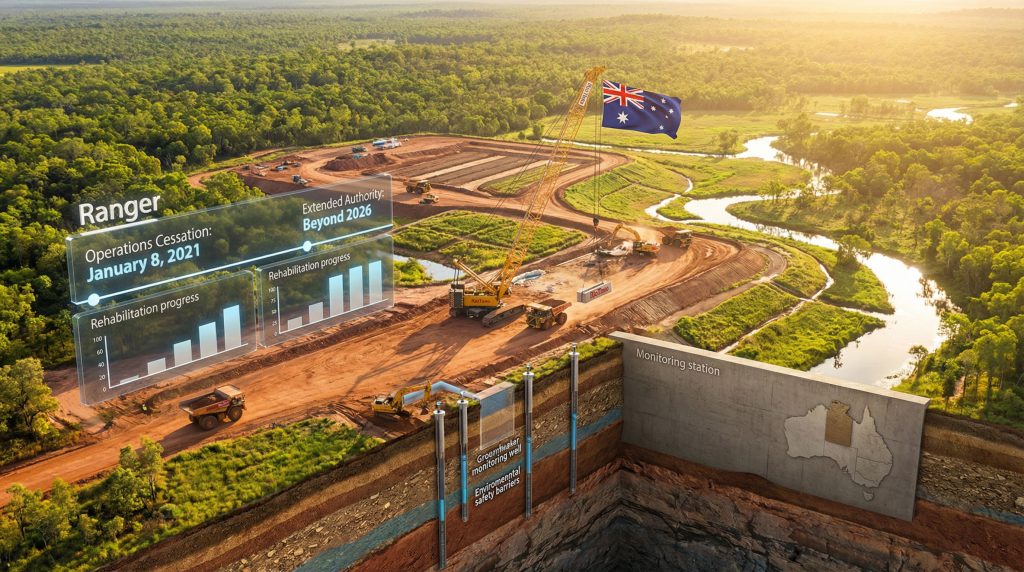
The rehabilitation authority Ranger uranium mine case represents a watershed moment in Australian mining governance, establishing new paradigms for how regulatory frameworks address the complex intersection of environmental restoration, Indigenous land rights, and corporate accountability. The unprecedented challenges of decommissioning uranium facilities within World Heritage Areas have created innovative uranium market dynamics that prioritise stakeholder integration and adaptive management over traditional compliance-based approaches.
Understanding the Regulatory Framework Behind Ranger's Rehabilitation Extension
Australia's uranium mining regulatory architecture operates through a sophisticated multi-jurisdictional framework that distinguishes uranium operations from other extractive industries. The recent issuance of a rehabilitation authority on January 30, 2026, represents a critical application of the Atomic Energy Amendment Act 2022, which substantially enhanced ministerial powers to manage uranium site closures through adaptive governance mechanisms.
Legislative Foundation Under the Atomic Energy Amendment Act 2022
The Atomic Energy Amendment Act 2022 established a comprehensive framework for managing uranium mining transitions beyond conventional operational phases. This legislation grants the Federal Resources Minister explicit authority to issue, modify, and extend rehabilitation authorities, creating flexibility to address unforeseen technical complexities or enhanced environmental requirements that may emerge during site restoration.
Furthermore, the Act recognises that uranium mining rehabilitation involves unique challenges not present in other mining operations, including:
- Long-term radioactive contamination management: Uranium extraction creates persistent radioactive residues requiring specialised containment and monitoring protocols that may extend decades beyond operational cessation
- Adaptive management requirements: Site conditions may evolve as rehabilitation progresses, necessitating modified approaches that cannot be predetermined during initial closure planning
- Integrated regulatory compliance: Uranium sites must satisfy multiple regulatory frameworks simultaneously, including radiation protection, environmental protection, and Indigenous land rights legislation
The legislative framework establishes rehabilitation authorities as distinct from conventional mining permits, recognising that site restoration activities require different governance approaches than operational mining activities.
Ministerial Powers and Authority Granting Process
The January 30, 2026 rehabilitation authority Ranger uranium mine issuance by Federal Minister for Resources and Northern Australia Madeleine King demonstrates the operational application of enhanced ministerial powers under the amended legislation. The minister's statement that the new authority enables ERA to restore Ranger uranium mine to a condition similar to the surrounding Kakadu National Park establishes a heritage-parity restoration standard rather than conventional post-mining closure benchmarks.
This approach prioritises integration with World Heritage values rather than achievable-minimum environmental remediation standards. The ministerial authority encompasses:
- Extended timeline management: Recognition that the original January 8, 2026 deadline was insufficient for comprehensive environmental restoration at a site of this complexity
- Adaptive scope modification: Authority to modify rehabilitation approaches as technical assessments reveal additional requirements
- Multi-stakeholder integration: Coordination mechanisms ensuring Traditional Owner rights and environmental protection requirements operate simultaneously
The authority represents a structured governance response rather than ad-hoc deadline extensions, establishing precedent for how Australian regulators manage complex uranium rehabilitation requirements.
Integration with Aboriginal Land Rights Act Requirements
The rehabilitation authority operates in conjunction with the Aboriginal Land Rights Act (Northern Territory), creating a dual-approval framework where both environmental and Indigenous land governance requirements must be satisfied simultaneously. Minister for Indigenous Australians Malarndirri McCarthy's approval of the land access agreement under the Aboriginal Land Rights Act demonstrates this integrated legal architecture.
This framework ensures that rehabilitation activities cannot proceed without explicit Traditional Owner consent, establishing Indigenous land rights as a mandatory compliance element rather than a consultation requirement. The integration encompasses:
- Decision-making authority: Traditional Owners retain veto rights over rehabilitation methodology selection and timeline modifications
- Cultural heritage protection: Site restoration must achieve cultural compatibility alongside environmental remediation
- Land handback protocols: Rehabilitation standards must satisfy Traditional Owner requirements for eventual land ownership transfer
When big ASX news breaks, our subscribers know first
How Does the New Land Access Agreement Transform Stakeholder Relations?
The land access agreement approved on January 30, 2026, establishes a collaborative governance structure that represents a significant departure from traditional top-down mining site management models. This three-party agreement between Mirarr Traditional Owners, Northern Land Council, and Energy Resources Australia creates a framework where Indigenous land rights, technical expertise, and regulatory compliance operate through integrated decision-making processes.
Multi-Party Collaboration Structure
The agreement integrates three distinct governance layers, each contributing specialised authority and expertise:
Mirarr Traditional Owners & Gundjeihmi Aboriginal Corporation hold primary decision-making authority regarding site use and restoration priorities. Their involvement reflects recognition that rehabilitation outcomes must satisfy Traditional Owner requirements for eventual land handback, moving beyond conventional site closure frameworks that may focus primarily on environmental compliance rather than stakeholder ownership restoration.
Northern Land Council (NLC) functions as the facilitation body and administrative intermediary, managing communication protocols and ensuring compliance with Indigenous land governance requirements. The NLC's role provides institutional continuity and dispute resolution capacity while maintaining Traditional Owner authority over substantive decisions.
Energy Resources Australia (ERA) with Rio Tinto Support provides technical project management, financial resources, and operational implementation of rehabilitation activities. This technical authority operates under Traditional Owner oversight rather than autonomous corporate decision-making.
Traditional Owner Rights and Decision-Making Authority
The agreement explicitly recognises Traditional Owner authority over site management decisions, establishing Indigenous land rights as a governance foundation rather than a consultation requirement. Minister Malarndirri McCarthy's statement that collaboration aims to see rehabilitation completed and land returned to the Mirarr Traditional Owners signals that the agreement prioritises eventual land handback as an outcome metric.
This governance approach acknowledges the historical context where ERA's operations at Ranger ended after failing to secure permission from the Mirarr Traditional Owners and Gundjeihmi Aboriginal Corporation to continue mining. The current collaborative agreement represents a resolution of previously contentious relations through formal recognition of Traditional Owner decision-making authority.
Key elements of Traditional Owner authority include:
- Rehabilitation methodology approval: Traditional Owners retain rights to approve or modify technical approaches to site restoration
- Cultural heritage integration: Site restoration must incorporate Traditional Owner requirements for cultural landscape compatibility
- Timeline and milestone management: Traditional Owners participate in determining rehabilitation progress benchmarks and completion criteria
Northern Land Council's Facilitation Role
The Northern Land Council's involvement provides institutional infrastructure for managing the complex interface between Traditional Owner authority, technical implementation, and regulatory compliance. However, the NLC's facilitation role encompasses:
- Communication coordination: Managing information flow between Traditional Owners, technical teams, and regulatory authorities
- Dispute resolution: Providing mediation capacity for conflicts that may arise during rehabilitation implementation
- Compliance oversight: Ensuring rehabilitation activities satisfy Aboriginal Land Rights Act requirements and Traditional Owner governance protocols
Minister McCarthy's acknowledgement of the contributions of all parties – including the Mirarr Traditional Owners, Gundjeihmi Aboriginal Corporation, Northern Land Council, ERA and Rio Tinto – demonstrates the collaborative framework's recognition of each stakeholder's specialised contributions to site management success.
| Stakeholder | Primary Authority | Key Contributions | Accountability Framework |
|---|---|---|---|
| Mirarr Traditional Owners | Land use decisions | Cultural heritage requirements | Aboriginal Land Rights Act |
| Gundjeihmi Aboriginal Corporation | Corporate representation | Formal governance structure | Corporate governance law |
| Northern Land Council | Administrative facilitation | Dispute resolution | Land councils legislation |
| Energy Resources Australia | Technical implementation | Project management | Mining regulations |
| Rio Tinto | Financial support | Corporate expertise | Corporate liability |
What Are the Technical Requirements for Ranger's Environmental Restoration?
Environmental restoration at the Ranger uranium mine must achieve integration with Kakadu National Park's World Heritage values, establishing technical requirements that exceed conventional mining rehabilitation standards. The requirement to restore the site to a condition similar to the surrounding Kakadu National Park creates a heritage-parity restoration standard that prioritises ecosystem functionality and cultural landscape compatibility.
Kakadu National Park Integration Standards
Kakadu National Park's status as both a World Heritage Area (listed 1981 for cultural and natural criteria) and its recognition under the Aboriginal Land Rights Act creates dual compliance requirements that shape rehabilitation protocols. The site's location within the park's 19,804 square kilometre area, which contains Aboriginal rock art sites dating back 20,000+ years and diverse wetland ecosystems, means restoration must achieve seamless integration with existing natural and cultural heritage values.
Technical integration standards encompass:
Ecosystem Reconstruction: Rehabilitation must reconstruct native vegetation communities and ecosystem functions that support the park's biodiversity values. This requires:
- Soil remediation to support native plant establishment
- Native species reintroduction following ecological succession principles
- Habitat connectivity restoration to maintain wildlife movement patterns
- Wetland functionality restoration to support seasonal flooding cycles
Cultural Landscape Compatibility: Site restoration must achieve visual and functional integration with the cultural landscape values that contributed to Kakadu's World Heritage listing. This includes:
- Landform restoration that maintains traditional landscape patterns
- Vegetation establishment that supports traditional resource management practices
- Access management that accommodates ongoing Traditional Owner land use
Monitoring and Remediation Protocols
Given the site's 40-year uranium extraction history, producing approximately 126,000 tonnes of uranium oxide over its operational life, rehabilitation protocols must address comprehensive contamination management. The mine's significant production history, including 1,999 tonnes of uranium oxide in 2018 and 613 tonnes in the December 2018 quarter alone, indicates the scale of potential environmental impact requiring remediation.
Radiation Management: Uranium mining generates radioactive tailings requiring long-term containment through:
- Engineered retention structures that isolate tailings from groundwater and surface water pathways
- Radiation monitoring networks ensuring post-closure levels remain below Australian Radiation Protection and Nuclear Safety Agency (ARPNSA) thresholds
- Long-term monitoring protocols extending decades beyond site handback to Traditional Owners
Water Quality Protection: Kakadu's location in the Top End's floodplain system requires comprehensive water quality safeguards:
- Groundwater monitoring to detect potential uranium or heavy metal contamination
- Surface water protection given uranium's potential bioaccumulation pathways
- Seasonal flood management to prevent contamination dispersal during wet season inundation
Contamination Assessment: Baseline contamination data forms the foundation for remediation planning, requiring:
- Quantified uranium concentration levels across the site
- Radionuclide distribution mapping to identify contamination hotspots
- Heavy metal loading assessment for comprehensive contamination management
Environmental Safety Benchmarks
The $830 million rehabilitation provision established by 2019 (increased from $526 million in 2017) reflects recognition that comprehensive environmental restoration requires financial commitments substantially exceeding initial projections. This cost trajectory demonstrates the complex technical requirements for achieving heritage-parity restoration standards.
Environmental safety benchmarks must satisfy multiple regulatory frameworks simultaneously:
- Australian Radiation Protection and Nuclear Safety Agency (ARPNSA) standards for radiation exposure limits
- Commonwealth Environment Protection and Biodiversity Conservation Act requirements for World Heritage Area protection
- Northern Territory Environment Protection Authority standards for environmental impact management
- Traditional Owner requirements for cultural landscape compatibility
Moreover, the mine reclamation innovations being applied at Ranger incorporate advanced natural capital in mining assessment methodologies that align with industry regulatory evolution trends.
The Ranger site's location within Kakadu National Park creates unique regulatory challenges, requiring rehabilitation standards that exceed typical mining closure requirements to ensure seamless integration with one of Australia's most significant natural heritage areas.
Restoration Timeline and Milestones:
| Phase | Original Deadline | Extended Authority | Key Milestones |
|---|---|---|---|
| Operations Cessation | January 8, 2021 | Completed | 40-year operational period ended |
| Initial Rehabilitation | January 8, 2026 | Extended beyond 2026 | New authority issued January 30, 2026 |
| Land Handback | TBD | Subject to completion | Return to Mirarr Traditional Owners |
Why Did Rio Tinto's Management Role Become Critical to Project Success?
Rio Tinto's assumption of explicit management responsibility through a services agreement effective April 2024 reflects recognition that comprehensive uranium site rehabilitation requires corporate-level project management infrastructure that extends beyond specialised uranium mining operators. The company's 68.6% ownership stake in ERA, maintained through a renounceable entitlement offer subscription, demonstrates substantial financial commitment to rehabilitation success.
Services Agreement Implementation Since April 2024
The services agreement establishes Rio Tinto as the primary project management authority for ERA's rehabilitation obligations, applying corporate-level systems and expertise to complex site restoration requirements. This arrangement recognises that ERA, as a specialised uranium mining operator, required broader corporate experience in mine closure and site remediation across multiple commodity types and geographies.
Rio Tinto's corporate project management framework brings several critical capabilities:
Integrated Project Governance: Rio Tinto's established project management systems, quality assurance frameworks, and risk management protocols provide institutional infrastructure for managing multi-decade rehabilitation programmes. These systems offer:
- Standardised project milestone tracking and reporting
- Risk assessment protocols adapted from global mine closure experience
- Quality assurance frameworks ensuring consistent technical implementation
Global Mine Closure Experience: Rio Tinto's portfolio includes mine closure projects across various commodities and jurisdictions, providing relevant expertise for complex environmental restoration. This experience encompasses:
- Large-scale mine closures in environmentally sensitive locations
- Stakeholder engagement models developed across diverse cultural contexts
- Regulatory interface management across multiple jurisdictional frameworks
Financial Management Infrastructure: Rio Tinto's treasury and financial controls ensure rehabilitation funds are appropriately allocated, tracked, and accounted for through corporate governance systems that exceed typical mining project requirements.
Financial Responsibility and Resource Allocation
The increase in rehabilitation provisions from $526 million (2017) to $830 million (2019) demonstrates Rio Tinto's assessment that comprehensive environmental restoration in Kakadu National Park requires financial commitments substantially exceeding initial projections. This $304 million increase reflects patterns common in uranium mining site closures due to:
- Unanticipated contamination complexity discovered through detailed site assessment
- Enhanced regulatory requirements as environmental protection standards evolve
- Cultural heritage integration costs associated with Traditional Owner consultation and collaboration
- Extended timeline requirements for achieving heritage-parity restoration standards
Rio Tinto's willingness to maintain financial support through the renounceable entitlement offer demonstrates corporate-level commitment extending beyond minimum regulatory compliance. The company's financial responsibility encompasses:
- Ongoing operational funding for rehabilitation activities beyond the original timeline
- Contingency provision for unforeseen technical challenges or regulatory enhancements
- Long-term monitoring commitments extending decades beyond site handback
Technical Expertise and Project Management Capabilities
Rio Tinto's involvement provides access to specialised technical capabilities developed across the company's global operations portfolio. In addition, the services agreement enables ERA to leverage:
Environmental Remediation Expertise: Rio Tinto's experience with environmental restoration across iron ore, aluminium, copper, and uranium portfolios provides technical knowledge applicable to Ranger's specialised requirements. This expertise includes:
- Advanced contamination assessment and remediation technologies
- Ecosystem restoration methodologies adapted to Australian conditions
- Water quality management systems for complex hydrogeological environments
Regulatory Interface Management: Rio Tinto's government relations and regulatory compliance teams provide institutional capacity for managing interactions with Federal and Northern Territory authorities. This capability encompasses:
- Multi-jurisdictional regulatory navigation experience
- Stakeholder engagement protocols developed across diverse cultural contexts
- Adaptive management frameworks for evolving regulatory requirements
Corporate Governance Integration: Rio Tinto's corporate governance systems ensure rehabilitation activities operate within established accountability frameworks, providing:
- Board-level oversight for major rehabilitation decisions
- Corporate risk management integration for long-term liability management
- Shareholder accountability for rehabilitation performance outcomes
The services agreement represents recognition that successful uranium site rehabilitation requires corporate-level commitment and expertise that extends beyond conventional mining permitting insights and operational mining project management capabilities.
How Do Federal and Territory Governments Ensure Compliance Oversight?
Australia's constitutional framework creates a sophisticated dual regulatory supervision model for uranium mining rehabilitation, where Commonwealth jurisdiction over atomic energy intersects with Northern Territory territorial authority over environmental and land management aspects. The rehabilitation authority Ranger uranium mine issued January 30, 2026, demonstrates the operational coordination between Federal and Territory governments in managing complex uranium site restoration.
Dual Regulatory Supervision Model
The establishment of parallel oversight mechanisms reflects Australia's constitutional division of powers, where uranium mining regulation falls under Commonwealth jurisdiction through the Atomic Energy Act 1953 (Cth), while environmental and land management aspects fall under Northern Territory territorial jurisdiction. This creates integrated governance where multiple regulatory authorities operate simultaneously:
Commonwealth Government Authority:
- Department of Industry, Science and Resources: Primary oversight through Federal Minister for Resources and Northern Australia Madeleine King
- Atomic energy regulation: Authority derived from constitutional power over atomic energy and uranium mining operations
- Environmental protection: Commonwealth Environment Protection and Biodiversity Conservation Act jurisdiction for World Heritage Area impacts
Northern Territory Government Authority:
- Environmental regulation: Territory environmental protection legislation governing land use and contamination management
- Land management coordination: Integration with Territory planning and development frameworks
- Regulatory interface: Coordination mechanisms ensuring Territory and Commonwealth requirements operate complementarily
Indigenous Land Rights Authority:
- Minister for Indigenous Australians: Malarndirri McCarthy's approval authority under Aboriginal Land Rights Act (Northern Territory)
- Traditional Owner recognition: Formal acknowledgement of Indigenous land rights as regulatory compliance requirement
- Cultural heritage protection: Integration of cultural landscape values into regulatory oversight frameworks
Environmental Protection Standards Enforcement
The government statement that Australian and Northern Territory governments will continue to provide oversight as rehabilitation progresses suggests an ongoing monitoring framework rather than periodic review mechanisms. This approach recognises that uranium site rehabilitation requires adaptive management as technical challenges emerge during restoration implementation.
Environmental protection enforcement encompasses multiple regulatory layers:
Radiation Protection Standards:
- Australian Radiation Protection and Nuclear Safety Agency (ARPNSA) monitoring requirements
- Long-term radiation monitoring networks ensuring post-closure compliance
- Public health protection standards for radiation exposure limits
World Heritage Protection Requirements:
- Commonwealth environmental legislation protecting Kakadu National Park World Heritage values
- Ecosystem restoration standards ensuring rehabilitation achieves park integration
- Cultural heritage protection requirements maintaining Traditional Owner cultural landscape values
Water Quality Protection:
- Groundwater monitoring protocols preventing contamination of regional aquifers
- Surface water protection given potential bioaccumulation in wetland systems
- Seasonal flood management preventing contamination dispersal during Top End wet seasons
Progress Monitoring and Reporting Requirements
The ongoing oversight framework establishes continuous monitoring rather than milestone-based review, recognising that uranium rehabilitation involves evolving technical requirements that cannot be predetermined during initial planning phases. Progress monitoring encompasses:
Technical Performance Monitoring:
- Contamination reduction tracking measuring progress toward remediation targets
- Ecosystem restoration assessment evaluating native vegetation establishment and wildlife habitat development
- Infrastructure performance monitoring ensuring long-term containment system effectiveness
Stakeholder Engagement Monitoring:
- Traditional Owner consultation tracking ensuring collaborative governance framework effectiveness
- Community engagement assessment maintaining public transparency and accountability
- Multi-party agreement compliance monitoring adherence to land access agreement provisions
Financial Performance Tracking:
- Rehabilitation provision adequacy assessment as technical requirements evolve
- Cost management monitoring ensuring efficient resource allocation
- Long-term financial security assessment for ongoing monitoring and maintenance obligations
The oversight framework must balance adaptive management flexibility with regulatory certainty, ensuring that changing technical requirements can be accommodated while maintaining strict environmental and cultural protection standards.
What Economic and Environmental Factors Drive Rehabilitation Priorities?
The intersection of economic feasibility and environmental protection creates complex prioritisation frameworks for uranium rehabilitation, particularly when restoration must achieve heritage-parity standards within World Heritage Areas. The $830 million rehabilitation provision established by 2019 represents recognition that conventional cost-benefit analysis approaches may be insufficient for projects requiring cultural landscape compatibility alongside environmental remediation.
Cost-Benefit Analysis of Extended Timelines
The extension of rehabilitation activities beyond the original January 8, 2026 deadline reflects assessment that compressed timelines may compromise restoration quality or increase overall costs through suboptimal technical approaches. Extended timeline benefits encompass:
Technical Optimisation Benefits:
- Adaptive management implementation allowing methodology refinement as restoration progresses
- Seasonal timing optimisation aligning restoration activities with optimal environmental conditions for ecosystem establishment
- Technology advancement integration incorporating improved remediation technologies as they become available
Cost Management Advantages:
- Resource allocation efficiency avoiding premium costs associated with compressed project timelines
- Contractor availability optimisation securing appropriate technical expertise without time pressure premiums
- Contingency planning integration accommodating unforeseen technical challenges without project disruption
Stakeholder Engagement Enhancement:
- Traditional Owner consultation adequacy ensuring cultural requirements are fully integrated into restoration planning
- Community engagement depth maintaining public support through transparent progress reporting
- Regulatory coordination time allowing comprehensive compliance across multiple jurisdictional frameworks
The $304 million increase in rehabilitation provisions between 2017 and 2019 demonstrates how detailed technical assessment can reveal cost implications that exceed initial estimates based on comparable project experience.
Environmental Risk Mitigation Strategies
Environmental risk management priorities reflect the site's location within Kakadu National Park and the long-term nature of radioactive contamination challenges. Risk mitigation strategies must address both immediate remediation requirements and long-term environmental protection:
Immediate Contamination Management:
- Tailings consolidation and containment preventing radioactive material dispersal
- Groundwater protection through engineered barrier systems and monitoring networks
- Surface water quality protection preventing contamination entry into park wetland systems
Long-term Environmental Protection:
- Climate adaptation planning ensuring remediation systems remain effective under changing climatic conditions
- Ecosystem resilience enhancement establishing native vegetation communities capable of long-term environmental stability
- Monitoring network sustainability ensuring ongoing environmental assessment capacity beyond site handback
Cultural Heritage Integration:
- Landscape restoration compatibility with Traditional Owner cultural landscape requirements
- Traditional resource management support enabling ongoing Traditional Owner land management practices
- Cultural site protection preventing remediation activities from impacting cultural heritage values
Long-term Sustainability Objectives
Sustainability objectives extend beyond conventional environmental compliance to encompass cultural sustainability and long-term land management viability. The goal of returning land to Mirarr Traditional Owners requires rehabilitation authority Ranger uranium mine standards that support ongoing Traditional Owner land management rather than merely achieving minimum environmental compliance.
Environmental Sustainability Elements:
- Ecosystem functionality restoration supporting natural processes and biodiversity values
- Water resource sustainability ensuring long-term water quality protection for downstream users
- Landscape stability preventing erosion or contamination mobilisation under extreme weather conditions
Cultural Sustainability Integration:
- Traditional Owner land management support through restoration approaches compatible with ongoing cultural practices
- Intergenerational land use viability ensuring rehabilitation supports long-term Traditional Owner connection to country
- Cultural landscape continuity maintaining visual and functional integration with surrounding cultural landscapes
Economic Sustainability Considerations:
- Long-term monitoring cost management ensuring ongoing environmental assessment remains financially sustainable
- Traditional Owner economic opportunities through rehabilitation implementation and ongoing land management
- Regional economic integration supporting ongoing economic development in Kakadu region
The rehabilitation priority framework must balance these multiple sustainability dimensions while maintaining the technical integrity required for long-term environmental protection in one of Australia's most significant natural and cultural heritage areas.
The next major ASX story will hit our subscribers first
How Does This Decision Impact Future Uranium Mining Regulations in Australia?
The rehabilitation authority Ranger uranium mine extension establishes regulatory precedents that will likely influence future uranium mining governance across Australia, particularly for operations in environmentally or culturally sensitive locations. The innovative collaborative governance framework and adaptive management approach represent potential templates for managing the complex interface between mining industry accountability and Indigenous land rights.
Precedent Setting for Mine Closure Authorities
The formal issuance of a rehabilitation authority under the Atomic Energy Amendment Act 2022, rather than ad-hoc deadline extensions, establishes structured governance mechanisms for managing uranium site closure complexities. This precedent encompasses several regulatory innovations:
Adaptive Management Integration: Recognition that uranium rehabilitation may require timeline modifications as technical assessments reveal additional requirements creates flexibility for future projects facing similar challenges. Regulatory frameworks can accommodate:
- Technical complexity acknowledgement where initial closure estimates prove insufficient
- Enhanced environmental standards as scientific understanding of contamination impacts evolves
- Cultural heritage integration requirements that may not be fully apparent during initial planning phases
Multi-stakeholder Authority Frameworks: The requirement for dual ministerial approval (Resources and Indigenous Australians portfolios) establishes institutional mechanisms ensuring Indigenous land rights operate as mandatory compliance requirements rather than consultation processes. Future uranium projects may require:
- Integrated approval processes incorporating Traditional Owner decision-making authority from project inception
- Collaborative governance structures where Traditional Owners retain oversight authority throughout project lifecycles
- Cultural landscape compatibility assessments as standard components of environmental impact evaluation
Financial Provision Adequacy: The substantial increase in rehabilitation provisions from $526 million to $830 million establishes precedent for realistic cost estimation approaches that account for:
- Heritage-parity restoration standards exceeding conventional mining closure requirements
- Extended timeline contingencies for complex technical or stakeholder consultation requirements
- Long-term monitoring obligations extending decades beyond operational cessation
Enhanced Traditional Owner Consultation Requirements
The collaborative governance structure established at Ranger creates potential templates for future uranium projects, where Traditional Owner authority extends beyond consultation to include substantive decision-making power over project implementation. This evolution encompasses:
Free, Prior, and Informed Consent Implementation: The explicit recognition that ERA operations ended after failing to secure Traditional Owner permission establishes consent as a prerequisite for project continuation rather than a consultation outcome. Future projects may require:
- Ongoing consent verification throughout project lifecycles rather than initial approval processes
- Veto authority recognition where Traditional Owners can halt operations based on cultural or environmental concerns
- Collaborative planning frameworks where Traditional Owner requirements shape technical implementation from project design phases
Cultural Heritage Protection Integration: The requirement for rehabilitation to achieve cultural landscape compatibility alongside environmental restoration creates precedent for comprehensive cultural impact assessment. Future uranium projects may require:
- Cultural landscape assessment as standard environmental impact evaluation components
- Traditional knowledge integration in environmental monitoring and restoration planning
- Intergenerational impact consideration ensuring project outcomes support ongoing Traditional Owner connection to country
Environmental Protection Standard Evolution
The heritage-parity restoration standard established for Ranger creates precedent for enhanced environmental protection requirements that extend beyond minimum regulatory compliance to achieve ecosystem integration. This standard evolution encompasses:
World Heritage Area Compatibility: The requirement to restore sites to conditions similar to surrounding World Heritage Areas establishes enhanced environmental standards for uranium operations in sensitive locations. Future projects may require:
- Ecosystem functionality restoration rather than contamination containment approaches
- Biodiversity enhancement outcomes supporting regional conservation objectives
- Long-term environmental stewardship extending beyond conventional closure timelines
Climate Adaptation Integration: The long-term nature of uranium rehabilitation requires consideration of changing climatic conditions over restoration timelines. Future regulatory frameworks may require:
- Climate resilience assessment for restoration system design and monitoring networks
- Adaptive management protocols enabling methodology modification as climatic conditions evolve
- Extreme weather preparation ensuring contamination containment systems remain effective under changing environmental conditions
Monitoring Network Sustainability: The requirement for ongoing oversight as rehabilitation progresses establishes precedent for sustained monitoring beyond operational phases. Future uranium projects may require:
- Long-term monitoring endowments ensuring financial sustainability for decades-long assessment programmes
- Technology adaptation protocols enabling monitoring system upgrades as assessment technologies improve
- Community engagement continuity maintaining public transparency throughout extended closure periods
What Are the Broader Implications for Mining Industry Rehabilitation Practices?
The Ranger rehabilitation authority extension creates potential implications extending beyond uranium mining to influence broader mining industry approaches to site closure, stakeholder engagement, and environmental restoration. The collaborative governance model and heritage-parity restoration standards may establish benchmarks for mining operations across various commodities, particularly in environmentally or culturally sensitive locations.
Industry-Wide Compliance Expectations
The comprehensive stakeholder engagement framework and adaptive management approach demonstrated at Ranger may influence regulatory expectations for mining rehabilitation across the Australian industry. The integration of Traditional Owner decision-making authority alongside technical and environmental requirements creates precedent for enhanced stakeholder engagement standards.
Stakeholder Authority Recognition: The formal recognition of Traditional Owner decision-making power rather than consultation requirements may influence expectations for mining projects across Indigenous-held lands. Industry implications include:
- Free, prior, and informed consent becoming standard practice rather than best practice aspiration
- Collaborative governance structures where Traditional Owners retain oversight authority throughout project lifecycles
- Cultural impact assessment integration as mandatory components of environmental impact evaluation across commodities
Financial Provision Adequacy: The substantial rehabilitation cost increases at Ranger demonstrate the importance of realistic financial provisioning that accounts for changing technical or regulatory requirements. Industry-wide implications encompass:
- Conservative cost estimation approaches incorporating contingencies for unforeseen technical challenges
- Adaptive financial planning enabling provision adjustments as rehabilitation requirements evolve
- Long-term liability management ensuring adequate financial security for extended monitoring and maintenance obligations
Technical Standard Enhancement: The heritage-parity restoration standard established for Ranger creates precedent for enhanced environmental outcomes that exceed minimum regulatory compliance. This may influence:
- Ecosystem restoration approaches prioritising functionality rather than contamination containment
- Biodiversity enhancement outcomes supporting regional conservation objectives beyond site boundaries
- Cultural landscape compatibility requirements for operations in culturally significant areas
Stakeholder Engagement Best Practices
The three-party collaboration structure between Traditional Owners, Northern Land Council, and corporate entities creates a potential template for stakeholder engagement approaches across the mining industry. Key elements transferrable to other mining contexts include:
Multi-party Governance Frameworks: The integration of Traditional Owners, institutional intermediaries, and corporate technical capacity provides a model for managing complex stakeholder relationships. Best practice elements include:
- Clear authority delineation where each stakeholder's decision-making power and responsibilities are explicitly defined
- Institutional facilitation capacity through organisations like Land Councils providing dispute resolution and communication coordination
- Cultural competency development ensuring technical teams understand and can work within Traditional Owner governance frameworks
Ongoing Consent Verification: The recognition that Traditional Owner permission can be withdrawn if operations fail to meet cultural or environmental expectations establishes precedent for ongoing consent rather than initial approval. This approach encompasses:
- Regular consent renewal processes ensuring ongoing agreement with project continuation
- Performance-based consent frameworks where continued permission depends on meeting specified cultural and environmental outcomes
- Transparency and accountability mechanisms enabling Traditional Owners to assess project performance against agreed criteria
Long-term Relationship Management: The decades-long timeline for uranium rehabilitation demonstrates the importance of institutional frameworks capable of managing stakeholder relationships across extended periods. Key elements include:
- Institutional continuity planning ensuring governance frameworks remain effective despite personnel changes
- Intergenerational engagement recognising that long-term projects must maintain relationships across changing community leadership
- Adaptive governance capacity enabling framework modifications as stakeholder needs or project requirements evolve
Regulatory Framework Development Trends
The innovative regulatory mechanisms demonstrated at Ranger may influence broader developments in Australian mining regulation, particularly regarding adaptive management, multi-jurisdictional coordination, and long-term liability management.
Adaptive Management Integration: The rehabilitation authority framework enabling timeline and methodology modifications creates precedent for regulatory flexibility that accommodates technical uncertainty while maintaining environmental protection standards. This approach may influence:
- Regulatory framework design incorporating explicit mechanisms for authority modification as project conditions evolve
- Performance-based compliance where regulatory requirements focus on outcomes rather than prescriptive methodologies
- Stakeholder integration protocols ensuring adaptive management decisions incorporate Traditional Owner and community input
Multi-jurisdictional Coordination Enhancement: The coordination between Commonwealth and Northern Territory authorities alongside Indigenous land rights frameworks demonstrates institutional mechanisms for managing complex regulatory interfaces. Development trends may include:
- Integrated approval processes reducing regulatory duplication while maintaining comprehensive oversight
- Cross-jurisdictional information sharing enabling coordinated monitoring and compliance assessment
- Cultural competency development within regulatory agencies to improve engagement with Traditional Owner governance systems
Long-term Liability Management: The extended rehabilitation timeline and ongoing monitoring requirements establish precedent for comprehensive long-term liability management that extends beyond conventional mining project timeframes. This may influence:
- Financial security requirements ensuring adequate provision for decades-long monitoring and maintenance obligations
- Corporate successor liability frameworks maintaining accountability despite corporate restructuring or asset divestment
- Institutional memory preservation ensuring technical knowledge and stakeholder relationships remain accessible throughout extended project timelines
Conclusion: Regulatory Innovation in Mining Closure Management
The rehabilitation authority Ranger uranium mine represents a transformative approach to mining closure governance that integrates adaptive management, collaborative stakeholder engagement, and heritage-parity environmental restoration within a comprehensive regulatory framework. The innovative mechanisms developed for managing this complex site closure create precedents that extend beyond uranium mining to influence broader industry practices around environmental restoration, Indigenous land rights, and corporate accountability.
Balancing Environmental Protection with Stakeholder Rights
The dual regulatory framework coordinating Commonwealth uranium authority with Northern Territory environmental jurisdiction and Aboriginal Land Rights Act requirements demonstrates sophisticated institutional mechanisms for balancing multiple regulatory objectives simultaneously. The integration of Traditional Owner decision-making authority alongside technical environmental requirements creates a governance model where Indigenous land rights operate as fundamental compliance requirements rather than consultation processes.
This balance encompasses recognition that environmental restoration in culturally significant landscapes requires achieving cultural compatibility alongside ecological functionality. The heritage-parity restoration standard established for Ranger – requiring restoration to conditions similar to surrounding Kakadu National Park – creates precedent for enhanced environmental outcomes that support Traditional Owner land management practices and cultural landscape values.
Consequently, the collaborative governance structure demonstrates how complex stakeholder relationships can be managed through institutional frameworks that provide clear authority delineation, dispute resolution capacity, and long-term relationship management protocols. The success of this approach may influence stakeholder engagement expectations across the Australian mining industry, particularly for operations in environmentally or culturally sensitive locations.
Looking to Capitalise on Mining Sector Opportunities?
Discovery Alert's proprietary Discovery IQ model delivers instant notifications on significant ASX mineral discoveries, empowering investors to identify actionable opportunities ahead of the broader market. With major regulatory developments like Ranger's rehabilitation precedent reshaping industry standards, positioning yourself to capture emerging opportunities becomes crucial. Begin your 14-day free trial today and secure your market-leading advantage.