May 20, 2026
The Mineral at the Heart of the Energy Transition
Few commodities sit closer to the centre of the global clean energy transition than neodymium and praseodymium. These two rare earth elements, collectively known as NdPr, are the primary inputs for the high-strength permanent magnets that power electric vehicle motors and direct-drive wind turbines. Without them, the core hardware of the energy transition simply does not function at scale.
The challenge facing manufacturers, governments, and investors alike is not a shortage of these minerals in the earth's crust. It is a shortage of accessible, politically stable, investment-ready supply outside of China. Today, China controls roughly 60% of global rare earth mining output and an even more commanding share of processing and separation capacity, estimated at 85 to 90% of the world total. That structural concentration has triggered an urgent, globally coordinated search for alternative sources of REE supply.
East Africa, and Tanzania in particular, is increasingly emerging as one of the most credible answers to that question. A recent rare earth discovery in Tanzania's Njombe Region has added a new dimension to a country that was already home to one of the world's most significant undeveloped NdPr deposits. Understanding what this discovery means, and what needs to happen next, requires a clear-eyed view of both the geology and the geopolitics.
When big ASX news breaks, our subscribers know first
Understanding Rare Earth Elements: More Than Just Minerals
The 17 Elements and Why NdPr Matters Most
Rare earth elements are a family of 17 metallic elements that share distinctive magnetic, luminescent, and electrochemical properties. They are grouped into two broad categories:
- Light rare earth elements (LREEs): Include lanthanum, cerium, praseodymium, and neodymium. Generally more abundant but commercially critical due to magnet applications.
- Heavy rare earth elements (HREEs): Include dysprosium, terbium, and yttrium. Less abundant and typically found in different deposit types, including ionic clay deposits.
Within this family, NdPr commands the highest commercial priority in the current market cycle. A single tonne of NdPr oxide is required to produce the permanent magnets used in approximately 20 to 25 electric vehicles, depending on motor design. As global EV production scales toward tens of millions of units annually, the critical minerals demand signal is structurally one-directional.
Key end-use applications driving this demand include:
- Permanent magnets in EV traction motors (the single largest and fastest-growing demand driver)
- Direct-drive wind turbine generators, which use significantly more REE per unit than geared alternatives
- Consumer electronics including smartphones, headphones, and hard disk drives
- Defence systems including precision-guided munitions, radar, and sonar equipment
Global demand for rare earth oxides is projected to roughly double between 2023 and 2030, with NdPr demand growing at an even faster rate as EV penetration accelerates across major markets. Supply diversification is no longer optional for Western industrial policy.
Why Carbonatite-Hosted Deposits Are Geologically Significant
Not all rare earth deposits are created equal, and this distinction matters enormously for investors and policymakers assessing Tanzania's potential. The most commercially attractive REE deposits globally tend to be carbonatite-hosted, where REE mineralisation occurs within alkaline igneous rocks rich in carbonate minerals.
Tanzania's geological setting is exceptionally well-suited to this deposit type. The country's Precambrian basement geology, combined with the structural influence of the East African Rift System, has created the conditions necessary for carbonatite intrusions and the associated concentration of rare earth minerals. This is not coincidental geology — it is the same tectonic framework that has produced world-class mineral deposits across the broader East African region.
A key but underappreciated technical point: carbonatite-hosted REE deposits tend to carry higher NdPr payability ratios than many competing deposit types. That is, a greater proportion of the total rare earth oxide content is made up of the commercially valuable NdPr fraction, rather than lower-value elements like cerium or lanthanum. This significantly improves the economics of extraction and processing, particularly for projects targeting magnet-feed markets.
Tanzania's Rare Earth Landscape: Two Tiers of Development
Ngualla: The Benchmark for East African REE
The Ngualla Rare Earth Project in Tanzania's Songwe Region remains the flagship reference point for the country's REE credentials. Located near Mbeya in southern Tanzania, Ngualla is consistently ranked among the largest and highest-grade undeveloped NdPr deposits outside of China — a classification that draws sustained interest from offtake partners and investors globally.
The project reached a significant milestone with the granting of a Special Mining Licence by the Tanzanian government in 2023, signalling a transition from exploration asset to development-stage project. A commissioning target of April 2025 was established, reflecting confidence in the project's technical and commercial foundations.
Ngualla's strategic profile is further complicated — and elevated — by its offtake linkage with Shenghe Resources, one of China's largest rare earth processing and trading companies. This arrangement reflects a global structural reality: even deposits developed outside China frequently rely on Chinese processing infrastructure to bring product to market. For Tanzania, this raises an important long-term policy question about the rare earth supply chain and where value is actually captured within it.
The Ngualla-Shenghe arrangement illustrates a pattern seen across the global REE sector. Countries discover and mine the ore, but the economic surplus is disproportionately captured by whoever controls the separation and processing step. Tanzania's long-term revenue ambitions depend on addressing this dynamic, not just celebrating the mine gate.
The Njombe Discovery: What Has Been Found and What It Means
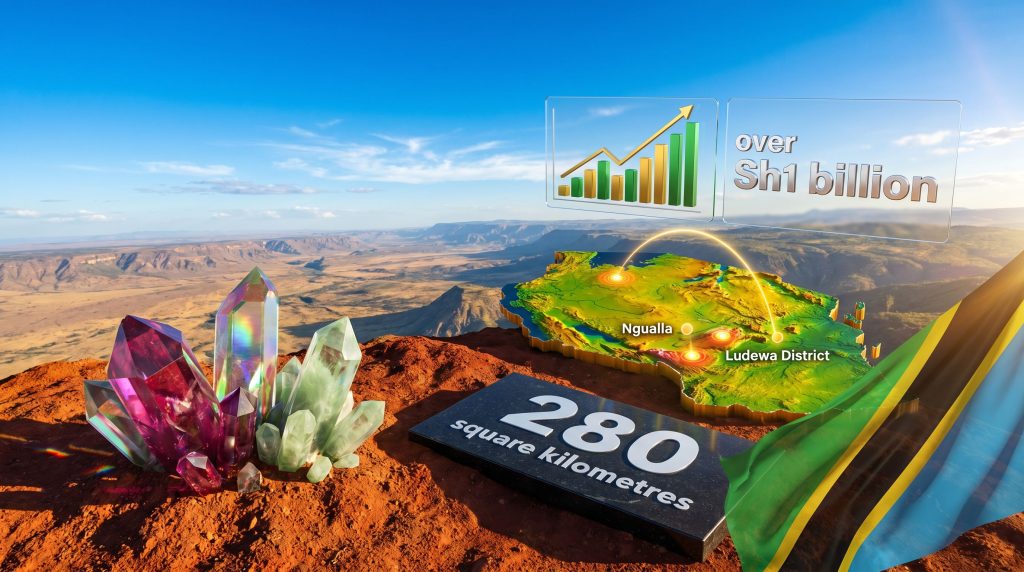
The newly confirmed rare earth discovery in Tanzania's Njombe Region adds a second, earlier-stage but strategically significant node to the country's REE portfolio. The discovery was made during ongoing exploration activities at Mkiu Village in Ludewa District, conducted through a cooperative arrangement between the government and Hongji Mining Co. Ltd.
Key facts established from Phase 1 exploration:
- Primary minerals confirmed: Neodymium (Nd) and Praseodymium (Pr), the most commercially valuable REE pair for permanent magnet manufacture
- Project area under active exploration: 280 square kilometres
- Community compensation already disbursed: over Sh1 billion (Tanzanian shillings)
- Environmental Impact Assessment (EIA): nearing completion as a prerequisite for mining operations
- Planned extraction methodology: in-situ leaching (ISL) technology
- Phase 1 complete; detailed assessment phase now underway ahead of commercial production decisions
The planned use of ISL technology deserves specific attention, as it represents a meaningful departure from conventional mining approaches. Furthermore, it carries important implications for both community relations and environmental outcomes in an agriculturally active region.
In-Situ Leaching for Rare Earths: A Technical Primer
In-situ leaching involves injecting a leaching solution — typically a mild ammonium sulfate or magnesium sulfate solution in REE applications — directly into the mineralised zone without physically removing the ore body. The solution dissolves target REE ions, which are then pumped to surface collection points and processed into a concentrate or oxide product.
The practical advantages for a populated agricultural region like Ludewa District are significant:
- Minimal surface disturbance: No large open pit or underground void is created
- Reduced waste rock generation: The ore body remains in place; only the leach solution is mobilised
- Lower community displacement risk: Smaller surface footprint means fewer land access conflicts
- Faster pathway to initial production: ISL operations can be commissioned more rapidly than conventional mines
The method is well-established for ionic clay REE deposits in southern China, which host a disproportionate share of the world's heavy REE supply. Its application in East Africa, where deposit geology and groundwater conditions differ, will require careful EIA scrutiny and ongoing monitoring. This is not a risk-free technology, but it is a meaningfully lower-impact alternative that aligns with the project's stated community development objectives.
Africa's REE Jurisdictions: How Tanzania Stacks Up
Tanzania is not Africa's only REE story, but it may be its most multifaceted. The table below benchmarks key African REE jurisdictions across development stage, deposit type, and strategic significance.
| Country | Key REE Project | Deposit Type | Development Stage | NdPr Focus |
|---|---|---|---|---|
| Tanzania | Ngualla, Njombe (Ludewa) | Carbonatite / Ionic clay | Advanced to early-stage | High |
| South Africa | Steenkampskraal | Monazite vein | Advanced | Moderate-High |
| Malawi | Songwe Hill | Carbonatite | Development | High |
| Namibia | Lofdal | Carbonatite (HREE) | Exploration | Low (HREE focus) |
| Madagascar | Tantalus | Lateritic | Early-stage | Mixed |
Tanzania's combination of a genuinely large, high-grade NdPr deposit at Ngualla plus a newly confirmed 280 km² exploration target at Njombe gives it a stronger forward pipeline than most competing African jurisdictions. According to the U.S. International Trade Administration, Tanzania hosts exploration activity across 24 rare earth and critical mineral elements, reflecting the breadth of geological opportunity across the country.
The Policy Architecture That Will Determine Tanzania's Economic Outcome
Lessons From Africa's Resource History
Geology creates the opportunity. Policy determines who benefits. This distinction is not academic — it is the central lesson of African resource development across the past six decades. Countries that have extracted vast quantities of gold, copper, oil, and diamonds have not always translated that extraction into durable national wealth.
The mechanisms through which value escapes a resource-rich nation are well-documented: raw material exports, thin royalty regimes, limited local employment, and processing outsourced to third countries. For Tanzania's rare earth sector, the risk of repeating this pattern is real.
The Ngualla-Shenghe offtake arrangement, while commercially rational, illustrates how REE concentrate can leave Tanzania's borders before any significant value-add processing occurs. Economist Ediko Mosha has noted publicly that Tanzania's government should ensure the country's population fully benefits from its mineral resources through policy frameworks and investment agreements that protect national interests and generate long-term economic value, rather than short-term royalty streams.
Recommended Policy Levers for Long-Term Value Capture
A robust policy framework for Tanzania's REE sector should encompass several interlocking mechanisms:
- Mandatory in-country processing thresholds that require a defined percentage of REE concentrate to be processed domestically before export is permitted
- Technology transfer requirements embedded in mining agreements, ensuring Tanzanian personnel and institutions gain access to separation and processing expertise
- Community development fund structures linked to production milestones, building on the Sh1 billion+ compensation precedent already established at Njombe
- Transparent revenue management frameworks that ringfence REE royalties and export levies for infrastructure and social investment
- Local content requirements for employment, procurement, and services across the mining supply chain
Tanzania's REE Economic Potential: A Scenario Framework
| Economic Dimension | Current Status | Potential with Full REE Development |
|---|---|---|
| REE export revenues | Nascent / pre-production | Significant foreign exchange contributor |
| Government royalty income | Minimal | Material budget contribution |
| Direct and indirect employment | Limited | Thousands of jobs across the value chain |
| Infrastructure investment | Improving (TAZARA upgrade underway) | Accelerated by mining capital expenditure |
| Foreign direct investment | Increasing | Elevated by strategic mineral positioning |
| Processing capacity | Absent | Transformative if built with technology transfer |
Tanzania vs. Global REE Peers: A Competitive Assessment
Where Does Tanzania Rank Among Non-Chinese Producers?
Tanzania's REE credentials compare favourably to most emerging jurisdictions outside of Australia and Canada. A benchmarking perspective:
- Australia (Mount Weld, Lynas Rare Earths): The current non-Chinese production benchmark. World's highest-grade REE deposit in active production with integrated processing in Malaysia. Sets the global standard for ex-China REE supply.
- Canada: Multiple advanced-stage projects targeting both light and heavy REEs. Strong processing ambitions but most projects remain pre-production.
- Greenland and Europe: Significant deposit inventory but facing persistent environmental and political headwinds. Indeed, critical minerals in Greenland face particularly complex geopolitical considerations that continue to delay development timelines.
- Brazil: Large ionic clay REE resources with processing capacity under development, but logistical and infrastructure challenges remain.
- Tanzania: Ngualla's NdPr grade and scale position it as a credible Tier-1 development candidate. The Njombe discovery adds meaningful exploration upside that differentiates Tanzania from single-asset peer jurisdictions.
A key competitive advantage for Tanzania that is often overlooked: the carbonatite mineralogy at Ngualla produces an REE basket with a relatively high critical mineral payability*, meaning the proportion of economically valued elements within the total ore is favourable compared to many deposits in Canada and Greenland where cerium and lanthanum dominate and depress overall basket value.*
The China Processing Dependency Problem
Even as new REE deposits are identified globally, the processing bottleneck remains centred in China. Approximately 85 to 90% of global REE separation and refining occurs within Chinese facilities, creating a structural vulnerability for Western supply chains that mining activity alone cannot resolve.
Western governments are actively funding efforts to break this dependency. The U.S. Inflation Reduction Act includes incentives for ex-China critical mineral processing, while the EU Critical Raw Materials Act identifies REEs as a strategic priority requiring domestic or allied-nation processing capacity. These policy frameworks create a commercial environment in which REE projects with credible supply chain integration attract stronger offtake interest and financing options. Consequently, the rare earth geopolitics surrounding these policy shifts are reshaping investment flows across emerging producer nations.
Tanzania's ability to capitalise on this shift depends on whether it can move beyond being a concentrate exporter. Strategic partnerships with processing-capable nations — including Australia, Japan, South Korea, or EU member states — could provide the technical pathways needed to build domestic or regionally integrated processing capacity.
The next major ASX story will hit our subscribers first
Key Risk Factors and Investment Considerations
What Needs to Go Right for Tanzania's REE Sector to Deliver
This section reflects analytical perspectives and forward-looking assessments. Investors should conduct independent due diligence and note that REE project development involves material geological, regulatory, and market risks.
Critical risk factors include:
- Geological risk: Phase 1 exploration at Njombe has confirmed the presence of NdPr mineralisation, but commercial viability requires bankable resource estimates derived from systematic drilling and assaying. Discovery is the beginning of a long verification process, not the end.
- Processing risk: ISL technology is proven in Chinese ionic clay settings but its application at Njombe will need site-specific validation. Hydrogeological conditions, ore body permeability, and leach solution recovery rates all require empirical testing.
- Infrastructure risk: Rail, road, and port connectivity are critical for REE concentrate logistics. The ongoing TAZARA railway upgrade between Tanzania and Zambia is directly relevant to southern Tanzania's mineral export capacity.
- Regulatory risk: Stability of Tanzania's mining fiscal regime, including royalty rates and licence security, is a primary consideration for long-term project financing.
- Market risk: NdPr oxide prices are cyclical and subject to significant volatility. Project economics need to be stress-tested across a range of price scenarios, not just current spot prices.
- Social licence risk: Operating in a populated agricultural region like Ludewa District requires ongoing community engagement. The Sh1 billion compensation framework is a positive foundation, but social licence must be maintained throughout the project lifecycle.
Frequently Asked Questions: Rare Earth Discovery in Tanzania
What rare earth minerals have been discovered in Tanzania?
Tanzania's REE portfolio encompasses a broad range of minerals. The rare earth discovery in Tanzania's Njombe Region has confirmed the presence of neodymium and praseodymium, the two commercially most valuable rare earth elements for permanent magnet applications. The Ngualla project in Songwe Region similarly targets NdPr as its primary commercial product, alongside a broader REE basket. The Wigu Hill project in Morogoro Region represents a third exploration-stage target with a distinct mineralogical profile.
Where is the Ngualla Rare Earth Project located?
Ngualla is located in the Songwe Region of southern Tanzania, in proximity to the regional hub of Mbeya. The area benefits from established road infrastructure and reasonable access to the TAZARA rail corridor, both relevant to future concentrate logistics.
Who holds the mining rights for Tanzania's rare earth projects?
Tanzania operates a Special Mining Licence framework administered through the Ministry of Minerals. At the Njombe site, Hongji Mining Co. Ltd. is the operator conducting exploration and community engagement activities. The broader investment landscape includes multiple international participants across different project areas, operating under Tanzania's Mining Act and associated regulations.
What technologies will be used to mine rare earths in Tanzania?
The Njombe project is planned to use in-situ leaching technology, which dissolves REE minerals underground and pumps the solution to surface for processing, minimising physical disturbance. The Ngualla project involves more conventional approaches to REE ore processing, with beneficiation and chemical processing stages designed to produce a mixed REE carbonate or oxide product for further refining.
How will Tanzania's rare earth sector benefit local communities?
At the Njombe site specifically, over Sh1 billion in compensation payments has already been disbursed to project-affected residents. The operator has committed to local employment creation, support for surrounding business development, and adherence to Tanzanian environmental assessment requirements. Broader national benefits will depend on royalty and tax revenue flows, as well as the extent to which downstream processing is developed within Tanzania rather than abroad.
The Strategic Opportunity Tanzania Cannot Afford to Miss
The geology is not in question. Tanzania possesses a genuinely world-class NdPr endowment anchored by Ngualla and now expanded by the rare earth discovery in Tanzania's Njombe Region — adding a 280 km² exploration frontier to an already compelling national minerals portfolio. What remains uncertain is whether Tanzania's institutional, policy, and processing architecture can develop quickly enough to capture the value that this geological endowment represents.
The window is real but not indefinite. Other jurisdictions, including Australia, Canada, and increasingly Brazil, are moving rapidly to establish themselves as reliable non-Chinese REE suppliers. Western governments and manufacturers are actively seeking long-term supply agreements for NdPr products. Tanzania has the raw material advantage. However, converting that into processing capacity, transparent revenue frameworks, and genuine community benefit is the work that will determine whether this mineral moment becomes a lasting economic transformation or another chapter in Africa's long history of undervalued resource extraction.
Disclaimer: This article contains forward-looking analysis and scenario projections regarding REE demand, project timelines, and economic outcomes. These represent analytical perspectives based on publicly available information and should not be construed as investment advice. Rare earth project development involves material risks including geological, regulatory, financial, and market uncertainties. Readers should conduct independent due diligence before making any investment decisions.
Ready to Identify the Next Major Mineral Discovery Before the Market Does?
Discovery Alert's proprietary Discovery IQ model delivers real-time alerts on significant ASX mineral discoveries — including critical minerals driving the global energy transition — instantly transforming complex geological data into actionable investment insights for both short-term traders and long-term investors. Explore historic examples of major discoveries and their exceptional returns, then start your 14-day free trial at Discovery Alert to position yourself ahead of the broader market.