August 25, 2026
The global transition toward renewable energy systems has fundamentally altered the strategic importance of mineral extraction technologies, with rare earth element processing emerging as a critical bottleneck in supply chains spanning from wind turbines to electric vehicle motors. Traditional hydrometallurgical approaches to leaching rare earth elements have long relied on aggressive chemical processes that generate substantial environmental burdens while struggling to achieve the efficiency levels demanded by modern manufacturing requirements.
Understanding the Fundamentals of Rare Earth Element Leaching
The process of leaching rare earth elements represents one of the most technically demanding aspects of modern metallurgical engineering. At its core, leaching involves the selective dissolution of target elements from host minerals using chemical solvents, with the primary goal of extracting neodymium, dysprosium, cerium, and yttrium from complex geological matrices. These elements serve as the backbone of permanent magnet technologies, phosphor applications, and catalytic systems that power everything from smartphones to industrial automation equipment.
The source materials for rare earth element leaching span a diverse range of geological formations and industrial byproducts. Natural ores such as monazite and bastnäsite represent traditional feedstocks, while coal byproducts and industrial waste streams have emerged as increasingly viable alternatives. The chemical principles driving selective extraction rely on differential solubility characteristics, where specific pH conditions and temperature regimes favour the dissolution of target compounds while leaving unwanted minerals intact.
Furthermore, modern supply chains face unprecedented vulnerabilities due to processing bottlenecks in rare earth element recovery systems. The electronics industry alone consumes approximately 23% of global rare earth production, while renewable energy applications account for an additional 15% of demand. Defence applications, though smaller in volume, require the highest purity specifications and represent some of the most strategically sensitive end uses.
When big ASX news breaks, our subscribers know first
Traditional Acid Leaching Methods and Their Operational Parameters
Sulfuric Acid Processing Systems
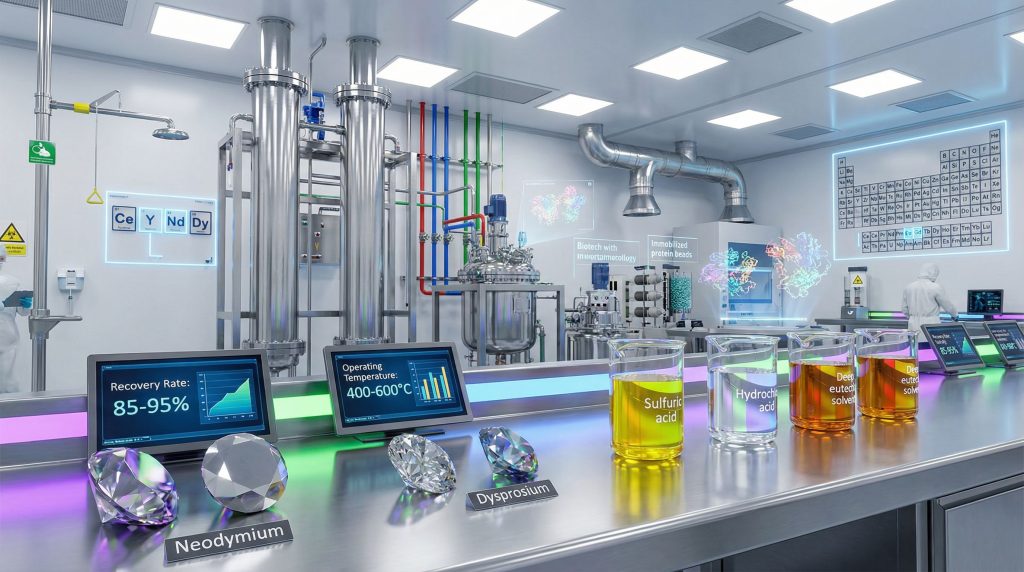
Sulfuric acid-based leaching systems have dominated industrial rare earth processing for decades, typically operating under high-temperature roasting protocols ranging from 400°C to 600°C. These systems achieve equilibrium kinetics within relatively short reaction windows, often completing primary extraction phases within 10-minute cycles. The addition of chemical enhancers such as ammonium sulfate and sodium chloride can significantly improve extraction rates by modifying the chemical environment and promoting more favourable dissolution kinetics.
Temperature-dependent solubility patterns in sulfuric acid systems create complex optimisation challenges for process engineers. Higher temperatures generally accelerate reaction kinetics but may also promote unwanted side reactions that reduce overall selectivity. The energy requirements for maintaining elevated temperatures represent a significant operational cost factor, particularly in facilities processing lower-grade feedstocks.
Hydrochloric Acid Extraction Techniques
Hydrochloric acid leaching presents distinct advantages in terms of operating temperature requirements and extraction efficiency. Recent testing conducted by ANSTO on composite samples from the Caladão Project demonstrated remarkable recovery rates, achieving up to 100% extraction of magnetic rare earth oxides under controlled conditions. These tests initiated with pH levels approximately equal to 1, with acidic conditions maintained over 72-hour processing cycles at 50°C.
The testing protocol employed composite samples from 3 metres of two diamond drill holes located 2 kilometres apart, providing representative geological variability for metallurgical assessment. Under comparative testing conditions, hydrochloric acid demonstrated stronger overall extraction responses compared to sulfuric acid alternatives, particularly for weathered profiles containing clay-hosted ionic mineralisation.
Thermal activation requirements for carbonate-targeting applications vary significantly depending on the specific mineralogy of the feedstock. Fluoride residue management represents a critical operational consideration, as many rare earth-bearing minerals contain fluorine compounds that can generate hazardous emissions during processing. Multi-stage purification workflows are typically required to achieve commercial-grade product specifications while maintaining environmental compliance.
Comparative Performance Analysis
| Acid Type | Operating Temperature | Recovery Rate | Primary Applications |
|---|---|---|---|
| H₂SO₄ | 400-600°C | 85-95% | Monazite processing |
| HCl | 25-80°C | 70-100%* | Bastnäsite extraction |
| MSA | 25°C | 78% | Phosphogypsum treatment |
*Recovery rates of up to 100% for magnetic rare earth oxides have been demonstrated under optimal conditions with selected compounds, as verified through ANSTO testing on Caladão Project samples.
Environmental Challenges in Conventional Leaching Operations
Radioactive Waste Generation
The processing of rare earth elements inevitably generates radioactive waste streams due to the natural occurrence of thorium and uranium in many rare earth-bearing minerals. Thorium contamination levels can vary dramatically depending on the geological source, with some deposits containing thorium concentrations exceeding 10,000 parts per million. Long-term storage and disposal requirements for radioactive processing residues create substantial liability concerns for operators, particularly in jurisdictions with stringent nuclear waste regulations.
Regulatory compliance frameworks for radioactive waste management vary significantly across different mining jurisdictions. Facilities in Australia, Canada, and the United States must navigate complex licensing requirements that can add millions of dollars to project development costs. The long half-life of thorium-232 (14 billion years) means that disposal solutions must account for essentially permanent storage requirements.
Chemical Toxicity Concerns
Acid neutralisation and pH management represent ongoing operational challenges in conventional leaching systems. The high acidity levels required for effective extraction create corrosive environments that demand specialised materials and handling procedures. Heavy metal contamination risks extend beyond the target rare earth elements to include potentially toxic byproducts such as arsenic, lead, and cadmium that may be present in the ore matrix.
However, water treatment system requirements for acid leaching operations can consume 20-30% of total operating costs in some facilities. The generation of large volumes of acidic process water requires sophisticated neutralisation and purification systems before discharge or recycling is possible.
Green Leaching Technologies and Their Revolutionary Potential
Deep Eutectic Solvents Applications
Deep eutectic solvents represent one of the most promising alternatives to conventional acid leaching systems. These biodegradable solvent systems, often based on choline chloride formulations, can achieve selective extraction of rare earth elements at significantly lower temperatures than traditional methods. Research has demonstrated cerium recovery rates of approximately 25% from complex ores at 80°C, while offering dramatically reduced environmental footprints compared to acid-based alternatives.
The biodegradable characteristics of deep eutectic solvents eliminate many of the long-term waste management challenges associated with conventional processing. Unlike traditional organic solvents, DES systems can be designed to break down naturally in the environment, reducing the risk of persistent contamination. Cost-benefit analyses suggest that while initial solvent costs may be higher, the reduced waste treatment and disposal expenses can provide favourable long-term economics.
Organic Acid Processing Methods
Citric acid extraction systems have shown particular promise for processing coal fly ash and other industrial waste streams. These systems employ response surface methodology optimisation to identify optimal processing conditions that maximise recovery while minimising chemical consumption. Sequential hydrometallurgical approaches using organic acids can achieve competitive recovery rates while operating at near-ambient temperatures.
Furthermore, the use of naturally occurring organic acids addresses many of the environmental concerns associated with strong mineral acids. Citric acid, for example, is readily biodegradable and presents minimal toxicity risks compared to hydrochloric or sulfuric acid systems. This characteristic makes organic acid systems particularly attractive for operations in environmentally sensitive areas or jurisdictions with strict environmental regulations.
Methanesulfonic Acid Innovations
Methanesulfonic acid has emerged as a particularly effective leaching agent for phosphogypsum processing applications. Optimisation studies have identified 3M concentration levels as providing optimal performance characteristics, with product layer diffusion kinetics exhibiting activation energies as low as 2.73 kJ/mol. Solid-to-liquid ratio optimisation typically favours ratios of 1:8 for maximum extraction efficiency.
The low activation energy requirements for MSA-based systems translate directly into reduced energy consumption compared to high-temperature alternatives. This characteristic makes MSA systems particularly attractive for large-scale processing operations where energy costs represent a significant portion of total operating expenses.
Biotechnology Applications in Modern REE Leaching
Lanmodulin Protein Engineering
Immobilised bead technology platforms utilising engineered lanmodulin proteins represent a fundamentally different approach to rare earth element extraction. These systems employ pH-controlled binding and release mechanisms that can achieve extraordinary selectivity improvements over traditional chemical methods. Laboratory studies have demonstrated selectivity advantages exceeding 99.9 times conventional approaches, particularly for separating neodymium and dysprosium from complex mixtures.
Reusable cycle performance characteristics of lanmodulin-based systems offer significant economic advantages over single-use chemical extraction methods. The protein-based binding sites can be regenerated through simple pH adjustments, allowing the same extraction medium to be used for multiple processing cycles without degradation in performance.
Selective Binding Mechanisms
The target specificity of engineered lanmodulin proteins enables processing of extremely low-grade sources containing less than 0.1% rare earth elements by weight. This capability opens up entirely new categories of feedstock materials that would be uneconomical to process using conventional methods. The elimination of organic solvent requirements in lanmodulin systems addresses many of the environmental and safety concerns associated with traditional solvent extraction processes.
The molecular-level precision of protein-based extraction systems allows for the selective targeting of individual rare earth elements within complex mixtures. This capability is particularly valuable for separating heavy rare earth elements such as dysprosium and terbium, which command premium pricing in global markets due to their scarcity and critical applications.
Advanced Separation Technologies Enhancing Leaching Efficiency
Solvent Extraction Post-Processing
Tributyl phosphate applications in post-leaching separation represent well-established technology for purifying rare earth element concentrates. PC-88A ligand systems offer improved selectivity characteristics, particularly for heavy rare earth element separation. Diglycolamide ligands provide enhanced selectivity improvements over traditional extraction systems, while TODGA systems demonstrate loading capacity advantages with factors exceeding 2.5 times conventional approaches.
The integration of advanced ligand systems with modern leaching technologies creates synergistic effects that improve overall process efficiency. Optimised ligand selection can reduce the number of extraction stages required to achieve commercial-grade purity specifications, directly translating into reduced capital and operating costs for processing facilities.
Ion Exchange and Precipitation Methods
Sodium hydroxide precipitation protocols represent the final stage in most rare earth element processing flowsheets. Hydroxide formation kinetics depend heavily on pH control and temperature management, with optimal conditions varying significantly between different rare earth elements. Purity enhancement strategies often involve multiple precipitation and redissolution cycles to remove residual impurities.
The crystallisation characteristics of rare earth hydroxides can be manipulated through careful control of precipitation conditions. Slower precipitation rates generally produce larger, more easily filtered crystals, while rapid precipitation may result in fine particles that are difficult to separate from process solutions.
The next major ASX story will hit our subscribers first
Size-Selective Lixiviant Technologies
SMART Lixiviant Development
Size-selective lixiviant technologies represent an emerging approach to rare earth element extraction that targets specific mineral phases while leaving unwanted materials undisturbed. These systems employ direct mineral targeting capabilities that can bypass many of the extensive solvent extraction requirements of conventional processing routes. The selective nature of these lixiviants enables REE extraction without the bulk acid processing that characterises traditional approaches.
Economic feasibility assessments for size-selective lixiviants suggest significant advantages in terms of reduced processing steps and lower chemical consumption. The ability to target specific mineral phases directly can eliminate many of the intermediate purification steps required in conventional flowsheets, resulting in simplified process designs and reduced capital requirements.
Targeted Extraction Advantages
The reduced processing step requirements of targeted extraction systems translate directly into lower operating costs and simplified process control requirements. Enhanced product purity profiles achievable through selective extraction can command premium pricing in markets where high-purity specifications are critical, such as permanent magnet applications.
Selective extraction systems also offer advantages in terms of waste generation, as they avoid the dissolution of large quantities of unwanted minerals that must subsequently be disposed of as tailings. This characteristic is particularly important in environmentally sensitive areas where waste minimisation is a key regulatory requirement.
Processing Conditions and Their Impact on Leaching Performance
What Temperature Conditions Optimise REE Leaching?
Temperature optimisation in rare earth element leaching systems reveals complex relationships between thermal input and extraction efficiency. While higher temperatures generally accelerate reaction kinetics, many systems exhibit inverse relationships between temperature and element solubility at extreme conditions. The recent success demonstrated at the Caladão Project, where optimal extraction was achieved at 50°C over 72-hour processing cycles, illustrates the importance of temperature-time optimisation rather than simply maximising thermal input.
Energy consumption trade-offs represent a critical consideration in temperature optimisation, particularly for operations processing large tonnages of lower-grade materials. Process control system requirements become increasingly sophisticated as temperature precision demands increase, adding complexity and cost to processing facilities.
Time and Concentration Variables
Processing time windows in leaching rare earth elements typically extend from several hours to maximum durations of 72 hours, depending on the specific extraction chemistry and target recovery rates. pH control systems must maintain precise acidic conditions throughout the extraction period, often starting from initial pH values near 1 and maintaining controlled acidity levels throughout the process cycle.
Concentration gradient management becomes increasingly important in longer processing cycles, as the buildup of dissolved species can affect extraction kinetics and selectivity. Dynamic concentration monitoring and adjustment systems are often required to maintain optimal extraction conditions throughout extended processing cycles.
Kinetic Modelling Applications
Product layer diffusion control mechanisms dominate the kinetics of many rare earth element leaching systems, particularly those operating at lower temperatures. Activation energy calculations provide crucial insights for process optimisation and scale-up engineering considerations. Mathematical modelling of these kinetic relationships enables process engineers to predict performance at different scales and operating conditions.
Scale-up engineering considerations must account for the non-linear relationships between reaction kinetics and reactor geometry. Heat and mass transfer limitations that are negligible at laboratory scale can become controlling factors in industrial-scale operations, requiring careful attention to reactor design and mixing systems.
Economic Implications of Different Leaching Technologies
Capital Investment Requirements
Traditional acid processing infrastructure typically requires substantial capital investments in corrosion-resistant materials and sophisticated safety systems. Stainless steel and exotic alloy construction can represent 30-40% of total plant capital costs for conventional acid leaching facilities. Green technology implementation costs vary significantly depending on the specific approach, with some biotechnology platforms requiring specialised bioreactor systems and controlled environment facilities.
Biotechnology platform development expenses often involve significant upfront research and development investments, but can provide attractive long-term returns through reduced operating costs and waste treatment requirements. The modular nature of many green extraction technologies can also provide advantages in terms of phased development and reduced initial capital requirements.
Operating Cost Analysis
Chemical consumption patterns represent the largest variable cost component in most leaching operations, typically accounting for 25-35% of total operating expenses. Energy requirements vary dramatically between different processing approaches, with high-temperature acid leaching consuming 3-5 times more energy per ton processed compared to ambient temperature alternatives.
Waste treatment and disposal expenses can represent hidden cost centres in conventional processing operations. Facilities processing 10,000 tons per year of rare earth concentrate may generate 50,000-100,000 tons of waste materials requiring treatment and disposal, creating ongoing liability and expense.
Market Competitiveness Factors
Processing efficiency metrics directly impact product pricing and market positioning. Facilities achieving 95% recovery rates can often justify premium pricing compared to operations with 85% efficiency, particularly for high-value heavy rare earth elements. Product quality specifications become increasingly important as end-use applications demand higher purity levels.
Supply chain integration capabilities provide competitive advantages for processing facilities that can offer consistent quality and delivery schedules. Long-term supply contracts with end users often favour facilities with proven track records of reliable production and quality control.
Addressing Scalability Challenges in the Industry
Pilot Plant Development Programs
Technology demonstration projects play crucial roles in validating new leaching approaches at intermediate scales before full commercial implementation. Process optimisation studies conducted at pilot scale can identify operational challenges that are not apparent in laboratory testing, particularly those related to materials handling and process control complexity.
Commercial viability assessments require comprehensive evaluation of both technical performance and economic competitiveness under realistic operating conditions. Pilot plant operations typically provide the first opportunity to generate comprehensive operating cost data and identify potential optimisation opportunities.
Industrial Implementation Strategies
Phased deployment approaches allow operators to minimise risk while gaining operational experience with new extraction technologies. Risk mitigation frameworks typically involve parallel operation of proven and experimental systems during transition periods, ensuring production continuity while validating new approaches.
Technology transfer protocols require careful consideration of intellectual property arrangements and technical support requirements. Successful implementation often depends on close collaboration between technology developers and operating companies throughout the deployment process.
Future Directions in REE Leaching Technologies
Emerging Research Directions
Hybrid processing combinations that integrate multiple extraction technologies represent an increasingly important research focus. These approaches can leverage the strengths of different technologies while mitigating their individual limitations, potentially achieving superior overall performance compared to single-technology approaches. In addition, the mining industry evolution is driving innovation in extraction methodologies.
Artificial intelligence optimisation systems are beginning to find applications in process control and optimisation for complex leaching operations. Data-driven mining operations can identify optimal operating parameters and predict equipment maintenance requirements, potentially improving both efficiency and reliability.
Continuous processing innovations offer advantages over traditional batch processing systems in terms of consistency and throughput. Flow-through reactor designs can provide better control over reaction conditions and eliminate the variability associated with batch-to-batch processing.
Regulatory and Sustainability Trends
Environmental compliance evolution continues to favour technologies with reduced waste generation and lower environmental impact profiles. Regulatory agencies in major mining jurisdictions are increasingly requiring comprehensive life-cycle environmental assessments for new processing technologies. Consequently, the mining sustainability transformation is reshaping industry practices.
Circular economy integration principles are driving interest in technologies that can process waste materials and byproducts as feedstocks for rare earth element extraction. Coal fly ash, industrial residues, and recycled permanent magnets represent growing feedstock categories that require specialised processing approaches. This aligns with the broader green transition in raw materials movement.
Waste minimisation requirements are becoming increasingly stringent, with some jurisdictions requiring demonstrated recycling or beneficial use for all process residues. This trend favours extraction technologies that generate minimal waste streams or produce valuable byproducts.
Market Demand Projections
Electric vehicle growth impacts are projected to drive rare earth element demand increases of 300-500% over the next decade, particularly for neodymium and dysprosium used in permanent magnet motors. This demand growth is creating opportunities for new processing facilities and extraction technologies that can handle lower-grade feedstocks economically.
Renewable energy sector expansion continues to drive demand for rare earth elements in wind turbine generators and solar panel applications. The development of floating offshore wind farms and utility-scale energy storage systems represents emerging demand categories that will require substantial rare earth element supplies.
Defence and aerospace applications, while smaller in volume, continue to demand the highest purity specifications and represent some of the most price-insensitive market segments. Advanced military technologies and space applications often require rare earth elements with purities exceeding 99.99%, creating premium market opportunities for facilities capable of achieving these specifications.
Optimising REE Leaching for Sustainable Production
Technology Selection Criteria
Source material characteristics represent the primary determinant in selecting optimal leaching technologies. Clay-hosted ionic deposits, such as those found in the Caladão Project, may favour different extraction approaches compared to hard rock ores containing monazite or bastnäsite. Environmental impact considerations are becoming increasingly important in technology selection, particularly for operations in environmentally sensitive areas.
Economic feasibility requirements must account for both capital and operating cost implications over the full project life cycle. Product specification demands from end users often dictate the level of processing complexity and purification required, directly impacting technology selection and overall process design.
Integration Strategies for Maximum Efficiency
Multi-technology processing approaches can optimise overall system performance by employing different extraction methods for different portions of the ore body or processing campaign. The Caladão Project strategy exemplifies this approach, with low-cost in-situ recovery using magnesium sulfate for ionic clay-hosted mineralisation, while maintaining the option for acid leaching of non-ionic compounds to maximise overall recovery.
Waste stream valorisation opportunities can transform processing residues from liability into additional revenue sources. Some facilities have successfully developed markets for rare earth processing byproducts, including construction materials, soil amendments, and specialised industrial applications.
Supply chain optimisation potential extends beyond individual processing facilities to encompass integrated networks of extraction, processing, and manufacturing operations. Vertical integration strategies that combine rare earth element extraction with downstream manufacturing can capture additional value while ensuring supply security for critical applications.
The evolution of leaching rare earth elements continues to accelerate as global demand intensifies and environmental regulations become more stringent. Success in this industry increasingly depends on the ability to integrate multiple technologies, optimise processing conditions, and adapt to changing market requirements while maintaining sustainable operational practices.
Ready to Capitalise on the Next Rare Earth Element Discovery?
Discovery Alert's proprietary Discovery IQ model delivers instant notifications when significant rare earth element discoveries are announced on the ASX, empowering investors to identify actionable opportunities ahead of the broader market. Explore why historic mineral discoveries can generate substantial returns, then begin your 14-day free trial today to position yourself at the forefront of this critical sector's evolution.