
August 22, 2026
Rare earth element processing technology has evolved significantly over the past decade, driven by growing demand for permanent magnets in electric vehicles and renewable energy systems. The Kangankunde rare earths project exemplifies how critical minerals energy security concerns are reshaping investment priorities in this sector. Traditional chemical separation methods, while effective, often require substantial capital investment and complex environmental management protocols. Physical beneficiation approaches, which concentrate rare earth minerals through mechanical processes rather than chemical dissolution, have emerged as a compelling alternative for projects with suitable geological characteristics.
The global rare earth supply chain remains heavily concentrated in China, creating strategic vulnerabilities for Western manufacturers dependent on these critical materials. This concentration has prompted governments and mining companies to prioritise projects outside Chinese influence, particularly those capable of producing high-grade concentrates suitable for downstream processing. African rare earth deposits, with their unique geological characteristics and proximity to established mining infrastructure, have attracted increasing attention from international investors seeking supply chain diversification.
The Kangankunde Rare Earths Project: Strategic Location and Geological Foundation
The Kangankunde rare earths project in Malawi occupies a strategically advantageous position within the Chilwa Alkaline Province, a geological formation known for hosting carbonatite complexes enriched in rare earth elements. This location provides several operational advantages that distinguish it from rare earth projects in other global jurisdictions.
Strategic Geographic Positioning and Infrastructure Access
Malawi's position in southeastern Africa provides the Kangankunde rare earths project with direct access to the Nacala Corridor, a major transportation network connecting landlocked countries to international markets through Mozambique's deepwater port facilities. This infrastructure advantage reduces logistics costs and transit times compared to alternative African rare earth projects that rely on longer overland transport routes.
The project's location approximately 230 kilometres from Malawi's commercial capital, Blantyre, ensures access to established services, skilled labour, and regulatory frameworks. Furthermore, Malawi operates under Commonwealth legal traditions, providing mining companies with familiar contract law and dispute resolution mechanisms that reduce regulatory risk compared to jurisdictions with less established mining codes.
Carbonatite Geology and Processing Advantages
The Chilwa Alkaline Province carbonatite complex hosting the Kangankunde rare earths project exhibits unique geological characteristics that directly impact processing efficiency and environmental compliance requirements. Carbonatite formations typically contain lower concentrations of radioactive elements compared to silicate-hosted rare earth deposits, reducing downstream processing complexity and regulatory burden.
With 23.7 million tonnes of probable ore reserves at 2.9% total rare earth oxides (TREO), the project demonstrates resource scale sufficient to support long-term production operations. The 45-year Stage 1 mine life projection indicates sustainable resource extraction potential, while the exceptionally low strip ratio of 0.2:1 for open-pit operations reflects favourable mining geometry that minimises waste rock handling costs.
The target production of premium monazite concentrate at approximately 55% TREO represents a high-grade specification competitive with international standards. Monazite, a naturally occurring cerium phosphate mineral, concentrates rare earth elements through geological processes, enabling physical beneficiation to achieve commercial grade concentrates without chemical processing.
When big ASX news breaks, our subscribers know first
Enhanced Production Capacity Through Optimised Plant Design
The Kangankunde rare earths project has undergone significant processing plant optimisation, resulting in substantial improvements to production capacity and operational flexibility. These enhancements address critical bottlenecks while maintaining concentrate quality specifications required for international markets.
Throughput Improvements and Circuit Modifications
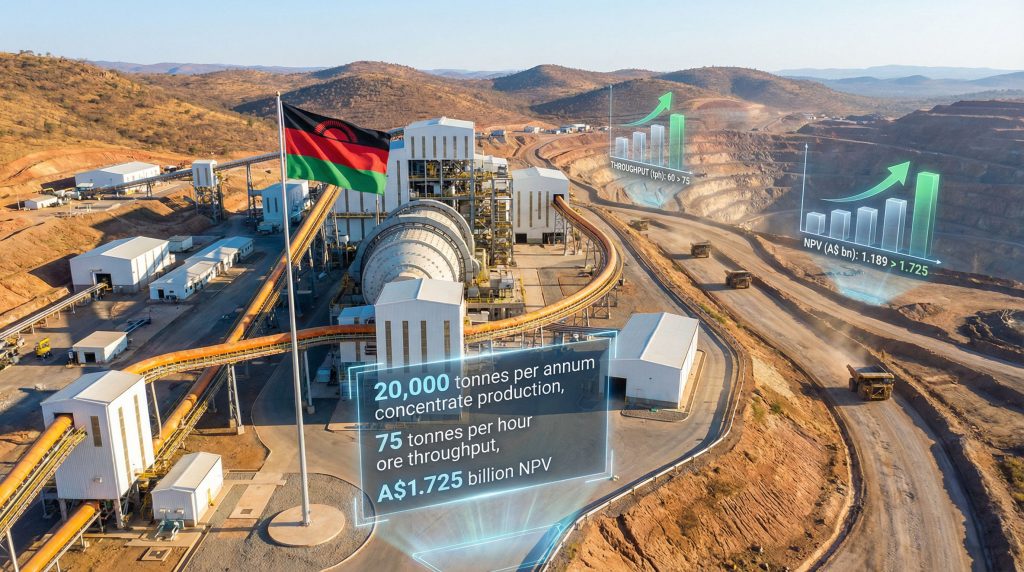
The optimised processing design increases ore throughput from 60 to 75 tonnes per hour, representing a 25% capacity improvement achieved through circuit reconfiguration rather than equipment scaling. This approach demonstrates capital-efficient engineering that maximises existing infrastructure investment whilst reducing per-unit processing costs.
The revised flowsheet replaces multi-stage crushing and ball milling with a single-stage crushing and SAG mill configuration. Semi-autogenous grinding technology, proven in copper and gold operations worldwide, provides energy-efficient size reduction with lower maintenance requirements compared to conventional ball mill circuits. This technology choice indicates adoption of best-practice mineral processing methodologies validated across multiple commodities.
Classification improvements shift from high-frequency screening to cycloning systems, enhancing operational flexibility for responding to ore variability and market demand fluctuations. However, cyclone classifiers provide adjustable separation parameters that enable operators to optimise recovery versus concentrate grade based on market conditions and downstream processor requirements.
Production Scaling and Output Enhancement
The optimisation work delivers Stage 1 monazite concentrate production of 20,000 tonnes per annum, compared to the original design target of 15,300 tonnes. This 31% increase in concentrate production translates directly to enhanced revenue generation and project economics without proportional capital cost increases.
Annual neodymium-praseodymium (NdPr) output reaches approximately 1,640 tonnes, derived from the monazite concentrate's rare earth element composition. NdPr elements command premium pricing in global markets due to their essential role in permanent magnet manufacturing for electric vehicle motors and wind turbine generators.
| Production Metric | Original Design | Optimised Design | Improvement |
|---|---|---|---|
| Ore Throughput (t/hr) | 60 | 75 | +25% |
| Annual Concentrate (t) | 15,300 | 20,000 | +31% |
| NPV (A$ billion) | 1.189 | 1.725 | +45% |
| Annual EBITDA (A$ million) | 124.3 | 171.5 | +38% |
The simplified circuit design incorporates early rejection of low-grade coarse material, reducing processing energy consumption and improving overall plant efficiency. This design philosophy aligns with modern mineral processing economics that prioritise energy efficiency and operational simplicity over maximum theoretical recovery rates.
Economic Performance and Financial Drivers
The Kangankunde rare earths project demonstrates exceptional financial metrics following processing optimisation, positioning it competitively within the global rare earth development landscape. The economic improvements reflect both technical enhancements and strategic operational decisions that support the broader mining industry transformation currently underway.
Capital Cost Management and Investment Framework
Stage 1 pre-production capital costs remain within US$40 million, maintained despite the 25% throughput increase. This capital efficiency indicates successful value engineering that captures optimisation benefits whilst controlling construction expenditure. The capital cost stability provides project financing certainty and maintains debt service coverage ratios within acceptable parameters for mining project finance.
The adoption of an owner-operator mining model reduces operating costs by approximately 30% compared to contract mining arrangements. This operational approach requires internal capability development but delivers improved cost predictability and eliminates contractor profit margins. Owner-operator models have proven successful in African mining operations where companies maintain direct control over production schedules and cost structures.
Long-lead equipment procurement has been completed for key gravity separation systems, reducing construction timeline risk and providing cost certainty for critical plant components. This procurement strategy protects against equipment price inflation and delivery delays that frequently impact mining project development schedules.
Revenue Projections and Operating Cost Advantages
Average annual revenue reaches A$228.9 million, reflecting both increased production volumes and premium concentrate pricing. The target operating costs of approximately US$2.92/kg REO position Kangankunde in the lowest-cost quartile globally among rare earth projects, providing sustainable profitability across commodity price cycles.
The pre-tax internal rate of return (IRR) increases from 99% to 142%, representing an exceptional return profile for a long-life mining project. In addition, this IRR level indicates robust project economics that remain attractive under conservative rare earth price assumptions and provide substantial upside potential during periods of strong market demand.
Annual EBITDA improvement of 38% to A$171.5 million demonstrates the financial impact of operational optimisation. This EBITDA level supports debt service capabilities and provides cash flow for potential expansion phases or dividend distributions to shareholders.
Physical Beneficiation Technology and Processing Methods
The Kangankunde rare earths project employs physical beneficiation processes to produce premium monazite concentrate without chemical separation on-site. This approach reduces capital requirements, environmental compliance complexity, and operational risk compared to integrated chemical processing facilities.
Gravity and Magnetic Separation Systems
Multi-stage gravity separation using shaking tables exploits the density differential between monazite (specific gravity ~5.0-5.3) and gangue minerals typically found in carbonatite host rock. Shaking tables provide proven technology for rare earth concentrate production, having been successfully deployed in historical rare earth operations worldwide.
The regrinding of composite particles targets improved mineral liberation in materials where rare earth minerals remain locked within silicate matrix. For instance, this secondary grinding stage increases rare earth recovery rates whilst maintaining concentrate quality specifications required by downstream processors.
Magnetic separation for concentrate purification removes weakly magnetic minerals that interfere with concentrate quality. Monazite exhibits moderate magnetic susceptibility, enabling effective separation from non-magnetic gangue minerals through properly designed magnetic circuits.
Quality Control and Product Specifications
The low thorium and uranium content characteristic of Chilwa Alkaline Province carbonatite enables simplified downstream processing and reduces regulatory restrictions on concentrate transport and handling. This intrinsic quality advantage provides competitive positioning in international rare earth concentrate markets where radioactivity levels directly impact processing costs.
Premium monazite concentrate with high TREO content meets specifications required by established rare earth separation facilities operated by downstream processors. The elimination of sulphide flotation from the circuit reduces operational complexity without compromising concentrate quality, as confirmed through comprehensive metallurgical test work programmes.
Minimal deleterious elements in final product ensure concentrate compatibility with existing separation technologies and reduce penalty charges that processors typically impose for problematic impurities. This quality characteristic enables premium pricing and strengthens offtake negotiation positions with potential customers.
Construction Progress and Development Timeline
The Kangankunde rare earths project has achieved critical construction milestones that position it for timely production commencement. Furthermore, contractor selection and engineering progress demonstrate systematic project advancement toward operational status, incorporating data-driven mining innovations throughout the development process.
Contractor Selection and Engineering Advancement
Obsideo has been appointed as design and construction contractor following a competitive tender process that evaluated technical capability, relevant experience, and delivery track record. The contract encompasses full engineering, procurement, construction, and commissioning of the processing plant, including all major process circuits and associated infrastructure.
Obsideo's previous experience commissioning the Gakara rare earths processing plant in Burundi provides credible technical pedigree for African rare earth project execution. This regional experience addresses logistical challenges, regulatory requirements, and operational conditions specific to African mining jurisdictions.
Performance guarantees and commercial mechanisms aligned to cost, schedule, and safety outcomes protect project stakeholders against contractor performance risks. These contractual structures provide recourse options if construction milestones or plant performance specifications are not achieved within agreed parameters.
Development Schedule and Production Targets
First production targeted for Q4 2026 maintains the development timeline established in the definitive feasibility study despite processing plant optimisation. This schedule consistency indicates effective project management and parallel advancement of critical path activities.
Early works and non-process infrastructure have progressed alongside major equipment procurement, demonstrating systematic construction sequencing that minimises overall project timeline. This parallel execution approach reduces construction duration and accelerates cash flow generation compared to sequential development phases.
Major contracting packages advancing simultaneously with detailed engineering ensures procurement activities align with construction readiness. This coordination reduces equipment delivery delays that frequently impact mining project commissioning schedules.
Comparative Analysis with African Rare Earth Projects
The Kangankunde rare earths project operates within a competitive landscape of African rare earth developments, each with distinct geological, operational, and strategic characteristics. Understanding this regional context provides insight into project positioning and market dynamics within the broader critical minerals supply chain.
Regional Development Context
Malawi's established mining jurisdiction provides regulatory framework certainty compared to countries with evolving mineral legislation. The nation operates under Commonwealth legal traditions with established mining codes, environmental regulations, and foreign investment protections that reduce sovereign risk for international mining companies.
Infrastructure access via the Nacala Corridor offers competitive advantages over projects requiring new transportation infrastructure development. This established rail connection to deepwater port facilities reduces logistics costs and timeline uncertainty compared to projects dependent on infrastructure construction for market access.
Environmental permitting completion with low impact profile reflects the project's physical beneficiation approach and carbonatite geology characteristics. Projects requiring chemical processing or located in environmentally sensitive areas face extended permitting timelines and higher compliance costs.
Market Position and Strategic Value
Supply chain diversification outside Chinese control addresses strategic concerns of Western governments and manufacturers seeking rare earth supply security. African projects provide geographical separation from Asian supply chains whilst maintaining access to international shipping routes and established trading relationships.
Premium concentrate quality meeting international standards enables direct sales to established separation facilities without additional upgrading requirements. This quality advantage reduces market access barriers and supports premium pricing compared to concentrates requiring further beneficiation.
Scalable production model with expansion potential provides optionality for responding to market demand growth. The resource base and processing plant design accommodate future capacity increases without fundamental infrastructure replacement.
The next major ASX story will hit our subscribers first
Risk Assessment and Mitigation Strategies
The Kangankunde rare earths project faces various technical, operational, and market risks common to mining developments. However, comprehensive risk mitigation strategies address these challenges through proven methodologies and operational flexibility.
Technical and Operational Risk Management
Metallurgical test work validation of the processing flowsheet provides technical confidence in concentrate quality and recovery performance. Extensive testing programmes using representative ore samples confirm processing parameters and equipment selection under various operational conditions.
Equipment selection based on proven technology reduces implementation risk compared to projects deploying unproven processing methods. The gravity separation and magnetic separation technologies have demonstrated reliability in similar applications worldwide.
Operational flexibility built into plant design enables response to ore variability and market demand changes. The simplified circuit configuration provides multiple adjustment points for optimising recovery versus concentrate grade based on economic conditions.
Infrastructure and Market Risk Considerations
Road access from established transportation networks reduces logistics risk and provides alternative routing options during infrastructure maintenance or disruption events. Multiple access routes ensure continuous operations and supply chain reliability.
Export logistics via Port of Nacala utilise established shipping services and customs procedures for mineral concentrate exports. This proven logistics chain reduces transportation costs and delivery timeline uncertainty compared to projects requiring new export arrangements.
Community engagement and environmental compliance programmes address social licence requirements and regulatory obligations. Proactive stakeholder management reduces project disruption risk and supports long-term operational sustainability.
Long-Term Expansion Potential and Strategic Outlook
The Kangankunde rare earths project demonstrates significant expansion potential beyond Stage 1 production, supported by substantial resource base and scalable infrastructure design. This long-term development opportunity provides strategic value for sustained rare earth supply.
Resource Base and Development Scalability
The substantial mineral resource base supporting multi-stage development indicates potential for production expansion as market demand grows and project cash flows support capital investment. Resource extension drilling and geological modelling continue to define expansion opportunities beyond the initial 45-year mine life.
Processing plant design enabling capacity increases through modular expansion or circuit duplication provides operational flexibility for responding to market opportunities. The simplified circuit configuration supports replication with proven equipment and operating parameters.
Technology advancement opportunities in rare earth processing may enable improved recovery rates or concentrate specifications in future development phases. The physical beneficiation approach provides foundation for incorporating technological improvements as they become commercially available.
Strategic Market Impact and Investment Implications
Long-term supply contract opportunities with downstream processors provide revenue stability and market access certainty. Offtake agreements structured around project expansion phases could support financing for capacity increases whilst securing customer relationships.
Strategic importance for global rare earth supply chains positions the project within government and industry initiatives for supply security. Consequently, this strategic value may attract policy support and preferential financing from development finance institutions focused on critical mineral security.
Economic impact on Malawi's mining sector through employment, infrastructure development, and foreign exchange earnings supports government backing for project success and potential expansion phases. This alignment of interests enhances project sustainability and growth potential.
The projections and financial forecasts presented in this analysis are based on company announcements and feasibility study parameters. Actual results may vary significantly due to commodity price fluctuations, operational challenges, regulatory changes, and market conditions. Potential investors should conduct independent due diligence and consider professional advice before making investment decisions. Mining projects involve substantial risks including technical, operational, environmental, and market uncertainties that could impact project viability and financial returns.
The Kangankunde rare earths project represents a compelling example of how geological advantages, strategic location, and technical optimisation can create competitive positioning in the global critical minerals landscape. With production development opportunities targeted for Q4 2026 and demonstrated financial metrics supporting project viability, this development offers significant potential for contributing to rare earth supply chain diversification outside traditional geographic concentrations.
Want to Stay Ahead of the Next Major Rare Earth Discovery?
Discovery Alert provides instant notifications on significant ASX mineral discoveries, powered by its proprietary Discovery IQ model, helping investors identify actionable opportunities in critical minerals before the broader market responds. Begin your 30-day free trial today to position yourself ahead of emerging rare earth and critical mineral developments that could drive substantial market returns.