July 25, 2026
The global rare earth elements market operates within a complex web of geopolitical dependencies that have fundamentally reshaped strategic minerals policy across Western nations. Current supply chain vulnerabilities expose critical infrastructure sectors to single-point-of-failure risks, where approximately 70% of global rare earth mining capacity and over 90% of processing capabilities remain concentrated within Chinese-controlled operations. This concentration creates systemic risks for defense contractors, renewable energy manufacturers, and technology companies requiring consistent access to these materials for permanent magnets, guidance systems, and advanced electronics.
Within this strategic landscape, Critical Metals Tanbreez offtake agreements represent a potentially transformative approach to Western supply chain diversification. The Tanbreez project in Greenland has emerged as one of the most significant non-Chinese rare earth deposits globally, with Critical Metals Corp securing preliminary commitments for approximately 75% of planned production capacity from U.S. and European buyers. These arrangements signal a fundamental shift in how Western governments and corporations approach strategic mineral security, moving beyond defensive stockpiling toward active development of alternative supply sources.
The geopolitical imperative driving these developments stems from the recognition that rare earth elements have evolved from specialty materials to critical minerals & energy security assets. Heavy rare earth elements, in particular, command strategic importance due to their essential role in advanced military systems, wind turbine generators, and electric vehicle motor assemblies. The concentration of these materials within Chinese supply chains creates vulnerability points that Western policymakers view as unacceptable for long-term economic and security planning.
Understanding Critical Metals Tanbreez Offtake Framework and Strategic Implications
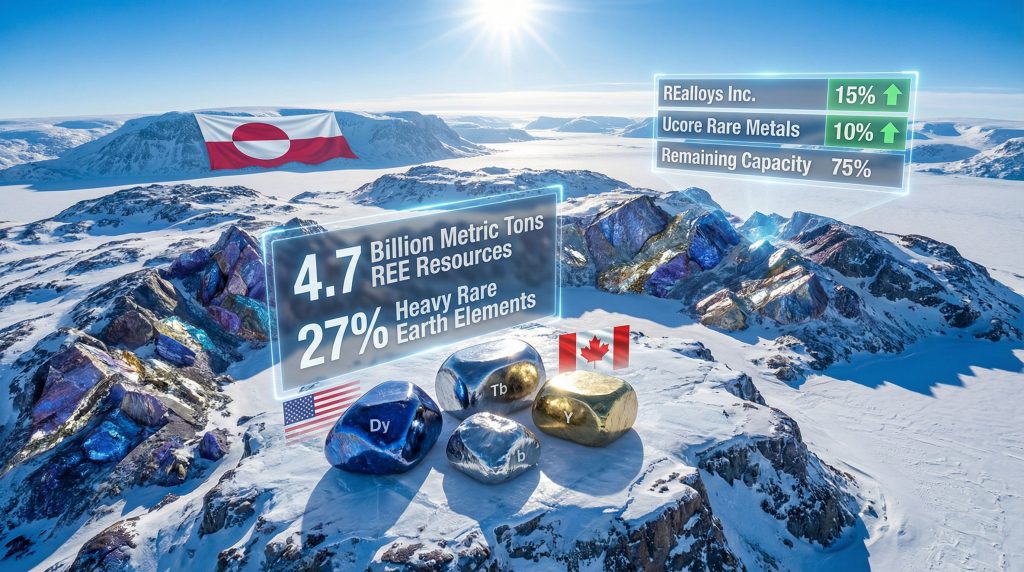
Critical Metals Corp's Tanbreez project operates within Greenland's critical minerals licensing framework, which provides regulatory stability through 2050 under the Government of Greenland's Department of Minerals and Energy oversight. The project claims to contain approximately 4.7 billion metric tons of rare earth resources, with reported heavy rare earth element concentrations exceeding 27% of total composition. This geological profile positions Tanbreez among the world's most HREE-enriched deposits, creating significant strategic value given that heavy rare earths typically command price premiums 3-5 times higher than light rare earth elements.
The offtake structure currently includes confirmed partnerships with REalloys Inc. and Ucore Rare Metals, representing approximately 25% of planned production capacity. REalloys has secured rights to 15% of output through a 10-year agreement, with processing operations planned for Ohio-based facilities that maintain existing relationships with the Defense Logistics Agency and DOE research institutions. Furthermore, Ucore Rare Metals has committed to 10% of production capacity, leveraging their Strategic Metals Complex in Louisiana, which has received Department of Defense funding for rare earth separation capabilities.
Current Tanbreez Offtake Portfolio:
• REalloys Inc.: 15% production share, 10-year contract duration, defense supply chain focus, Ohio processing location
• Ucore Rare Metals: 10% production share, 10-year contract duration, heavy REE processing specialisation, Louisiana/Ontario facilities
• Uncommitted Capacity: 75% production share, targeting European and additional U.S. buyers, processing locations to be determined
The remaining 75% of production capacity represents both opportunity and risk for Critical Metals' strategic positioning. This uncommitted volume provides negotiating leverage as geopolitical tensions continue driving Western demand for Chinese supply chain alternatives. However, the lack of binding commitments for the majority of planned output creates execution uncertainty that affects project bankability and financing prospects.
Western governments have explicitly identified rare earth supply chain diversification as a strategic priority through multiple policy initiatives. The U.S. Department of Defense has designated rare earth elements as critical materials under the Defense Strategic Stockpile program, maintaining reserves equivalent to approximately six months of domestic consumption. In addition, the European Union's Critical Raw Materials Act, implemented in 2023, establishes specific targets for reducing dependence on single-country suppliers, creating preferential treatment opportunities for projects like Tanbreez.
When big ASX news breaks, our subscribers know first
Geological Positioning and Resource Characteristics of Tanbreez
Greenland's geological advantages extend beyond simple resource abundance to encompass strategic positioning within democratic governance frameworks and naturally favourable processing characteristics. The Tanbreez deposit benefits from naturally low radioactivity levels compared to typical rare earth deposits, which commonly contain thorium concentrations ranging from 3-12% of total ore mass. Lower radioactivity reduces processing complexity and environmental remediation costs by an estimated 15-30%, creating significant operational advantages over competing projects globally.
Heavy rare earth element distribution globally remains highly concentrated, with China controlling approximately 60-70% of HREE reserves according to U.S. Geological Survey assessments. The reported 27% HREE composition at Tanbreez positions the project among the most HREE-enriched deposits worldwide, comparing favourably to established operations like Mountain Pass (approximately 2% HREE) and development-stage projects like Nechalacho (15-20% HREE composition).
Global HREE-Enriched Deposits Comparison:
• Tanbreez (Greenland): ~27% HREE composition, 4.7 billion metric tons claimed resources, low radioactivity profile
• Mountain Pass (USA): ~2% HREE composition, currently operational, bastnasite-hosted deposit
• Nechalacho (Canada): 15-20% HREE composition, xenotime-hosted deposit, development suspended
• Kvanefjeld (Greenland): 8-10% HREE composition, high radioactivity levels, development challenges
The mineralogical characteristics of Tanbreez concentrate create specific advantages for downstream processing. Heavy rare earth separation requires liquid-liquid extraction or ion exchange chromatography, with processing costs typically 2-3 times higher than light REE separation. The absence of significant interfering elements like iron and titanium, which commonly complicate rare earth processing, potentially improves recovery rates and reduces separation complexity.
Greenland's regulatory environment provides stability advantages that many competing jurisdictions lack. The mining licence framework operates under Danish sovereignty within democratic institutions, eliminating the governance risks associated with developing rare earth projects in politically unstable regions. Environmental assessment requirements follow established European Union standards, providing predictable permitting pathways compared to emerging mining jurisdictions with evolving regulatory frameworks.
Processing infrastructure requirements for HREE-enriched ores differ significantly from light rare earth operations. Commercial HREE separation typically achieves 85-95% recovery rates, but requires specialised equipment and technical expertise that remains limited globally. The concentration of 27% HREE within Tanbreez concentrate creates opportunities for specialised processing approaches that could optimise recovery economics compared to mixed LREE/HREE operations.
Transportation logistics from Greenland present both challenges and strategic advantages. Seasonal shipping constraints limit operational flexibility during Arctic winter months, potentially affecting delivery reliability for offtake partners. However, Greenland's geographic position provides relatively direct shipping access to both North American and European processing centres, avoiding the complex logistics networks required for competing projects in Central Asia or Africa.
Strategic Value Creation Through REalloys and Ucore Partnerships
The partnership structure between Critical Metals, REalloys, and Ucore creates complementary capabilities across the rare earth supply chain, addressing critical gaps in Western processing infrastructure while providing market access pathways for Tanbreez production. REalloys' Ohio-based operations specifically target defence supply chain requirements, leveraging existing relationships with the Defense Logistics Agency and DOE research institutions to create immediate market penetration opportunities.
REalloys' strategic positioning within U.S. defence procurement systems provides advantages that extend beyond simple offtake agreements. The company maintains pre-established relationships with defence contractors and government agencies that require qualified rare earth suppliers meeting strict security and reliability standards. This positioning eliminates typical market development timelines that can extend 2-3 years for new rare earth suppliers seeking defence sector qualification.
Consequently, Ucore Rare Metals' Strategic Metals Complex in Louisiana addresses downstream processing bottlenecks that have historically constrained Western rare earth supply chains. The facility design targets approximately 5,000 metric tons per annum of separated rare earth oxides, with Department of Defense funding supporting development of heavy rare earth processing capabilities specifically. This processing capacity alignment with Tanbreez HREE production creates synergistic value that enhances both companies' strategic positioning.
Partnership Value Creation Framework:
• Market Access: Pre-established customer relationships eliminate market development risk
• Processing Infrastructure: Dedicated HREE separation capabilities address supply chain bottlenecks
• Government Relations: Existing defence contractor status provides qualification advantages
• Geographic Distribution: Ohio and Louisiana locations serve distinct regional markets
The technical capabilities of Ucore's processing infrastructure specifically address heavy rare earth separation challenges that require specialised expertise. Traditional rare earth processing facilities focus on light REE production, lacking the equipment and technical knowledge required for efficient HREE separation. Ucore's investment in HREE-specific processing technology creates competitive advantages for handling Tanbreez concentrate compared to generic rare earth processing facilities.
Government support mechanisms for both REalloys and Ucore operations provide additional strategic value through risk mitigation. Department of Defense funding for Ucore's Louisiana facility demonstrates government commitment to alternative supply chain development. Furthermore, REalloys' defence contractor relationships suggest potential for government-backed purchase agreements that could provide revenue stability during early production phases.
The geographic distribution of processing capabilities between Ohio and Louisiana creates redundancy benefits that enhance supply chain reliability. Single-point-of-failure risks that characterise Chinese-controlled supply chains become mitigated through multiple processing locations serving different customer bases. This distribution also allows for specialisation, with each facility optimising for specific rare earth products or customer requirements.
Integration challenges between Tanbreez concentrate and partner processing facilities require careful technical coordination. Mineralogical compatibility between Greenland ore characteristics and U.S. processing equipment must be validated through pilot-scale testing before commercial agreements finalise. Variations in ore composition across different zones of the Tanbreez deposit could affect processing efficiency and recovery rates.
Production Capacity Allocation and Market Positioning Strategy
The strategic decision to maintain 75% of Tanbreez production capacity uncommitted reflects deliberate market positioning rather than inability to secure offtake partners. This approach provides Critical Metals with pricing flexibility and negotiating leverage as geopolitical tensions continue driving Western demand for Chinese supply chain alternatives. However, the majority uncommitted capacity also creates execution risks that affect project bankability and financing prospects.
European industrial manufacturers represent high-value target customers for remaining offtake capacity, particularly within Germany's automotive sector and Scandinavia's renewable energy industries. These customers typically demonstrate willingness to pay premium pricing for non-Chinese rare earth supplies, given their exposure to supply chain disruption risks and regulatory pressures under the EU Critical Raw Materials Act. Premium pricing potential for European customers could exceed standard market rates by 10-15%, depending on contract structure and strategic value.
European Market Penetration Opportunities:
• German Automotive: BMW, Mercedes-Benz, Volkswagen requiring permanent magnets for electric vehicle motors
• Scandinavian Wind Power: Vestas, Ørsted, Equinor requiring HREE for turbine generators
• French Nuclear: EDF, Orano requiring rare earths for advanced reactor technologies
• Netherlands Technology: ASML, Philips requiring high-purity rare earths for semiconductor manufacturing
Market dynamics within European rare earth procurement reflect growing strategic awareness of supply chain vulnerabilities. The EU Critical Raw Materials Act mandates that member states reduce dependence on single-country suppliers, creating regulatory incentives for diversified sourcing. European companies increasingly view premium pricing for alternative suppliers as insurance against supply disruption risks rather than unnecessary cost increases.
Pricing mechanisms for the remaining 75% capacity will likely incorporate multiple approaches depending on customer requirements and market conditions. Spot-linked pricing provides flexibility but exposes both parties to market volatility. Fixed pricing offers certainty but may not capture upside from geopolitical supply disruptions. Hybrid mechanisms combining floor pricing with upside participation could optimise value for both Critical Metals and offtake partners.
Contract duration considerations for European offtake agreements balance customer security requirements against market flexibility needs. European customers typically prefer longer-term commitments (10-15 years) to justify capital investments in rare earth processing infrastructure. However, Critical Metals benefits from shorter-term flexibility to optimise pricing as market conditions evolve and competition from other non-Chinese suppliers emerges.
The uncommitted production capacity also creates strategic optionality for Critical Metals to respond to changing geopolitical conditions. Escalating US‑China trade impact could drive additional demand from American customers willing to pay premium pricing for supply security. Conversely, normalisation of trade relationships could reduce premium valuations for non-Chinese suppliers, making flexible offtake arrangements more valuable than fixed commitments.
Processing location decisions for the remaining 75% capacity significantly impact project economics and customer accessibility. European processing facilities would reduce transportation costs and currency exposure for EU customers but require additional capital investment and permitting processes. Expanding U.S. processing capacity through partnerships with additional facilities could capture American market demand while leveraging existing infrastructure.
Project Financing Structure and Capital Requirements Analysis
Critical Metals' Tanbreez project requires approximately $1.7-1.8 billion total capital investment, divided between upstream mining infrastructure (~$500 million) and downstream processing facilities (>$1 billion). Current offtake agreements, while strategically valuable, do not automatically translate into project financing capabilities, creating a critical gap between commercial commitments and capital availability for project development.
Traditional project financing for rare earth developments requires committed offtake agreements covering 70-80% of planned production capacity with investment-grade counterparties. The current structure, with 25% committed to REalloys and Ucore, falls short of typical lender requirements for non-recourse project financing. Additional offtake commitments with creditworthy counterparties become essential for accessing institutional debt markets.
Capital Requirements Breakdown:
• Mining Infrastructure: $500 million (open-pit development, processing plant, infrastructure)
• Downstream Processing: $1+ billion (separation facilities, metal production, environmental controls)
• Working Capital: $200-300 million (operational reserves, inventory financing, contingency funds)
• Total Project Cost: $1.7-1.8 billion (excluding cost escalation and financing costs)
Government support mechanisms could significantly alter project financing dynamics through risk mitigation and credit enhancement. The U.S. Department of Energy's Loan Programs Office provides financing for critical materials projects that enhance national energy security. The Development Finance Corporation offers political risk insurance and credit guarantees for strategic minerals projects in allied countries like Greenland.
European government support through the European Investment Bank and national development finance institutions creates additional financing pathways for Tanbreez development. The EU Critical Raw Materials Act specifically authorises member state support for strategic minerals projects that reduce import dependencies. German, French, and Scandinavian development banks have indicated willingness to support qualifying rare earth supply chain investments.
Financing structure complexity increases due to the international scope of Tanbreez operations, spanning Greenland mining, potential U.S. processing, and European customer relationships. Multi-jurisdictional project financing requires coordination between different regulatory frameworks, tax systems, and political risk considerations. Currency hedging becomes essential given exposure to USD, EUR, and DKK exchange rate fluctuations.
The timing gap between offtake agreement execution and project financing completion creates execution risk for all parties. Offtake partners require delivery certainty to justify their own capital investments in rare earth processing infrastructure. Critical Metals needs financing certainty to commit to project development timelines. This coordination challenge often delays rare earth project development by 12-24 months while financing structures align.
Equity financing requirements for Critical Metals likely exceed $400-500 million given the capital-intensive nature of rare earth development and limited debt capacity for development-stage projects. Current market capitalisation near $1 billion provides theoretical equity raising capacity, but dilution concerns for existing shareholders could complicate large-scale equity offerings. Moreover, capital raising strategies from government entities or major industrial customers could provide both capital and commercial validation.
Technical and Operational Risk Assessment
Rare earth projects historically encounter significant technical challenges during the transition from pilot-scale testing to commercial production, with metallurgical processing representing the highest risk category for operational difficulties. The specific mineralogy of Tanbreez concentrate and its compatibility with existing Western processing infrastructure remains unproven at commercial volumes, creating potential for unexpected processing challenges that could affect recovery rates and production costs.
Greenland's Arctic operating environment presents unique logistical and infrastructure challenges that extend beyond typical mining operations. Seasonal shipping constraints limit material transportation to approximately 6-8 months annually, requiring substantial inventory management and storage capabilities. Extreme weather conditions affect equipment reliability and personnel rotation, potentially increasing operational costs by 15-25% compared to temperate climate operations.
Primary Technical Risk Categories:
• Metallurgical Processing: Scale-up risks from pilot to commercial operations, recovery rate variability
• Arctic Operations: Seasonal shipping constraints, extreme weather impacts, equipment reliability
• Environmental Compliance: Greenland regulatory requirements, permitting timeline uncertainty
• Infrastructure Development: Remote location challenges, power generation requirements, workforce logistics
Heavy rare earth element separation requires specialised technical expertise that remains limited globally outside of Chinese operations. The concentration of HREE processing knowledge within China creates technology transfer challenges for Tanbreez development. Recruiting qualified personnel with HREE separation experience may require significant compensation premiums and extended training programs.
Environmental permitting processes in Greenland follow European Union standards but require coordination between Greenland authorities and Danish oversight mechanisms. Environmental Impact Assessment requirements could extend permitting timelines by 12-18 months compared to initial project schedules. Climate change impacts on Arctic infrastructure and transportation systems create additional long-term operational uncertainties.
Processing facility location decisions significantly impact technical risk profiles through different regulatory requirements and infrastructure availability. U.S. processing facilities benefit from established rare earth handling protocols but require compliance with Nuclear Regulatory Commission oversight for radioactive materials management. European processing locations offer customer proximity advantages but may lack existing rare earth processing expertise and equipment.
Quality control and product specifications become critical for maintaining offtake agreement compliance, particularly for defence applications requiring consistent purity levels and chemical composition. Variability in ore composition across different zones of the Tanbreez deposit could affect product consistency and require blending strategies to meet customer specifications. Implementing quality assurance systems requires additional capital investment and technical expertise.
Operational ramp-up timelines for rare earth projects typically extend 18-24 months longer than initial projections due to technical optimisation requirements and market development needs. Initial production volumes often operate at 60-70% of design capacity while processing parameters optimise and customer qualification processes complete. These factors affect cash flow timing and project return calculations.
The next major ASX story will hit our subscribers first
Market Valuation Analysis and Investment Considerations
Critical Metals Corp trades at approximately $9.42 per share with a market capitalisation near $1 billion, reflecting significant speculative premium based on strategic positioning rather than demonstrated mining economics. Current financial performance shows revenue of $560,000 (TTM), EBITDA of negative $47.5 million, and net losses of $51.9 million, confirming the company's pre-production development status.
Valuation metrics indicate market pricing reflects geopolitical optionality and strategic asset value rather than traditional mining project economics. With negligible current revenue and substantial operating losses, the stock price incorporates expectations for successful project development, financing completion, and commercial production achievement. Current ratio of 0.13 demonstrates dependence on external financing well before mine-level cash flow generation.
Key Financial Metrics Assessment:
• Market Capitalisation: ~$1 billion (strategic premium valuation)
• Revenue (TTM): $560,000 (pre-production minimal operations)
• EBITDA: -$47.5 million (development-stage losses)
• Current Ratio: 0.13 (financing-dependent liquidity position)
Insider ownership at 55% creates conditions for reduced institutional participation and increased retail investor influence on share price movements. High insider concentration often correlates with limited float availability and increased volatility around development milestones. Elevated short interest at approximately 19% of float suggests institutional scepticism about near-term value realisation prospects.
Trading patterns reflect headline-driven momentum rather than fundamental analysis, with significant price movements typically following offtake announcements, government policy statements, or geopolitical developments affecting rare earth supply chains. The stock's performance above both 50-day and 200-day moving averages indicates speculative momentum amplified by retail investor enthusiasm for strategic minerals exposure.
Comparable valuation analysis proves challenging given the limited number of development-stage rare earth projects with similar strategic positioning. Mountain Pass (MP Materials) trades at enterprise values reflecting operational cash flow generation, while early-stage rare earth exploration companies typically trade at substantial discounts to resource-based valuations. Critical Metals occupies an intermediate position with advanced development status but unproven production economics.
Investment risk assessment requires balancing strategic optionality against execution uncertainty across multiple dimensions including financing, permitting, technical development, and market positioning. The company's valuation reflects maximum strategic value potential while offering limited downside protection if development milestones encounter delays or cost overruns.
Institutional investor participation remains limited due to the speculative nature of development-stage rare earth projects and ESG considerations related to Arctic mining operations. Retail investor enthusiasm for critical minerals exposure creates trading dynamics that may not reflect underlying project fundamentals or development risk assessments.
Competitive Landscape and Strategic Positioning Analysis
Critical Metals' Tanbreez project competes within a rapidly evolving landscape of non-Chinese rare earth development initiatives, where first-mover advantages in securing offtake agreements and processing partnerships create significant strategic value. Early commitment from established Western processors positions Tanbreez ahead of competing development projects that must build market relationships while simultaneously advancing technical development.
Integration advantages with existing processing infrastructure differentiate Tanbreez from greenfield rare earth projects requiring entirely new supply chain development. REalloys' established defence contractor relationships and Ucore's DOD-funded processing capabilities provide immediate market access pathways that competing projects typically require 2-3 years to develop independently.
Competitive Positioning Factors:
• Processing Integration: Established partnerships with operational processing capabilities
• Geographic Advantages: Greenland location provides democratic governance and shipping access
• HREE Concentration: 27% heavy rare earth content exceeds most competing deposits
• Regulatory Stability: Mining licence framework extending through 2050 provides operational certainty
Alternative non-Chinese rare earth projects include Mountain Pass (currently operational but limited HREE content), Nechalacho (suspended development), and various Australian developments focusing primarily on light rare earth production. The concentration of HREE within Tanbreez creates differentiation from LREE-focused competitors but requires more sophisticated processing capabilities and market development.
Technology transfer restrictions from Chinese rare earth processors create barriers for all Western rare earth development projects. However, Tanbreez benefits from partnerships with companies actively developing non-Chinese processing capabilities, potentially reducing technology acquisition timelines compared to projects relying on independent technology development.
European government support for strategic minerals projects creates preferential treatment opportunities that benefit Tanbreez through its uncommitted production capacity targeting EU customers. The Critical Raw Materials Act specifically authorises member state support for qualifying projects that reduce import dependencies, providing potential financing and market access advantages.
Market timing advantages could prove significant if Tanbreez achieves commercial production before competing non-Chinese HREE projects. Early market entry provides opportunities to establish customer relationships and premium pricing before alternative suppliers create competitive pressure. However, development delays could eliminate first-mover advantages if competing projects achieve production simultaneously.
Scale advantages remain uncertain until Tanbreez demonstrates commercial-level production capabilities and cost structures. Large resource base claims require validation through operational performance, and processing efficiency at commercial scale may differ significantly from pilot-scale results. Competing projects with smaller resources but lower development costs could achieve superior project economics.
Geopolitical Context and Policy Impact Assessment
U.S.-China trade relationship developments significantly influence valuation prospects for alternative rare earth suppliers, with escalating tensions creating favourable conditions for non-Chinese projects while normalisation could reduce strategic premiums. Current U.S. policy under the Biden administration emphasises critical minerals supply chain diversification through the Defense Production Act and Infrastructure Investment and Jobs Act funding mechanisms.
The European Union's Critical Raw Materials Act establishes specific targets for supply chain diversification, mandating that member states reduce dependence on single-country suppliers by 2030. Implementation mechanisms include preferential procurement policies, investment incentives, and strategic partnership development with allied nations including the United States and Greenland.
Policy Support Mechanisms:
• U.S. Defense Production Act: Funding authority for critical minerals projects supporting national security
• EU Critical Raw Materials Act: Supply chain diversification mandates and investment incentives
• Greenland Mining Framework: Democratic governance and regulatory stability through 2050
• NATO Strategic Minerals Initiative: Coordinated approach to critical materials security among allies
Chinese rare earth export policies create ongoing uncertainty that benefits alternative suppliers through supply security premiums. Historical export restrictions and quality control measures affecting rare earth exports demonstrate Chinese willingness to use strategic minerals as geopolitical leverage. Western customers increasingly view premium pricing for alternative suppliers as insurance against supply disruption risks.
Technology transfer restrictions affecting rare earth processing equipment and expertise create barriers for all non-Chinese development projects. However, government support for domestic processing capability development through institutions like DOE national laboratories provides pathways for acquiring necessary technical knowledge independent of Chinese sources.
Arctic Council cooperation frameworks facilitate Greenland mining development through environmental standards coordination and infrastructure development support. Denmark's NATO membership and democratic governance structures provide political stability that many competing rare earth jurisdictions lack, reducing sovereign risk for international investors and customers.
Furthermore, the implementation of a comprehensive critical minerals strategy across Western nations demonstrates long-term commitment to supply chain diversification. Future policy developments could significantly impact Tanbreez project economics through changes in government support levels, environmental regulations, or trade relationships.
Development Timeline and Execution Risk Analysis
Critical Metals targets mining commencement in 2027 with first production by mid-2028, representing an aggressive timeline that requires coordination across multiple development workstreams including permitting, financing, construction, and market preparation. Historical rare earth project development typically encounters significant delays due to technical optimisation requirements and regulatory approval processes.
Permitting timeline risks in Greenland involve coordination between local authorities and Danish oversight mechanisms, with Environmental Impact Assessment requirements potentially extending approval processes by 12-18 months beyond initial projections. Arctic environmental considerations add complexity to permitting processes compared to temperate climate mining operations.
Critical Timeline Dependencies:
• Bankable Feasibility Study: Completion required for project financing applications
• Processing Location Finalisation: Required for integrated project economics assessment
• Government Approvals: Greenland permits and potential U.S./EU support agreements
• Financing Completion: $1.7-1.8 billion capital requirement coordination
Processing infrastructure development timelines significantly impact overall project schedules, with new processing facility construction typically requiring 3-4 years from design to commissioning. Uncertainty regarding processing locations for 75% of planned production creates potential for delays if suitable facilities require greenfield development rather than existing infrastructure utilisation.
Supply chain development for Arctic mining operations requires extended planning periods for equipment procurement and logistics preparation. Seasonal shipping constraints necessitate advance planning for construction materials and operational supplies, with missed shipping seasons potentially delaying project timelines by 6-12 months.
Technical risk factors during construction and commissioning phases could affect startup timelines and early production performance. Rare earth processing equipment commissioning often requires extended optimisation periods, with initial production typically achieving 60-70% of design capacity while technical parameters stabilise.
Market development timelines for remaining offtake capacity could affect production startup schedules if customer qualification processes extend beyond current projections. Defence applications particularly require extended qualification periods and security clearance processes that may not align with production startup timelines.
Financing coordination across multiple jurisdictions and investor types creates additional timeline complexity, with international project financing typically requiring 6-12 months longer than domestic transactions due to regulatory coordination requirements and political risk assessment processes.
Strategic Investment Framework and Risk Assessment
Investment evaluation of Critical Metals requires framework analysis balancing strategic optionality against execution uncertainty across multiple risk dimensions including technical development, financing coordination, regulatory approval, and market positioning. Current valuation reflects maximum strategic value potential while providing limited downside protection through asset diversification or operational cash flows.
Risk-adjusted return considerations must account for binary outcome characteristics where successful development could generate substantial returns while development failures could result in near-total value loss. Portfolio positioning should reflect appropriate allocation for speculative growth opportunities with significant execution risk rather than traditional mining investment characteristics.
Investment Decision Framework:
• Strategic Value Assessment: Geopolitical optionality and supply chain positioning
• Execution Risk Analysis: Technical, financial, and regulatory development challenges
• Market Timing Evaluation: Competitive positioning and first-mover advantages
• Portfolio Allocation: High-beta exposure to Western rare earth supply chain development
Milestone-based investment approach could optimise risk management through position sizing adjustments based on development progress including feasibility study completion, financing agreements, and regulatory approvals. Early-stage positions benefit from strategic positioning while later-stage evaluation focuses on execution capability demonstration.
Due diligence priorities should emphasise technical validation through independent geological assessment, financial capacity evaluation through management track record analysis, and market positioning verification through customer relationship validation. Regulatory approval timelines and environmental compliance capabilities require particular scrutiny given Arctic operating environment complexity.
Exit strategy considerations include both strategic acquisition potential from major mining companies seeking rare earth exposure and IPO opportunities following successful production demonstration. Market timing for exit decisions may depend more on geopolitical developments and policy changes than traditional mining economics factors.
Diversification strategies within critical minerals exposure should consider correlation risks between different rare earth projects and broader geopolitical factors affecting strategic minerals markets. Portfolio construction benefits from geographic and technical diversification rather than concentration within single projects or regions.
Long-term value creation potential depends on successful execution across multiple development phases while maintaining strategic relevance within evolving Western supply chain security frameworks. Investment horizon considerations should account for 5-7 year development timelines before meaningful cash flow generation and additional time required for return optimisation.
Critical Metals Tanbreez offtake agreements represent a strategic inflection point in Western rare earth supply chain development, offering significant upside potential for successful execution while carrying substantial development risks that require careful portfolio positioning and ongoing milestone monitoring. In conclusion, Reuters reports that Critical Metals expects to close additional Greenland supply deals by Q1 2026. The convergence of geopolitical necessity, technological capability, and commercial opportunity creates conditions for transformative value creation, but investors must maintain realistic expectations regarding development timelines and execution challenges inherent in Arctic rare earth projects.
Ready to Capitalise on Strategic Minerals Opportunities?
Discovery Alert's proprietary Discovery IQ model provides instant notifications on significant ASX mineral discoveries, helping subscribers identify emerging opportunities in critical minerals and rare earth developments before broader market recognition. Explore how major mineral discoveries have historically generated substantial returns, then begin your 30-day free trial today to position yourself ahead of the market.