August 14, 2026
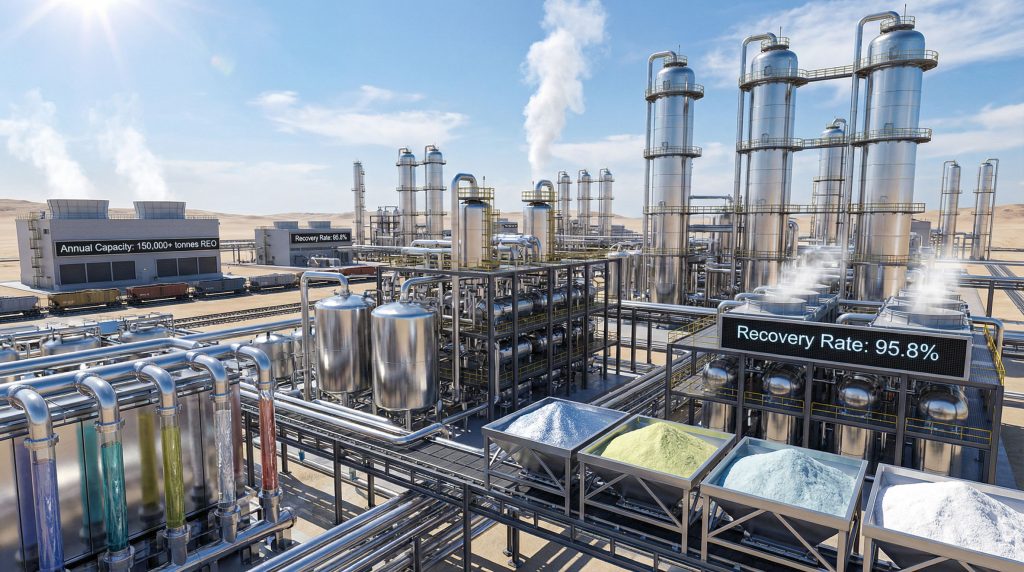
The global mining sector faces an unprecedented challenge in scaling rare earth elements processing capacity to meet surging demand from electric vehicles, renewable energy systems, and defense applications. While these seventeen chemically similar elements represent less than 0.02% of the Earth's crust, their strategic importance far exceeds their geological abundance. Understanding the technical infrastructure required for rare earth elements processing capacity reveals why supply chain diversification has become a critical priority for industrial nations.
What Defines Rare Earth Elements Processing Capacity in Modern Industrial Systems?
Rare earth elements processing capacity encompasses far more than simple ore extraction. The complexity begins with understanding that typical Canadian rare earth projects contain approximately 1-3% total rare earth oxide (REO) content by weight, meaning 97-99% of processed material requires sophisticated waste management systems. This low concentration necessitates specialised hydrometallurgical facilities capable of handling massive throughput volumes while maintaining precise separation protocols.
Technical Specifications of REE Processing Infrastructure
The technical foundation for rare earth elements processing capacity relies on three critical stages that determine operational viability. The concentrated product stage involves initial ore concentration using flotation, magnetic separation, or gravity techniques depending on mineralogy. Processing then advances to the cracking stage, which employs heat and chemical treatment to break down mineral structures and produce intermediate compounds. Finally, individual element isolation requires sophisticated solvent extraction systems to separate chemically similar lanthanides.
Each mineral behaves differently during processing, making detailed mineralogical analysis essential for designing economically viable extraction methodologies. Companies must understand exactly how elements are distributed within ore bodies and select appropriate technologies based on these geological characteristics rather than applying generic processing approaches.
Environmental compliance systems present additional complexity, particularly for facilities processing thorium-bearing minerals common in rare earth deposits. Radioactive waste management protocols, acid consumption controls, and neutralisation systems require specialised infrastructure that significantly impacts capital requirements and operational costs.
Capacity Measurement Frameworks
Measuring rare earth elements processing capacity involves multiple performance indicators beyond simple tonnage throughput. Recovery rates for high-value elements such as neodymium, praseodymium, dysprosium, and terbium determine economic viability more than total volume processed. These heavy rare earth elements command premium pricing but require specialised separation techniques.
Concentration ratios from ore to refined oxides vary dramatically based on deposit characteristics and processing methodology. Canadian projects typically target 1-3% REO content, but successful operations must achieve concentration factors of 50:1 or higher to produce commercially viable products. Quality control standards for individual element isolation require maintaining purity levels above 99% for premium applications in permanent magnets and defence systems.
Economic viability thresholds for commercial operations depend heavily on element mix, processing costs, and market positioning. Operations focusing on light rare earth elements face different economic parameters than facilities targeting heavy rare earth production for specialised applications.
When big ASX news breaks, our subscribers know first
How Do Current Global Processing Facilities Compare by Technical Capability?
Global rare earth elements processing capacity demonstrates extreme geographic concentration that has intensified over recent years. According to the International Energy Agency's 2025 Global Critical Minerals Outlook, the top three refining countries—China, Indonesia, and the Democratic Republic of Congo—account for approximately 86% of global refining capacity in 2024, representing a significant increase from 82% in 2020.
Tier 1 Industrial Processing Complexes
| Facility Type | Annual Capacity Range | Primary Technologies | Geographic Distribution |
|---|---|---|---|
| Integrated refineries | 100,000+ tonnes REO | Full separation chains | China (dominant position) |
| Specialised processors | 15,000-40,000 tonnes REO | Selective extraction | US, Canada, Australia |
| Pilot-scale operations | 500-3,000 tonnes REO | Technology validation | EU, India, Japan |
| Research facilities | <500 tonnes REO | Process development | Global distribution |
This concentration pattern reveals the technical and financial barriers facing new market entrants. Integrated refineries require massive capital investments, spanning multiple processing stages from ore concentration through individual element separation. The technical expertise needed to operate these facilities represents decades of accumulated knowledge, creating significant competitive moats for established players.
Non-Chinese Processing Infrastructure Development
Canada represents among the most advanced non-Chinese rare earth development landscapes, with approximately seven rare earth projects in advanced study phase across the country. Notable examples include Defense Metals' Wicheeda project in British Columbia and Torngat Metals' Strange Lake project in Quebec, both progressing through detailed engineering and feasibility studies.
The concentration of refining capacity in three countries demonstrates supply chain vulnerability despite repeated G7 calls for diversification. This critical minerals energy transition has driven policy responses across North America aimed at establishing alternative processing infrastructure, though technical barriers remain substantial.
Saskatchewan Research Council has developed innovative approaches to zero-waste processing methodologies, while Energy Fuels' White Mesa Mill demonstrates monazite processing capabilities within existing infrastructure. These examples highlight different pathways for expanding rare earth elements processing capacity outside traditional centres.
What Are the Critical Technical Bottlenecks in REE Processing Capacity?
The technical challenges constraining rare earth elements processing capacity expansion stem from the fundamental chemistry of lanthanide elements and the complexity of multi-element separation. Unlike single-metal operations, rare earth processing requires simultaneous management of up to seventeen different elements with remarkably similar chemical properties.
Metallurgical Complexity Challenges
The greatest bottleneck in rare earth elements processing capacity lies in the difficulty of separating and refining elements that are typically found together in the same ore. Adjacent lanthanides exhibit nearly identical chemical behaviours, making selective extraction extremely challenging through conventional metallurgical techniques.
Multi-element separation difficulties manifest throughout the processing chain:
• Chemical similarity between elements like neodymium and praseodymium requires hundreds of extraction stages
• Selective precipitation techniques must account for overlapping solubility curves
• Ion exchange systems face capacity limitations when processing mixed rare earth solutions
• Quality control becomes exponentially more complex with each additional element
Acid consumption and neutralisation requirements create additional operational challenges. Processing one tonne of rare earth concentrate can require multiple tonnes of sulfuric or hydrochloric acid, with corresponding neutralisation and waste management implications. These chemical requirements drive both operational costs and environmental compliance complexity.
Infrastructure Investment Requirements
Capital expenditure requirements for commercial-scale rare earth elements processing capacity typically range from $200-500 million for integrated facilities. This investment level reflects the specialised equipment, environmental controls, and technical systems required for multi-element separation.
Technology licensing and intellectual property considerations add further complexity. Many advanced separation technologies remain under patent protection, requiring licensing agreements or independent technology development. Skilled workforce development presents another bottleneck, as rare earth processing requires specialised metallurgical expertise that cannot be quickly acquired.
Regulatory approval timelines compound infrastructure investment challenges. Environmental permitting for rare earth processing facilities involves radioactive materials handling, acid waste management, and groundwater protection protocols that can extend approval processes for multiple years.
Which Processing Technologies Offer the Greatest Capacity Expansion Potential?
Current rare earth elements processing capacity expansion relies primarily on proven solvent extraction methodologies, though emerging technologies show promise for improving efficiency and reducing environmental impact. The technological landscape remains relatively conservative due to the high stakes and complexity of multi-element separation.
Advanced Separation Methodologies
Continuous solvent extraction systems represent the current standard for commercial-scale rare earth elements processing capacity. These systems enable steady-state operation with predictable recovery rates, though they require substantial infrastructure and skilled operators. Batch processing systems offer greater flexibility but typically achieve lower overall throughput for large-scale operations.
Selective precipitation and crystallisation techniques provide alternative pathways for certain element separations. These approaches can reduce chemical consumption compared to solvent extraction but may achieve lower purity levels for specific applications. The choice between methodologies depends heavily on target element mix and product specifications.
Ion exchange resin optimisation offers potential for heavy rare earth recovery enhancement. Recent developments in specialised resins show improved selectivity for valuable elements like dysprosium and terbium, though commercial implementation remains limited. Furthermore, technological advances from companies like Phoenix Tailings securing $302M funding demonstrate growing investor confidence in innovative processing technologies.
Integrated Processing Approaches
Strategic decisions about processing depth significantly impact capacity utilisation and economic returns. Producers must evaluate whether to halt at concentrated product stage or advance through intermediate compounds toward individual element isolation through solvent extraction or related technologies.
Co-product recovery strategies can improve project economics by maximising value extraction from ore bodies. Heavy mineral sands operations increasingly evaluate rare earth recovery alongside traditional products, leveraging existing infrastructure for capacity expansion.
Modular processing units offer scalable capacity increases without massive upfront capital commitments. These approaches enable staged development as market conditions and technical confidence improve, though they may sacrifice some operational efficiency.
How Do Geopolitical Factors Impact Processing Capacity Development?
Geopolitical considerations have become primary drivers of rare earth elements processing capacity development initiatives worldwide. Rising tensions and export restrictions have transformed these materials from commodity products into strategic resources requiring supply chain security planning.
Supply Chain Diversification Initiatives
The June 2025 G7 meeting in Alberta resulted in an agreed strategic alliance framework to strengthen partnerships between resource-rich countries and those with processing capacity. This framework marked a shift from rhetorical commitments toward structured cooperation mechanisms.
U.S. policy evolution from late 2024 through 2025 demonstrated marked movement toward supply chain realignment. Trump's critical minerals order included executive actions to accelerate critical mineral supply chains. These policy changes influenced allied nations to develop coordinated responses addressing shared supply chain vulnerabilities.
Rising geopolitical tensions, particularly China's export restrictions, served as key drivers behind policy responses in Canada and the United States aimed at strengthening national and economic security and diversifying supply chains. The 4 percentage point increase in refining capacity concentration from 2020 to 2024 highlighted the urgency of these diversification efforts.
Regional Processing Hub Development
Canadian federal initiatives launched in November 2025 included Defence Production Act powers granting the government direct critical minerals sector support capabilities. The Critical Minerals Sovereign Fund received $2 billion over five years to help finance domestic projects, while offtake agreement support for Rio Tinto scandium oxide production at Quebec metallurgical complex demonstrated practical implementation.
These government-industry partnership structures provide production guarantees through federal purchasing commitments, de-risking project financing and enabling infrastructure investment decisions. The approach creates precedents for future rare earth elements processing capacity development across strategic allies, particularly through initiatives like the Australian critical minerals reserve.
Strategic alliance frameworks between G7 nations establish formal partnerships between resource-endowed nations and processing-capable countries. These relationships address technology transfer, financing coordination, and supply chain security through multilateral cooperation rather than bilateral agreements.
What Investment Models Are Driving New Processing Capacity?
Investment models for rare earth elements processing capacity development have evolved significantly as governments recognise the strategic importance of domestic processing capabilities. Traditional mining finance approaches prove insufficient for the technical complexity and geopolitical considerations of rare earth operations.
Government-Industry Partnership Structures
Offtake agreement frameworks provide production guarantees that de-risk project financing by ensuring government purchase commitments. The Rio Tinto Quebec scandium oxide offtake agreement demonstrates how federal support can enable private investment in processing infrastructure.
Critical Minerals Sovereign Fund deployment strategies involve $2 billion over five years specifically targeting domestic project development. This funding model bridges the gap between private capital limitations and strategic national requirements for processing capacity development.
Infrastructure support for remote processing facilities addresses the geographic challenges of developing rare earth elements processing capacity near resource locations. Government provision of transportation, power, and communications infrastructure reduces private sector capital requirements while enabling strategic positioning through comprehensive defence critical materials strategy.
Private Capital Deployment Patterns
Advancing rare earth projects requires coordinated action across government, industry, and investors. While governments provide targeted funding, infrastructure support, and defence-related strategies, attracting foreign direct investment and building international partnerships remains essential for project advancement.
Risk mitigation through staged capacity development enables progressive investment as technical confidence and market conditions improve. This approach aligns technical work, financing, and execution at each stage of development rather than requiring massive upfront commitments.
The importance of disciplined development cannot be overstated for rare earth elements processing capacity projects. While policy and investment support are expanding, project advancement ultimately depends on getting fundamental technical and economic parameters established early in the development process.
The next major ASX story will hit our subscribers first
How Will Processing Capacity Requirements Evolve Through 2030?
The trajectory of rare earth elements processing capacity requirements through 2030 reveals concerning trends that may exacerbate current supply chain vulnerabilities. Despite diversification efforts, capacity concentration has actually intensified, with the top three refining countries increasing their market share from 82% in 2020 to 86% in 2024.
Demand Projection Analysis
Electric vehicle magnet requirements represent the fastest-growing segment driving rare earth elements processing capacity needs. Each electric vehicle requires approximately 1-2 kilograms of rare earth permanent magnets, with global EV production targets suggesting exponential demand growth through the decade. Moreover, rare earth shortages are already impacting India's EV sector, highlighting the urgency of capacity expansion.
Wind turbine installation targets across developed nations require substantial neodymium and dysprosium supplies for direct-drive generators. Offshore wind development particularly favours permanent magnet generators due to maintenance considerations, intensifying demand for high-performance rare earth magnets.
Defence application growth encompasses fighter jets, submarines, and advanced weapons systems that require reliable rare earth element supplies. National security considerations increasingly influence procurement decisions, prioritising supply chain resilience over cost optimisation.
Capacity Gap Assessment
Current global processing capacity trends suggest a widening deficit between demand growth and available supply through 2030. The accelerating concentration of refining capacity despite policy diversification efforts indicates that new processing infrastructure development has failed to keep pace with existing facility expansion.
Regional processing targets established by G7 nations require substantial capacity additions to achieve meaningful supply chain diversification. Announced project timelines suggest most new non-Chinese processing facilities will not reach commercial production before 2028-2029, creating a critical supply gap period.
Technology readiness levels for emerging processing methods remain largely unproven at commercial scale. While research facilities demonstrate innovative approaches, scaling to industrial throughput requires substantial additional development and capital investment.
What Are the Key Performance Indicators for Processing Facility Success?
Success metrics for rare earth elements processing capacity extend beyond traditional mining operational indicators due to the multi-element nature and strategic importance of these materials. Performance evaluation must consider technical efficiency, economic viability, and supply chain contribution simultaneously.
Operational Efficiency Metrics
Element recovery rates across the lanthanide series provide the primary technical performance indicator. Successful operations typically achieve 85-95% recovery for target elements, though heavy rare earth recovery often proves more challenging than light rare earth extraction.
Processing cost per kilogram of refined oxide varies dramatically based on element mix, facility scale, and technology selection. Integrated facilities benefit from economies of scale but require substantial throughput to achieve competitive unit costs.
Environmental impact per tonne of production increasingly influences facility viability due to regulatory requirements and social acceptance considerations. Operations demonstrating superior environmental performance gain advantages in permitting, financing, and community relations.
Strategic Value Creation Factors
Product mix optimisation for high-value elements determines long-term economic viability. Facilities capable of producing heavy rare earth elements command premium pricing but require more sophisticated separation technologies and skilled operators.
Supply chain integration with downstream manufacturers creates competitive advantages through guaranteed offtake agreements and technical collaboration. Direct relationships with permanent magnet producers or defence contractors provide stability during market volatility.
Technology licensing revenue potential offers additional value creation opportunities for facilities developing proprietary separation techniques. Intellectual property development can supplement production revenue while contributing to industry advancement.
Geographic positioning for market access influences both operational costs and strategic value. Facilities located near major consuming regions reduce transportation costs and supply chain risks while potentially accessing favourable trade agreements.
Frequently Asked Questions About REE Processing Capacity
What makes rare earth processing more complex than other metals?
Rare earth processing complexity stems from the chemical similarity of lanthanide elements and their occurrence together in the same ore. Unlike copper or gold extraction, rare earth operations must simultaneously separate up to seventeen different elements with nearly identical chemical properties. This requires hundreds of extraction stages and sophisticated quality control systems to achieve the purity levels required for advanced applications.
How long does it take to build commercial-scale processing capacity?
Commercial-scale rare earth elements processing capacity typically requires 5-8 years from initial feasibility studies to production startup. This timeline includes 2-3 years for engineering and permitting, 3-4 years for construction, and 1-2 years for commissioning and ramp-up. The complexity of multi-element separation systems and environmental compliance requirements often extend these timelines beyond initial projections.
Which countries have the technical expertise for REE processing?
Technical expertise for rare earth elements processing capacity remains concentrated in China, which has developed specialised knowledge over several decades. Other countries with emerging capabilities include Canada through projects like Defense Metals' Wicheeda and Torngat Metals' Strange Lake, the United States through existing facilities like Energy Fuels' White Mesa Mill, and Australia through various development projects. However, scaling this expertise to commercial production levels requires substantial additional development.
What are the main environmental challenges in REE processing?
Environmental challenges in rare earth processing include radioactive waste management from thorium-bearing minerals, acid consumption and neutralisation requirements, groundwater protection protocols, and air emissions control. Processing facilities must handle multiple tonnes of acid per tonne of concentrate while managing radioactive waste streams and preventing groundwater contamination. These requirements significantly impact capital costs and operational complexity.
This analysis is based on publicly available information and expert commentary from industry sources. Investment decisions should be based on comprehensive due diligence and professional financial advice. The rare earth elements market involves substantial technical and commercial risks that may impact project development timelines and economic viability.
Could Rare Earth Processing Opportunities Transform Your Investment Portfolio?
Discovery Alert's proprietary Discovery IQ model delivers instant notifications on significant critical minerals discoveries across the ASX, empowering subscribers to identify emerging rare earth and processing opportunities ahead of the broader market. With global rare earth elements processing capacity facing unprecedented expansion requirements and Canadian projects advancing through feasibility studies, explore Discovery Alert's dedicated discoveries page to understand why historic mineral discoveries can generate substantial returns for positioned investors.