May 23, 2026
Global supply chain vulnerabilities in critical materials manufacturing have exposed fundamental weaknesses in industrial sovereignty strategies across emerging economies. The concentration of rare earth processing capabilities in specific geographic regions creates cascading risks for nations pursuing advanced manufacturing independence, particularly in sectors essential for critical minerals energy transition and strategic technology applications.
Strategic Manufacturing Ecosystem Development in Critical Materials
India's approach to rare earth magnet manufacturing represents a calculated pivot toward technological self-reliance in materials science. The establishment of specialized pilot facilities demonstrates systematic capability building in sectors where supply chain disruptions can paralyse entire industrial ecosystems.
The rare earth magnet pilot plant in Hyderabad operates within a broader framework of critical minerals strategy pivot, addressing vulnerabilities that extend far beyond simple import substitution. This facility represents technology validation infrastructure designed to bridge the gap between laboratory-scale innovations and commercial manufacturing readiness.
Technical Infrastructure and Processing Capabilities
The Hyderabad-based rare earth magnet pilot plant integrates advanced metallurgical processes spanning the complete production cycle. From strip-cast alloy production through sintered magnet finishing, the facility provides end-to-end manufacturing validation for neodymium-iron-boron (Nd-Fe-B) permanent magnets.
Key technical specifications include:
• Strip-casting technology for rapid solidification processing
• Powder metallurgy systems for controlled particle size distribution
• Sintering furnaces with precisely controlled atmospheric conditions
• Quality assurance protocols for magnetic property validation
The facility operates alongside complementary research infrastructure, including C-MET Hyderabad's pilot-scale capabilities for Nd-Pr metals and NdFeB alloys through hydrometallurgical and pyrometallurgical processing methods. Furthermore, this integrated approach enables comprehensive technology development from raw material processing through finished product manufacturing.
Commercial Scaling Pathways and Investment Landscape
Commercial implementation of rare earth magnet manufacturing requires substantial capital investment and technical expertise development. The transition from pilot-scale validation to industrial production presents multiple scaling challenges that must be systematically addressed.
Investment requirements span multiple categories:
• Manufacturing equipment and specialised furnace systems
• Quality control instrumentation and testing facilities
• Environmental compliance and waste management systems
• Skilled workforce development and technical training programmes
• Raw material sourcing and supply chain infrastructure
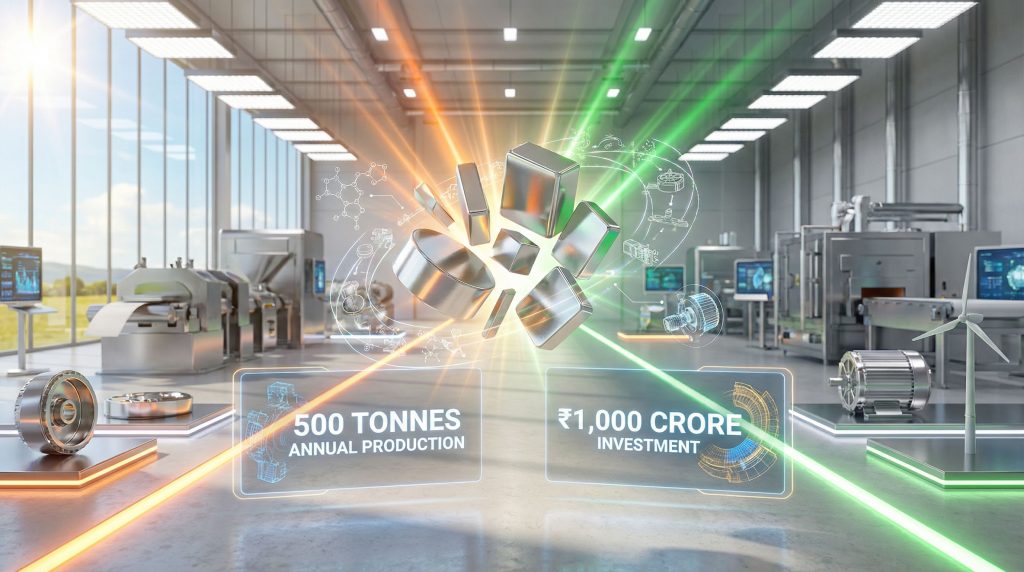
The commercial manufacturing pipeline includes facilities targeting significant production volumes, with initial capacity planning for 500 tonnes annual production scaling to 5,000 tonnes by 2030. These projections reflect aggressive expansion timelines designed to capture growing domestic demand across electric vehicle and renewable energy sectors.
When big ASX news breaks, our subscribers know first
Market Dynamics and Supply Chain Integration
Rare earth magnet markets exhibit complex pricing dynamics influenced by raw material availability, processing capacity constraints, and end-user demand fluctuations. Understanding these market mechanics becomes essential for evaluating commercial viability of domestic manufacturing initiatives.
Global Supply Concentration and Strategic Vulnerabilities
Current global rare earth magnet production remains heavily concentrated, with approximately 80% of worldwide manufacturing capacity controlled by Chinese producers. This concentration creates significant supply security risks for countries dependent on imported permanent magnets for critical applications.
However, the mining industry evolution demonstrates how emerging economies can develop alternative supply chains through strategic investment and technology development.
"India's strategic positioning recognises that building domestic rare earth magnet manufacturing capabilities addresses both economic competitiveness and national security considerations in advanced technology sectors."
Table: Rare Earth Magnet Application Sectors
| Application Category | Magnet Requirements | Market Growth Rate |
|---|---|---|
| Electric Vehicle Motors | 2-5 kg per vehicle | 25-30% annually |
| Wind Power Generators | 200-600 kg per MW | 15-20% annually |
| Industrial Automation | Variable specifications | 10-15% annually |
| Consumer Electronics | Miniaturised formats | 8-12% annually |
Technology Readiness and Commercial Validation
The transition from research-level innovations to commercial manufacturing requires systematic technology validation through pilot-scale operations. Technology readiness levels (TRL) advancement from laboratory demonstrations to full-scale deployment represents a critical development phase for rare earth magnet manufacturing.
Current domestic capabilities span multiple TRL stages, with some processes achieving TRL-7/9 readiness levels suitable for commercial implementation. This technological maturity enables industry partnerships and private sector investment in scaled manufacturing facilities.
Processing method innovations include:
• Molten salt electrolysis for high-purity rare earth metal production
• Advanced powder processing techniques for improved magnetic properties
• Environmental compliance protocols for sustainable manufacturing
• Quality control systems meeting international standards
Electric Vehicle Ecosystem Integration and Market Opportunities
India's electric vehicle expansion creates substantial domestic demand for rare earth permanent magnets, providing a foundation for commercial manufacturing viability. The convergence of EV adoption targets and domestic manufacturing capabilities presents strategic alignment opportunities.
EV Motor Applications and Magnet Requirements
Electric vehicle motors rely on high-performance permanent magnets for efficient power conversion and compact design requirements. The specific magnetic properties of Nd-Fe-B magnets make them essential components in modern electric drivetrains, whilst electric vehicles transforming mining creates additional demand for specialised magnetic materials.
Critical performance parameters include:
• Maximum energy product for power density optimisation
• Coercivity ratings for thermal stability
• Corrosion resistance for automotive environments
• Cost-effectiveness for mass market applications
The domestic EV manufacturing ecosystem benefits from integrated supply chains that reduce import dependencies and provide pricing stability for critical components. Local magnet production enables closer collaboration between component suppliers and vehicle manufacturers for optimised designs.
Renewable Energy Infrastructure Demand
Wind power generation requires substantial quantities of rare earth magnets for direct-drive generator systems. A single megawatt of wind generation capacity typically requires 200-600 kilograms of permanent magnets, creating significant market opportunities for domestic suppliers.
Consequently, solar energy systems increasingly incorporate tracking mechanisms and power electronics that utilise rare earth magnets for precise positioning and efficient power conversion. The expanding renewable energy sector provides diversified demand beyond transportation applications.
Investment Analysis and Risk Assessment
Rare earth magnet manufacturing investments present both significant opportunities and substantial risks that must be carefully evaluated. The sector's capital-intensive nature and technical complexity require sophisticated risk management approaches.
Capital Allocation Strategies
Investment opportunities span multiple value chain segments:
• Upstream mining and extraction: Rare earth ore processing and beneficiation
• Midstream processing: Metal separation and purification technologies
• Downstream manufacturing: Magnet production and finishing operations
• Application integration: End-user product development and system optimisation
Each segment presents distinct risk-return profiles and capital requirements that investors must evaluate based on technical expertise and market positioning capabilities.
Market Development and Competitive Positioning
Successful commercial deployment requires simultaneous development of domestic demand and international competitiveness. The timing of market entry becomes critical given the dynamic nature of technology advancement and competitive responses.
Key success factors include:
• Cost competitiveness with established international suppliers
• Quality certification for demanding applications
• Supply chain reliability and delivery performance
• Technical support capabilities for customer integration
The domestic market development timeline must align with manufacturing capacity expansion to ensure efficient capital utilisation and sustainable growth trajectories.
Technological Innovation and Process Development
Advanced materials processing requires continuous innovation in manufacturing techniques and quality control methods. The rare earth magnet pilot plant in Hyderabad serves as a platform for developing proprietary processes that can provide competitive advantages in commercial operations.
Process Optimisation and Efficiency Enhancement
Manufacturing efficiency improvements focus on yield optimisation, energy consumption reduction, and waste minimisation throughout the production cycle. These operational enhancements directly impact cost competitiveness and environmental sustainability.
Innovation areas include:
• Powder processing automation for consistent quality
• Sintering atmosphere control for optimal magnetic properties
• Machining and finishing techniques for precise tolerances
• Recycling and recovery systems for material conservation
The pilot plant environment enables rapid prototyping and process refinement before commercial-scale implementation, reducing technical risks and accelerating development timelines.
Quality Assurance and Standards Compliance
International market access requires compliance with stringent quality standards and certification protocols. The development of indigenous testing capabilities and quality assurance systems becomes essential for export competitiveness.
Magnetic property testing, environmental compliance verification, and product reliability validation represent critical capabilities that must be developed alongside manufacturing processes. Additionally, the Department of Science and Technology's magnet development programme demonstrates government commitment to establishing world-class manufacturing standards.
The next major ASX story will hit our subscribers first
Strategic Implications for Industrial Policy
The rare earth magnet pilot plant in Hyderabad development reflects broader industrial policy objectives focused on technological sovereignty and supply chain resilience. These initiatives demonstrate systematic approaches to critical materials security that extend beyond immediate commercial considerations.
Technology Transfer and Capability Building
Successful technology commercialisation requires effective knowledge transfer from research institutions to industrial partners. The pilot plant serves as a bridge between academic research and commercial manufacturing, facilitating collaborative development programmes.
Capability building initiatives include:
• Technical workforce training and skill development
• Industry-academia partnership programmes
• Intellectual property development and protection
• International collaboration and technology exchange
These programmes create sustainable competitive advantages through human capital development and innovation ecosystem strengthening.
Regional Industrial Development
The concentration of rare earth processing capabilities in Hyderabad creates opportunities for regional industrial cluster development. Proximity effects between research institutions, manufacturing facilities, and supporting industries can generate significant economic multipliers.
Supply chain integration within regional clusters reduces logistics costs, improves technical collaboration, and accelerates innovation cycles. This geographic concentration strategy mirrors successful industrial development models implemented in other advanced manufacturing sectors.
In addition to this, the mining sustainability transformation highlights how environmental considerations are becoming integral to industrial development strategies. Furthermore, industry analysts predict that India's strategic approach to rare earth development could reshape global supply chain dynamics.
The long-term vision encompasses comprehensive materials science capabilities that extend beyond the rare earth magnet pilot plant in Hyderabad to encompass broader advanced materials manufacturing competencies. This integrated approach provides foundation capabilities for multiple high-technology industrial sectors essential for economic development and strategic autonomy.
Looking to Capitalise on Critical Materials Manufacturing Opportunities?
Discovery Alert's proprietary Discovery IQ model delivers instant notifications on significant ASX mineral discoveries, including critical materials essential for advanced manufacturing and energy transition technologies. Position yourself ahead of the market by accessing real-time insights into actionable investment opportunities and begin your 14-day free trial today to secure your competitive advantage.