August 23, 2026

The Long Road From Geological Lead to National Asset: Understanding India's Rare Earth Pipeline
Across the global mining landscape, few assets are as strategically coveted or as chronically misunderstood as rare earth deposits at their earliest exploration stages. Investors, policymakers, and analysts frequently conflate a geological lead with a production-ready resource, a mistake that can distort both capital allocation decisions and public expectations. In India's case, the systematic expansion of its critical mineral discovery pipeline requires precisely this kind of nuanced understanding, because the country's ambitions in rare earth self-sufficiency will be built not on single headline finds, but on the careful accumulation of geological evidence across dozens of blocks over many years.
The Telangana rare earth find at Pata Gangaram, formally disclosed through a Union government response to the Lok Sabha on August 12, 2026, offers a useful lens through which to examine this broader dynamic. It is simultaneously a meaningful geological data point and a reminder of how far India still has to travel before translating exploration potential into commercial supply.
When big ASX news breaks, our subscribers know first
Decoding the Pata Gangaram Resource: What the Numbers Actually Tell Us
The Geological Survey of India has delineated an inferred resource of 8.1 million tonnes of rare-earth-bearing alluvium at Pata Gangaram in Bhadradri Kothagudem district, Telangana. The deposit carries an average Total Rare Earth Elements (TREE) grade of 746 parts per million (ppm) at a cut-off grade of 500 ppm.
| Parameter | Detail |
|---|---|
| Location | Pata Gangaram, Bhadradri Kothagudem district, Telangana |
| Resource Volume | 8.1 million tonnes (inferred) |
| Average TREE Grade | 746 ppm |
| Cut-off Grade | 500 ppm |
| Exploration Stage | G3 Inferred Resource (UNFC classification) |
| Auction Status | Not yet notified or auctioned |
| Disclosed Via | Union Government reply to Lok Sabha, August 12, 2026 |
Understanding what these numbers mean in isolation versus in context is critical. The 746 ppm TREE grade is sufficient to justify continued exploration but sits considerably below the concentrations found at the world's operating rare earth mines. For reference, the Mountain Pass deposit in California, operated by MP Materials, processes ore at grades approximating 8% total rare earth oxide (TREO), while China's Bayan Obo, the world's largest REE producer, operates at multi-percent grades.
Even many of the ionic clay deposits in southern China, which are mined at much lower grades than hard-rock operations, typically target grades above 1,000 ppm for economic viability. This does not disqualify Pata Gangaram from future development, but it does frame the work that remains to be done.
Understanding Alluvial REE Mineralisation
The deposit type at Pata Gangaram is rare-earth-bearing alluvium, meaning dispersed concentrations of rare earth elements hosted within sedimentary material, typically clays, silts, and unconsolidated sands deposited through water action. This is a meaningfully different deposit class from hard-rock carbonatite-hosted or pegmatite-hosted REE deposits. Furthermore, the alluvial deposit at Pata Gangaram presents a distinct set of processing considerations that warrant careful analysis.
Alluvial and clay-hosted REE deposits carry a distinct set of processing characteristics that are worth understanding:
- They are typically shallower and potentially lower-cost to mine from a physical extraction standpoint
- Beneficiation and metallurgical recovery can be more complex depending on the clay mineralogy and the specific rare earth species present
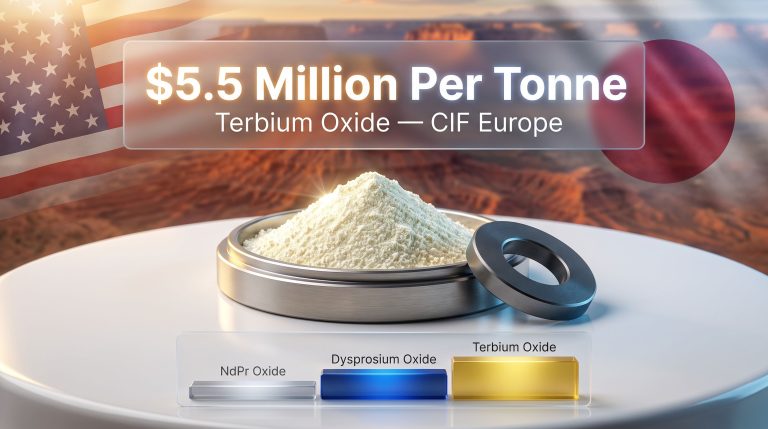
- The distribution of individual rare earth elements within the TREE total matters enormously for commercial value, since heavy rare earth elements (HREEs) such as dysprosium and terbium command substantially higher prices than light rare earth elements (LREEs) like cerium and lanthanum
- Without speciation data confirming the proportion of HREEs versus LREEs in the deposit, the commercial attractiveness of the Pata Gangaram resource cannot be fully assessed
This last point is a nuance frequently overlooked in early-stage REE reporting. A deposit grading 746 ppm TREE dominated by cerium and lanthanum, which are in global oversupply, presents a fundamentally different investment case than a deposit of similar grade enriched in neodymium, praseodymium, dysprosium, or terbium, all of which are in high demand for permanent magnet applications. In addition, REE processing challenges of this nature are increasingly central to how investors and governments evaluate early-stage finds.
What G3 Inferred Status Means in Practice
A G3 inferred resource under the United Nations Framework Classification (UNFC) represents the earliest recognised stage of geological confidence. Estimates are derived from surface sampling, limited drilling, or geophysical inference, meaning the deposit's true extent, grade continuity, and commercial potential remain unconfirmed.
The UNFC classification system provides a standardised framework for communicating the maturity of mineral resource estimates. The progression from G3 to higher confidence categories requires substantial additional investment and time.
| UNFC Stage | Geological Confidence | Data Basis | Commercial Readiness |
|---|---|---|---|
| G3 Inferred | Low | Surface data, limited sampling | Not commercially assessable |
| G2 Indicated | Moderate | Systematic drilling campaigns | Preliminary feasibility possible |
| G1 Measured | High | Detailed drilling and assaying | Bankable feasibility studies viable |
Progressing from G3 to G2 typically requires:
- Designing and executing a systematic drilling programme across the deposit footprint
- Collecting representative geochemical samples from defined drill intervals
- Submitting samples to accredited laboratories for multi-element assay analysis, including speciation of individual rare earth elements
- Applying geostatistical modelling to establish grade continuity and estimate resource tonnage with higher confidence
- Independent review and sign-off by a Competent Person under the applicable reporting code
This process can take anywhere from two to five years depending on access, funding, and regulatory timelines. The investment required is non-trivial and carries geological risk at every stage. It is entirely possible for a G3 resource to be downgraded, upgraded, or simply abandoned following more detailed work.
Telangana's Broader Critical Mineral Footprint
The Telangana rare earth find at Pata Gangaram sits within a wider regional exploration story. Under the Centre's Exploration Licence programme initiated in 2026, three additional areas within Telangana have been identified for rare earth elements investigation. Consequently, the state is rapidly emerging as a notable contributor to India's critical minerals demand diversification strategy.
| Exploration Area | District or Region | Current Status |
|---|---|---|
| Pata Gangaram | Bhadradri Kothagudem | G3 Inferred Resource (8.1 MT) |
| Kondagattu | Jagtial and Rajanna Sircilla region | Under active exploration |
| Chinna Kodur | Siddipet district | Under active exploration |
| Momanpet | Vikarabad and Sangareddy region | Under active exploration |
Each of these blocks is at a stage where mineralisation has been identified but not yet quantified to resource standards. The simultaneous activation of four REE exploration zones within a single state reflects a deliberate effort to build a diverse geological pipeline rather than concentrate risk on any single asset.
An important clarification for those following Telangana's mineral sector closely: separate reports have circulated regarding rare-earth-related minerals associated with Singareni coal mine areas and related processing discussions. These are entirely distinct programmes from the Pata Gangaram alluvium resource and the four REE exploration blocks described above. Conflating them risks misrepresenting the scale or significance of any individual discovery.
Vanadium, Titanium, and the Sangareddy Benchmark
To understand where Pata Gangaram sits in the maturity spectrum, it is instructive to look at what Telangana's more advanced critical mineral blocks have already delivered. The Govindpur and Parvathapur blocks in Sangareddy district have both been successfully auctioned as Composite Licences, providing concrete precedent for what the state's geology can yield at higher confidence stages.
Govindpur Block: Resource Summary
| Mineral | Estimated Resource | Average Grade | Cut-off Grade |
|---|---|---|---|
| Vanadium | 37.88 million tonnes | 0.35% V₂O₅ | 500 ppm vanadium |
| Titanium | 40.21 million tonnes | 4.5% TiO₂ | 3% TiO₂ |
| Aluminous Laterite | 67.03 million tonnes | 29.02% Al₂O₃ | Not specified |
Parvathapur Block: Resource Summary
| Mineral | Estimated Resource | Average Grade | Cut-off Grade |
|---|---|---|---|
| Vanadium | 15.26 million tonnes | 0.404% V₂O₅ | Greater than 0.3% V₂O₅ |
| Titanium (lower grade) | 45 million tonnes | 3.83% TiO₂ | 3 to 5% TiO₂ |
| Titanium (higher grade) | 6.3 million tonnes | 5.49% TiO₂ | Greater than 5% TiO₂ |
| Aluminous Laterite | 87 million tonnes | 29.23% Al₂O₃ | Not specified |
The vanadium grades at both Sangareddy blocks are noteworthy in global context. Vanadium is increasingly valued not only for its role in high-strength steel alloys but as the active material in vanadium redox flow batteries, a grid-scale energy storage technology gaining traction in markets seeking long-duration storage solutions.
Additionally, the GSI has prepared Geological Memoranda covering three critical mineral blocks associated with aluminous laterite, incorporating vanadium, scandium, and gallium. The Baswapur Titanium, Vanadium, Gallium and Aluminous Laterite Block in Vikarabad district has been formally notified under the eighth tranche of critical mineral block auctions. The remaining two blocks with completed Geological Memoranda are pending auction notification.
Gallium and scandium are among the lesser-discussed critical minerals embedded in Telangana's laterite geology. Both are classified as critical by multiple jurisdictions, with gallium essential for compound semiconductors used in radar systems and 5G infrastructure, and scandium used to strengthen aluminium alloys in aerospace applications.
India's Auction Pipeline and the Mechanics of Acceleration
The broader context within which the Telangana rare earth find at Pata Gangaram must be evaluated is one of deliberate structural reform across India's mineral governance framework. The Centre has introduced a sequence of amendments to the Mineral (Auction) Rules, 2015 specifically designed to compress the timeline between geological discovery and block operationalisation. However, understanding these reforms also requires appreciating the geopolitical pressures shaping rare earth supply chains globally.
Key reforms include:
- Introduction of intermediary timelines to prevent auction processes from stalling at administrative decision points
- Automated declaration of preferred bidders and issuance of Letters of Intent, removing discretionary delays
- Bidder-accountability mechanisms to reduce speculative participation that historically inflated auction participation without delivering operational outcomes
- Financial incentives tied to early operationalisation of awarded blocks
The institutional architecture supporting these reforms is also being modernised:
- A Project Management Unit (PMU) has been established within the Ministry of Mines to provide dedicated oversight of critical mineral block progression
- The Unified Mining Portal (UMP) provides end-to-end digital tracking of auction and licensing workflows
- Pre-Auction Committees have been formed in major mineral-producing states to resolve land scheduling issues before the bidding process begins
- State-Level Coordination Committees, operating under Chief Secretaries, address local administrative bottlenecks that have historically delayed project activation
Under the Scheme for Special Assistance to States for Capital Investment (SASCI) for FY 2025-26, the Centre has extended financial incentives to states to accelerate critical mineral block operationalisation, aligning state-level fiscal interests with the national minerals pipeline objective.
Additional liberalisations allow additional minerals to be incorporated into existing mining leases and remove restrictions on the sale of minerals extracted from captive mines, measures that increase the commercial flexibility of licence holders and potentially improve project economics for multi-mineral deposits like those found across Telangana.
The next major ASX story will hit our subscribers first
The Strategic Imperative Behind REE Self-Sufficiency
India's interest in building a domestic rare earth resource base is driven by a structural vulnerability that has persisted for decades. The country currently relies heavily on imported processed rare earth materials, and China's rare earth strategy accounts for the dominant share of global REE processing capacity. According to data from the US Geological Survey, China controls roughly 60% of global rare earth mine production and an even larger share of separation and processing capacity, a concentration that creates supply chain risk for any nation dependent on these inputs for advanced manufacturing.
Furthermore, the broader dimensions of rare earth geopolitics make India's drive for self-sufficiency all the more pressing. The specific rare earth elements most critical to India's industrial ambitions include:
- Neodymium and praseodymium (NdPr): Core inputs for neodymium-iron-boron (NdFeB) permanent magnets used in electric vehicle motors and wind turbine generators
- Dysprosium and terbium: Heavy rare earth elements added to NdFeB magnets to maintain performance at elevated operating temperatures, essential for EV traction motors
- Lanthanum and cerium: Light rare earth elements with applications in fluid catalytic cracking catalysts, glass polishing, and optical lenses, though currently in global oversupply
India's historical REE exploration has been concentrated in states such as Andhra Pradesh, Kerala, Jharkhand, and Odisha. Telangana's emergence as an active REE exploration frontier broadens the geographic distribution of the national resource base and reduces the geological concentration risk inherent in a single-state dependency.
If Pata Gangaram successfully advances through G2 and G1 resource stages following systematic drilling, and if grade continuity and volume prove sufficient, a Composite Licence auction could theoretically be initiated within a five to eight year horizon, contingent on environmental clearances, land acquisition, and processing infrastructure. This timeline underscores that the current disclosure marks the beginning of a long geological journey, not an imminent production announcement.
Frequently Asked Questions
Is the Pata Gangaram deposit commercially viable?
Not at this stage. Classified as a G3 inferred resource, the deposit has low geological confidence and no bankable feasibility assessment has been conducted. Commercial viability requires advanced exploration, systematic drilling, REE speciation analysis, and detailed resource modelling.
How does the 746 ppm TREE grade compare globally?
The grade is sufficient to justify continued exploration but falls well below world-class operations. Mountain Pass in the United States operates at approximately 8% TREO, while ionic clay deposits in southern China, a more comparable deposit type to alluvial mineralisation, typically target grades above 1,000 ppm for economic viability. Crucially, the commercial value of the deposit also depends on the proportion of high-value heavy rare earth elements within the total TREE figure, data not yet publicly confirmed for Pata Gangaram.
When will Pata Gangaram be auctioned?
There is no confirmed auction timeline. The deposit has not been notified for auction and must first advance through higher geological confidence stages under the UNFC framework.
What other REE exploration is active in Telangana?
Three additional areas — Kondagattu in Jagtial and Rajanna Sircilla, Chinna Kodur in Siddipet, and Momanpet in Vikarabad and Sangareddy — are under active investigation as part of the Centre's 2026 Exploration Licence programme.
What critical mineral blocks have already been auctioned in Telangana?
The Govindpur and Parvathapur blocks in Sangareddy district have been successfully auctioned as Composite Licences covering vanadium, titanium, and aluminous laterite. The Baswapur block in Vikarabad district has been notified under the eighth tranche of critical mineral block auctions, covering titanium, vanadium, gallium, and aluminous laterite.
Key Takeaways
- The 8.1 MT inferred REE resource at 746 ppm TREE at Pata Gangaram is a meaningful geological lead at the earliest stage of the resource development pathway
- Without REE speciation data confirming the proportion of high-value heavy rare earth elements, the commercial attractiveness of the deposit cannot be fully assessed
- Telangana is developing into a multi-mineral critical resource frontier spanning REE, vanadium, titanium, gallium, and scandium across multiple exploration and development stages
- India's auction and governance reforms are structurally designed to compress discovery-to-production timelines, but geological and regulatory realities mean these remain multi-year processes
- The significance of the Pata Gangaram disclosure lies within the systematic expansion of India's national critical mineral pipeline, not as a standalone commercial announcement
This article contains forward-looking statements and scenario projections based on publicly available information. Geological resource estimates at the G3 inferred stage carry significant uncertainty and should not be interpreted as confirmed reserves or indicators of commercial viability. Readers should conduct independent research before making investment decisions.
Want to Track the Next Major Mineral Discovery Before the Market Catches On?
Discovery Alert's proprietary Discovery IQ model delivers real-time alerts on significant ASX mineral discoveries — including critical minerals such as rare earths, vanadium, and titanium — instantly translating complex geological data into actionable investment insights for traders and long-term investors alike. Explore Discovery Alert's dedicated discoveries page to understand how historic ASX mineral finds have generated substantial returns, and begin your 14-day free trial today to position yourself ahead of the broader market.