June 19, 2026
The Metallization Bottleneck That Makes Rare Earth Supply Chains Uniquely Fragile
Most commodity supply disruptions have workarounds. Oil can be rerouted through alternative shipping lanes, drawn from strategic petroleum reserves, or partially substituted with other energy sources. Even semiconductor shortages, painful as they were during the pandemic years, could be partially managed through inventory adjustments and design workarounds. Rare earth permanent magnets offer none of these escape routes. When dysprosium or terbium becomes unavailable, the motors stop. The missiles don't fly. The electric vehicles don't move.
There is no substitute material waiting in reserve, and building new supply capacity from scratch takes not months but years, sometimes decades. Understanding rare earth supply chains helps clarify exactly why this vulnerability is so difficult to resolve quickly.
This structural reality is what makes the REalloys Appalachian rare earth supply deal worth examining not simply as a corporate announcement, but as a case study in how Western industrial nations are attempting to rebuild supply chain capabilities that were quietly offshored over the past thirty years. The architecture being assembled is complex, multi-jurisdictional, and technically demanding in ways that most coverage of the sector fails to convey.
When big ASX news breaks, our subscribers know first
What the Appalachian Basin Actually Represents as a Rare Earth Resource
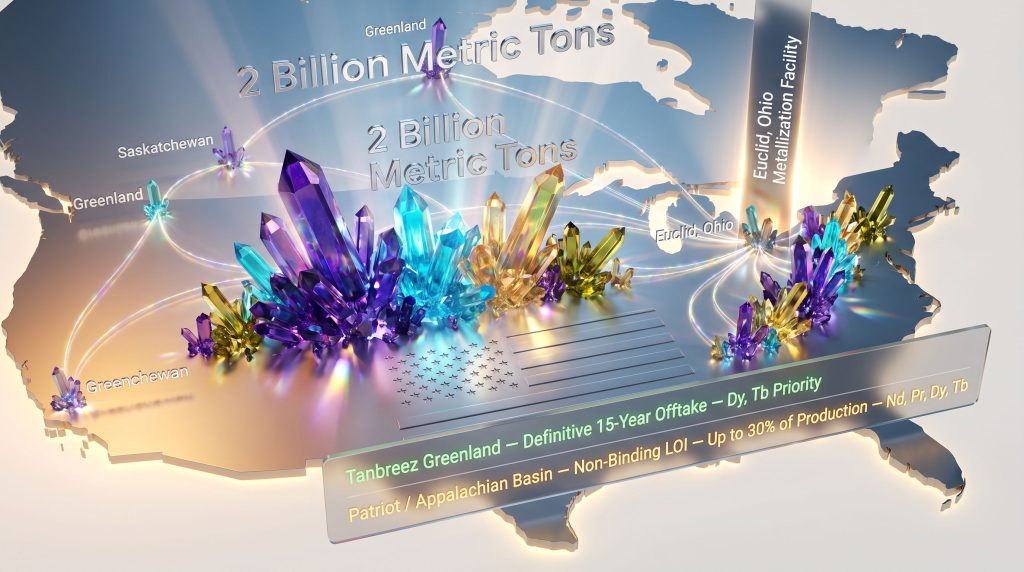
The Appalachian Basin rare earth resource that sits at the centre of REalloys' (NASDAQ: ALOY) latest agreement is not a conventional mining story. Patriot Exploration & Mining holds access to approximately 2 billion metric tons of above-ground rare earth-bearing material distributed across more than 150 tested sites stretching from Alabama to Pennsylvania. The term above-ground is critical here, and it is frequently misunderstood by general audiences.
Unlike hard-rock mining projects that require blasting through solid geology to access buried ore bodies, above-ground rare earth resources typically involve materials that have already been physically separated from bedrock through geological or industrial processes. In the Appalachian context, this includes legacy coal mining byproducts, coal ash deposits, and sedimentary accumulations where rare earth elements have been concentrated over long periods. The operational implications are significant:
- Reduced site disturbance compared to conventional open-pit or underground mining
- Lower initial capital intensity, since extraction infrastructure already partially exists
- Compressed permitting timelines relative to greenfield hard-rock projects
- Faster pathway from resource identification to feedstock availability
The mineral composition of the Patriot network is precisely what makes it strategically relevant rather than merely commercially interesting. The resource contains neodymium (Nd), praseodymium (Pr), dysprosium (Dy), and terbium (Tb), which are the four magnet metals at the centre of permanent magnet manufacturing for defence, electric vehicle, and industrial applications. The fact that all four are present in a single domestic resource base, spanning multiple U.S. states with existing road, rail, and power infrastructure, removes several of the logistical constraints that complicate other domestic rare earth development scenarios.
Critical Investor Note: The arrangement between REalloys and Patriot Exploration & Mining is currently a non-binding Letter of Intent. Conversion to a definitive long-term offtake agreement depends on the completion of metallurgical testing and the subsequent negotiation of commercial terms. Investors should apply appropriate weight to this distinction when assessing the company's feedstock security timeline. The Tanbreez and Saskatchewan Research Council agreements represent the more contractually advanced components of REalloys' current supply chain architecture.
Understanding Metallization: The Step Nobody Talks About
To understand why REalloys' overall platform is architecturally distinctive, it helps to map the full rare earth supply chain and identify where the most significant capability gaps actually exist. Most coverage of the sector focuses on mining and, to a lesser extent, on separation and refining. The metallization step receives far less attention, partly because it is technically complex and partly because very few Western facilities can perform it at commercial scale. Furthermore, rare earth processing challenges at this stage are among the most formidable barriers facing non-Chinese producers.
The rare earth supply chain follows this sequence:
- Mining: Extracting ore containing rare earth minerals from the ground
- Cracking and leaching: Chemically dissolving rare earth minerals from the ore matrix
- Separation: Isolating individual rare earth elements from mixed solutions using solvent extraction
- Refining: Producing high-purity rare earth oxides or carbonates
- Metallization: Chemically reducing rare earth oxides into high-purity metals using processes such as calcium or lanthanum reduction
- Alloying: Combining rare earth metals with iron and boron (in the case of NdFeB magnets) to produce the alloy from which magnets are made
- Magnet manufacturing: Sintering or bonding the alloy into finished permanent magnets
Metallization sits between steps five and six, and it is the point where Western supply chains are most severely underdeveloped. China controls the overwhelming majority of global metallization capacity for heavy rare earths, which is why dysprosium and terbium metal and alloy are structurally difficult to source from non-Chinese suppliers even when the oxides themselves are available from other origins.
REalloys co-founder Tim Johnston has described the challenge in terms that underscore why operational experience matters as much as capital in this sector. Replicating commercial-scale rare earth metallization capability typically requires three to seven years of accumulated operating expertise, process control development, and qualification testing, even with adequate capital and strong execution. The process variables involved in continuous heavy rare earth metal production are highly sensitive, and the qualification standards for defence-grade material add further complexity.
This timeline compression is precisely what makes existing operational metallization platforms disproportionately valuable relative to greenfield alternatives. REalloys' Euclid, Ohio facility is being built as the downstream anchor of what the company describes as a zero-adversary-nexus supply chain, meaning no Chinese-controlled inputs at any stage from feedstock through finished metal.
How the Appalachian LOI Fits the Broader Feedstock Network
The REalloys Appalachian rare earth supply deal adds a domestic U.S. feedstock tier to a multi-geography network that is being assembled simultaneously across several jurisdictions. Understanding where this agreement sits relative to the company's other arrangements clarifies its strategic purpose. According to Reuters, this MOU reflects growing urgency among U.S. stakeholders to build a fully domestic rare earth supply chain ahead of critical defence deadlines.
| Agreement | Type | Allocation | Key Metals | Status |
|---|---|---|---|---|
| Patriot / Appalachian Basin | Non-binding LOI | Up to 30% of production | Nd, Pr, Dy, Tb | Pending metallurgical testing |
| Critical Metals / Tanbreez, Greenland | Definitive 15-year offtake | 15% of Phase 1 output | Dy, Tb priority streams | Binding; mining targeted 2027 |
| Saskatchewan Research Council (SRC) | Processing partnership | Up to 80% of expanded output | NdPr, Dy, Tb | Active; ~$20.6M committed |
The Appalachian agreement serves a function that the Greenland and Canadian arrangements cannot fully replicate: it provides a feedstock source that is entirely within U.S. sovereign territory. For defence supply chain qualification purposes, origin provenance matters considerably. Materials that can be traced through every processing stage to a domestic U.S. extraction point carry distinct advantages in the procurement qualification process for sensitive defence applications.
The Tanbreez REE deposit and Saskatchewan agreements provide scale and heavy rare earth depth; the Appalachian LOI, if converted to a binding offtake, would provide a fully domestic origin layer.
Greenland's Tanbreez: The Heavy Rare Earth Depth Advantage
The Tanbreez deposit in southern Greenland possesses a mineralogical characteristic that distinguishes it from the vast majority of rare earth deposits globally. Critical Metals Corp. (NASDAQ: CRML), which holds a 92.5% stake in the project following an April 2026 acquisition, estimates that approximately 27% of the deposit's rare earth profile consists of heavy rare earths, including dysprosium and terbium.
Most commercially developed rare earth deposits are dominated by light rare earth elements such as cerium, lanthanum, and neodymium, with heavy rare earths typically present in concentrations of five to fifteen percent at most. This compositional skew toward heavy rare earths is what makes Tanbreez geopolitically significant well beyond its total resource size.
Dysprosium and terbium are added to neodymium-iron-boron magnets specifically to improve their resistance to demagnetisation at elevated temperatures, a property called coercivity. Without sufficient dysprosium and terbium additions, NdFeB magnets used in electric vehicle motors and defence applications would lose their magnetic strength under normal operating conditions. There is currently no commercially viable substitute for this function.
The geopolitical contest over Tanbreez has been unusually direct. Reporting from Reuters earlier in 2026 indicated that U.S. and Danish officials privately urged the project's owners not to proceed with any transaction involving Chinese-linked buyers, reflecting acute concern among Western governments about heavy rare earth supply chain concentration. The project ultimately came under the control of U.S.-based Critical Metals Corp., preserving Western access to one of the world's most significant identified heavy rare earth concentrations.
Key Tanbreez development milestones include:
- Pilot facility construction in Qaqortoq, Greenland commenced January 2026, engineered for Arctic operating conditions
- Pilot facility completion targeted mid-2026
- Full mining operations targeted to commence 2027
- First commercial production expected mid-2028
- Approximately 75% of planned Phase 1 output already pre-sold to U.S. and European customers
- Phase 1 production capacity: up to 15,000 metric tonnes of rare earth concentrate annually
REalloys' 15-year definitive offtake covers 15% of monthly Phase 1 production with priority access to dysprosium- and terbium-rich concentrate streams, locking in preferential access to the deposit's most strategically valuable output.
The Saskatchewan Processing Bridge
Between the feedstock layer and the Ohio metallisation facility sits the Saskatchewan Research Council's commercial rare earth processing operation in Saskatoon, Canada. This is the midstream anchor of REalloys' supply chain architecture, and the capital commitment underpinning it is substantial.
REalloys has committed approximately $20.6 million toward targeted upgrades, engineering, permitting, commissioning, and throughput expansion at the Saskatoon facility. The investment is structured to produce the following measurable output improvements:
- NdPr production increased by 25% above current baseline
- Dysprosium output doubled
- Terbium output doubled
- Target annual production: approximately 525 tonnes NdPr, 30 tonnes dysprosium, 15 tonnes terbium
In exchange for this capital commitment, REalloys secured exclusive preferred rights to as much as 80% of the facility's expanded commercial output, giving the company long-term access to one of the only multi-feedstock, commercial-scale rare earth processing streams operating in North America outside of Chinese industrial infrastructure.
A separate and technically significant element of the SRC arrangement involves the design, build, and commissioning of a standalone commercial-scale heavy rare earth metallisation system dedicated specifically to dysprosium and terbium metal production. Once completed, this system will be transferred to the Euclid, Ohio facility, directly expanding the company's downstream metallisation capacity for defence-grade material. This transfer mechanism is noteworthy because it means REalloys is acquiring a purpose-built metallisation system developed by an established research institution rather than attempting to build that capability from internal engineering resources alone.
The next major ASX story will hit our subscribers first
Federal Capital Deployment and the Competitive Landscape
The scale of federal capital being directed toward domestic rare earth supply chain development in 2025 and 2026 is without precedent in the modern era. Understanding the competitive and policy context helps clarify both the opportunity and the risk landscape. America's rare earth supply chain is, however, still in the early stages of genuine strategic depth, particularly at the metallisation layer.
| Initiative | Funding Mechanism | Scale | Focus Area |
|---|---|---|---|
| DoE Louisiana REE Grant | Direct grant | $67M | Extraction |
| USA Rare Earth / CHIPS Act | Federal financing package | ~$1.6B | Full mine-to-magnet |
| MP Materials / DoD Partnership | Equity + offtake | $400M + price floor | Mining + magnets |
| Energy Fuels / White Mesa Mill | Internal + grants | Undisclosed | Heavy REE processing |
MP Materials Corp. (NYSE: MP) posted record first-quarter 2026 results in May, with NdPr oxide production up 63% year-over-year to 917 metric tonnes and revenue reaching $90.6 million. The company is commissioning heavy rare earth separation at Mountain Pass, California, including terbium and dysprosium streams, supported by a Department of Defense partnership that includes a $400 million equity investment and a 10-year NdPr oxide price floor at $110 per kilogram.
Energy Fuels Inc. (NYSE American: UUUU), operating the White Mesa Mill in Utah, announced in March 2026 that it had produced the first kilogram of 99.9% pure terbium oxide from domestically mined ore, following initial dysprosium production in mid-2025. Commercial-scale heavy rare earth output is targeted for Q4 2026, using ore sourced from mines in Florida and Georgia. This achievement is meaningful as a proof-of-concept for U.S.-sourced heavy rare earth processing, though the gap between oxide production and commercial-scale metallisation remains substantial.
Why Rare Earth Magnets Are the Economy's Hidden Infrastructure Layer
The defence procurement narrative, while urgent and accurate, understates the full economic exposure created by rare earth supply chain concentration. Permanent magnets manufactured from neodymium-iron-boron alloys function as embedded infrastructure across multiple sectors simultaneously. China's export restrictions have, furthermore, dramatically accelerated awareness of this structural dependence across Western governments and industry alike.
- Electric vehicles: Approximately $500 billion in annual global EV sales depend on NdFeB magnet motors as the primary propulsion mechanism in most battery electric designs
- Consumer electronics: A $1 trillion global market incorporating miniaturised permanent magnets in speakers, microphones, hard drives, and vibration motors
- Industrial robotics and automation: Hundreds of billions in capital equipment utilising high-torque, high-efficiency permanent magnet motors
- AI and data centre infrastructure: Cooling systems, power management hardware, and robotic logistics systems all incorporating rare earth magnet components
- Defence and aerospace: Precision guidance systems, electric propulsion, communications equipment, and radar systems
The asymmetry between an oil supply disruption and a rare earth supply disruption is instructive. Oil markets have alternative sources, rerouting mechanisms, strategic reserves, and partial substitutes. A rare earth magnet supply disruption offers none of these relief valves. The motors and guidance systems that depend on dysprosium-terbium permanent magnets cannot be rewired to use a different material on short notice. New mines take five to fifteen years to develop from discovery to production.
Metallisation and magnet manufacturing capacity requires years of process development and qualification even after the physical infrastructure is in place. This is the structural reality that makes the REalloys Appalachian rare earth supply deal meaningful beyond its headline tonnage figures. Each layer of the supply chain that gets locked in through binding agreements or capital commitments reduces the systemic vulnerability of industries that cannot function without these materials. As OilPrice.com reports, Pentagon-linked players are now moving with unusual urgency to secure domestic supply ahead of the China ban deadline.
Frequently Asked Questions: REalloys Appalachian Rare Earth Supply Deal
What is the REalloys Appalachian rare earth supply deal?
REalloys (NASDAQ: ALOY) signed a non-binding Letter of Intent with Patriot Exploration & Mining that would grant REalloys preferential allocation rights to up to 30% of rare earth production from Patriot's Appalachian Basin resource network, comprising more than 150 tested sites spanning Alabama to Pennsylvania, with an estimated 2 billion metric tonnes of above-ground rare earth-bearing material.
Is the REalloys Appalachian deal finalised?
No. The arrangement is currently a non-binding LOI. Conversion to a definitive long-term offtake agreement depends on the completion of metallurgical testing and subsequent commercial negotiations. The Tanbreez and SRC agreements represent the more contractually advanced components of the current architecture.
What rare earth elements does the Appalachian Basin resource contain?
The Patriot resource network contains neodymium, praseodymium, dysprosium, and terbium, which are the four magnet metals most critical to permanent magnet manufacturing for defence, EV, and industrial applications.
Why is the 2027 Pentagon deadline significant?
The Department of Defense has mandated the elimination of Chinese-origin rare earth materials from U.S. defence supply chains by 2027. This creates a hard procurement deadline that compresses the available timeline for domestic and allied feedstock, processing, and metallisation capacity to become operational and qualification-ready.
What is rare earth metallisation and why does it matter?
Metallisation is the process by which rare earth oxides are chemically reduced into high-purity metal using agents such as calcium, then alloyed with other elements to produce the materials from which permanent magnets are manufactured. It is the least-developed segment of the rare earth supply chain outside China, requiring years of accumulated process expertise, specialised equipment, and qualification testing to execute at commercial scale for defence-grade applications.
Key Takeaways: The Supply Chain Architecture in Context
- Feedstock layer: Appalachian Basin LOI (domestic U.S.), Tanbreez Greenland 15-year definitive offtake, plus Brazil and Kazakhstan sources providing geographic diversification
- Processing layer: Saskatchewan Research Council partnership with approximately $20.6 million committed; up to 80% exclusive offtake on expanded output; target 525 tonnes NdPr, 30 tonnes dysprosium, 15 tonnes terbium annually
- Metallisation layer: Euclid, Ohio facility, described as the only large-scale heavy rare earth metallisation platform being developed in North America outside Chinese control
- Demand layer: Pentagon defence procurement, EV supply chains, AI infrastructure, and industrial automation converging simultaneously on the same magnet metal inputs
- Competitive layer: Billions in federal capital deployed across the sector through DoD, DoE, and CHIPS Act mechanisms, creating both validation and increased competition for feedstock
Important Disclaimer: This article contains forward-looking statements and references to non-binding agreements. The REalloys Appalachian arrangement remains subject to metallurgical testing and commercial negotiation. All financial figures, production targets, and timelines cited are based on publicly available company disclosures and independent reporting. This content is for informational purposes only and does not constitute investment advice. Investing in securities involves significant risk, and past performance does not guarantee future results. Readers should conduct independent due diligence and consult a qualified financial adviser before making any investment decisions.
Want to Be First When the Next Major Mineral Discovery Hits the ASX?
Discovery Alert's proprietary Discovery IQ model delivers real-time alerts on significant ASX mineral discoveries, transforming complex mineral data into actionable insights for traders and investors at every experience level — explore historic examples of exceptional discovery returns to understand what's at stake, then start your 14-day free trial at Discovery Alert to position yourself ahead of the market.